Months of research went into the creation of the essays in “When Women Wrote Hollywood.” Here are some of the resources used to enlighten today’s film lovers to the female pioneers who helped create it.
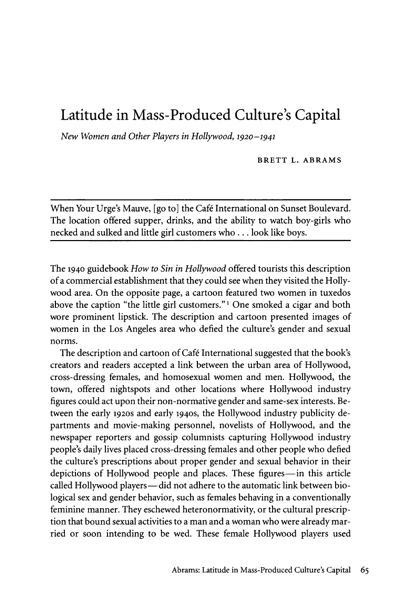
When Your Urge’s Mauve, [go to] the Cafe Intemational on Sunset Boulevard. The location offered supper, drinks, and the ability to watch boy-girls who necked and sulked and little girl customers who … look like boys.
The 1940 guidebook How to Sin in Hollywood offered tourists this description of a commercial establishment that they could see when they visited the Holly-wood area. On the opposite page, a cartoon featured two women in tuxedos above the caption “the little girl customers.”‘ One smoked a cigar and both wore prominent lipstick The description and cartoon presented images of women in the Los Angeles area who defied the culture’s gender and sexual norms.
* A portion of each sale from Amazon.com directly supports our blogs
** Many of these books may be available from your local library. Check it out!
† Available from the LA Public Library
Subscribe to Rosanne’s Channel and receive notice of each new video!
Transcript:
I think that’s what we should remember but we don’t and I think we realize it without realizing it because when you talk about movies to your friends you don’t say, “I loved the camera angle in scene seven.” No! You quote dialogue. You quote the lines from your favorite movies whether they’re Pixar or Disney or The Princess Bride. You know the dialogue and that is the work of the writer. That’s the person you should credit but often when I start a class I have students list their two or three favorite films and then who directed those films and then I ask them who wrote that film and they very often cannot name the person who wrote the film they adore. How can you want to be a writer if you don’t remember the writers yourself. So I think that’s a really important thing for us to remember.
A Note About This Presentation
A clip from my keynote speech at the 10th Screenwriters´(hi)Stories Seminar for the interdisciplinary Graduation Program in “Education, Art, and History of Culture”, in Mackenzie Presbyterian University, at São Paulo, SP, Brazil, focused on the topic “Why Researching Screenwriters (has Always) Mattered.” I was especially pleased with the passion these young scholars have toward screenwriting and it’s importance in transmitting culture across the man-made borders of our world.
To understand the world we have to understand its stories and to understand the world’s stories we must understand the world’s storytellers. A century ago and longer those people would have been the novelists of any particular country but since the invention of film, the storytellers who reach the most people with their ideas and their lessons have been the screenwriters. My teaching philosophy is that: Words matter, Writers matter, and Women writers matte, r so women writers are my focus because they have been the far less researched and yet they are over half the population. We cannot tell the stories of the people until we know what stories the mothers have passed down to their children. Those are the stories that last. Now is the time to research screenwriters of all cultures and the stories they tell because people are finally recognizing the work of writers and appreciating how their favorite stories took shape on the page long before they were cast, or filmed, or edited. But also because streaming services make the stories of many cultures now available to a much wider world than ever before.
Many thanks to Glaucia Davino for the invitation.
* A portion of each sale from Amazon.com directly supports our blogs ** Many of these books may be available from your local library. Check it out! † Available from the LA Public Library
Months of research went into the creation of the essays in “When Women Wrote Hollywood.” Here are some of the resources used to enlighten today’s film lovers to the female pioneers who helped create it.
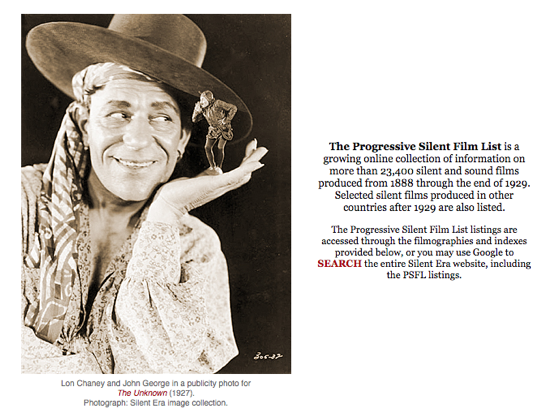
The Progressive Silent Film List is a growing online collection of information on more than 23,400 silent and sound films produced from 1888 through the end of 1929. Selected silent films produced in other countries after 1929 are also listed.
The Progressive Silent Film List listings are accessed through the filmographies and indexes provided below, or you may use Google to SEARCH the entire Silent Era website, including the PSFL listings.
* A portion of each sale from Amazon.com directly supports our blogs
** Many of these books may be available from your local library. Check it out!
† Available from the LA Public Library
Subscribe to Rosanne’s Channel and receive notice of each new video!
Transcript:
My teaching philosophy — I will apologize if the translations aren’t perfect. I used Google Translate — but I think it’s important that words matter, that writers matter, and that women writers matter in this world and we must pay attention to them. I think it’s important to consider writers because writer comes before director when you describe a filmmaker who can do two things. They are writer/ directors. They are not director/writers. That tells me something, right? To me that’s a very important point. I also think that we have to realize that the vision of a movie cannot exist without the screenplay. A director cannot direct nothing. There must be an idea. There must be a philosophy. There must be a theme right? There must be a story. So the writer is of equal importance. Sometimes my students who come from directing think that I am saying we should push the directors down to pull the writers up. I don’t think that’s true. I think they have to be equal partners in this right? I think that’s what we should remember.
A Note About This Presentation
A clip from my keynote speech at the 10th Screenwriters´(hi)Stories Seminar for the interdisciplinary Graduation Program in “Education, Art, and History of Culture”, in Mackenzie Presbyterian University, at São Paulo, SP, Brazil, focused on the topic “Why Researching Screenwriters (has Always) Mattered.” I was especially pleased with the passion these young scholars have toward screenwriting and it’s importance in transmitting culture across the man-made borders of our world.
To understand the world we have to understand its stories and to understand the world’s stories we must understand the world’s storytellers. A century ago and longer those people would have been the novelists of any particular country but since the invention of film, the storytellers who reach the most people with their ideas and their lessons have been the screenwriters. My teaching philosophy is that: Words matter, Writers matter, and Women writers matte, r so women writers are my focus because they have been the far less researched and yet they are over half the population. We cannot tell the stories of the people until we know what stories the mothers have passed down to their children. Those are the stories that last. Now is the time to research screenwriters of all cultures and the stories they tell because people are finally recognizing the work of writers and appreciating how their favorite stories took shape on the page long before they were cast, or filmed, or edited. But also because streaming services make the stories of many cultures now available to a much wider world than ever before.
Many thanks to Glaucia Davino for the invitation.
* A portion of each sale from Amazon.com directly supports our blogs ** Many of these books may be available from your local library. Check it out! † Available from the LA Public Library
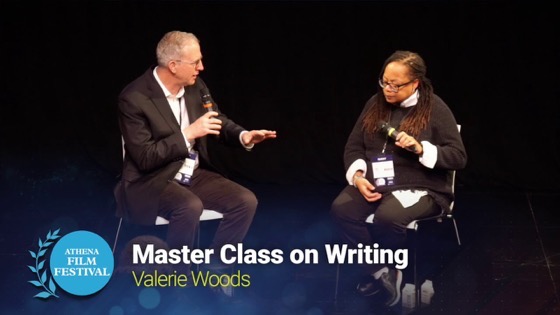
The Stephens College MFA in TV and Screenwriting is proud to help sponsor the 10th Annual Athena Film Festival, celebrating films that tell the extraordinary stories of fierce and fearless women leaders.
As part of our sponsorship, we hosted this MasterClass on television writing with one of our valued mentors – Valerie Woods, most recently co-executive producer of Queen Sugar, interviewed at the festival by our writer-in-residence, Ken Lazebnik.
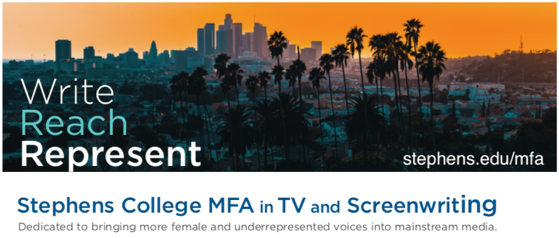
Learn more about television writing and storytelling with a female focus in our low residency MFA program — rolling applications means there is still time for you to join our Fall 2020 cohort and learn from working writers like Valerie.
Months of research went into the creation of the essays in “When Women Wrote Hollywood.” Here are some of the resources used to enlighten today’s film lovers to the female pioneers who helped create it.
Challenging conventional scholarship placing the origins of film noir in postwar Hollywood, Sheri Chinen Biesen finds the genre’s roots firmly planted in the political, social, and material conditions of Hollywood during the war. After Pearl Harbor, America and Hollywood experienced a sharp cultural transformation that made horror, shock, and violence not only palatable but preferable. Hard times necessitated cheaper sets, fewer lights, and fresh talent; censors as well as the movie-going public showed a new tolerance for sex and violence; and female producers experienced newfound prominence in the industry.
Biesen brings prodigious archival research, accessible prose, and imaginative insights to both well-known films noir of the wartime period―The Maltese Falcon, The Big Sleep, and Double Indemnity―and others often overlooked or underrated―Scarlet Street, Ministry of Fear, Phantom Lady, and Stranger on the Third Floor.
* A portion of each sale from Amazon.com directly supports our blogs
** Many of these books may be available from your local library. Check it out!
† Available from the LA Public Library
Subscribe to Rosanne’s Channel and receive notice of each new video!
Transcript:
My college is actually in the state of Missouri but we are what is called low residency. So students come to Los Angeles and the picture on the bottom is the Jim Henson Studio in Los Angeles and this is where the students come for workshops twice a year. You’ll see Kermit standing on top. Before Kermit this was the Charlie Chaplin studio founded in 1917 and was never torn down. So it is the original buildings that Charlie Chaplin did all his work in and now we do it with our students. So I you can see the difference in Missouri is quite far away from California.
A Note About This Presentation
A clip from my keynote speech at the 10th Screenwriters´(hi)Stories Seminar for the interdisciplinary Graduation Program in “Education, Art, and History of Culture”, in Mackenzie Presbyterian University, at São Paulo, SP, Brazil, focused on the topic “Why Researching Screenwriters (has Always) Mattered.” I was especially pleased with the passion these young scholars have toward screenwriting and it’s importance in transmitting culture across the man-made borders of our world.
To understand the world we have to understand its stories and to understand the world’s stories we must understand the world’s storytellers. A century ago and longer those people would have been the novelists of any particular country but since the invention of film, the storytellers who reach the most people with their ideas and their lessons have been the screenwriters. My teaching philosophy is that: Words matter, Writers matter, and Women writers matte, r so women writers are my focus because they have been the far less researched and yet they are over half the population. We cannot tell the stories of the people until we know what stories the mothers have passed down to their children. Those are the stories that last. Now is the time to research screenwriters of all cultures and the stories they tell because people are finally recognizing the work of writers and appreciating how their favorite stories took shape on the page long before they were cast, or filmed, or edited. But also because streaming services make the stories of many cultures now available to a much wider world than ever before.
Many thanks to Glaucia Davino for the invitation.
* A portion of each sale from Amazon.com directly supports our blogs ** Many of these books may be available from your local library. Check it out! † Available from the LA Public Library
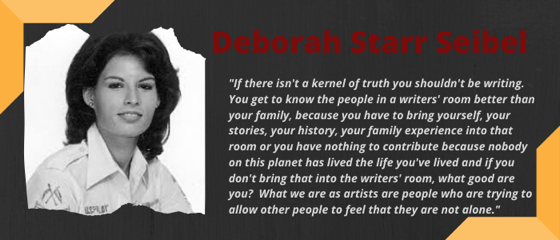
Deborah Starr Seibel is a multiple award-winning journalist and screenwriter. For the past eight years, she has been an instructor at USC’s School of Cinematic Arts in the John Wells Division of Writing for Film & Television. In addition, she serves as a mentor for Stephens College’s MFA in Screenwriting program. In prime time television, Deborah recently sold two pilots to CBS and is credited with four years on staff. During those years, she wrote six episodes for the final season of NBC’s Sisters and spent three additional years on the staff of Promised Land, the spin-off to CBS’s Touched By An Angel. She has also written episodes for Mysterious Ways and 21 Jump Street.
As a television reporter, Deborah won a George Foster Peabody award for investigative journalism, two Emmy Awards and First Place from the Associated Press for one of her documentaries. As a print journalist, she has written for the New York Times, Los Angeles Times, Chicago Tribune, Parade and USA Today. In addition, she is a long-time national correspondent for TV Guide.
In 2010, Deborah was awarded a USC Annenberg Fellowship to receive her Master’s Degree in Specialized Journalism/The Arts.
“If there isn’t a kernel of truth you shouldn’t be writing. You get to know the people in a writers’ room better than your family, because you have to bring yourself, your stories, your history, your family experience into that room or you have nothing to contribute because nobody on this planet has lived the life you’ve lived and if you don’t bring that into the writers’ room, what good are you? What we are as artists are people who are trying to allow other people to feel that they are not alone.”” Deborah Starr Seibel
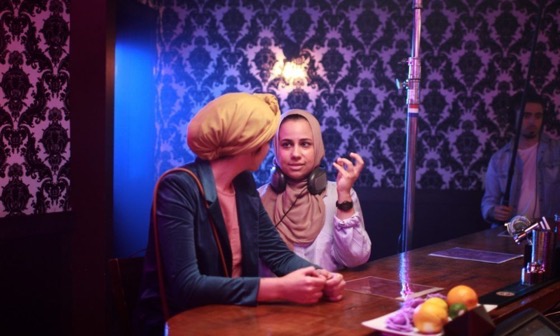
Stephens College MFA in TV and Screenwriting alum Sahar Jahani recently sat for an interview with Voyage LA magazine. Check it out and join our fall 2020 cohort to put yourself on the road to your screenwriting future.
Sahar, can you briefly walk us through your story – how you started and how you got to where you are today. I am first generation Iranian-American and come from a Muslim family, so it took me a while to realize that this career was even a possibility. If you can’t see it, it’s hard to believe you can also do it. By that, I mean that I didn’t know any other Muslims or Iranians who worked in Hollywood even though I grew up twenty minutes from all the studios. I remember driving by the Disney Animation building on the 134 freeway on my way to school every day and just think it was the coolest place in the world. But for me, it felt unattainable.
Ten years later, I’m having meetings there all the time. I was always interested in storytelling from a young age. My sister and I would put on plays for my family and I developed an interest in photography in high school, but I never considered film as a career until I was in college. I had planned to become a journalist because that was the closest thing to film that I could consider a tangible career. But when I started school at UC Irvine and began interning at different newspapers, I realized how much journalism was changing in an era of digital media.
Months of research went into the creation of the essays in “When Women Wrote Hollywood.” Here are some of the resources used to enlighten today’s film lovers to the female pioneers who helped create it.
This site is an extension of the research for The Algonquin Round Table New York: A Historical Guide by Kevin C. Fitzpatrick, foreword by Anthony Melchiorri. Published by Lyons Press, Hardcover, Dec. 2014, ISBN: 978-1-4930-0757-8.
“That is the thing about New York,” wrote Dorothy Parker in 1928. “It is always a little more than you had hoped for. Each day, there, is so definitely a new day.”
Now you can journey back there, in time, to a grand city teeming with hidden bars, luxurious theaters, and dazzling skyscrapers.
* A portion of each sale from Amazon.com directly supports our blogs
** Many of these books may be available from your local library. Check it out!
† Available from the LA Public Library
![05 Do You Know Who Wrote Your Favorite Films? from Why Researching Screenwriters (has Always) Mattered [Video] (51 seconds)](https://rosannewelch.com/wp-content/uploads/2020/04/rmw-sao-paolo-05.jpeg)
![04 Writers Matter. Women Writers Matter from Why Researching Screenwriters (has Always) Mattered [Video] (1 minute 5 seconds)](https://rosannewelch.com/wp-content/uploads/2020/04/rmw-sao-paolo-04.jpeg)


![03 About Stephens College MFA from Why Researching Screenwriters (has Always) Mattered [Video] (34 seconds)](https://rosannewelch.com/wp-content/uploads/2020/03/rmw-sao-paolo-03.jpeg)