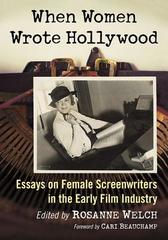
Months of research went into the creation of the essays in “When Women Wrote Hollywood.” Here are some of the resources used to enlighten today’s film lovers to the female pioneers who helped create it.
* A portion of each sale from Amazon.com directly supports our blogs
** Many of these books may be available from your local library. Check it out!
† Available from the LA Public Library
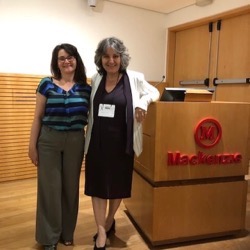
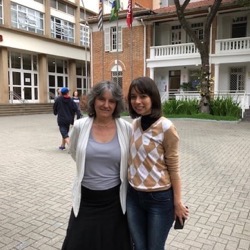
I gave the opening lecture entitled, “Why Researching Screenwriters (has Always) Mattered” which appears here in English, though the rest of the papers (naturally) are in Portuguese. It was an honor to be asked to do the lecture and privilege to spend time with Professor Glaucia Davino and her students who made me feel very welcome in their city.
Words matter. Writers matter and women writers matter in this world. It is important to consider writers because the word writer comes before the word director when you describe a filmmaker who can do two things. They are writer-directors, they are not director-writers. That tells us something. The vision of a movie cannot exist without the screenplay. A director cannot direct nothing. There must be an idea. There must be a philosophy. There must be a theme. There must be a story. This proves that the writer is of equal importance. We must remember writers have to be equal partners and I think we realize that without realizing it. When people talk about movies to their friends they don’t say “I loved the camera angle in scene 7.” They quote dialogue from their favorite movies whether they are from a Pixar film or a Disney one, they quote the dialogue and that is the work of the writer. That’s the person who should be given credit, yet often at the start a class I ask students to list their two or three favorite films, who directed those films and who wrote that film. They very often cannot name the person who wrote the film they claim to adore. How can you study to be a writer if you don’t remember writers yourself? Hence the reason to study Screenwriting. Hence researching screenwriters has always mattered.
When actors Frances McDormand won her Oscar for Three Billboards Outside Ebbing Missouri she said of the screenwriter Martin McDonagh, “He did not sketch a blueprint. That’s an insult to a screenplay. He didn’t string together a few words. He wrote, meticulously crafted, a tsunami, and then he allowed his troupe of actors to surf it into the shore.” (https://www.hollywoodreporter.com/news/sag-awards-three-billboards-takes-top-honors-at-a-show-women-took-center-stage-1076726) She credited the writer in a way that many people do not.
Stories – and therefore screenplays and therefore screenwriters — are important because they transmit culture around the world. The United States has had a corner on that market for far too many years but now we’re beginning to see other stories permeate our culture, a good and beneficial thing for a country made of immigrants and the ancestors of immigrants. Stories have always transmitted culture far back to the cave paintings of many ancient cultures, through Gilgamesh, and the griots of Africa. Humans have used stories to move culture forward. Movies are the most current version of doing that so why do we forget to study the storytellers? Now is the time to fix this glaring omission both in casual discussions of films and in academia.
Months of research went into the creation of the essays in “When Women Wrote Hollywood.” Here are some of the resources used to enlighten today’s film lovers to the female pioneers who helped create it.
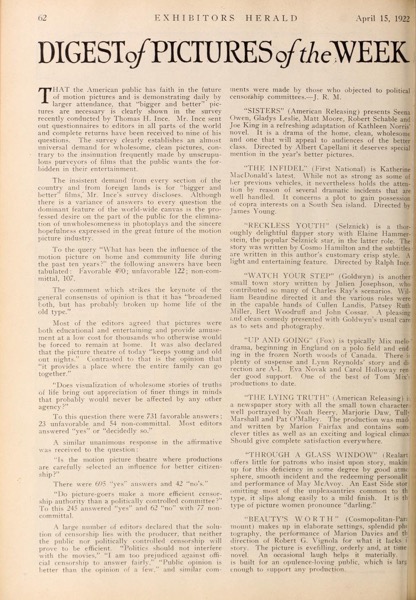
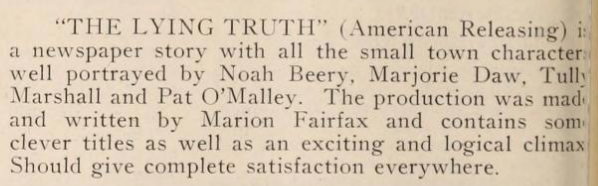
“Frederica Sagor Maas, a pioneering female screenwriter who scored her first big success with The Plastic Age, a smash hit for ‘It Girl’ Clara Bow in 1925, died Jan 5.” She was 111. Mike Barnes in the Hollywood Reporter: “Because she was a woman, Maas was typically assigned work on flapper comedies and light dramas. Her efforts includes such other Bow films as Dance Madness (1926), Hula (1927) and Red Hair (1928); two films featuring Norma Shearer, His Secretary (1925) and The Waning Sex (1926); the Greta Garbo drama Flesh and the Devil (1926); and the Louise Brooks film Rolled Stockings (1927)…. In 1927, she married Ernest Maas, a producer at Fox, and they wrote as a team but struggled to sell scripts…. The pair, interrogated by the FBI for allegedly Communist activities, were out of the business by the early 1950s. Ernest Mass died in 1986 at age 94. In 1999, at the urging of film historian Kevin Brownlow, Maas published her autobiography, The Shocking Miss Pilgrim: A Writer in Early Hollywood. She was 99 at the time.”
* A portion of each sale from Amazon.com directly supports our blogs
** Many of these books may be available from your local library. Check it out!
† Available from the LA Public Library
Months of research went into the creation of the essays in “When Women Wrote Hollywood.” Here are some of the resources used to enlighten today’s film lovers to the female pioneers who helped create it.
John Meredyth Lucas, son of silent screen star and screenwriter Bess Meredyth (Ben-Hur, The Sea Beast, When a Man Loves, Don Juan) and stepson of renowned Hungarian-born director Michael Curtiz (Casablanca, Mildred Pierce, Yankee Doodle Dandy, Life with Father), came of age in Hollywood during the 1930s. Lucas went on to an impressive career of his own as a writer-producer-director. He made films with Hal Wallis, Ross Hunter, Walt Disney, and others, and he wrote, produced, and directed such classic television series as Mannix, The Fugitive and Star Trek. Completed shortly before his death in 2002, Lucas memoir is filled with never-before-told recollections of many Hollywood greats and features previously unpublished photographs. With Lucas, we go behind the scenes, onto the studio lots and into the parties with family friends John Barrymore, Joan Crawford, Errol Flynn and Jack Warner, to name just a few. Its a boys-eye-view of Hollywood in a time of glamour, decadence, and the golden years of filmmaking. — Amazon
* A portion of each sale from Amazon.com directly supports our blogs
** Many of these books may be available from your local library. Check it out!
† Available from the LA Public Library
Months of research went into the creation of the essays in “When Women Wrote Hollywood.” Here are some of the resources used to enlighten today’s film lovers to the female pioneers who helped create it.
“So tomorrow we will be in England bright and early. And I really feel quite thrilled because Mr. Eisman sent one a cable this morning, as he does every morning, and he says to take advantage of everybody we meet as traveling is the highest form of education.” Lorelei Lee in Gentlemen Prefer Blondes)
What makes Lorelei Lee from Anita Loos’s novel Gentlemen Prefer Blondes (Gm) on appealing is her ability to manipulate her own image and effectively become miswess of her own grand confidence game. Throughout the novel, it is clear that Lorelei is aware of herself as an image, and she constantly adjusts this image whew “take advantage. of the situation aromd her. In effect, she is smaner than she looks, and she uses this to her rhetorkal (and financial) ad-vantage. Recently. Christina Britzolakis has questioned the viability of reading the”ferninine spectacle” as a particularly feminist undertaking? Although Brit-zolakis is right to point to the patriarchal underpinnings that inform the male gaze,’ argue that the rhetorical construction of the wise-cracIdng, self-reflexive blonde often enacts a critique on the system of commodification and ob-jectification that she appears to uphold, thus meriting more critical and schol-arly attention.’ More specifically, tlotestigste the parallel rhetorical strategies in Anita Loos’s novel Gentlemen Prefer Blondes and Angela Carter’s Nights at Me Circus to reveal the self-reflexive and ultimately subversive nature oft de-liberately constructed blonde spectacle.’ In contrast, the main character in Dorothy Parker’s then story “Big Blonde.. Hazel Motes. is not in control of her own narrative and thus her “performance” as a blonde has disastrous re-sultn a brief analysis of Parker’s use of the blonde spectacle will provide a use-fid contrast to Loos’s Lorelei Lee and Carter’s main character, Sophie Fevvers. Loos and Carter draw our Mention to the image ofblonde beauty as a valuable
* A portion of each sale from Amazon.com directly supports our blogs
** Many of these books may be available from your local library. Check it out!
† Available from the LA Public Library
For a few years running my colleague Warren Lewis has asked me to be a panelist for the semi-annual Film Spark event for ASU (Arizona State University) discussing pitching on a panel and then listening and giving notes to students during an afternoon pitchathon.
This year, due to our sheltering at home during the virus the event used Zoom so for the first time they recorded the hour long panel – and here it is.
We were each asked to give advice based on the stories of our best and worst pitches, which provided a few good laughs and hopefully a lot of good advice.
Months of research went into the creation of the essays in “When Women Wrote Hollywood.” Here are some of the resources used to enlighten today’s film lovers to the female pioneers who helped create it.
In Of With Their Heads! A Serio-Comic Tale of Hollywood, scenarist Frances Marion speaks of her attempts to secures writing job in Hollywood ma reputable salary, particularly of her encounter with Fox who couldn’t understand why she would want to write. “Listen, cuteness, don’t try to be a foolish somebody. Nobody cares nothing about female writer,” She kept pestering him until he offered her a job as a staff writer for $80 a week. She then went across town to William A. Brady’s office at World Film Company and pushed her way in at $200 a week stating in her autobiography, “it’s about time the writers got on the gravy train.. It was the teens, the early days of scenario writing in Hollywood. Anita Loos was a staff writer at Biograph where she was paid by the story, eventually earning $200 a piece. Gene Gunder was acting and writing scenarios for Kalem, then her own company, Gene Gauntier Feature Film Company, and eventually Universal. Jeanie Macpherson was beginning along and prolific partnership with director Cecil B. DeMille. Grace Cunard was taming out and acting in action-packed serials at Universal. Arid by the end of the decade, June Mathis, a regular scenarist at Metro, was chief of their script department. Women did not struggle to be a part of the growing industry of scenario writing in its early days, for women dominated the industry, and women like Marion, Loos, Mathis and Macpherson were among the most successful scenarists finale on female) in film history.’
* A portion of each sale from Amazon.com directly supports our blogs
** Many of these books may be available from your local library. Check it out!
† Available from the LA Public Library
This gave us the chance to meet potential students (and a few who had already been accepted) and answer questions about how the program operates.
It’s always fun to engage with people and share our enthusiasm about the Stephens College MFA in TV and Screenwriting – and nowadays part of the fun of Zooming is checking out other folks’ backgrounds whether they are virtual (are they using the TARDIS of the Golden Gate Bridge) or their real office bookshelves. (Hey – I have that same book on my bookshelf!).
If you have any questions that weren’t answered during this Open House, send them directly to me at rwelch@stephens.edu and I’ll be glad to answer them.
Months of research went into the creation of the essays in “When Women Wrote Hollywood.” Here are some of the resources used to enlighten today’s film lovers to the female pioneers who helped create it.
“At eighteen I must have been regarded as a woman, writes the author in this colorful memoir, for I was one of the first women reporters, maybe as an all-around police beat, sports, sin and society reporter the first in the world.” “Although she chose what was considered a man’s career, she never forgot that she was a woman, and in her recollections, she also finds time to discuss her youghful flirtations, her bittersweet marriage to Ike St. Johns, a profound love affair, her difficulties with being simultaneously a wife, mother and coreer woman, as well as more serious personal problems. The result is a blockbuster of a story which catches the reader up in its drama and excitement and involves him in a personal confrontation with the events.” — Amazon
* A portion of each sale from Amazon.com directly supports our blogs
** Many of these books may be available from your local library. Check it out!
† Available from the LA Public Library

 †
†





![Watch Now: Creative Career Kickstart: Catching and Pitching Panel – ASU Film Spark Program [Video] (1 hour 15 minutes)](https://rosannewelch.com/wp-content/uploads/2020/05/asu-film-spark-logo.png)
![Creative Career Kickstart: Catching and Pitching Panel - ASU Film Spark Program [Video] (1 hour 15 minutes)](https://rosannewelch.com/wp-content/uploads/2020/05/asu-fim-spark.png)

![Learn More About the Stephens College MFA in TV and Screenwriting with this Open House Session [Video]](https://rosannewelch.com/wp-content/uploads/2020/05/mfa-open-house.jpg)

