Rosanne Hosting Screenwriting Discussion at The Athena TV Lab

Athena film festival logo

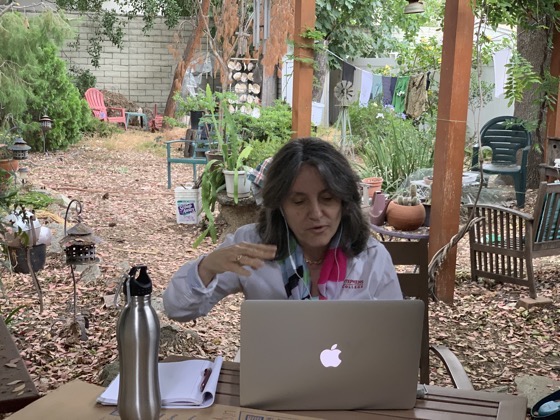
Rosanne Hosting Screenwriting Discussion at The Athena TV Lab Via Zoom

Rosanne Hosting Screenwriting Discussion at The Athena TV Lab Via Zoom

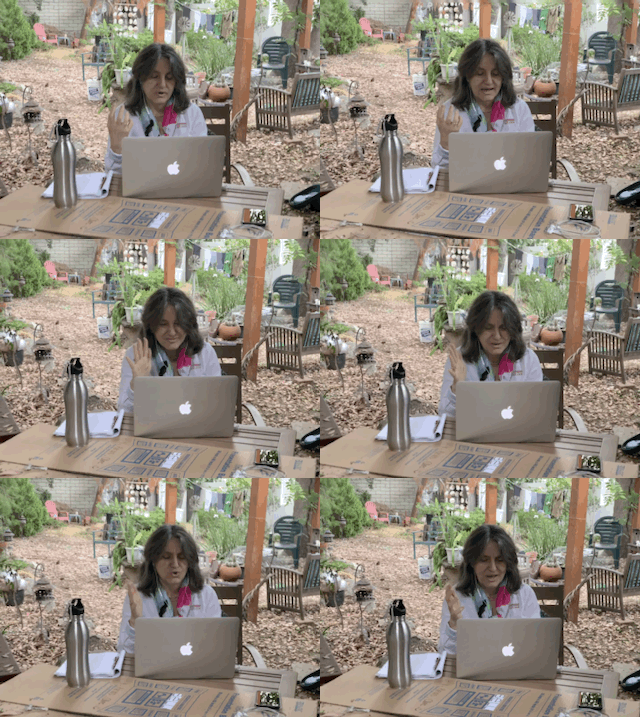
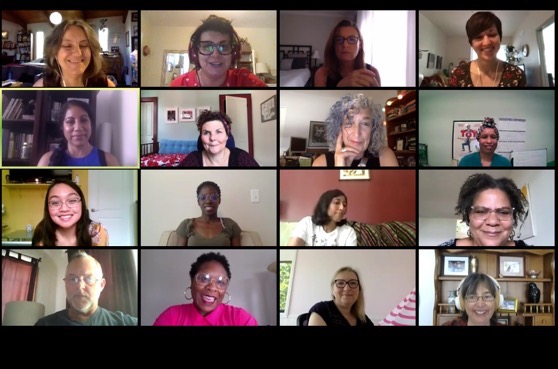
Many thanks to the many great MFA mentors who are doing double duty as mentors to this year’s Athena TV Lab. You can find them on the last two lines of this (now familiar) Zoom grid (starting on the 3rd tier/4th spot): Dawn Comer Jefferson, Jon Vandergriff, Rashaan Dozier-Escalante (also alumna of the MFA Class of 2018), Amy Straus, and Laura Brennan. And there are 2 MFA alums here, too (Sydney Haven and Pam Winfrey).

The Athena Film Festival Virtual Writers Lab

The Athena Film Festival at Barnard College Virtual Writers Lab is for emerging women writers who have not had a feature-length narrative script produced within the past 10 years. Writers must submit a screenplay that includes a woman or women characters in a leadership role or position at the center of the story. Scripts must be feature-length narratives (between 80 and 120 pages).

The Athena Film Festival at Barnard College Virtual Writers Lab provides women identified storytellers with training, skills, and a robust supportive network. Participants will have several one-on-one mentoring sessions with experienced screenwriters as well as peer-to-peer and group sessions.

The Athena Film Festival at Barnard College Virtual Writers Lab will also include industry events where participants will learn about how to navigate the industry as well as a keynote conversation from an established filmmaker. Past panels have included: The Fluidity of Writing, How Does Representation Work, and The Art of Pitching and past keynotes have come from Gina Prince-Bythewood and Kat Candler.

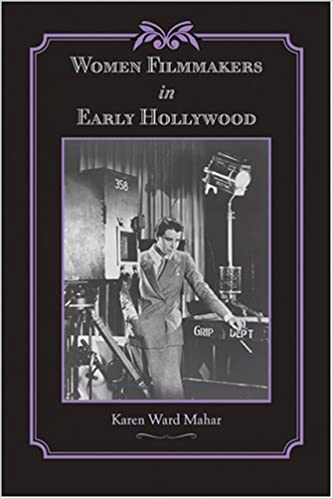
From The “When Women Wrote Hollywood Archives 34: Women Filmmakers in Early Hollywood by Karen Ward Mahar

Months of research went into the creation of the essays in “When Women Wrote Hollywood.” Here are some of the resources used to enlighten today’s film lovers to the female pioneers who helped create it.

From The “When Women Wrote Hollywood Archives 34: Women Filmmakers in Early Hollywood by Karen Ward Mahar

From The


Women Filmmakers in Early Hollywood explores when, how, and why women were accepted as filmmakers in the 1910s and why, by the 1920s, those opportunities had disappeared. In looking at the early film industry as an industry―a place of work―Mahar not only unravels the mystery of the disappearing female filmmaker but untangles the complicated relationship among gender, work culture, and business within modern industrial organizations.

In the early 1910s, the film industry followed a theatrical model, fostering an egalitarian work culture in which everyone―male and female―helped behind the scenes in a variety of jobs. In this culture women thrived in powerful, creative roles, especially as writers, directors, and producers. By the end of that decade, however, mushrooming star salaries and skyrocketing movie budgets prompted the creation of the studio system. As the movie industry remade itself in the image of a modern American business, the masculinization of filmmaking took root.

Mahar’s study integrates feminist methodologies of examining the gendering of work with thorough historical scholarship of American industry and business culture. Tracing the transformation of the film industry into a legitimate “big business” of the 1920s, and explaining the fate of the female filmmaker during the silent era, Mahar demonstrates how industrial growth and change can unexpectedly open―and close―opportunities for women. — Amazon


Buy “When Women Wrote Hollywood” Today!


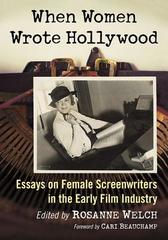
When Women Wrote Hollywood: Essays on Female Screenwriters in the Early Film Industry

Paperback Edition | Kindle Edition | Google Play Edition

Help Support Local Bookstores — Buy at Bookshop.org

* A portion of each sale from Amazon.com directly supports our blogs
** Many of these books may be available from your local library. Check it out!
† Available from the LA Public Library

Screenwriter Jennifer Maisel from The March Sisters at Christmas, and Tempting Fate from the How I Wrote That Podcast [Audio]

Listen to the latest How I Wrote That Podcast with Tera Hernandez of The Big Bang Theory [Audio]

Screenwriter Jennifer Maisel from The March Sisters at Christmas, and Tempting Fate [Audio]

Subscribe to the Podcast with iTunes | TuneIn

Listen to this episode

Jennifer Maisel most recently developed an original pilot called “The 626” with Super Deluxe and adapted two Jane Green novels—Tempting Fate and To Have and to Hold, which aired in June. She currently is working on a two-hour about campus rape and institutional betrayal with Just Singer Entertainment. Her screenplay “Lost Boy” was filmed starring Virginia Madsen. She wrote The Assault and The March Sisters for Mar Vista Entertainment and Double Wedding for Jaffe Braunstein. She has written movies for NBC, ABC, MTV and Lifetime, was a staff writer on the television series Related, wrote a pilot for ABC Family and an animated feature for Disney. Maisel has developed original pilots with Bunim-Murray, Ineffable, Stun Media and MomentumTV and co-created the critically acclaimed web series Faux Baby with Laura Brennan and Rachel Leventhal. The screenplay adaptation of her play The Last Seder won Showtime’s Tony Cox Screenwriting Award, meriting her a month’s stay in a haunted farmhouse at the Nantucket Screenwriter’s Colony. A graduate of Cornell University and NYU’s Dramatic Writing program, Maisel is also an award-winning playwright whose Eight Nights will premiere at Antaeus Theatre in October 2019; the play is currently part of a nationwide event called 8 Nights of Eight Nights, raising funds and awareness for HIAS. She has taught playwriting at University of Southern California and guest-lectured around the country.

On adapting novels “I like the puzzle of taking something that’s epic, novels are epic, even not great novels are epic, and you have to figure out how to find the essential spine to it and give shape to it as a writer.” — Jennifer Maisel

Presented by Stephens College MFA in TV and Screenwriting


Visit the Stephens College MFA in TV and Screenwriting for more information.

Follow @StephensMFA on Instagram

Follow and Like the Stephens College MFA in TV and Screenwriting

#MentorMonday 8 - Dawn Comer Jefferson - Stephens College MFA in TV and Screenwriting

From The “When Women Wrote Hollywood Archives 33: Blood and Sand. Wr: June Mathis, Dir: Fred Fred Niblo, Paramount Pictures, 1922, USA 80 mins.

Months of research went into the creation of the essays in “When Women Wrote Hollywood.” Here are some of the resources used to enlighten today’s film lovers to the female pioneers who helped create it.

From The “When Women Wrote Hollywood Archives 33: Blood and Sand. Wr: June Mathis, Dir: Fred Fred Niblo, Paramount Pictures, 1922, USA 80 mins.

From The

Juan Gallardo (Valentino), a village boy born into poverty, grows up to become one of the greatest matadors in Spain. He marries a friend from his childhood, the beautiful and virtuous Carmen (Lee), but after he achieves fame and fortune he finds himself drawn to Doña Sol (Naldi), a wealthy, seductive widow.

They embark on a torrid affair with sadomasochistic overtones, but Juan, feeling guilty over his betrayal of Carmen, tries to free himself of Doña Sol. Furious at being rejected, she exposes their affair to Carmen and Juan’s mother, seemingly destroying his marriage. Growing more and more miserable and dissipated, Juan becomes reckless in the arena. He is eventually killed in a bullfight but does manage to reconcile with Carmen moments before he dies.

There is also a subplot involving a local outlaw whose career is paralleled to Juan’s throughout the film by the village philosopher: Juan’s fatal injury in the bullring comes moments after the outlaw is shot by the police. — Wikipedia


Buy “When Women Wrote Hollywood” Today!


When Women Wrote Hollywood: Essays on Female Screenwriters in the Early Film Industry

Paperback Edition | Kindle Edition | Google Play Edition

Help Support Local Bookstores — Buy at Bookshop.org

* A portion of each sale from Amazon.com directly supports our blogs
** Many of these books may be available from your local library. Check it out!
† Available from the LA Public Library

From The “When Women Wrote Hollywood Archives 33: “Elinor Glyn.”, Denise Cummings , Women Film Pioneers Project. Columbia University

Months of research went into the creation of the essays in “When Women Wrote Hollywood.” Here are some of the resources used to enlighten today’s film lovers to the female pioneers who helped create it.

From The “When Women Wrote Hollywood Archives 33: “Elinor Glyn.”, Denise Cummings , Women Film Pioneers Project. Columbia University

From The

From The

Perhaps most remembered in the United States for her best-selling 1907 novel of exotic sensuality Three Weeks and her brainchild “It,” that enigmatic characteristic embodied in actress Clara Bow and dramatized in the silent motion picture It (1927), English-born journalist, novelist, screenwriter, and actress Elinor Glyn, born Elinor Sutherland, embarked on her American career in 1920 during her second visit to the United States. In October of 1907, at forty-two, Glyn, traveling as Elinor Glyn, the authoress of romantic fiction, boarded the Lusitania and set sail for New York on her first American tour in order to promote Three Weeks. According to her British biographer, Joan Hardwick, “the reception of Three Weeks in the States had renewed [Glyn’s] confidence and she decided to try her hand at dramatizing it” (133). Before that version materialized, however, Glyn returned to England, but only after lengthening her stay with a journey by rail through the American West to California. Her 1907 tour of the United States and her introduction to American culture and way of life may very well have laid the fertile groundwork for her 1920 return and subsequent work as writer, director, producer, and actress in Hollywood.

Read More


Buy “When Women Wrote Hollywood” Today!


When Women Wrote Hollywood: Essays on Female Screenwriters in the Early Film Industry

Paperback Edition | Kindle Edition | Google Play Edition

Help Support Local Bookstores — Buy at Bookshop.org

* A portion of each sale from Amazon.com directly supports our blogs
** Many of these books may be available from your local library. Check it out!
† Available from the LA Public Library
Rosanne is part of a virtual Bucharest Symposium in Screenwriting and Literature

I spent a lovely and engaging morning in the company of several international screenwriting academics discussing teaching online thanks to being invited to this virtual Bucharest Symposium in Screenwriting and Literature by Tudor Voican, PhD, WallachiaIFF Jury President.

Rosanne is part of a virtual Bucharest Symposium in Screenwriting and Literature

Bucharest

The invitation arrived in my email inbox and almost looked like a fake – until I saw the names of the other participants and knew them to be pretty stellar in their fields. So I said yes.  We’ll meet online each Sunday for 3 Sundays to make 20 minute presentations to each other and share our knowledge.  

Though I would have loved to actually fly to what Tudor calls “the legendary land of Principe Vlad III Drăculea aka Vlad the Impaler, Voivode of Wallachia” but for now I am outside on the patio using our built-in Zoom background.

From The “When Women Wrote Hollywood Archives 32: The Writers: A History of American Screenwriters and Their Guild by Miranda J Banks

Months of research went into the creation of the essays in “When Women Wrote Hollywood.” Here are some of the resources used to enlighten today’s film lovers to the female pioneers who helped create it.

From The “When Women Wrote Hollywood Archives 32: The Writers: A History of American Screenwriters and Their Guild by Miranda J Banks

From The

Screenwriters are storytellers and dream builders. They forge new worlds and beings, bringing them to life through storylines and idiosyncratic details. Yet up until now, no one has told the story of these creative and indispensable artists. The Writers is the only comprehensive qualitative analysis of the history of writers and writing in the film, television, and streaming media industries in America.

Featuring in-depth interviews with over fifty writers–including Mel Brooks, Norman Lear, Carl Reiner, and Frank Pierson–The Writers delivers a compelling, behind-the-scenes look at the role and rights of writers in Hollywood and New York over the past century. Granted unprecedented access to the archives of the Writers Guild Foundation, Miranda J. Banks also mines over 100 never-before-published oral histories with legends such as Nora Ephron and Ring Lardner Jr., whose insight and humor provide a window onto the enduring priorities, policies, and practices of the Writers Guild.

With an ear for the language of storytellers, Banks deftly analyzes watershed moments in the industry: the advent of sound, World War II, the blacklist, ascension of television, the American New Wave, the rise and fall of VHS and DVD, and the boom of streaming media. The Writers spans historical and contemporary moments, and draws upon American cultural history, film and television scholarship and the passionate politics of labor and management. Published on the sixtieth anniversary of the formation of the Writers Guild of America, this book tells the story of the triumphs and struggles of these vociferous and contentious hero-makers.


Buy “When Women Wrote Hollywood” Today!


When Women Wrote Hollywood: Essays on Female Screenwriters in the Early Film Industry

Paperback Edition | Kindle Edition | Google Play Edition

Help Support Local Bookstores — Buy at Bookshop.org

* A portion of each sale from Amazon.com directly supports our blogs
** Many of these books may be available from your local library. Check it out!
† Available from the LA Public Library

Listen to the latest “How I Wrote That” Podcast with Screenwriter Laura Brennan from Most Likely to Die, and Faux Baby. [Audio]

Listen to the latest How I Wrote That Podcast with Tera Hernandez of The Big Bang Theory [Audio]

Listen to the latest

Subscribe to the Podcast with iTunes | TuneIn

Listen to this episode

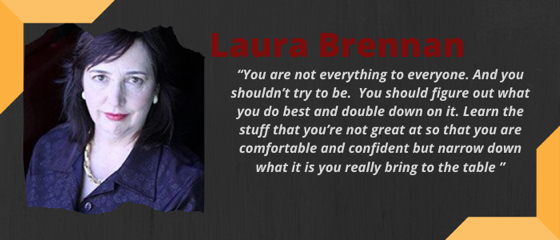
Laura Brennan’s eclectic writing career includes television, film, theater, web series, fiction and news. Behind the scenes, she has helped production companies develop movies, TV pilots and limited series. She has taught pitching workshops to executives at Netflix and Film Victoria, as well as MFA programs and undergraduate classes at universities including Stephens College, University of California, Los Angeles, University of Southern California, Boston University and National University.A graduate of Yale University, Brennan has won awards for journalism, television writing and fiction. Her children’s book, Nana Speaks Nanese, tackles the confusing changes brought on by dementia in a reassuring and straightforward way. She hopes it will help families facing a diagnosis of dementia open up a conversation with their young children. Her web series Faux Baby is also for parents, but it is definitely not for children—or even safe for work.

“You are not everything to everyone. And you shouldn’t try to be.  You should figure out what you do best and double down on it. Learn the stuff that you’re not great at so that you are comfortable and confident but narrow down what it is you really bring to the table ” -Laura Brennan

Presented by Stephens College MFA in TV and Screenwriting


Visit the Stephens College MFA in TV and Screenwriting for more information.

Follow @StephensMFA on Instagram

Follow and Like the Stephens College MFA in TV and Screenwriting

#MentorMonday 8 - Dawn Comer Jefferson - Stephens College MFA in TV and Screenwriting

2020 Jan Marino Scholarship to Stephens MFA in TV and Screenwriting Announced at SeriesFest [Video]

2020 Jan Marino Scholarship to Stephens MFA in TV and Screenwriting Announced at SeriesFest [Video]

It was a pleasure to take part in announcing our Class of 2022 Jan Marino Scholarship winner at this year’s (online of course) SeriesFest.

Betsy Leighton, the founder of the scholarship, and I each recorded short videos to be played before one of the major panels of the festival.

I wanted to share the videos here so everyone can join me in welcoming Jen Bosworth-Ramirez to the Stephens College MFA in TV and Screenwriting.

Stephens College MFA in TV and Screenwriting Alumna Sarah Phillips Batchelder (Class of 2017) in Drama Series Comeptition at SeriesFest

SeriesFest 2020

From The “When Women Wrote Hollywood Archives 31: Marion Fairfax, Exhibitors Herald, 17 April 1922.

Months of research went into the creation of the essays in “When Women Wrote Hollywood.” Here are some of the resources used to enlighten today’s film lovers to the female pioneers who helped create it.

From The “When Women Wrote Hollywood Archives 31: Marion Fairfax, Exhibitor’s Herald. Exhibitors Herald, 15 April 1922.

From The

From The

From The


Buy “When Women Wrote Hollywood” Today!


When Women Wrote Hollywood: Essays on Female Screenwriters in the Early Film Industry

Paperback Edition | Kindle Edition | Google Play Edition

Help Support Local Bookstores — Buy at Bookshop.org

* A portion of each sale from Amazon.com directly supports our blogs
** Many of these books may be available from your local library. Check it out!
† Available from the LA Public Library