What’s interesting about this video game trailer (is first of all that they have trailers for video games!) but that at the 5:36 mark they begin giving the credits for all the relatively big name actors in this – including Guillermo del Toro and (for me) Lindsay Wagner (the original Bionic Woman) which shows how this new-ish art form is following the path of films – which originally did not name their actors until they realized actors bring in audience.
Also, that the branding of the creator “Kojima Productions”. The parallels between these arts-turned-businesses are so interesting. — Rosanne
Seeing the public show such an interest in reading the scripts of their favorite tv shows and films is right in line with the goal of the History of Screenwriting courses in our Stephens College MFA in TV and Screenwriting program.
People are finally recognizing the work of writers and appreciating how their favorite stories took shape on the page long before they were cast, or filmed, or edited. Screenwriting Rocks! Join us to learn how to write the great American screenplay! — Rosanne
For decades they were bought only by drama students, who would anxiously pore over well-thumbed copies trying to memorise audition monologues, and by aspiring screenwriters hoping to learn their craft.
Scripts and screenplays did not sell in huge numbers to the public – until now. Readers are increasingly keen to buy the texts of their favourite films and plays, and some cultural blockbusters are leaving bestselling novels in the dust.
Fleabag: The Scriptures, the collected screenplays of the two seasons of the hit television series spawned by Phoebe Waller-Bridge’s one-woman stage play, will be published in November. Sceptre bought the scripts in an eight-way auction, reportedly for £500,000.
Wherever you go, you find Monkees fans and the Denver Popular Culture Con was no different. Amid rooms full of caped crusaders and cosplay creations, I was initially not sure how many folks would attend a talk on a TV show from the 1960s – but happily I was met by a nice, engaged audience for my talk on Why the Monkees Matter – and afterward they bought books! What more could an author ask for?
Transcript
Down in the right corner is Peter Meyerson. Clearly from his photograph truly on the hippie train back in the day — had a very interesting life and ended up married to one of Michael Nesmith’s early girlfriends later in life — like his third wife was Nesmith’s first girlfriend or some silly thing like that. Gentlemen the middle is Bernie Ornstein. He was a writer of more mainstream work and had a lot to say about what The Monkees were about, Dave Evans, the gentleman who’s smiling. He’s so adorable He’s the nicest man you would ever want to meet and he had written for Bullwinkle before he came to The Monkees and then Treva Silverman is the woman I was speaking of. The first woman to write on television write comedy without a male partner and so she went on to earn two Emmys in her career writing on The Mary Tyler Moore Show. So all these writers had very good histories coming into and then moving out of The Monkees and again people dismissed the show but it really deserves much more attention. She wrote the particular episode of Mary Tyler Moore where Lou Grant’s wife asked for a divorce which was huge in the early 70s and that’s what she got the Emmy for.
A hit television show about a fictitious rock band, The Monkees (1966-1968) earned two Emmys–Outstanding Comedy Series and Outstanding Directorial Acheivement in Comedy.
Capitalizing on the show’s success, the actual band formed by the actors, at their peak, sold more albums than The Beatles and The Rolling Stones combined, and set the stage for other musical TV characters from The Partridge Family to Hannah Montana. In the late 1980s, the Monkees began a series of reunion tours that continued into their 50th anniversary.
This book tells the story of The Monkees and how the show changed television, introducing a new generation to the fourth-wall-breaking slapstick created by Laurel and Hardy and the Marx Brothers.
Its creators contributed to the innovative film and television of 1970s with projects like Bob & Carol & Ted & Alice, The Mary Tyler Moore Show, Laugh-In and Welcome Back, Kotter. Immense profits from the show, its music and its merchandising funded the producers’ move into films such as Head, Easy Riderand Five Easy Pieces.
This lack of female representation at the creative/gatekeeper levels is precisely what the Stephens College MFA in TV and Screenwriting aims to change! More prepared female writers = more prepared female showrunners = more believable female character and stories permeating our lives. — Rosanne
For the 2018-19 season, 96% of TV programs had no women directors of photography; 79% had no women directors; 77% had no women editors; and 77% had no women creators.
As a number of female-fronted TV shows, including “Veep” and “The Marvelous Mrs. Maisel,” vie for Emmys later this month, a study released Wednesday finds that “historic highs” for women in television still leave them vastly underrepresented in key behind-the-scenes roles.
Whether big city or small-town USA, a show’s location can have a powerful impact. We are teaming up with Columbia College Chicago on this special evening to sit down with a panel of TV writers for a discussion about how writing location, whether real or fictional, sets the scene and can shape the motivations of the characters.
Panelists:
Ayanna Floyd – Writer, Executive Producer, The Chi
Anthony Sparks – Writer, Executive Producer, Queen Sugar
Stay tuned for more panelist announcements!
Moderated by Dr. Rosanne Welch.
Doors open at 7pm. Event starts at 7:30pm.
All events advertised on our Events page are open to anyone who wants to buy a ticket—not just WGA members!
In the case the event is sold out, we will have a first come, first serve stand-by line at the event. The stand-by line does not guarantee entry into the event and we will only accept credit card transactions for any released seats.
Proceeds benefit the Foundation’s library, archive and other outreach programs.
Wherever you go, you find Monkees fans and the Denver Popular Culture Con was no different. Amid rooms full of caped crusaders and cosplay creations, I was initially not sure how many folks would attend a talk on a TV show from the 1960s – but happily I was met by a nice, engaged audience for my talk on Why the Monkees Matter – and afterward they bought books! What more could an author ask for?
Transcript
I got very involved on this one. I wrote an article for Written By about The Monkees — the writers of The Monkees. I wanted to find out who it is people who had stories to tell and who were telling their philosophy through these four characters right and so that really interested me and these are most of the folks that I got to meet. Obviously when I met them they were in their late 70s and had been around for a while and they have some marvelous stories to tell. Gerald Gardner, the gentleman just to the left of my book picture was actually a script writer and a speech writer for a Robert Kennedy’s Senate campaign in New York. He came to television through a show called That Was The Week That Was, which is kind of the SNL Weekend Update of its time and then he moved to Get Smart and when they started The Monkees the folks in charge were like “We need some cool funny, young men,” and he and his partner showed up. So that’s Gerald Gardner.
A hit television show about a fictitious rock band, The Monkees (1966-1968) earned two Emmys–Outstanding Comedy Series and Outstanding Directorial Acheivement in Comedy.
Capitalizing on the show’s success, the actual band formed by the actors, at their peak, sold more albums than The Beatles and The Rolling Stones combined, and set the stage for other musical TV characters from The Partridge Family to Hannah Montana. In the late 1980s, the Monkees began a series of reunion tours that continued into their 50th anniversary.
This book tells the story of The Monkees and how the show changed television, introducing a new generation to the fourth-wall-breaking slapstick created by Laurel and Hardy and the Marx Brothers.
Its creators contributed to the innovative film and television of 1970s with projects like Bob & Carol & Ted & Alice, The Mary Tyler Moore Show, Laugh-In and Welcome Back, Kotter. Immense profits from the show, its music and its merchandising funded the producers’ move into films such as Head, Easy Riderand Five Easy Pieces.
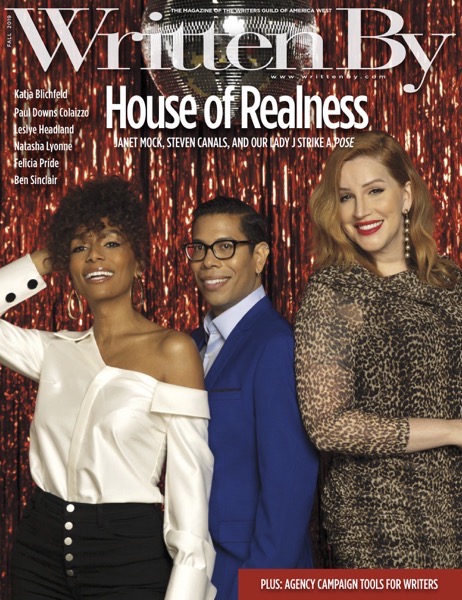
Just on time for your Labor Day Reading! The Fall 2019 issue of Written By magazine, the magazine of the Writers Guild of America, West is now available online.
Stephens College MFA in TV and Screenwriting Executive Director Dr. Rosanne Welch, who serves on the Editorial Board of the magazine (along with program friend Glen Mazzara) is proud of this truly groundbreaking issue: it’s the first issue featuring transgender writers (and on the cover!); entry- or mid-level writers; LGBTQIA writers; female writers; and writers of color in every story.
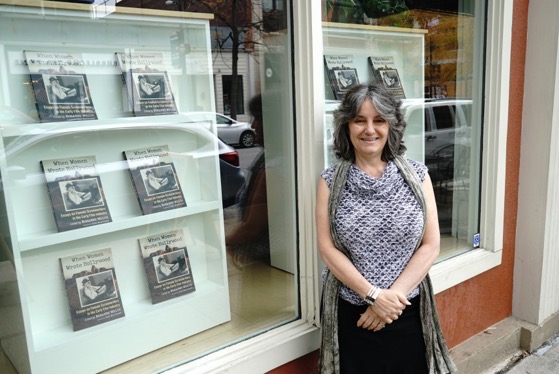
It’s always wonderful to be given another chance to talk about “When Women Wrote Hollywood” – the book of essays on female screenwriters who deserve to be much more famous and spoken of much more often in modern day film history courses.
Women writers are fascinated to know how many women blazed the trail for them and more than happy to help make their names more well known. So this interview with Susan Gil Vardon of the OC Register turned into an hour and a half chat between two new friends. — Rosanne
Rosanne Welch has advice for female students who want to get their screenplays noticed: Speak up.
A lecturer in screenwriting at Cal State Fullerton, Welch says she has seen a pattern — even in her master’s classes. When she asks her students to pitch their scripts, the men start talking while the women sit quietly, as if they’re waiting their turn.
“They’re so polite,” Welch said about the women. “I say, Hollywood will never give you a turn. Open your mouth, overspeak the boy. You gotta be loud and proud of what you do.”
Welch did it. Leaving Cleveland, Ohio, with a degree in secondary education, she worked her way up in television from a job as a receptionist for a production company to writing for the shows “Beverly Hills 90210,” “Picket Fences,” ABC’s “Nightline” and “Touched by an Angel.”
In recent years she has focused on writing books, including several on women whose achievements and legacies have been sidelined or lost to history.
Her latest is “When Women Wrote Hollywood: Essays on Female Screenwriters in the Early Film Industry.” The book, which she edited, features 24 essays her students wrote in a master’s of fine arts class at Stephens College in Missouri on such pioneering women writers as Adela Rogers St. Johns, Anita Loos, Lillian Hellman and Dorothy Parker.
* A portion of each sale from Amazon.com directly supports our blogs ** Many of these books may be available from your local library. Check it out! † Available from the LA Public Library
Tara Hernandez started working on The Big Bang Theory as an assistant to the executive producer in season 4, and became a staff writer in the middle of season 5. From there she rose in the ranks to be a co-executive producer, helping to craft the series finale before moving to work on the show’s spin-off Young Sheldon.
The key to pitching sitcoms – there’s the event and then there’s the story. The event is the thing that happens but the story is her emotional realization that comes from the event… So for my first story that sold on Big Bang Theory was about the time Bernadette was getting married and Amy was going overboard so the girls decide to go dress shopping without Amy. That was the event that happened and then, because she was so devastated, Sheldon had to step up as a boyfriend and comfort her and it lead to their first cuddle. – Tara Hernandez