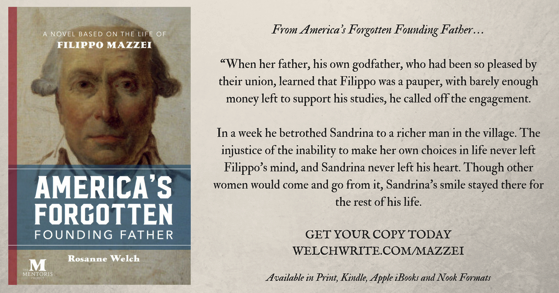
“When her father, his own godfather, who had been so pleased by their union, learned that Filippo was a pauper, with barely enough money left to support his studies, he called off the engagement.
In a week he betrothed Sandrina to a richer man in the village. The injustice of the inability to make her own choices in life never left Filippo’s mind, and Sandrina never left his heart. Though other women would come and go from it, Sandrina’s smile stayed there for the rest of his life.”
For her 5th Doctor Who lecture to the CPP community, Dr. Rosanne Welch discusses how society – and the show’s writing staff – prepared the audience for a major change in this 50-year franchise – the creation of the first Lady Doctor!
Transcript:
So this was their invention, and I think it’s important to recognize that from the very beginning barbara is not a housewife
She’s not passive. She’s not boring
She’s a teacher who is very excited about these adventures she chooses to go on them
And she learns along the way she often lectures the doctor the older man
About how he should be behaving in the other worlds that they visit so we started with a strong woman. Let’s just remember that
Dr. Rosanne Welch teaches the History of Screenwriting and One-Hour Drama for the Stephens College MFA in Screenwriting.
Writing/producing credits include Beverly Hills 90210, Picket Fences, ABCNEWS: Nightline and Touched by an Angel. In 2016 she published the book Why The Monkees Matter: Teenagers, Television and American Pop; co-edited Women in American History: A Social, Political, and Cultural Encyclopedia; and placed “Transmitting Culture Transnationally Via the Characterization of Parents in Police Procedurals” in the New Review of Film and Television Studies. Essays appear in Torchwood Declassified: Investigating Mainstream Cult Television and Doctor Who and Race: An Anthology. Welch serves as Book Reviews editor for Journal of Screenwriting and on the Editorial Advisory Board for Written By magazine, the magazine of the Writers Guild.
Dr. Rosanne Welch presents at Cal Poly Pomona’s Golden Leaves Presentation [Video] (5:21)
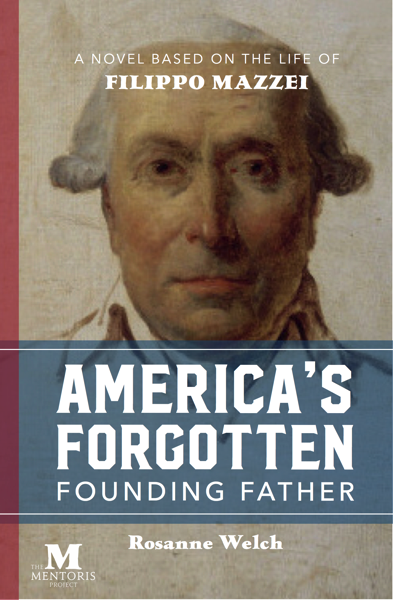
Thanks to the librarians at CalPoly Pomona for another fun afternoon listening to all my colleagues who have published books this year at the annual Golden Leaves Ceremony. This year I enjoyed sharing a reading from my new novel, Filippo Mazzei America’s Forgotten Founding Father, the story of an Italian-American patriot who owned the plantation next door to Thomas Jefferson – but chose not to own slaves. Rather he worked at establishing a vineyard with the help of other Italian immigrants (whose children and grandchildren helped populate Virginia according to records kept at Monticello).
Alongside Jefferson, Mazzei wrote articles in support of the Revolution and is now credited with coining the phrase “All Men are Created Equal”, which Jefferson found so inspiring he added it to his Declaration. As the Revolutionary War waged on, Jefferson and other Founding Fathers asked Mazzei to return to Europe and solicit funds, weapons and other support from the leading countries of Europe, which he gladly did, though it separated him from the beloved country he had adopted.
It is my hope that the more people who hear my talks and read this novel, the more will learn to add Mazzei’s name to the list of folks who helped found our country.
The Golden Leaves
Since 1986, the Golden Leaves program has celebrated those members of the Cal Poly Pomona campus community (faculty, staff, students, alumni and retirees) who have authored or edited a book* in the preceding year. The Golden Leaves program is funded by the University Library.
Each year books published by Cal Poly Pomona authors are on display in the Library during the month of April. The Golden Leaves program is celebrated annually at the University Library in conjunction with National Library Week.
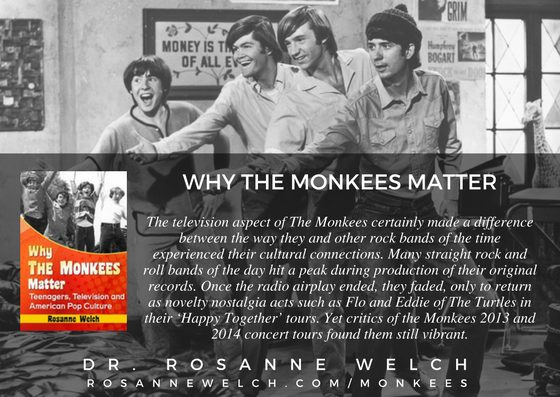
The television aspect of The Monkees certainly made a difference between the way they and other rock bands of the time experienced their cultural connections. Many straight rock and roll bands of the day hit a peak during production of their original records. Once the radio airplay ended, they faded, only to return as novelty nostalgia acts such as Flo and Eddie of The Turtles in their ‘Happy Together’ tours. Yet critics of the Monkees 2013 and 2014 concert tours found them still vibrant.
Also in the episode, she talks about surfing — she eats, drinks and sleeps it. She says to her Dad, you do the same thing. Why should it be wrong that I have something I’m obsessed with being better at and he agrees with her. So, she’s able to debate with her father and they have this very equal relationship which makes me interested. In this particular episode, she brought her Dad to the beach to see what was so good about surfing. he met a girlfriend who is a research chemist. A woman writing the episode makes the woman not only a widow, not some little girly job. She’s a research chemist that he is going to go out with. His last girlfriend was the Dean of Female Students at UCLA. Every woman you meet on this show if the episode is written by a woman is a woman with a substantial career and an interesting person. That fascinates me.
“How Gidget Got Into the Girl Ghetto by Accident (and How We Can Get Her Out of it): Demoting Gidget: The Little Girl with Big Ideas from Edgy Coming of Age Novel to Babe on the Beach Genre Film via Choices made in the Adaptation Process.”
It’ a long title, as I joke up front, but covers the process of adapting the true life story of Kathy Kohner (nicknamed ‘Gidget’ by the group of male surfers who she spent the summers with in Malibu in the 1950s) into the film and television series that are better remembered than the novel. The novel had been well-received upon publication, even compared to A Catcher in the Rye, but has mistakenly been relegated to the ‘girl ghetto’ of films. Some of the adaptations turned the focus away from the coming of age story of a young woman who gained respect for her talent at a male craft – surfing – and instead turned the focus far too much on Kathy being boy crazy.
Along the way I found interesting comparisons between how female writers treated the main character while adapting the novel and how male writers treated the character.
Dr. Rosanne Welch teaches the History of Screenwriting and One-Hour Drama for the Stephens College MFA in Screenwriting.
Writing/producing credits include Beverly Hills 90210, Picket Fences, ABCNEWS: Nightline and Touched by an Angel. In 2016 she published the book Why The Monkees Matter: Teenagers, Television and American Pop; co-edited Women in American History: A Social, Political, and Cultural Encyclopedia; and placed “Transmitting Culture Transnationally Via the Characterization of Parents in Police Procedurals” in the New Review of Film and Television Studies. Essays appear in Torchwood Declassified: Investigating Mainstream Cult Television and Doctor Who and Race: An Anthology. Welch serves as Book Reviews editor for Journal of Screenwriting and on the Editorial Advisory Board for Written By magazine, the magazine of the Writers Guild.
The Screenwriting Research Network is a research group consisting of scholars, reflective practitioners and practice-based researchers interested in research on screenwriting. The aim is to rethink the screenplay in relation to its histories, theories, values and creative practices.
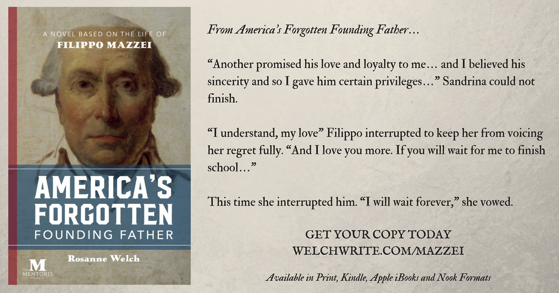
“Another promised his love and loyalty to me… and I believed his sincerity and so I gave him certain privileges…” Sandrina could not finish.
“I understand, my love” Filippo interrupted to keep her from voicing her regret fully. “And I love you more. If you will wait for me to finish school…”
This time she interrupted him. “I will wait forever,” she vowed.


 and Follow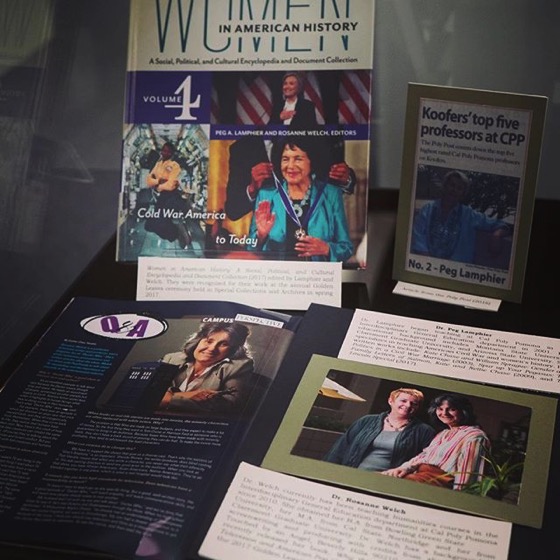
![06 Barbara Is 1st Strong Female Character from Gender Diversity in the Who-niverse [Video] (0:25)](https://rosannewelch.com/wp-content/uploads/2018/04/gender-dw-06-barbara.jpeg)
![Dr. Rosanne Welch presents at Cal Poly Pomona’s Golden Leaves Presentation [Video] (5:21)](https://rosannewelch.com/wp-content/uploads/2018/04/rmw-golden-leaves-2018.jpeg)