* A portion of each sale from Amazon.com directly supports our blogs ** Many of these books may be available from your local library. Check it out! † Available from the LA Public Library
The KCET documentary Lost LA is designed to cover the hidden stories of our city. This clip comes from Season 2, episode four “The Dream Factory” and covers the lost history of Hollywood’s early female screenwriters and directors. Most of them appear in our upcoming collection of essays When Women Wrote Hollywood. This segment is similarly titled “When Women Called the Shots.”
To highlight the wonderful yet largely forgotten work of a collection of female screenwriters from the early years of Hollywood (and as a companion to the book, When Women Wrote Hollywood) we will be posting quick bits about the many films they wrote along with links to further information and clips from their works which are still accessible online. Take a few moments once or twice a week to become familiar with their names and their stories. I think you’ll be surprised at how much bold material these writers tackled at the birth of this new medium. — Rosanne Welch
Anita Loos (April 26, 1889[1] – August 18, 1981) was an American screenwriter, playwright and author, best known for her blockbuster comic novel, Gentlemen Prefer Blondes. She wrote film scripts from 1912, and became arguably the first-ever staff scriptwriter, when D.W. Griffith put her on the payroll at Triangle Film Corporation. She went on to write many of the Douglas Fairbanks films, as well as the stage adaptation of Colette’s Gigi.
Loos would continue writing, always a constant magazine contributor and appearing regularly in Harper’s Bazaar, Vanity Fair and The New Yorker. Biographer Gary Carey notes: “She was a born storyteller and was always in peak form when reshaping a real-life encounter to make an amusing anecdote.”[4] Loos began a volume of memoirs, A Girl Like I, which would be published in September 1966. Her 1972 book, Twice Over Lightly: New York Then and Now, was written in collaboration with friend and actress Helen Hayes. Kiss Hollywood Good-by (1974) was another Hollywood memoir, this time about the MGM years and would be very successful. Her book The Talmadge Girls (1978) is about the actress sisters Constance Talmadge and Norma Talmadge.
Loos would become a virtual New York institution, an assiduous partygoer and diner-out, conspicuous at fashion shows, theatrical and movie events, balls and galas.[14] A celebrity anecdotalist, she was also never one to let facts spoil a good story: — Wikipedia
* A portion of each sale from Amazon.com directly supports our blogs ** Many of these books may be available from your local library. Check it out! † Available from the LA Public Library
Rosanne Welch, PhD, Author of Why The Monkees Matter, presents “How The Monkees Changed Television” at a Cal State Fullerton Lunch Lecture on May 8, 2018.
In this talk, she shows how The Monkees, and specifically their presence on television, set the stage for large changes to come in the late 1960s.
Transcript
…and they won for Best Director who happened to be James Frawley who was a new young guy in town. He grew up to direct the original Muppets Movie and win several awards in his career. So this is how he got started and you’ll see some similarities between the four guys and The Muppets. They’re all just kind of characters having fun. So, just to let you know who I am as John was happy to say, I was television writer for many years. I wrote on Beverly Hills 90210, a show called Picket Fences which I adored but was canceled in its third season and I spent a long time on Touched By An Angel. I did a documentary for ABC News Nightline which was based on the American Legion Boys Nation group. There 50th anniversary year for 1963. They had all met President John F. Kennedy and 1993 Bill Clinton who was one of them was President of the United States and they had a reunion at The White House and so I got meet with them and interview them about their life and what they had lived through.
Rosanne Welch, PhD is a writer, producer and university professor with credits that include Beverly Hills 90210, Picket Fences, Touched by an Angel and ABC NEWS/Nightline. Other books include Why The Monkees Matter: Teenagers, Television and American Pop Culture (McFarland, 2017) and Women in American History: A Social, Political, and Cultural Encyclopedia and Document Collection (ABC-CLIO, 2017), named to the 2018 Outstanding References Sources List, by the Reference and User Services Association (RUSA), a division of the American Library Association. Welch has also published chapters in Torchwood Declassified: Investigating Mainstream Cult Television (I.B.Tauris) and The American Civil War on Film and TV: Blue and Gray in Black and White and Color (Lexington Books, 2018) and essays in Doctor Who and Race: An Anthology and Outside In Makes it So, and Outside in Boldly Goes (both edited by Robert Smith). By day she teaches courses on the history of screenwriting and on television writing for the Stephens College MFA in Screenwriting programs. Her talk “The Importance of Having a Female Voice in the Room” at the 2016 TEDxCPP is available on YouTube.
When Women Wrote Hollywood went to the printer today!
We are on schedule for our planned publication date of July 31st AND here’s the first time an ad for the book appears alongside some other fun McFarland titles in Classic Images: The Newspaper of Film Fandom.
Available for Print Pre-Order Now. Electronic Editions Coming Soon!
Use “When Women Wrote Hollywood” in your classroom!
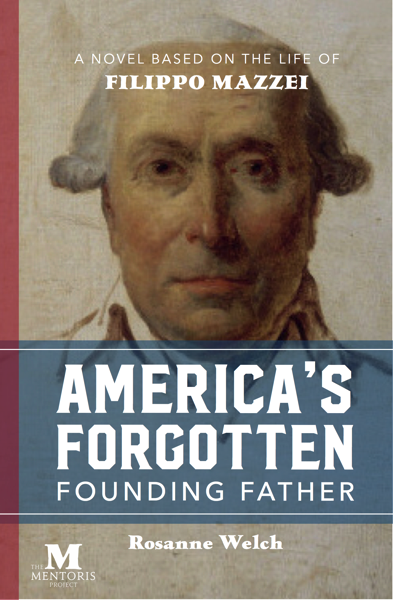
Dejected and disillusioned about his family, Filippo returned to London and in 1764 he opened a shop selling imported Italian wares including wine and olive oil. He named the shop Martini & Company to avoid incurring a reputation as merely a shopkeeper, since he still didn’t know what the future would hold. While he had decided not to pursue medicine anymore, he felt he had simply fallen into business and wanted to stay open to other opportunities as they arose.
To highlight the wonderful yet largely forgotten work of a collection of female screenwriters from the early years of Hollywood (and as a companion to the book, When Women Wrote Hollywood) we will be posting quick bits about the many films they wrote along with links to further information and clips from their works which are still accessible online. Take a few moments once or twice a week to become familiar with their names and their stories. I think you’ll be surprised at how much bold material these writers tackled at the birth of this new medium. — Rosanne Welch
When Women Wrote Hollywood – 4 in a series – Jeanie MacPherson
Jeanie MacPherson (May 18, 1886[1] – August 26, 1946) was an American actress, writer, and director from 1908 until the late 1940s. She was a pioneer for women in the film industry. She worked with some of the best filmmakers of the time period including D. W. Griffith and Cecil B. DeMille. While she started in the theater, and then had a brief stint as an actress, she ultimately dedicated her life’s work to screenwriting for DeMille.[2] She was appraised for her new level resourcefulness and attentiveness to the needs of DeMille.[3]
DeMille and MacPherson formed what became one of the most influential and long-lasting partnerships in the industry.[3] She was infatuated with his perfection and force of will, while he was captivated by her high spirited courage. She penned 30 of DeMille’s next 34 films. They admired each other; he would provide the crowd shots and epic sense, while she would humanize the heroine. They both loathed weakness, which they defined as a man being degraded and women, who were shallow and money-hungry, looking for a man to take care of them. They both believed in the power of people to change their ways, which many of their scripts showed.[3] — Wikipedia
* A portion of each sale from Amazon.com directly supports our blogs ** Many of these books may be available from your local library. Check it out! † Available from the LA Public Library
While I only used a portion of my total research, there are a host of little tidbits of information on this amazing man which I wanted to share here. — Rosanne.
Since this series is intended to focus on ‘Thomas Jefferson on Wine’ I will try to stick specifically to the subject, and not ramble too much about TJ’s drinking buddies. I am deviating slightly from our course by introducing one of the more interesting characters in Jefferson’s life, Philip Mazzei. Like most posts in this series, this one is by no means an exhaustive treatment of the life of a very complex man. Instead, this is merely an introduction to someone who played a significant role in Jefferson’s life – politically, personally and with wine.
For her 5th Doctor Who lecture to the CPP community, Dr. Rosanne Welch discusses how society – and the show’s writing staff – prepared the audience for a major change in this 50-year franchise – the creation of the first Lady Doctor!
Transcript:
Finally, we’re now looking at what will happen to the show with a new writer Chris Chibnall and Chris Chibnall is a really interesting writer. He worked on Torchwood as a staff writer. He created this program Broachchurch which I highly recommend if you have some time. One of the best-written mini-series I have ever seen. Very good stuff and in doing the show he worked with Jody Whittaker who played the mother on Broadchurch of a 10-year-old boy who went missing. Jody, blonded out, is going to be the new Doctor Who. So through working with Chris on this previous program, he decided she had the chutzpah and the charisma and what was necessary to be the new Doctor Who and also, as I said earlier, in his writing for Doctor Who he invented Kate Lethbridge-Stewart who is a head in the military. Her father was a head. We’re going to talk about in a minute. So, I think Chris is a really interesting writer. I think he’s going to do a lot of good work for the show. So that’s what I want to think about.
Rosanne Welch PhD teaches the History of Screenwriting and One-Hour Drama for the Stephens College MFA in Screenwriting.
Writing/producing credits include Beverly Hills 90210, Picket Fences, ABCNEWS: Nightline and Touched by an Angel. In 2016 she published the book Why The Monkees Matter: Teenagers, Television and American Pop; co-edited Women in American History: A Social, Political, and Cultural Encyclopedia; and placed “Transmitting Culture Transnationally Via the Characterization of Parents in Police Procedurals” in the New Review of Film and Television Studies. Essays appear in Torchwood Declassified: Investigating Mainstream Cult Television and Doctor Who and Race: An Anthology. Welch serves as Book Reviews editor for Journal of Screenwriting and on the Editorial Advisory Board for Written By magazine, the magazine of the Writers Guild.