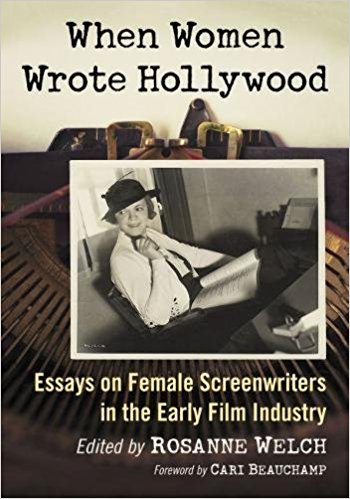
February was a month of sharing the marvelous photos from all the guest lectures who graced the January Stephens College MFA in TV and Screenwriting workshop with their talent and inspiration… (plus a quick shot of my upcoming book on Films of the Civil War).
💪🍪 We honor the great women who have gone ahead of us and who walk beside us every day on this #InternationalWomensDay. This Peanuts strip was first published on November 11, 1976.
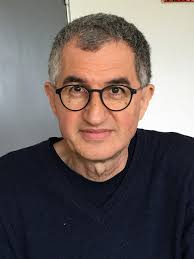
Philip Lazebnik has written numerous television episodes and motion picture screenplays in Los Angeles and Europe. His screenwriting credits include Disney’s Pocahontas and Mulan, and DreamWorks’ Prince of Egypt and The Legend of El Dorado. For the past several years, LaZebnik has lived in Denmark, where he has written movies and television shows throughout Europe and the U.S. His produced movies include the three Treasure of the Templar Knights movies in Denmark and The Three Investigators: The Secret of Skeleton Island and The Three Investigators: The Mystery of Terror Castle for Studio Hamburg; the Danish film Emma and Santa Claus; the English screenplay for Asterix and the Vikings and Asterix and the Domain of the Gods. He also wrote the TV mini-series Hindenburg in Germany, the Christmas TV series Ludvig and Santa Claus for TV2 in Denmark, and the book for Fairytale, a theatrical musical about H.C. Andersen with songs by Stephen Schwartz. Most recently he wrote the book for the musical theatrical version of Prince of Egypt with Stephen Schwartz, which opens in London’s West End on February 25, 2020.
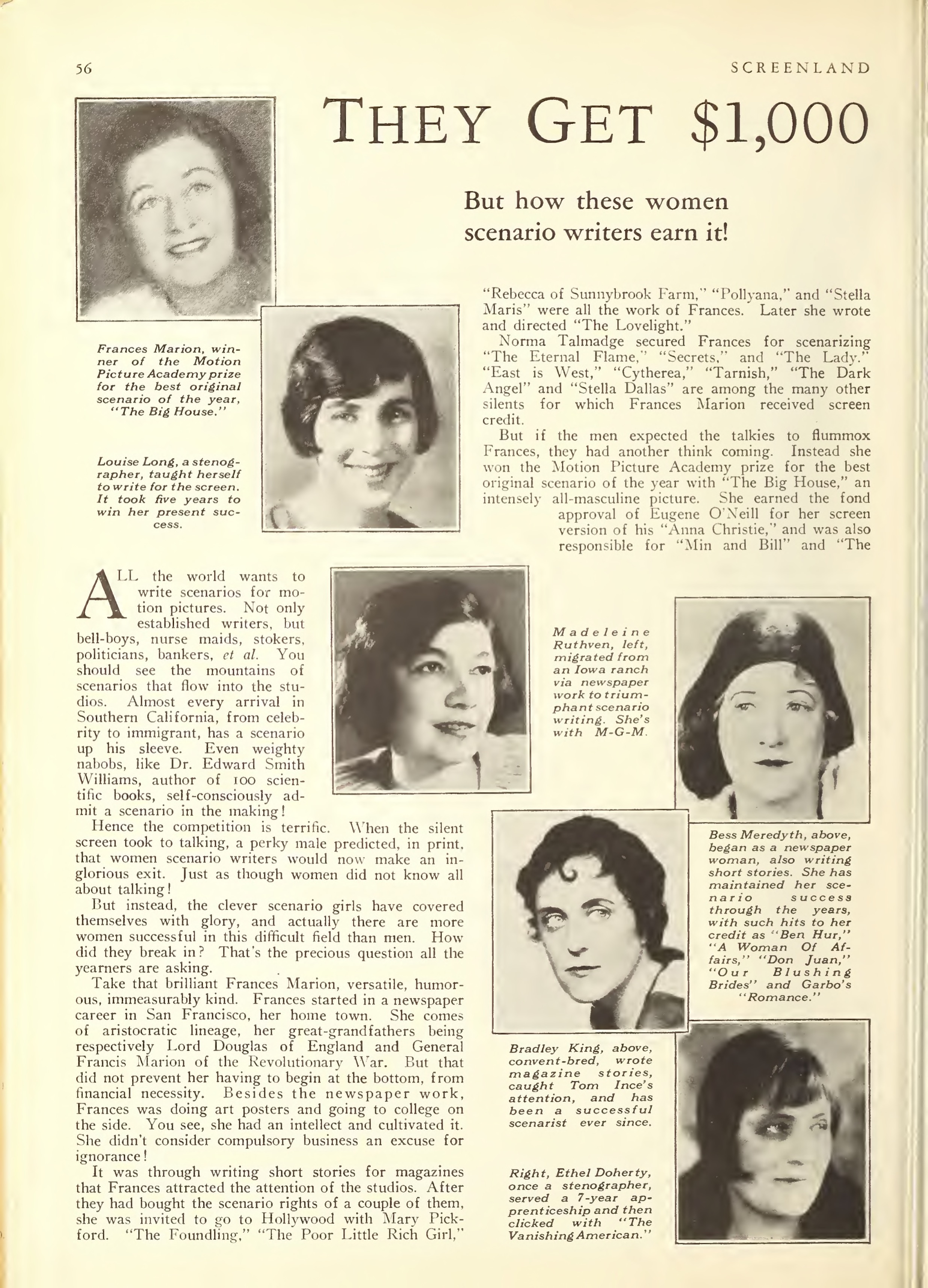
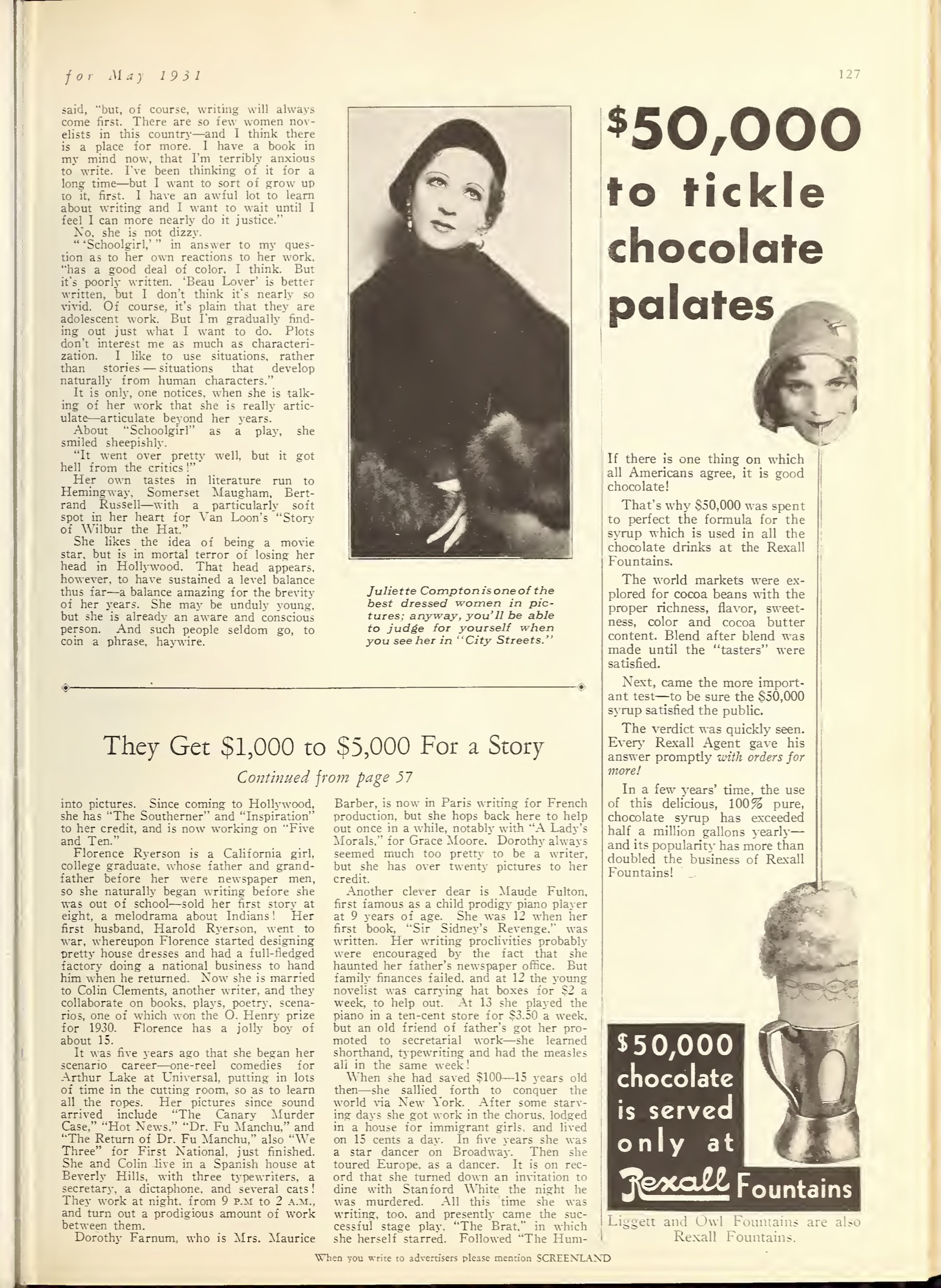
Months of research went into the creation of the essays in “When Women Wrote Hollywood.” Here are some of the resources used to enlighten today’s film lovers to the female pioneers who helped create it.
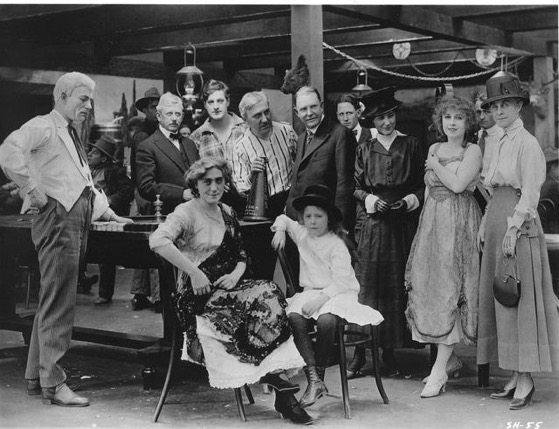
The 1916 Motion Picture News Studio Directory credits Los Angeles native Ida May Park with twelve years of stage experience as a “leading woman in support of well-known stars” and with screen experience at Pathé and the Universal Film Manufacturing Company, where she was then employed as a scenario writer (134). Park flourished at Universal, where she wrote forty-four films, half of them feature length, between 1914 and 1919. Before 1917, Park’s husband, Joseph De Grasse, directed almost all of the films she wrote. In 1917, Park began directing her own scenarios and, according to a 1918 story in the Universal Weekly, a newspaper for exhibitors, editing them as well (29). She crafted a total of eleven features by this method in a scant two years. Park is important to understand as part of a strong creative presence that we now refer to as “Universal Women,” those who between 1912 and 1919 were promoted from acting or writing to directing and were credited on at least one hundred and seventy titles, a cohort that included Ruth Ann Baldwin, Cleo Madison, Ruth Stonehouse, Lois Weber, and Elsie Jane Wilson (Cooper 17, Denton 50). Park and De Grasse left Universal in the spring or summer of 1919 for reasons as yet unknown. On September 12, the Los Angeles Times reported that Lew Cody and manager-producer Louis J. Gasnier had signed her to direct motion pictures in which Cody would star (16). She made one such title, and, with De Grasse, directed two features for Andrew J. Callaghan Productions in 1920.
* A portion of each sale from Amazon.com directly supports our blogs
** Many of these books may be available from your local library. Check it out!
† Available from the LA Public Library
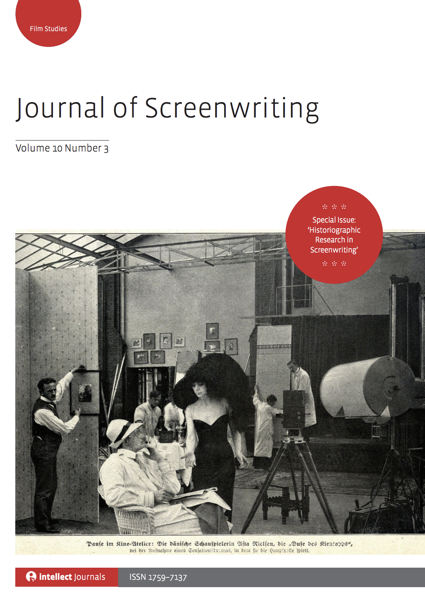
Highlighting the articles in the past editions of the Journal of Screenwriting, of which I am the Book Reviews Editor. Hopefully these abstracts will entice you to did a little deeper into the history and future of screenwriting. — Rosanne
This article aims to contribute to contemporary debates about screenwriting as a process of developing the screen idea; about the ways in which formatting conventions from an earlier era of cinema may restrict innovation in screenwriting; and about shifting practices of screenwriting in a digital era in which images and sound play a potentially more significant role. Additionally, it questions the use of terms such as blueprint to describe the relationship between the screenplay and the proposed film that it represents. The article draws on the author’s body of practice-led research as a writer and director of feature films and documentaries, as well as histories of screenwriting, film production, comics and the graphic arts.
The Journal of Screenwriting is an international double-blind peer-reviewed journal that is published three times a year. The journal highlights current academic and professional thinking about the screenplay and intends to promote, stimulate and bring together current research and contemporary debates around the screenplay whilst encouraging groundbreaking research in an international arena. The journal is discursive, critical, rigorous and engages with issues in a dynamic and developing field, linking academic theory to screenwriting practice.
While many film historians and teachers still don’t know the name of many of these marvelous female screenwriters from Hollywood’s Golden era, research shows they existed. It’s the job of this generation of scholars to bring these names into the larger conversation.
* A portion of each sale from Amazon.com directly supports our blogs ** Many of these books may be available from your local library. Check it out! † Available from the LA Public Library
Every Monday we will be profiling a member of the Stephens College MFA in TV and Screenwriting 2020 graduating class. This exciting, fresh crop of writers are the future of the industry and are going on to do BIG things, so get to know them now!
Antonio Zarro is a director and actor for film and television. He created Aria Pictures, a media production company through which he produced and directed over 300 films, commercials and training dramas. His productions have played in Hollywood, Cannes and Europe, and have shown on Showtime, HBO, Cinemax and the Family Channel.
His work has screened at the NY Film Festival, the Chicago Film Festival, the Virginia Festival of American Film, the Columbus Film Festival and Worldfest-Houston. A few of Zarro’s awards include: A Cine Golden Eagle, Telly, Addy, and Aurora Award. He is a member of the Screen Actors Guild, acting in movies, television and the theatre. Zarro received a B.A. from the University of Tulsa and an M.A. from Regent University.
At the graduate level, he wrote and directed Bird in a Cage, which won a Student Academy Award.
Subscribe to Rosanne’s Channel and receive notice of each new video!
Transcript:
Of we move further, a lot of people know The Golden Girls, and hopefully, they know Maude and all these lovely shows. That’s who gave those shows to us. Susan Harris is my favorite TV writer. The longest TV running career. All of the stuff iconic. All of the stuff beloved and people don’t think about her name. She wrote the entire first 2 seasons of Soap herself — no staff. She wrote every episode for 2 seasons and that’s in the days of doing 35 episodes, not 23 or 22 or 12, which is the new reality, right? So Susan is pretty brilliant. Linda Bloodworth-Thomason created Designing Women which I also think is quite a brilliant show and she wrote the first full season of that herself. She’d won an Emmy nomination for her first freelance episode which was an episode of M*A*S*H and it was her and a partner and they were the first people to go into the M*AS*H writing offices –they were 2 women — and they said: “What happens to Hot Lips on the nights when Frank’s not around?” Because she was an officer, which means she couldn’t fraternize with all the other nurses because they were not officers. So she’s lonely in her place all night and it was a study of loneliness and how awful her life was because she could have no friends and she couldn’t share her story with anybody back home because she was having an affair with a married man. So they focused on that and they got an Emmy nomination for looking at the honest emotions of that previously comedic character. They gave her the fullness that made her become a lead on that show.
Dr. Rosanne Welch discusses the women in her new book “When Women Wrote Hollywood” which covers female screenwriters from the Silents through the early 1940s when women wrote over 50% of films and Frances Marion was the highest paid screenwriter (male or female) and the first to win 2 Oscars. Yet, she fails to appear in film history books, which continue to regurgitate the myth that male directors did it all – even though it’s been proven that the only profitable movies Cecil B. de Mille ever directed were all written by Jeannie Macpherson film ever won for Best Picture was written by Robert E. Sherwood (who people have heard of, mostly due to his connection to Dorothy Parker) and Joan Harrison.
* A portion of each sale from Amazon.com directly supports our blogs ** Many of these books may be available from your local library. Check it out! † Available from the LA Public Library
What do you do when your series continues beyond the original book upon which the show is based? On this special evening, we join forces with Columbia College Chicago to welcome a panel of TV writers who’ll discuss how they navigate the uncharted territory of writing for a show that has diverged from the original novel.
Panelists:
Marissa Jo Cerar – Writer, Supervising Producer, The Handmaid’s Tale, 13 Reasons Why
I. Marlene King – Writer, Executive Producer, Pretty Little Liars
Stacy Osei-Kuffour – Writer, Watchmen
Anthony Sparks – Writer, Executive Producer, Queen Sugar