A fishwife tells her young daughter a fairy story about a princess imprisoned by a hunchback in a seashell, a story that parallels her own life. – IMDB
* A portion of each sale from Amazon.com directly supports our blogs
** Many of these books may be available from your local library. Check it out!
† Available from the LA Public Library
Subscribe to Rosanne’s Channel and receive notice of each new video!
Transcript:
When I teach my students about writing, there’s the quote “you should write what you know” and sometimes people think that means if you come from a family where your father’s a policeman you should write about policemen. If you yourself were a high school teacher you should write about teachers. It doesn’t mean, to me, you should write your experiences only. It means you should write the emotions that you know because the emotions are what are universal and that’s what sells to other people.
Watch this entire presentation
A Note About This Presentation
A clip from my keynote speech at the 10th Screenwriters´(hi)Stories Seminar for the interdisciplinary Graduation Program in “Education, Art, and History of Culture”, in Mackenzie Presbyterian University, at São Paulo, SP, Brazil, focused on the topic “Why Researching Screenwriters (has Always) Mattered.” I was especially pleased with the passion these young scholars have toward screenwriting and it’s importance in transmitting culture across the man-made borders of our world.
To understand the world we have to understand its stories and to understand the world’s stories we must understand the world’s storytellers. A century ago and longer those people would have been the novelists of any particular country but since the invention of film, the storytellers who reach the most people with their ideas and their lessons have been the screenwriters. My teaching philosophy is that: Words matter, Writers matter, and Women writers matte, r so women writers are my focus because they have been the far less researched and yet they are over half the population. We cannot tell the stories of the people until we know what stories the mothers have passed down to their children. Those are the stories that last. Now is the time to research screenwriters of all cultures and the stories they tell because people are finally recognizing the work of writers and appreciating how their favorite stories took shape on the page long before they were cast, or filmed, or edited. But also because streaming services make the stories of many cultures now available to a much wider world than ever before.
Many thanks to Glaucia Davino for the invitation.
* A portion of each sale from Amazon.com directly supports our blogs ** Many of these books may be available from your local library. Check it out! † Available from the LA Public Library
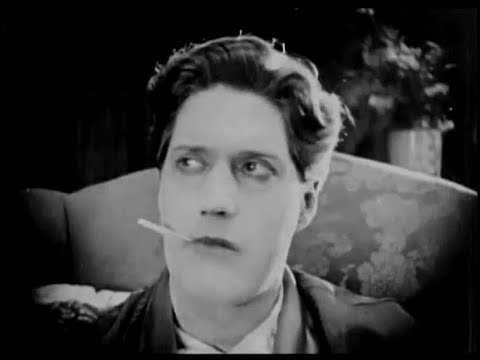
The spoiled, somewhat “mama’s boy” young son of a railroad magnate and the pretty young daughter of the magnate’s partner set out to stop their respective fathers from their constant quarreling. In the process they find themselves falling for each other. – IMDB
* A portion of each sale from Amazon.com directly supports our blogs
** Many of these books may be available from your local library. Check it out!
† Available from the LA Public Library
Subscribe to Rosanne’s Channel and receive notice of each new video!
Transcript:
Now we’ve had a ton of final girls in movies. There was actually a final girl movie because of that trope right? So i think that’s kind of interesting, but what’s great is that after 11 Halloween sequels, they came back to Jamie Lee Curtis and said will you do another one of these movies and she said “Now I will only do it if we flip the whole damn thing and from now on I’m the survivor. She’s the survivor. She gets back at the guy who did that to them. That’s why she agreed to the movie to flip that trope over in her adulthood. She’s like why don’t we call women survivors? Why are they girls? They’re survivors. Let’s think about the language and how it’s used.
A Note About This Presentation
A clip from my keynote speech at the 10th Screenwriters´(hi)Stories Seminar for the interdisciplinary Graduation Program in “Education, Art, and History of Culture”, in Mackenzie Presbyterian University, at São Paulo, SP, Brazil, focused on the topic “Why Researching Screenwriters (has Always) Mattered.” I was especially pleased with the passion these young scholars have toward screenwriting and it’s importance in transmitting culture across the man-made borders of our world.
To understand the world we have to understand its stories and to understand the world’s stories we must understand the world’s storytellers. A century ago and longer those people would have been the novelists of any particular country but since the invention of film, the storytellers who reach the most people with their ideas and their lessons have been the screenwriters. My teaching philosophy is that: Words matter, Writers matter, and Women writers matte, r so women writers are my focus because they have been the far less researched and yet they are over half the population. We cannot tell the stories of the people until we know what stories the mothers have passed down to their children. Those are the stories that last. Now is the time to research screenwriters of all cultures and the stories they tell because people are finally recognizing the work of writers and appreciating how their favorite stories took shape on the page long before they were cast, or filmed, or edited. But also because streaming services make the stories of many cultures now available to a much wider world than ever before.
Many thanks to Glaucia Davino for the invitation.
* A portion of each sale from Amazon.com directly supports our blogs ** Many of these books may be available from your local library. Check it out! † Available from the LA Public Library
Subscribe to Rosanne’s Channel and receive notice of each new video!
Transcript:
If you censor the storytellers you’re going to censor the stories and that’s why we get such a small block of stories that are repeated over and over and over again, right, and this makes me crazy. Stories equal culture. So if we censor the stories, we are censoring these moments of culture. We’re not allowing people to learn about these other people and their struggles, which is what art has always been about, right, about highlighting these ideas. Now, this is where we come to streaming because streaming services are finally our chance to show all the many cultures of the world to each other, right? You can’t really block them, which I think is fascinating.
Watch this entire presentation
A Note About This Presentation
A clip from my keynote speech at the 10th Screenwriters´(hi)Stories Seminar for the interdisciplinary Graduation Program in “Education, Art, and History of Culture”, in Mackenzie Presbyterian University, at São Paulo, SP, Brazil, focused on the topic “Why Researching Screenwriters (has Always) Mattered.” I was especially pleased with the passion these young scholars have toward screenwriting and it’s importance in transmitting culture across the man-made borders of our world.
To understand the world we have to understand its stories and to understand the world’s stories we must understand the world’s storytellers. A century ago and longer those people would have been the novelists of any particular country but since the invention of film, the storytellers who reach the most people with their ideas and their lessons have been the screenwriters. My teaching philosophy is that: Words matter, Writers matter, and Women writers matte, r so women writers are my focus because they have been the far less researched and yet they are over half the population. We cannot tell the stories of the people until we know what stories the mothers have passed down to their children. Those are the stories that last. Now is the time to research screenwriters of all cultures and the stories they tell because people are finally recognizing the work of writers and appreciating how their favorite stories took shape on the page long before they were cast, or filmed, or edited. But also because streaming services make the stories of many cultures now available to a much wider world than ever before.
Many thanks to Glaucia Davino for the invitation.
* A portion of each sale from Amazon.com directly supports our blogs ** Many of these books may be available from your local library. Check it out! † Available from the LA Public Library
Min and Bill is a 1930 American Pre-Code comedy-drama film starring Marie Dressler and Wallace Beery, and based on Lorna Moon’s 1929 novel Dark Star, adapted by Frances Marion and Marion Jackson. The film tells the story of dockside innkeeper Min’s tribulations as she tries to protect the innocence of her adopted daughter Nancy, all while loving and fighting with boozy fisherman Bill, who resides at the inn.
Min and Bill stars Marie Dressler (Min), Wallace Beery (Bill), Dorothy Jordan (Nancy), and Marjorie Rambeau (Bella, Nancy’s ill-reputed mother), and was directed by George W. Hill. Dressler won the Academy Award for Best Actress in 1931 for her performance in this film.[2]
This film was such a runaway hit that it and its near-sequel Tugboat Annie, which re-teamed Dressler and Beery in similar roles, boosted both to superstar status. Dressler topped Quigley Publications’ annual Top Ten Money Making Stars Poll of movie exhibitors in 1933, and the two pairings with Dressler were primarily responsible for Beery becoming MGM’s highest-paid actor in the early 1930s, before Clark Gable took over that crown; — Wikipedia
* A portion of each sale from Amazon.com directly supports our blogs
** Many of these books may be available from your local library. Check it out!
† Available from the LA Public Library
Subscribe to Rosanne’s Channel and receive notice of each new video!
Transcript:
Also, think about how important names are with your characters. You all know from your childhood Cruella de Ville. Y’all knew what that was really, of course, maybe not when you were five but eventually you caught on. She was the devil, right? Think about all the movie characters Luke Skywalker walks through the sky right? Han Solo flies alone. I guess you forget about Chewbacca and that right? Names mean something. Ginny Fields. Ginny is the nickname for Virginia which means her name is Virgin Fields. She’s never had sex. (Audience) She’s never been plowed. She has never been plowed. Seriously. That is literally what her name is telling you. Is that not crazy? That.. is it’s wonderful. She’s right. I love that. So you really have to think about, my gosh, what was that message telling young girls right and who decided that was the message they needed.
A Note About This Presentation
A clip from my keynote speech at the 10th Screenwriters´(hi)Stories Seminar for the interdisciplinary Graduation Program in “Education, Art, and History of Culture”, in Mackenzie Presbyterian University, at São Paulo, SP, Brazil, focused on the topic “Why Researching Screenwriters (has Always) Mattered.” I was especially pleased with the passion these young scholars have toward screenwriting and it’s importance in transmitting culture across the man-made borders of our world.
To understand the world we have to understand its stories and to understand the world’s stories we must understand the world’s storytellers. A century ago and longer those people would have been the novelists of any particular country but since the invention of film, the storytellers who reach the most people with their ideas and their lessons have been the screenwriters. My teaching philosophy is that: Words matter, Writers matter, and Women writers matte, r so women writers are my focus because they have been the far less researched and yet they are over half the population. We cannot tell the stories of the people until we know what stories the mothers have passed down to their children. Those are the stories that last. Now is the time to research screenwriters of all cultures and the stories they tell because people are finally recognizing the work of writers and appreciating how their favorite stories took shape on the page long before they were cast, or filmed, or edited. But also because streaming services make the stories of many cultures now available to a much wider world than ever before.
Many thanks to Glaucia Davino for the invitation.
* A portion of each sale from Amazon.com directly supports our blogs ** Many of these books may be available from your local library. Check it out! † Available from the LA Public Library
Subscribe to Rosanne’s Channel and receive notice of each new video!
Transcript:
In this time period this gentleman, Michael Wilson was completely censored. His movies were put out without his name on them at all. The movies were released and there was no written by credit at all because the studio refused to recognize him because he was marked as a communist.Both of these movies are anti-war films The first one Friendly Persuasion is about our Civil War and Salt of the Earth is actually a union movie. Iit’s about a union of miners, New Mexican miners who are on strike and the women who support them and nobody wanted to support those ideas so his he just disappeared right?
A Note About This Presentation
A clip from my keynote speech at the 10th Screenwriters´(hi)Stories Seminar for the interdisciplinary Graduation Program in “Education, Art, and History of Culture”, in Mackenzie Presbyterian University, at São Paulo, SP, Brazil, focused on the topic “Why Researching Screenwriters (has Always) Mattered.” I was especially pleased with the passion these young scholars have toward screenwriting and it’s importance in transmitting culture across the man-made borders of our world.
To understand the world we have to understand its stories and to understand the world’s stories we must understand the world’s storytellers. A century ago and longer those people would have been the novelists of any particular country but since the invention of film, the storytellers who reach the most people with their ideas and their lessons have been the screenwriters. My teaching philosophy is that: Words matter, Writers matter, and Women writers matte, r so women writers are my focus because they have been the far less researched and yet they are over half the population. We cannot tell the stories of the people until we know what stories the mothers have passed down to their children. Those are the stories that last. Now is the time to research screenwriters of all cultures and the stories they tell because people are finally recognizing the work of writers and appreciating how their favorite stories took shape on the page long before they were cast, or filmed, or edited. But also because streaming services make the stories of many cultures now available to a much wider world than ever before.
Many thanks to Glaucia Davino for the invitation.
* A portion of each sale from Amazon.com directly supports our blogs ** Many of these books may be available from your local library. Check it out! † Available from the LA Public Library
Ben Hur is a 1907 American silent drama film set in ancient Rome, the first screen adaptation of Lew Wallace’s popular 1880 novel Ben-Hur: A Tale of the Christ. Co-directed by Sidney Olcott and Frank Oakes Rose, this “photoplay” was produced by the Kalem Company of New York City, and its scenes, including the climactic chariot race, were filmed in the city’s borough of Brooklyn.[5][a]
While this film is significant for being the first motion-picture adaptation of Wallace’s novel, its production also served as a landmark case of copyright infringement by an early American film studio. In 1908 Kalem was successfully sued for representing parts of Wallace’s book on screen without obtaining permission from the author’s estate. Copies of the film, which survive, are now in the public domain and are readily available for free viewing online in the collections of various digital archives and on streaming services. — Wikipedia
* A portion of each sale from Amazon.com directly supports our blogs
** Many of these books may be available from your local library. Check it out!
† Available from the LA Public Library
Subscribe to Rosanne’s Channel and receive notice of each new video!
Transcript:
Now one of the things we have to think about — side note — when we think about horror movies again — is what they’re telling us. In this movie, as we know, spoiler alert, he’s the bad guy. Anthony Perkins was gay and by casting him they knew the audience would feel awkward about him. there would be something wrong with him They didn’t have to say what it was. They just knew society would find him wrong and so they cast him as the bad guy right? And so under all of this, what we’re saying is you can’t trust gay men. They’re dangerous. Don’t be near them. That’s the underlying concept behind Psycho. So I think that’s really — I have to think about what are the messages we’re getting from the stuff we’re watching and the stuff we’re reading and how do we counter those if they’re messages that we don’t want to have but it’s a good movie. It’s a good movie but have to think about that.
A Note About This Presentation
A clip from my keynote speech at the 10th Screenwriters´(hi)Stories Seminar for the interdisciplinary Graduation Program in “Education, Art, and History of Culture”, in Mackenzie Presbyterian University, at São Paulo, SP, Brazil, focused on the topic “Why Researching Screenwriters (has Always) Mattered.” I was especially pleased with the passion these young scholars have toward screenwriting and it’s importance in transmitting culture across the man-made borders of our world.
To understand the world we have to understand its stories and to understand the world’s stories we must understand the world’s storytellers. A century ago and longer those people would have been the novelists of any particular country but since the invention of film, the storytellers who reach the most people with their ideas and their lessons have been the screenwriters. My teaching philosophy is that: Words matter, Writers matter, and Women writers matte, r so women writers are my focus because they have been the far less researched and yet they are over half the population. We cannot tell the stories of the people until we know what stories the mothers have passed down to their children. Those are the stories that last. Now is the time to research screenwriters of all cultures and the stories they tell because people are finally recognizing the work of writers and appreciating how their favorite stories took shape on the page long before they were cast, or filmed, or edited. But also because streaming services make the stories of many cultures now available to a much wider world than ever before.
Many thanks to Glaucia Davino for the invitation.
* A portion of each sale from Amazon.com directly supports our blogs ** Many of these books may be available from your local library. Check it out! † Available from the LA Public Library


 †
†![32 You Should Write What (Emotions) You Know from Why Researching Screenwriters Has Always Mattered [Video] (28 seconds)](https://rosannewelch.com/wp-content/uploads/2020/10/rmw-sao-paolo-32.png)
![32 Women As Survivors from When Women Write Horror with Dr. Rosanne Welch [Video] (40 seconds)](https://rosannewelch.com/wp-content/uploads/2020/10/rmw-cpp-horror-32.png)
![31 If You Censor Storytellers…You Censor Culture from Why Researching Screenwriters Mattered [Video] (36 seconds)](https://rosannewelch.com/wp-content/uploads/2020/10/rmw-sao-paolo-31.png)

![31 The Importance of Names from When Women Write Horror with Dr. Rosanne Welch [Video] (53 seconds)](https://rosannewelch.com/wp-content/uploads/2020/10/rmw-cpp-horror-31.png)
![30 Michael Wilson – Censored from Why Researching Screenwriters (has Always) Mattered [Video] (34 seconds)](https://rosannewelch.com/wp-content/uploads/2020/10/rmw-sao-paolo-30.png)

![30 The “Final Girl” Trope from When Women Write Horror with Dr. Rosanne Welch [Video] (43 seconds)](https://rosannewelch.com/wp-content/uploads/2020/09/rmw-cpp-horror-30.png)
