08 Jeannie Macpherson from Why Researching Screenwriters (has Always) Mattered [Video] (1 minute 3 seconds)

Watch this entire presentation

08 Jeannie Macpherson from Why Researching Screenwriters (has Always) Mattered

Subscribe to Rosanne’s Channel and receive notice of each new video!


Transcript:

So unreliable narrators are something we have to look at when we’re doing our own research or study about films. In this case, we have a woman named Jeannie Macpherson and a gentleman who you may or may not have heard, if if you know about early American films Cecil B. DeMille. Mostly if I teach this woman’s work people have heard of him they have never heard of her because when he outlived her and gave an interview to the Academy of Motion Pictures in oral history, he said — after she was long dead — she didn’t do much work I did most of it. She had some nice ideas but I was the one who did all the real work. But if you do the research, all the movies that he made that were blockbusters she wrote and when she didn’t write his films they did not make money. Why would he have kept her on board for 20 years of filmmaking if she did so very little but she didn’t live long enough to give her own oral history and he did.

A Note About This Presentation

A clip from my keynote speech at the 10th Screenwriters´(hi)Stories Seminar for the interdisciplinary Graduation Program in “Education, Art, and History of Culture”, in Mackenzie Presbyterian University, at São Paulo, SP, Brazil, focused on the topic “Why Researching Screenwriters (has Always) Mattered.” I was especially pleased with the passion these young scholars have toward screenwriting and it’s importance in transmitting culture across the man-made borders of our world.

To understand the world we have to understand its stories and to understand the world’s stories we must understand the world’s storytellers. A century ago and longer those people would have been the novelists of any particular country but since the invention of film, the storytellers who reach the most people with their ideas and their lessons have been the screenwriters. My teaching philosophy is that: Words matter, Writers matter, and Women writers matte, r so women writers are my focus because they have been the far less researched and yet they are over half the population. We cannot tell the stories of the people until we know what stories the mothers have passed down to their children. Those are the stories that last. Now is the time to research screenwriters of all cultures and the stories they tell because people are finally recognizing the work of writers and appreciating how their favorite stories took shape on the page long before they were cast, or filmed, or edited. But also because streaming services make the stories of many cultures now available to a much wider world than ever before.

Many thanks to Glaucia Davino for the invitation.


* A portion of each sale from Amazon.com directly supports our blogs
** Many of these books may be available from your local library. Check it out!
† Available from the LA Public Library

From The “When Women Wrote Hollywood” Archives 24 : Obituary: Jan Zilliacus. Independent. Pub. Monday, May 31, 1999, Kevin Brownlow

Months of research went into the creation of the essays in “When Women Wrote Hollywood.” Here are some of the resources used to enlighten today’s film lovers to the female pioneers who helped create it.

From The “When Women Wrote Hollywood” Archives 24 : Obituary: Jan Zilliacus. Independent. Pub. Monday, May 31, 1999, Kevin Brownlow

From The

JAN ZILLIACUS was the daughter of the pioneer American film director Laurence Trimble, owner of Jean, the Vitagraph dog, who won international fame long before Rin-Tin-Tin.

“Father wanted six boys and all he got was this miserable girl,” she said. “So he treated me like a boy. He gave me no quarter at all. I was breaking horses at the age of 10 and 11. I was very strong. I didn’t go to school properly – I had tutors from time to time. But somebody had to be chased by wolves, and the actresses didn’t like the idea.”

Read Obituary: Jan Zilliacus. Independent. Pub. Monday, May 31, 1999


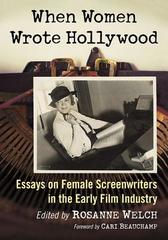
Buy “When Women Wrote Hollywood” Today!


When Women Wrote Hollywood: Essays on Female Screenwriters in the Early Film Industry

Paperback Edition | Kindle Edition | Google Play Edition

Help Support Local Bookstores — Buy at Bookshop.org

* A portion of each sale from Amazon.com directly supports our blogs
** Many of these books may be available from your local library. Check it out!
† Available from the LA Public Library

Stephens College MFA in TV and Screenwriting [Video]

What is the Stephens College MFA in TV and Screenwriting? Here is a short introduction.

Stephens College  MFA in TV and Screenwriting  Official AD

We’re pleased to present a new slideshow designed by graphic artist Phoenix Bussey, a Stephens College undergrad, using photos taken by MFA candidates during the last few years of workshops. We think it tells our story well. Write. Reach. Represent.

Visit the Stephens College MFA in TV and Screenwriting web site to apply today!

Listen to the latest “How I Wrote That” Podcast with Screenwriter Dawn Comer Jefferson from Our Friend Martin, and South of Nowhere

Listen to the latest How I Wrote That Podcast with Tera Hernandez of The Big Bang Theory [Audio]

Listen to the latest

Subscribe to the Podcast with iTunes | TuneIn

Listen to this episode

Dawn Comer Jefferson is an Emmy-nominated, award-winning writer. On television, Comer Jefferson wrote on the CBS family drama Judging Amy, served as writer/consulting producer on MTV’s teen drama, South of Nowhere, freelanced on the CBS hit NCIS, and developed a drama pilot at NBC Universal Studios. She was nominated for an Emmy for writing the Fox-animated family film, Our Friend, Martin, and for the last nine years has written Emmy-winning arts programming for PBS, performed at the Walt Disney Concert Hall and the Dorothy Chandler Pavilion.

As a non-fiction writer, Comer Jefferson has written about children, families and public policy issues for national print and online media including Garnet News, Working Mother, Fit Pregnancy Magazine and MomsRising, and her essays have been featured in the anthologies A Woman Alone (Seal Press) and Go Girl (Eighth Mountain Press). She adapted, produced and directed the eight-part NPR radio series adaptation of the biography Maggie’s American Dream, co-wrote the nonfiction book Three Ring Circus: How Real Couples Balance Marriage, Work, and Family, and the African American historical children’s fiction, The Promise. Visit her website. 

“My first piece of advice is to recognize that you are a writer and a storyteller.  A lot of people are hesitant to own that yet you really need to be in that mind space.  And then remember that your first draft is not your only draft. There are probably 15 or 16 more and you’re not really done until your done… and even then, you’re not done.“

-Dawn Comer Jefferson

Presented by Stephens College MFA in TV and Screenwriting


Visit the Stephens College MFA in TV and Screenwriting for more information.

Follow @StephensMFA on Instagram

Follow and Like the Stephens College MFA in TV and Screenwriting

#MentorMonday 8 - Dawn Comer Jefferson - Stephens College MFA in TV and Screenwriting

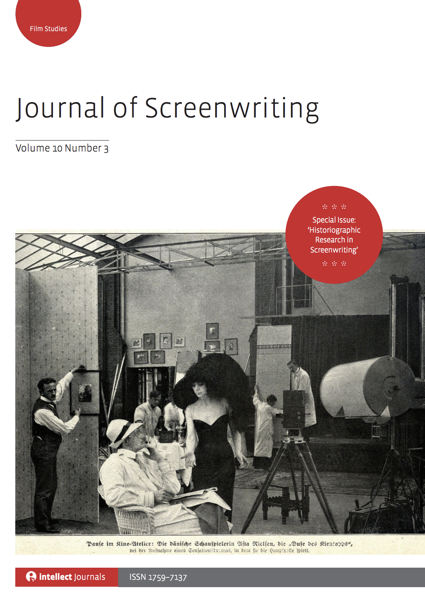
From The Journal Of Screenwriting V1 Issue 1: Creating Authorship? Lindsay Anderson and David Sherwin’s collaboration on If. (1968) by Isabelle Gourdin-Sangouard

Highlighting the articles in the past editions of the Journal of Screenwriting, of which I am the Book Reviews Editor. Hopefully these abstracts will entice you to did a little deeper into the history and future of screenwriting. — Rosanne


Creating Authorship? Lindsay Anderson and David Sherwin’s collaboration on If. (1968) by Isabelle Gourdin-Sangouard
 
This article draws upon the research currently undertaken for my doctoral thesis and is meant to act as a complementary study of Lindsay Anderson and David Sherwin’s partnership on If. (1968), following Charles Drazin’s 2008 article for the Journal of British Cinema and Television, If before If. Charles Drazin (2008: 318) highlights the idea of a creative dynamic underlying the working partnership between Lindsay Anderson and David Sherwin on If., as well as in the subsequent projects they developed together. The following article aims to uncover the nature of the creative dynamic suggested by Drazin’s article by looking at both the personal and the artistic dimensions that the working relationship assumed. The aim is to highlight the distinctiveness of their collaboration in the cinema; the article will show that in the course of this collaborative work they realized their artistic potential through an exchange of expertise, and that their collaboration helped to bring about an alternative approach to the conventional opposition between screenwriter and director, especially when it comes to claiming authorship over a film.


The Journal of Screenwriting is an international double-blind peer-reviewed journal that is published three times a year. The journal highlights current academic and professional thinking about the screenplay and intends to promote, stimulate and bring together current research and contemporary debates around the screenplay whilst encouraging groundbreaking research in an international arena. The journal is discursive, critical, rigorous and engages with issues in a dynamic and developing field, linking academic theory to screenwriting practice. 

Get your copy and subscription to the Journal of Screenwriting Today!


* A portion of each sale from Amazon.com directly supports our blogs
** Many of these books may be available from your local library. Check it out!

07 Storytelling And Unreliable Narrators from Why Researching Screenwriters (has Always) Mattered [Video] (1 minute 30 seconds)

Watch this entire presentation

07 Storytelling And Unreliable Narrators from Why Researching Screenwriters (has Always) Mattered

Subscribe to Rosanne’s Channel and receive notice of each new video!


Transcript:

Stories have always transmitted culture. If we go far back to the cave paintings of many ancient cultures, to Gilgamesh, to the griots of Africa, we have always used stories to move forward our culture, right, and movies are just the most current version of doing that.

So why do we forget who the storytellers are? That doesn’t make any sense to me, right, and I think there are some reasons that we can fix both in our own casual discussions of films and in the teaching that people might do about what is important, right? One of the first things I discovered in my research is this issue of unreliable narrators. Often we find when people are interviewed to discuss films they chose not to credit anyone who will take away their own fame.So this is one of the most egregious quotes. Alfred Hitchcock, who everyone seems to recognize — you say that you’re watching a Hitchcock film — but he did not write any of his films. He had many other writers who worked for him. This photograph is a woman named Eve Unsell and she’s from the early 1920s in Hollywood. At one point, she was sent to England to work in the studio there and she trained this young man who knew nothing about how films were made and when he wrote about her in his biography, he didn’t mention her name so you could research her. He only said “a middle-aged American woman.” He wrote her out of history as nothing but a middle-aged woman and yet she taught him everything he knows. So, in fact, his movies are Eve Unsell movies but we don’t think that way.

A Note About This Presentation

A clip from my keynote speech at the 10th Screenwriters´(hi)Stories Seminar for the interdisciplinary Graduation Program in “Education, Art, and History of Culture”, in Mackenzie Presbyterian University, at São Paulo, SP, Brazil, focused on the topic “Why Researching Screenwriters (has Always) Mattered.” I was especially pleased with the passion these young scholars have toward screenwriting and it’s importance in transmitting culture across the man-made borders of our world.

To understand the world we have to understand its stories and to understand the world’s stories we must understand the world’s storytellers. A century ago and longer those people would have been the novelists of any particular country but since the invention of film, the storytellers who reach the most people with their ideas and their lessons have been the screenwriters. My teaching philosophy is that: Words matter, Writers matter, and Women writers matte, r so women writers are my focus because they have been the far less researched and yet they are over half the population. We cannot tell the stories of the people until we know what stories the mothers have passed down to their children. Those are the stories that last. Now is the time to research screenwriters of all cultures and the stories they tell because people are finally recognizing the work of writers and appreciating how their favorite stories took shape on the page long before they were cast, or filmed, or edited. But also because streaming services make the stories of many cultures now available to a much wider world than ever before.

Many thanks to Glaucia Davino for the invitation.


* A portion of each sale from Amazon.com directly supports our blogs
** Many of these books may be available from your local library. Check it out!
† Available from the LA Public Library

From The “When Women Wrote Hollywood” Archives 23: Satire and Melodrama in a Newspaper Play Entitled “Clear All Wires”, New York Times

Months of research went into the creation of the essays in “When Women Wrote Hollywood.” Here are some of the resources used to enlighten today’s film lovers to the female pioneers who helped create it.

From The “When Women Wrote Hollywood” Archives 23: Satire and Melodrama in a Newspaper Play Entitled “Clear All Wires”, New York Times

From The

With the perspiring assistance of Thomas Mitchell, who acts like a steam locomotive, the Spewacks have tossed another one of those melodramatic lampoons at the newspaper profession in “Clear All Wires,” put on at the Times Square last evening. It is brisk, noisy, extravagant and funny in “The Front Page” and “Broadway” tradition. 


Buy “When Women Wrote Hollywood” Today!

Paperback Edition | Kindle Edition | Google Play Edition

Help Support Local Bookstores — Buy at Bookshop.org

* A portion of each sale from Amazon.com directly supports our blogs
** Many of these books may be available from your local library. Check it out!
† Available from the LA Public Library

From The Journal Of Screenwriting V1 Issue 1: Tonino Guerra: the screenwriter as a narrative technician or as a poet of images? by Riikka Pelo

Highlighting the articles in the past editions of the Journal of Screenwriting, of which I am the Book Reviews Editor. Hopefully these abstracts will entice you to did a little deeper into the history and future of screenwriting. — Rosanne


Tonino Guerra: the screenwriter as a narrative technician or as a poet of images? Authorship and method in the writerdirector relationship by Riikka Pelo

The article focuses on the invisible role of the screenwriter and makes observations about the screenwriter’s part in the process of writing a screenplay together with a director. By studying the two examples of the collaboration between the screenwriter and poet Tonino Guerra with the directors Michelangelo Antonioni and Andrei Tarkovsky, the intention is to follow the ways in which authorship is both constituted and shared in such a liaison. I observe how the craft of the screenwriter is understood in relation to the different aspects of his task. By focusing on the case study around the writing of the film Nostalghia/Nostalgia (1983), I also consider how responsibility in developing these aspects is shared between screenwriter and director during different phases of a screenwriting process: in gathering ideas, sketching, building the story structure, writing drafts, rewriting and completing the final draft.


The Journal of Screenwriting is an international double-blind peer-reviewed journal that is published three times a year. The journal highlights current academic and professional thinking about the screenplay and intends to promote, stimulate and bring together current research and contemporary debates around the screenplay whilst encouraging groundbreaking research in an international arena. The journal is discursive, critical, rigorous and engages with issues in a dynamic and developing field, linking academic theory to screenwriting practice. 

Get your copy and subscription to the Journal of Screenwriting Today!


* A portion of each sale from Amazon.com directly supports our blogs
** Many of these books may be available from your local library. Check it out!

Another Day, Another Video Conference via Instagram

Another Day, Another Video Conference

Another Day, Another Video Conference via Instagram

As a member of the Executive Council of the Screenwriting Research Network (SRN) I have the great pleasure of meeting with colleagues from several continents (Australia, South America, Europe, etc) on a monthly basis to discuss the business of the organization. it continues to amaze me how technology allows us to do this – as it continues to amaze me how lucky I am to have had the chance to meet all of these lovely folks in person at our various conferences. Can’t wait for the next one – in Oxford in 2021!

Follow Me On Instagram

Event: Stephens MFA in TV and Screenwriting Online Open House – Thursday, April 23, 2020

Event: Stephens MFA in TV and Screenwriting Online Open House - Thursday, April 23, 2020

Click To Register For The Conference

Write
Reach
Represent

Online Open House with
Program Executive Director Dr. Rosanne Welch
and Director of Admissions Sally Bohlinger

Stephens College Low Residency M.F.A in TV and Screenwriting

  • London, United Kingdom Fri, Apr 24, 2020 at 12:30 am BST
  • Eastern Time, ET Thu, Apr 23, 2020 at 7:30 pm EDT
  • Central Time, CT Thu, Apr 23, 2020 at 6:30 pm CDT
  • Mountain Time, MT Thu, Apr 23, 2020 at 5:30 pm MDT
  • Pacific Time, PT Thu, Apr 23, 2020 at 4:30 pm PDT
  • Sydney, Australia Fri, Apr 24, 2020 at 9:30 am AEST 

Learn more about this ground-breaking program focused on bringing more female and underrepresented voices into the mainstream media. The MFA boasts an impressive record of success and some of the best faculty and mentors in the industry.

RSVP for Conference Links to gradmissions@stephens.edu