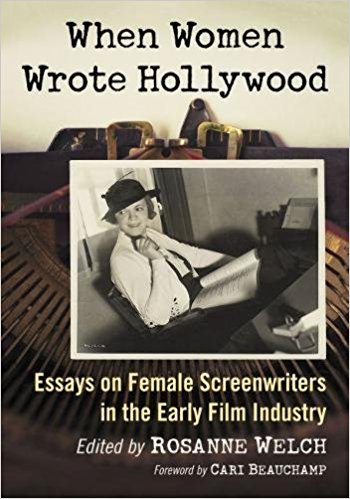
Months of research went into the creation of the essays in “When Women Wrote Hollywood.” Here are some of the resources used to enlighten today’s film lovers to the female pioneers who helped create it.
“Difficult” is probably the most tactful word one could use in characterizing Lillian Hellman. If ever there were an author safer to meet through her art rather than in real life, she was the one. Born in New Orleans into a Jewish family, Hellman came of age in the Roaring ’20s, liberated by flappers and Freud. Hellman drank like a fish, swore like a sailor and slept around like, well, like most of the men in her literary circle, chief among them Dashiell Hammett, with whom she had an open relationship spanning three decades. She was, recalled one observer, a “tough broad … the kind of girl who can take the tops off bottles with her teeth.”
* A portion of each sale from Amazon.com directly supports our blogs
** Many of these books may be available from your local library. Check it out!
† Available from the LA Public Library
Every Monday we will be profiling a member of the Stephens College MFA in TV and Screenwriting 2020 graduating class. This exciting, fresh crop of writers are the future of the industry and are going on to do BIG things, so get to know them now!
This week, Stephens College is proud to present: CJ Ehrlich #MeetTheGraduates
A Bostonian who resides in the wilds of NY, C.J. Ehrlich is an award-winning playwright, whose works have enjoyed over 200 productions around the world, and are published in numerous “Best of” anthologies (including The Best American Short Plays of 2015-16). Full-lengths include The Cupcake Conspiracy: Terrorism is Easy, Marriage is Complicated (with Philip J. Kaplan), the anti-romcom This Time We’ll Make It Work, and scifi comedy Zane to Gate 69. While in the MFA program, C.J. has written a full-length horror screenplay, Graduation, and is developing the comedy Stupid Voices from the Future, as well as pilots for a supernatural, teen-oriented thriller, and a comedy about a team of reality TV losers. She also spent a wonderful semester living amongst the female screenwriters of the silent era, and has mixed feelings about Al Jolson.
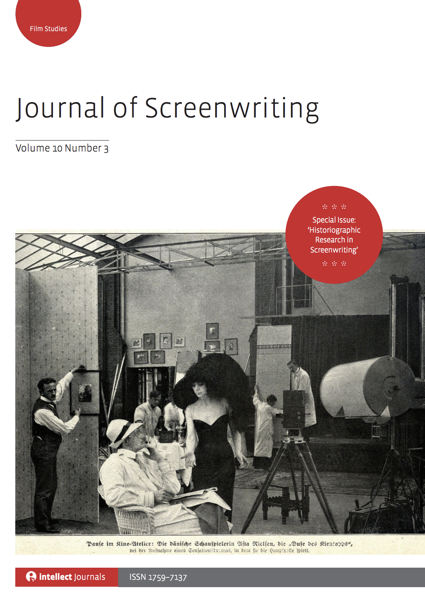
Highlighting the articles in the past editions of the Journal of Screenwriting, of which I am the Book Reviews Editor. Hopefully these abstracts will entice you to did a little deeper into the history and future of screenwriting. — Rosanne
The Screen Idea Work Group (SIWG) is a flexibly constructed group organized around the development and production of a screen idea; a hypothetical grouping of those professional workers involved in conceptualizing and developing fictional narrative work for any particular moving image screen idea. In this article, I use the notion of the SIWG to draw together the views of key workers about how the process of screen idea development works or doesn’t. My findings are based on a small ethnographic study I undertook in 2004, in which, through in-depth semi-structured interviews with seven SIWG workers, I attempted to understand how they came to occupy their role, how they felt their judgements were made and received, and how far the SIWG’s view of the screen idea accorded with the screenwriting doxa (characterized as how to do a good piece of work). As detailed below, their answers were concerned with status, a sense of self-worth and respect, points of tension, power, control, collaboration and trust, and the nature of the doxa itself.
The Journal of Screenwriting is an international double-blind peer-reviewed journal that is published three times a year. The journal highlights current academic and professional thinking about the screenplay and intends to promote, stimulate and bring together current research and contemporary debates around the screenplay whilst encouraging groundbreaking research in an international arena. The journal is discursive, critical, rigorous and engages with issues in a dynamic and developing field, linking academic theory to screenwriting practice.
Subscribe to Rosanne’s Channel and receive notice of each new video!
Transcript:
Thank you all very much. I apologize that I will speak in English because we do very bad in teaching languages in the United States. So this is the best that I can do, but I appreciate very much the translator who will help us all this evening. So thank you all for coming. We are here to talk about why researching screenwriters is important and I think it’s a very important thing. I’ve been teaching it for a while and I was, in fact, a screenwriter myself for a while. As a writer in Hollywood, I wrote for these television shows. You can see me in the little corner picture there quite a few years ago on “Touched by an Angel”, “Beverly Hills 90210”. These are the kind of programs from the United States that get traveled around the world and I teach my students now how important it is that they are finally being able to take in the stories from other countries and we’ll talk about the importance of streaming media and how that has allowed for that to happen as we move on.
A Note About This Presentation
A clip from my keynote speech at the 10th Screenwriters´(hi)Stories Seminar for the interdisciplinary Graduation Program in “Education, Art, and History of Culture”, in Mackenzie Presbyterian University, at São Paulo, SP, Brazil, focused on the topic “Why Researching Screenwriters (has Always) Mattered.” I was especially pleased with the passion these young scholars have toward screenwriting and it’s importance in transmitting culture across the man-made borders of our world.
To understand the world we have to understand its stories and to understand the world’s stories we must understand the world’s storytellers. A century ago and longer those people would have been the novelists of any particular country but since the invention of film, the storytellers who reach the most people with their ideas and their lessons have been the screenwriters. My teaching philosophy is that: Words matter, Writers matter, and Women writers matte, r so women writers are my focus because they have been the far less researched and yet they are over half the population. We cannot tell the stories of the people until we know what stories the mothers have passed down to their children. Those are the stories that last. Now is the time to research screenwriters of all cultures and the stories they tell because people are finally recognizing the work of writers and appreciating how their favorite stories took shape on the page long before they were cast, or filmed, or edited. But also because streaming services make the stories of many cultures now available to a much wider world than ever before.
Many thanks to Glaucia Davino for the invitation.
* A portion of each sale from Amazon.com directly supports our blogs ** Many of these books may be available from your local library. Check it out! † Available from the LA Public Library
Months of research went into the creation of the essays in “When Women Wrote Hollywood.” Here are some of the resources used to enlighten today’s film lovers to the female pioneers who helped create it.
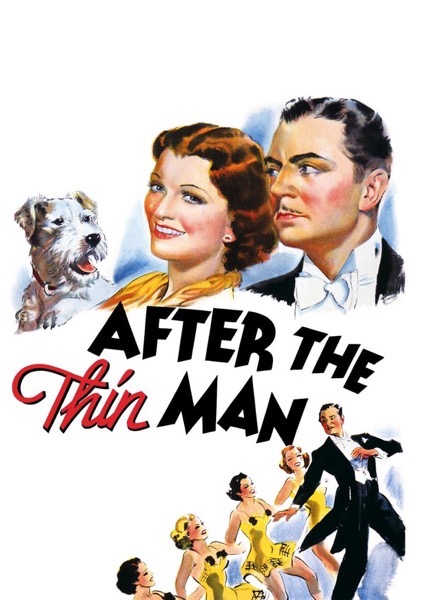
After the Thin Man is a 1936 American comedy film directed by W. S. Van Dyke and starring William Powell, Myrna Loy, and James Stewart. A sequel to the film The Thin Man, the film presents Powell and Loy as Dashiell Hammett’s characters Nick and Nora Charles. The film also features Elissa Landi, Joseph Calleia, Jessie Ralph, Alan Marshal, and Penny Singleton (billed under her maiden name as Dorothy McNulty).
* A portion of each sale from Amazon.com directly supports our blogs
** Many of these books may be available from your local library. Check it out!
† Available from the LA Public Library
Every Monday we will be profiling a member of the Stephens College MFA in TV and Screenwriting 2020 graduating class. This exciting, fresh crop of writers are the future of the industry and are going on to do BIG things, so get to know them now!
Emma Jeszke is a dramedy writer, with a focus on coming-of-age stories that challenge and expand typical narratives about girlhood, young adulthood, and motherhood. She has a special talent for keeping you laughing till you’re crying.
Her television pilot Postpartum, about the joys and struggles of being a new mom, was a top-ten finalist in the Women Writing Competition at Series Fest. She is the author of the feature screenplays Wildflower, a forbidden love story about a soldier and an antiwar activist set in 2004, and Bobbi Malone, which follows a thirty-something as she reconnects with her estranged grandmother through a theater troupe. She’s also the author of several stage plays, and the creator of the forthcoming web series Holly & Gem, about two sisters who reconnect after one escapes a cult.
Her plays have been performed regionally in places such as the Finger Lakes Musical Theatre Festival and the Blank Theatre in Los Angeles. She is a book editor at Theatre Communications Group, the foremost publisher of theatrical literature, where she’s spent eight years working with world-renowned playwrights. She’s currently finishing her MFA in TV & Screenwriting at Stephens College.
Subscribe to Rosanne’s Channel and receive notice of each new video!
Transcript:
Pretty brilliant and then everyone loves Breaking Bad right, but among the Emmys the show got one was by a woman Moira Walley-Beckett got an Emmy for writing the Ozymandias episode of Breaking Bad. So as much as we love Vince Gilligan and he’s quite marvelous and the show is truly his piece of art, Moira got the Emmy for it, right? So we need to think about that and that I think is where I will stop because there’s a lot of women writing today , thank goodness and I’m happy to see that but we must remember to look for who the writers are and then extra specially, if they happen to be women, tell people about them. Tell them about their work. Have them watch it. That would be a lovely thing. Thank you for coming.
Dr. Rosanne Welch discusses the women in her new book “When Women Wrote Hollywood” which covers female screenwriters from the Silents through the early 1940s when women wrote over 50% of films and Frances Marion was the highest paid screenwriter (male or female) and the first to win 2 Oscars. Yet, she fails to appear in film history books, which continue to regurgitate the myth that male directors did it all – even though it’s been proven that the only profitable movies Cecil B. de Mille ever directed were all written by Jeannie Macpherson film ever won for Best Picture was written by Robert E. Sherwood (who people have heard of, mostly due to his connection to Dorothy Parker) and Joan Harrison.
* A portion of each sale from Amazon.com directly supports our blogs ** Many of these books may be available from your local library. Check it out! † Available from the LA Public Library
Julie Hébert started her creative life as a theater director and playwright (Ruby’s Bucket of Blood). She’s written and directed for the Magic Theater, Steppenwolf, Victory Gardens, LaMaMa, The Women’s Project, Cornerstone and many more. Her plays were honored twice with the Pen Award for Drama. Moving into television, Julie has written and directed for some of the most respected shows in television including American Crime, The Good Wife, Boss, Numb3rs and The West Wing. Her films have been praised as “intriguingly complex” (Variety) and “pulsing with veracity” (LA Times), with “a raw power that is impossible to dismiss” (Roger Ebert). She blogs occasionally at JulieHébert.com.
“I honor the depth inside and the stories that really want to be told because often in television you can get away with topline chatter, but to really hit on something that has meaning for you, that will have meaning for someone hearing the story, it has to come from a deeper place.”-Julie Hébert
February was a month of sharing the marvelous photos from all the guest lectures who graced the January Stephens College MFA in TV and Screenwriting workshop with their talent and inspiration… (plus a quick shot of my upcoming book on Films of the Civil War).
💪🍪 We honor the great women who have gone ahead of us and who walk beside us every day on this #InternationalWomensDay. This Peanuts strip was first published on November 11, 1976.

![01 Introduction from Why Researching Screenwriters (has Always) Mattered – Dr. Rosanne Welch [Video] (1 minute)](https://rosannewelch.com/wp-content/uploads/2020/03/rmw-sao-paolo-01.png)

![44 Conclusion from “When Women Wrote Hollywood” – Dr. Rosanne Welch [Video] (39 seconds)](https://rosannewelch.com/wp-content/uploads/2020/03/csuf-rmw-w3h-44.jpeg)