Students of the Stephens College MFA in TV and Screenwriting (Stephens.edu/mfa) work in small groups creating genre mashup scenes under the direction of visiting professor, Jule Selbo, PhD, author of Film Genre for the Screenwriter.
Months of research went into the creation of the essays in “When Women Wrote Hollywood.” Here are some of the resources used to enlighten today’s film lovers to the female pioneers who helped create it.
* A portion of each sale from Amazon.com directly supports our blogs
** Many of these books may be available from your local library. Check it out!
† Available from the LA Public Library
Guest Speaker, Pavel Jech, myself, and the entire MFA class of 2020 in the Chaplin Screening Room at the Jim Henson Studios — where we host the workshops twice each year.
Subscribe to Rosanne’s Channel and receive notice of each new video!
This one allowed me to riff on some of my favorite female science fiction writers across time, whether they be novelists or television writers. It also opened up a good conversation on what art we support and include in our lives – and what that art says to us and about us. — Rosanne
Transcript:
Now of course, post Star Trek, the next big star science fiction thing that’s going to happen is Star Wars. We all know that and so it’s interesting because now sometimes people go oh Princess Leia sort of sat there and waited to be rescued. Ehhh… it was a big deal back in the day that she fought her way out right? She grabbed the blaster and they jumped in the garbage chute and all those things. She was considered a much more active princess. She’s not as active as we want people to be today but she’s like a bridge between where they didn’t do anything and where they do everything but I think it’s an important thing to pay attention to. She writes a lot about that in her last book before Carrie Fisher died, The Princess Diarist. She writes about the experience of filming that. What I don’t like is that we sort of when you look up pictures of Princess Leia and you think power it’s because she’s always got that blaster in her hand. So we’re still equating power with the male concept of a weapon as opposed to the interior power that you bring.
* A portion of each sale from Amazon.com directly supports our blogs ** Many of these books may be available from your local library. Check it out!
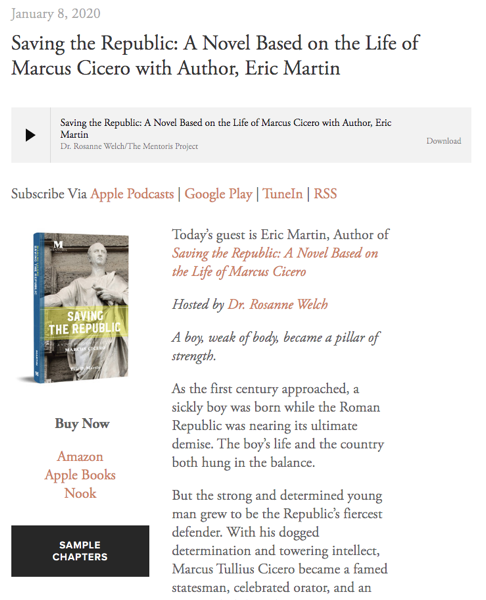
As the first century approached, a sickly boy was born while the Roman Republic was nearing its ultimate demise. The boy’s life and the country both hung in the balance.
But the strong and determined young man grew to be the Republic’s fiercest defender. With his dogged determination and towering intellect, Marcus Tullius Cicero became a famed statesman, celebrated orator, and an esteemed philosopher.
Surviving civil wars, political intrigues, and assassination attempts, Cicero pushed against the grain, standing steadfastly in support of the Republic, even when it threatened his career—or his life.
About the Author
Eric D. Martin is a novelist and screenwriter. He has a BA in film studies from the University of California, Santa Barbara, and an MFA in screen and television writing from Pepperdine University. While studying at Pepperdine, Martin served as president of the student film society, Courier 12, and was a semifinalist for the Academy of Arts and Sciences Nicholl Fellowship. Recently, Martin adapted the novel The Liar’s Chair for the screen and wrote the popular Lifetime thriller, The Other Mother. Currently, he is writing for the premium cable television drama Heels and for Starz, and developing the TV comedy King Elizabeth.
Highlighting the articles in the past editions of the Journal of Screenwriting, of which I am the Book Reviews Editor. Hopefully these abstracts will entice you to did a little deeper into the history and future of screenwriting. — Rosanne
Antihero narratives constitute a common thread in the current boom of TV fiction. The Sopranos (HBO, 1999–2007) could be considered an early example of this tendency. The antihero is a complex character who demands equally complex responses from viewers. The title of this article is an allusion to Rob White’s article, ‘No more therapy’, in which White explores Dr Jennifer Melfi’s role as a narrative mechanism used to undermine viewer sympathy for Tony Soprano at the end of the series. Here I seek to explore this role further since Dr Melfi’s responses to Tony’s actions serve as a narrative strategy used by The Sopranos writers to guide viewer responses in their relationship with Tony Soprano, a pioneer example of the antihero figure. In doing so, it is my purpose to demonstrate the relevance in antihero TV series of the evolution not only of the antihero themselves but also of their relationship with other major characters over the course of the series. I call this evolution, through which the creators develop the transformational arcs of the two characters concerned: the ‘relationship arc’.
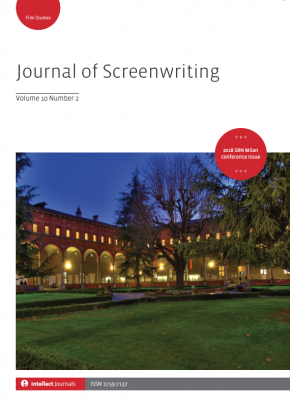
The Journal of Screenwriting is an international double-blind peer-reviewed journal that is published three times a year. The journal highlights current academic and professional thinking about the screenplay and intends to promote, stimulate and bring together current research and contemporary debates around the screenplay whilst encouraging groundbreaking research in an international arena. The journal is discursive, critical, rigorous and engages with issues in a dynamic and developing field, linking academic theory to screenwriting practice.
Subscribe to Rosanne’s Channel and receive notice of each new video!
Transcript:
Moving through into the 50s, we come up with Harriet Frank Jr. — a woman going by Jr. because her mother was Harriet Frank and her mother was a reader at one of the studios which is how she got into the business of writing. She married Irving Ravetch and together they made several important films. To me, most important is Norma Rae. Again a very female based film which really falls into Harriet’s world and also Stanley and Iris and Murphy’s Romance are very female-focused stories. Harriet was a really strong woman — very involved in the Union which makes sense when you think about Norma Rae right? So again names people don’t really know because these are considered Martin Ritt films because he directed all four of them, because he was best friends with Frank and Ravetch. So they liked to hire directors they knew who wouldn’t muck up their work and I believe in those collaborations. I don’t — like I’m dissing directors. I don’t mean to. I like directors but there it’s an even collaboration and I think that’s what academia has to start referencing more than we do because that’s how writers get lost and if male writers are getting lost you know female writers getting even more lost right? So we need to keep thinking about it’s a — it’s a collaboration.
Dr. Rosanne Welch discusses the women in her new book “When Women Wrote Hollywood” which covers female screenwriters from the Silents through the early 1940s when women wrote over 50% of films and Frances Marion was the highest paid screenwriter (male or female) and the first to win 2 Oscars. Yet, she fails to appear in film history books, which continue to regurgitate the myth that male directors did it all – even though it’s been proven that the only profitable movies Cecil B. de Mille ever directed were all written by Jeannie Macpherson film ever won for Best Picture was written by Robert E. Sherwood (who people have heard of, mostly due to his connection to Dorothy Parker) and Joan Harrison.
* A portion of each sale from Amazon.com directly supports our blogs ** Many of these books may be available from your local library. Check it out! † Available from the LA Public Library
Wherever you go, you find Monkees fans and the Denver Popular Culture Con was no different. Amid rooms full of caped crusaders and cosplay creations, I was initially not sure how many folks would attend a talk on a TV show from the 1960s – but happily I was met by a nice, engaged audience for my talk on Why the Monkees Matter – and afterward they bought books! What more could an author ask for?
Subscribe to Rosanne’s Channel and receive notice of each new video!
Transcript
In the 70s we’re gonna be on Laugh In. At this point, Peter has left the band. Once the show is off the air Peter leaves the band. So now they’re trying to do it as a threesome. So check us out. Look at how much more Seventy-fied, hippy-ied their stuff is right? So they’re still being talked about in the ’70s. In the 80s, we’re gonna have the MTV Marathon Pleasant Valley Sunday. So a 20th anniversary of the show all of a sudden a new generation of kids are introduced to it. I have a photo of Rachel Maddow because she interviewed Peter after the death of Davy Jones and she said to him as a child of the 80s I learned what it was like to be a kid in the 60s through watching reruns of your show. That’s how I learned what it was like. I thought how interesting with that as it’s going through the decades and of course the Monkees as they toured today. They’re in New Zealand this week actually. It’s just Mike and Micky now. They will say that they have grandmothers, mothers, daughters, and the gettin down to great-grandmothers pretty soon. They have a very wide fandom, which is a big deal.
A hit television show about a fictitious rock band, The Monkees (1966-1968) earned two Emmys–Outstanding Comedy Series and Outstanding Directorial Acheivement in Comedy.
Capitalizing on the show’s success, the actual band formed by the actors, at their peak, sold more albums than The Beatles and The Rolling Stones combined, and set the stage for other musical TV characters from The Partridge Family to Hannah Montana. In the late 1980s, the Monkees began a series of reunion tours that continued into their 50th anniversary.
This book tells the story of The Monkees and how the show changed television, introducing a new generation to the fourth-wall-breaking slapstick created by Laurel and Hardy and the Marx Brothers.
Its creators contributed to the innovative film and television of 1970s with projects like Bob & Carol & Ted & Alice, The Mary Tyler Moore Show, Laugh-In and Welcome Back, Kotter. Immense profits from the show, its music and its merchandising funded the producers’ move into films such as Head, Easy Riderand Five Easy Pieces.
Months of research went into the creation of the essays in “When Women Wrote Hollywood.” Here are some of the resources used to enlighten today’s film lovers to the female pioneers who helped create it.
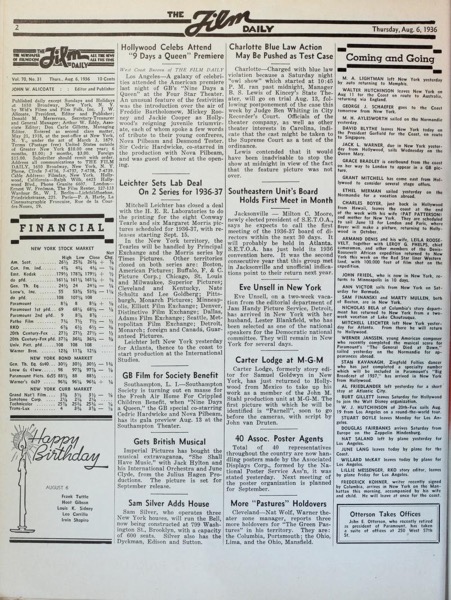
Marion Fairfax Productions in collabora- tion with Sam E. Rork have had erected a complete Algerian village for the company producing “The Desert Healer” under the di- rection of Maurice Tourneur. The principals in the cast include Lewis Stone, Barbara Bedford, Tully Marshall, Katherine MacDon- ald, Walter Pidgeon, Ann Rork, Arthur Rankin and Albert Conti.
* A portion of each sale from Amazon.com directly supports our blogs
** Many of these books may be available from your local library. Check it out!
† Available from the LA Public Library




![33 Princess Leia from The Sisterhood of Science Fiction – Dr. Rosanne Welch [Video] (56 seconds)](https://rosannewelch.com/wp-content/uploads/2020/01/scifi-rmw-cpp-33.jpeg)


![35 Harriet Frank, Jr. from “When Women Wrote Hollywood” with Dr. Rosanne Welch [Video] (1 minute 9 seconds)](https://rosannewelch.com/wp-content/uploads/2020/01/csuf-rmw-w3h-35.jpeg)
![20 The 70’s And The Monkees from “Why The Monkees Matter: Even 50 Years Later [Video] (57 seconds)](https://rosannewelch.com/wp-content/uploads/2020/01/monkees-popcon-2019-20-1.jpeg)