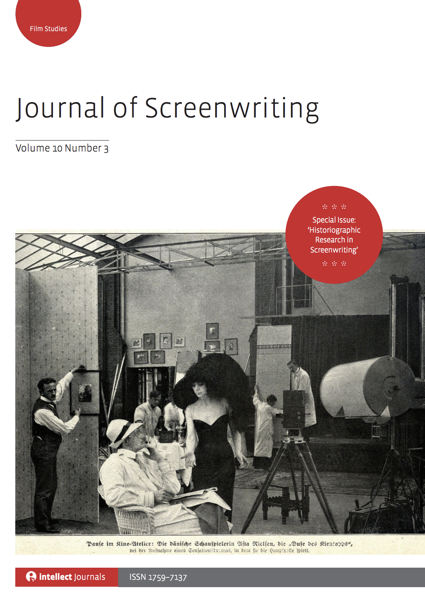
Journal of Screenwriting 10.3 is now available (Historiographic Research in Screenwriting Special Issue)

Journal of Screenwriting 10.3 is now available (Historiographic Research in Screenwriting Special Issue)

I’m always happy to announce the latest issues of the Journal of Screenwriting and 10.3 — a Special Issue discussing ‘Historiographic Research in Screenwriting’ — is now available! 


For me, as Book Reviews editor it’s especially nice to note that 2 alums of the Stephens College MFA in TV and Screenwriting program, one current student and Friend of the Program Anna Weinstein are among the reviewers of books this month, with current MFA candidate CJ Ehrlich having reviewed a text used in our History of Screenwriting courses – Tom Stempel’s Framework.


Does your college library have a subscription? Order one today to read all these reviews PLUS the articles noted below:


Crash! Boom! Bang! How to Write Action Movies, Michael Lucker (2017) 

JENNIFER ANNE MARTIN


Words in Action: Forms and Techniques of Film Dialogue, Paolo Braga (2015) 

JACKIE PEREZ


Off the Page: Screenwriting in the Era of Media Convergence, Daniel Bernardi and Julian Hoxter (2017)

ANNA WEINSTEIN


FrameWork: A History of Screenwriting in the American Film, 3rd ed., Tom Stempel (2000)


C. J. EHRLICH


For more information about the special issue and journal, click here >> https://www.intellectbooks.com/journal-of-screenwriting


Issue 10.3 Included:


Editorial

STEVEN PRICE AND CLAUS TIEBER 


Articles


Die Filmprimadonna (The Film Primadonna, 1913): A case study of the fiction of a screenplay and the process of filmmaking in German early cinema 

JAN HENSCHEN


Once again into the cabinets of Dr. Caligari: Evil spaces and hidden sources of the Caligari screenplay

ALEXANDRA KSENOFONTOVA


Reel by reel: Jan Stanislav Kolár’s narrative poetics in the context of transition to feature-length format in Czech silent cinema 

MARTIN KOS


Walter Reisch: The musical writer

CLAUS TIEBER


Network television writers and the ‘race problems’ of 1968 

CARYN MURPHY


From dialogue writer to screenwriter: Pier Paolo Pasolini at work for Federico Fellini

CLAUDIA ROMANELLI 


The Journal of Screenwriting is an international double-blind peer-reviewed journal that is published three times a year. The journal highlights current academic and professional thinking about the screenplay and intends to promote, stimulate and bring together current research and contemporary debates around the screenplay whilst encouraging groundbreaking research in an international arena. The journal is discursive, critical, rigorous and engages with issues in a dynamic and developing field, linking academic theory to screenwriting practice. 

Get your copy and subscription to the Journal of Screenwriting Today!
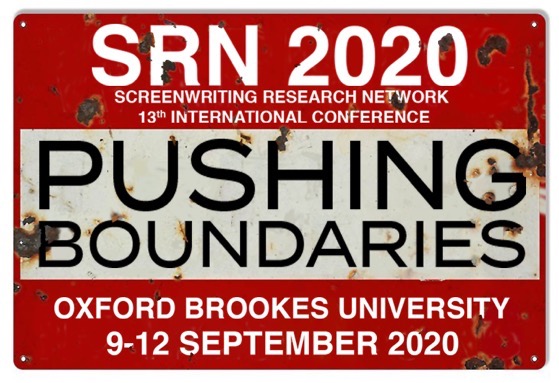

Screenwriting Research Network Conference 2020

Join me at the Screenwriting Research Network’s Annual Conference in Oxford, UK


* A portion of each sale from Amazon.com directly supports our blogs
** Many of these books may be available from your local library. Check it out!
From The Journal Of Screenwriting V10 Issue 1: Colonizing, decolonizing: Bad-faith liberalism and African space colonialism in Doris Lessing’s screenplay The White Princess By James Arnett

Highlighting the articles in the past editions of the Journal of Screenwriting, of which I am the Book Reviews Editor. Hopefully these abstracts will entice you to did a little deeper into the history and future of screenwriting. — Rosanne


Colonizing, decolonizing: Bad-faith liberalism and African space colonialism in Doris Lessing’s screenplay The White Princess
By James Arnett

Although Doris Lessing frequently wrote about Africa over the course of her career, and her relationship to colonialism is undeniably critical, changing theoretical paradigms have complicated readings of her anticolonial critique. From a treasure trove of unpublished African material contained in her papers at the Harry Ransom Center Archives at the University of Texas, this article looks at one of her unpublished screenplays, The White Princess, as a complex and fraught attempt to generate an ethos of decolonization well in advance of its contemporary, post-postcolonial preeminence in twenty-first-century theoretical discourse. Lessing’s positing of a speculative future African recolonization of Britain would have emerged into a smattering of British speculative fictions of the late 1960s and 1970s that likewise imagined African colonialism, but did so, this article argues, hampered by a bad-faith liberalism. Despite the subversive potential of exploring inverted colonial dynamics, this article argues that Lessing ultimately cannot break free of generic conventions, political and theoretical limitations, or colonial discursive structures to achieve real decolonization work in The White Princess – although she may succeed elsewhere in her oeuvre.


From The Journal Of Screenwriting V10 Issue 1: Creative resistance tactics in the work of English Canadian screenwriters by Kerry McArthur

The Journal of Screenwriting is an international double-blind peer-reviewed journal that is published three times a year. The journal highlights current academic and professional thinking about the screenplay and intends to promote, stimulate and bring together current research and contemporary debates around the screenplay whilst encouraging groundbreaking research in an international arena. The journal is discursive, critical, rigorous and engages with issues in a dynamic and developing field, linking academic theory to screenwriting practice. 

Get your copy and subscription to the Journal of Screenwriting Today!


Screenwriting Research Network Conference 2020

Join me at the Screenwriting Research Network’s Annual Conference in Oxford, UK


* A portion of each sale from Amazon.com directly supports our blogs
** Many of these books may be available from your local library. Check it out!

34 More On Frances Goodrich & Albert Hackett – “When Women Wrote Hollywood” with Dr. Rosanne Welch [Video] (1 minute 10 seconds)

Part of the California State University, Fullerton Faculty Noon Time Talks at the Pollak Library.

Watch this entire presentation

34 More On Frances Goodrich & Albert Hackett -

Subscribe to Rosanne’s Channel and receive notice of each new video!


Transcript:

Directors are lovely people but when you talk about a movie to your friends rarely do you discuss camera angles. You discuss dialogue and that’s what the writer wrote.It should be the writer’s movie or nobodies. I have a big fight with publishers now. I refuse to do things like Spielberg’s Lincoln. No. Tony Kushner wrote Lincoln and he’s got a Pulitzer Prize. it’s either his movie or it’s just Lincoln. Let’s leave it at that all right? It does not belong to Steven Spielberg cuz he didn’t write any of it but these guys are wonderful. Their work was great. They were invited — they did Thin Man. They did It’s A Wonderful LIfe — they were invited to work on the play the Diary of Anne Frank. A couple other people were offered at first. This was at a time when everything was crazy after the war. There were some thoughts that maybe it was a fake diary right but these guys believed in i.t They met Otto Frank — Anne’s father — and worked with him and created the play which won them a Pulitzer Prize and then they adapted their own play into a film. So Francis and Albert Hackett — they were considered the most beloved couple in Hollywood. They were friends with Dorothy and Alan and all these other couples that work together and they were apparently the nicest people you could ever meet, right?

Dr. Rosanne Welch discusses the women in her new book “When Women Wrote Hollywood” which covers female screenwriters from the Silents through the early 1940s when women wrote over 50% of films and Frances Marion was the highest paid screenwriter (male or female) and the first to win 2 Oscars.  Yet, she fails to appear in film history books, which continue to regurgitate the myth that male directors did it all – even though it’s been proven that the only profitable movies Cecil B. de Mille ever directed were all written by Jeannie Macpherson film ever won for Best Picture was written by Robert E. Sherwood (who people have heard of, mostly due to his connection to Dorothy Parker) and Joan Harrison.


Buy a signed copy of when Women Wrote Hollywood

…or via Amazon…

Paperback Edition | Kindle Edition | Google Play Edition

* A portion of each sale from Amazon.com directly supports our blogs
** Many of these books may be available from your local library. Check it out!
† Available from the LA Public Library

31 Characters: Nyota Uhura, Star Trek from The Sisterhood of Science Fiction – Dr. Rosanne Welch [Video] (1 minute 20 seconds)

Watch this entire presentation

The Sisterhood of Science Fiction: A Walk Through Some Writers and Characters You (Should) Know And Love

31 Characters: Nyota Uhura, Star Trek from The Sisterhood of Science Fiction - Dr. Rosanne Welch [Video] (1 minute 20 seconds)

Subscribe to Rosanne’s Channel and receive notice of each new video!


This one allowed me to riff on some of my favorite female science fiction writers across time, whether they be novelists or television writers. It also opened up a good conversation on what art we support and include in our lives – and what that art says to us and about us. — Rosanne

Transcript:

In terms of characters that we need to pay some attention to, if you don’t know the original Star Trek you should but you’ve seen some of these characters and memes all over the internet right? Nyota Uhura. It was a big deal. They’re putting an African-American woman in the future. Now there was some chit chat about the sexism going on because she was just answering the phone. She’s running the radio on the ship but she’s still on the ship on the main place and she often was involved in stories, but what’s really important about her character and why these two are connected in these pictures is that after the first season on the show, she was kind of like “I’m just answering the damn phone like I don’t really feel like I’m empowered very much I don’t really want to do this show anymore” and she was a big band singer, she could go back out on the road , sing, tour America, make money. I don’t need to do this cheesy science fiction show and then she met him at some event– I forget — some fundraising event and she said she kind of apologized for kind of how stupid her role was in the show and told him she was quitting so she’s proud of I want you to know I’m not gonna do this anymore and he was like “Oh no no no no. You have to stay. You are the only African-American who is seen in the future. You do not understand the power of little children looking up and saying okay we survive. She made it. I’ll make it. This is a big, big deal.


* A portion of each sale from Amazon.com directly supports our blogs
** Many of these books may be available from your local library. Check it out! 

33 Frances Goodrich & Albert Hackett from “When Women Wrote Hollywood” with Dr. Rosanne Welch [Video] (58 seconds)

Part of the California State University, Fullerton Faculty Noon Time Talks at the Pollak Library.

Watch this entire presentation

33 Frances Goodrich & Albert Hackett from

Subscribe to Rosanne’s Channel and receive notice of each new video!


Transcript:

These guys are somebody that everybody should know and, of course, each of these people that I’m talking about now, they have a chapter in this book which is what the books all about. Francis and Albert Hackett. They were married for 54 years and wrote films together for about 50 of those. They started in New York as playwrights they came out here and again you’ve probably never heard their names but you have seen these movies, have you not? Every year how many times do we watch It’s a Wonderful Life and what does everybody tell you whose movie is that? Frank Capra’s movie because Frank Capra forced himself on the writing credits. He wrote some scenes and had his name added to the writing credits and when they edited the movie they cut out all the scenes he wrote. The movie is Francis and Albert Hackett’s script. He kept adding more to prove he was a writer and none of it was any good. So it kills me that we call that Frank Capra’s It’s a Wonderful Life.

Dr. Rosanne Welch discusses the women in her new book “When Women Wrote Hollywood” which covers female screenwriters from the Silents through the early 1940s when women wrote over 50% of films and Frances Marion was the highest paid screenwriter (male or female) and the first to win 2 Oscars.  Yet, she fails to appear in film history books, which continue to regurgitate the myth that male directors did it all – even though it’s been proven that the only profitable movies Cecil B. de Mille ever directed were all written by Jeannie Macpherson film ever won for Best Picture was written by Robert E. Sherwood (who people have heard of, mostly due to his connection to Dorothy Parker) and Joan Harrison.


Buy a signed copy of when Women Wrote Hollywood

…or via Amazon…

Paperback Edition | Kindle Edition | Google Play Edition

* A portion of each sale from Amazon.com directly supports our blogs
** Many of these books may be available from your local library. Check it out!
† Available from the LA Public Library

Krista Dyson, Stephens College MFA in TV and Screenwriting Alumni, wins Buffy for Best Documentary at the 2019 Tampa Bay Underground Film Festival

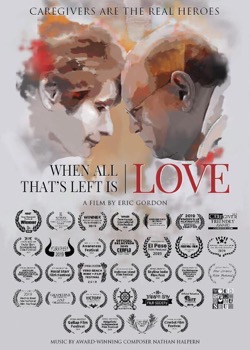
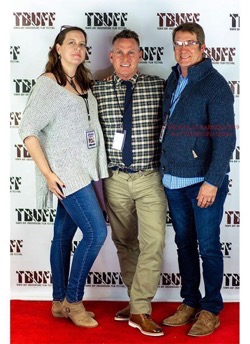
Congratulations Krista Dyson (Stephens College MFA in TV and Screenwriting Class of 2018), co-producer on “When All That’s Left Is Love” which won the Buffy for Best Documentary at the 2019 Tampa Bay Underground Film Festival.

This feature-length documentary goes behind closed doors with Alzheimer’s caregivers. Dyson worked on the film while she was completing the MFA program.

“I feel like I earned two MFAs, between the writing program and the work I did on this project… Our goal was to allow the audience to truly understand what a complex and difficult situation exists for caregivers.”

Stephens College MFA Alums are Active Achievers!

Krista Dyson, Stephens College MFA in TV and Screenwriting Alunmi, wins Buffy for Best Documentary at the 2019 Tampa Bay Underground Film FestivalKrista Dyson, Stephens College MFA in TV and Screenwriting Alunmi, wins Buffy for Best Documentary at the 2019 Tampa Bay Underground Film Festival


Follow and Like the Stephens College MFA in TV and Screenwriting

#MentorMonday 8 - Dawn Comer Jefferson - Stephens College MFA in TV and Screenwriting

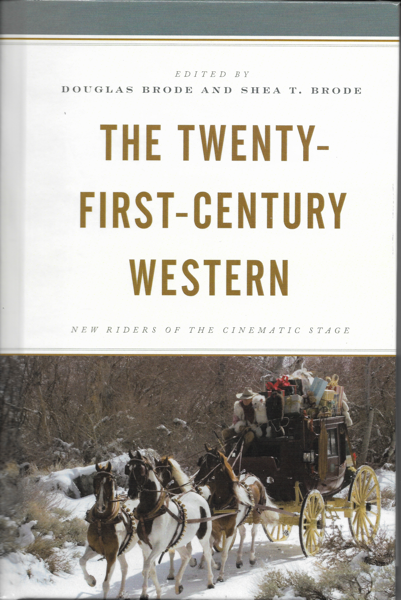
New Essay Published: The Twenty-First-Century Western: New Riders of the Cinematic Stage

Once again I’m happy to have co-written a chapter with editor Doug Brode. — Westward Ho! The Women!: Frontier Females in Postfeminist Films

Our first was collaboration came in The American Civil War on Film and TV: Blue and Gray in Black and White and Color – this one gave me a chance to analyze female characters in westerns produced after 2000.

Sadly, you’d think their new-ness would have made for more interesting, nuanced female characters but, as I say in the chapter, the most well-rounded, honest and real representations of females in westerns in the (supposedly) 21st century came from one of the youngest characters (Mattie Ross in True Grit) and from one of the animated characters, who is not even a female human, but a female lizard (Beans in Rango). And once again, as I am finding more and more, whether the screenwriter was female or male often made a difference.

New Essay Published: The Twenty-First-Century Western

Focusing on twenty-first century Western films, including all major releases since the turn of the century, the essays in this volume cover a broad range of aesthetic and thematic aspects explored in these films, including gender and race. As diverse contributors focus on the individual subgenres of the traditional Western (the gunfighter, the Cavalry vs. Native American conflict, the role of women in Westerns, etc.), they share an understanding of the twenty-first century Western may be understood as a genre in itself. They argue that the films discussed here reimagine certain aspects of the more conventional Western and often reverse the ideology contained within them while employing certain forms and clichés that have become synonymous internationally with Westerns. The result is a contemporary sensibility that might be referred to as the postmodern Western.

30 More On Jane Espenson from The Sisterhood of Science Fiction – Dr. Rosanne Welch [Video] (58 seconds)

Watch this entire presentation

The Sisterhood of Science Fiction: A Walk Through Some Writers and Characters You (Should) Know And Love

30 More On Jane Espenson from The Sisterhood of Science Fiction - Dr. Rosanne Welch

Subscribe to Rosanne’s Channel and receive notice of each new video!


This one allowed me to riff on some of my favorite female science fiction writers across time, whether they be novelists or television writers. It also opened up a good conversation on what art we support and include in our lives – and what that art says to us and about us. — Rosanne

Transcript:

Likewise, she wrote many Buffy’s but one of the best is an episode called Earshot and Buffy’s all streaming for free on Facebook right now so you can watch. (Audience: I grew up watching that.) I Iove Buffy, I know. It’s really brilliantly written show. Earshot was a brilliant episode about Buffy who is the Vampire Slayer being cursed with the ability to hear what everyone is thinking — so mental telepathy and the problem is the cacophony in your head starts to make you crazy because if you can hear what everyone was thinking you couldn’t think your own thoughts and along the way — she’s in high school — she hears someone say “It doesn’t matter tomorrow by noon they’ll all be dead.” So now she knows she’s in a school with a shooter but who is it because she can’t pinpoint where the voice came from. So the whole episode is about trying to find the kid and of course, you trace the kid who looks the most bullied and seems to be the most stereotypically that kid. I’m not going to tell you you did it but — spoiler alert — it ain’t that kid right? So it’s really again excellently written episode using all the tropes of the era so Jane Espenson a pretty important writer.


* A portion of each sale from Amazon.com directly supports our blogs
** Many of these books may be available from your local library. Check it out! 

From The Journal Of Screenwriting V10 Issue 1: Creative resistance tactics in the work of English Canadian screenwriters by Kerry McArthur

Highlighting the articles in the past editions of the Journal of Screenwriting, of which I am the Book Reviews Editor. Hopefully these abstracts will entice you to did a little deeper into the history and future of screenwriting. — Rosanne


Creative resistance tactics in the work of English Canadian screenwriters by Kerry McArthur

This article analyses how eight successful English Canadian screenwriters negotiate various norms of screenwriting practice, in particular the criteria for three-act structure, character development and closure as advocated by Hollywood. The writers discuss their interpretations of what they consider essential narrative elements in screenplay projects, while dismissing other edicts of the screenwriting industry. Analysis of interview transcripts reveals that most of these writers take their inspiration from their own experience of screenwriting and their interpretations of other screenplays and historic texts on narrative rather than from contemporary screenwriting textbooks. The focus for almost all of these screenwriters is on writing screen stories in original ways, rather than adopting standardized narrative directives, even when elements of these directives have their uses.


From The Journal Of Screenwriting V10 Issue 1: Creative resistance tactics in the work of English Canadian screenwriters by Kerry McArthur

The Journal of Screenwriting is an international double-blind peer-reviewed journal that is published three times a year. The journal highlights current academic and professional thinking about the screenplay and intends to promote, stimulate and bring together current research and contemporary debates around the screenplay whilst encouraging groundbreaking research in an international arena. The journal is discursive, critical, rigorous and engages with issues in a dynamic and developing field, linking academic theory to screenwriting practice. 

Get your copy and subscription to the Journal of Screenwriting Today!


Screenwriting Research Network Conference 2020

Join me at the Screenwriting Research Network’s Annual Conference in Oxford, UK


* A portion of each sale from Amazon.com directly supports our blogs
** Many of these books may be available from your local library. Check it out!

32 Adam’s Rib and Ruth Gordon from “When Women Wrote Hollywood” with Dr. Rosanne Welch [Video] (1 minute 7 seconds)

Part of the California State University, Fullerton Faculty Noon Time Talks at the Pollak Library.

Watch this entire presentation

32 Adam's Rib and Ruth Gordon from

Subscribe to Rosanne’s Channel and receive notice of each new video!


Transcript:

In Adam’s Rib they’re two lawyers who work on the opposite side of a case. In real life, she and her husband were equally famous writers. They shared a profession together at which they both excelled right? So that was exactly her experience and the kind of dialogue and language — the kind of attitude that comes from Katharine Hepburn and all her in all the films written by Ruth, that’s Ruth Gordon talking right? She’s the feminist we should think about. She was an early Broadway actress. Best friends of Thornton Wilder who wrote Our Town. He wrote the matchmaker for her which became — Hello Dolly — and when she was young her husband died. Her first husband died of disease when he was like 28 which was very sad and she ended up in a relationship with a famous producer — Broadway producer. They had a baby out of wedlock. She was supposed to have the baby adopted away because you weren’t supposed to tell people you had gotten pregnant and had sex outside of marriage but she kept it instead and everybody said “Well your acting career will be over!” and she said “Only if you say it’s over.” and she kept working. So she was breaking the societal rules that were trying to trap her all right? So she is who Katharine Hepburn is in those movies and we should pay more attention.

Dr. Rosanne Welch discusses the women in her new book “When Women Wrote Hollywood” which covers female screenwriters from the Silents through the early 1940s when women wrote over 50% of films and Frances Marion was the highest paid screenwriter (male or female) and the first to win 2 Oscars.  Yet, she fails to appear in film history books, which continue to regurgitate the myth that male directors did it all – even though it’s been proven that the only profitable movies Cecil B. de Mille ever directed were all written by Jeannie Macpherson film ever won for Best Picture was written by Robert E. Sherwood (who people have heard of, mostly due to his connection to Dorothy Parker) and Joan Harrison.


Buy a signed copy of when Women Wrote Hollywood

…or via Amazon…

Paperback Edition | Kindle Edition | Google Play Edition

* A portion of each sale from Amazon.com directly supports our blogs
** Many of these books may be available from your local library. Check it out!
† Available from the LA Public Library