From The Journal Of Screenwriting 6: Kurosawa to Kasdan: Storytelling influences

Highlighting the articles in the latest edition of the Journal of Screenwriting, of which I am the Book Reviews Editor. Hopefully these abstracts will entice you to did a little deeper into the history and future of screenwriting. — Rosanne


Kurosawa to Kasdan: Storytelling influences
Brett Davies

Lawrence Kasdan is one of the most commercially successful screenwriters of the past forty years. In addition to writing Raiders of the Lost Ark (1981) and four episodes of the Star Wars saga, Kasdan has gained critical acclaim as the writer-director of seminal 1980s ‘baby-boomer’ films, such as The Big Chill (1983) and The Accidental Tourist (1988). Known for ‘genre-hopping’, it is perhaps Kasdan’s very versatility that has led to a marked lack of academic discourse on his work, as his eclectic canon – including westerns, neo-noir, sci-fi horror, comedy and romantic thriller – makes it problematic for scholars to establish prevalent patterns in his output. This article argues that one influence has remained constant throughout Kasdan’s career: the work of Akira Kurosawa. Examining three screenwriting elements – dialogue, protagonists, themes – the article will demonstrate how Kurosawa’s storytelling style has repeatedly informed Kasdan’s work, from his earliest screenplays (Kasdan said that ‘there’s a lot of Kurosawa in Raiders’) to his most recent, as The Force Awakens (2015) and Solo: A Star Wars Story (2018) showed stylistic connections with Kurosawa’s films, beyond those already established by George Lucas’s original Star Wars (1977).

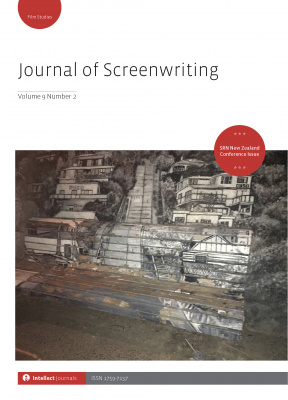
Journal of Screenwriting Cover

The Journal of Screenwriting is an international double-blind peer-reviewed journal that is published three times a year. The journal highlights current academic and professional thinking about the screenplay and intends to promote, stimulate and bring together current research and contemporary debates around the screenplay whilst encouraging groundbreaking research in an international arena. The journal is discursive, critical, rigorous and engages with issues in a dynamic and developing field, linking academic theory to screenwriting practice. 

Get your copy and subscription to the Journal of Screenwriting Today!


* A portion of each sale from Amazon.com directly supports our blogs
** Many of these books may be available from your local library. Check it out!

After the DTLA Film Festival Panel via Instagram

Follow Rosanne on Instagram!

After the DTLA Film Festival Panel

After the DTLA Film Festival Panel via Instagram

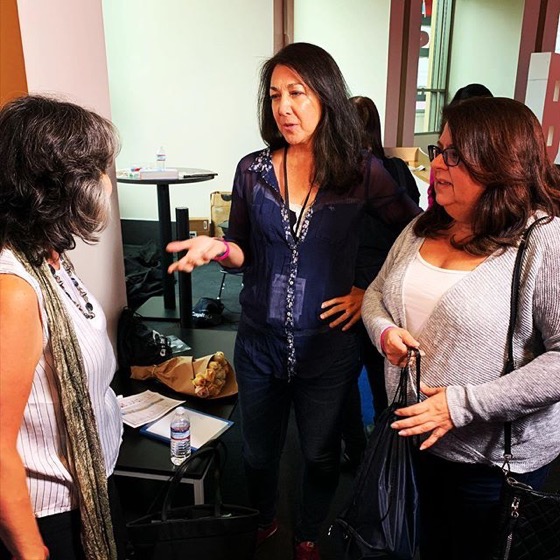
Moderating panels at local film festivals is a good way to highlight the great work of mentors like Maria Escobedo and to meet new possible mentors for MFA program like Peruvian filmmaker Donna Bonilla Wheeler. Here we are chatting after a panel on how Writers Can avoid implicit bias in their work at the DTLA film Festival in Los Angeles.


Quotes from When Women Wrote Hollywood – 50 and End in a series – “…her female-centric work failed to find acclaim with critics.”

Do you know about these women screenwriters? Many don’t. Learn more about them today! 

Buy “When Women Wrote Hollywood” Today!

Quotes from When Women Wrote Hollywood - 49 and End in a series -

Zoë Akins is described as “a perplexing figure in the history of American theatre” by historian Yvonne Shafer (58). Akins was a poet, novelist, playwright, and screenwriter. Despite many successful publications, productions, films, and a Pulitzer Prize, she is not considered an obvious success. In creative fields dominated by the male perspective, her female-centric work failed to find acclaim with critics.

Zoë Akins: A Quiet Rebellion
by Sarah Whorton


Buy a signed copy of when Women Write Hollywood or Buy the Book on Amazon

Paperback Edition | Kindle Edition | Google Play Edition

* A portion of each sale from Amazon.com directly supports our blogs
** Many of these books may be available from your local library. Check it out!
† Available from the LA Public Library

DTLA Film Festival panel discussion, Privileged Characters: How to recognize and avoid implicit bias in your screenwriting via Instagram

Follow Rosanne on Instagram!

DTLA Film Festival panel discussion, Privileged Characters: How to recognize and avoid implicit bias in your screenwriting.

DTLA Film Festival panel discussion, Privileged Characters: How to recognize and avoid implicit bias in your screenwriting via Instagram

Video of this panel coming soon!


DTLA Film Festival panel discussion via Instagram

Follow Rosanne on Instagram!

DTLA Film Festival panel discussion, Privileged Characters: How to recognize and avoid implicit bias in your screenwriting.

DTLA Film Festival panel discussion via Instagram

Video of this panel coming soon.


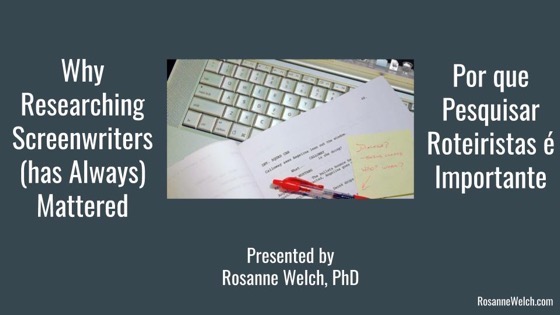
Why Researching Screenwriters (has Always) Mattered – 10th Screenwriters´ (hi)Stories Seminar – Dr. Rosanne Welch

*** Note: Introduction is in Portuguese, but the presentation is entirely in English

Brazil 10th Screenwriters´ hi Stories Seminar 1

Subscribe to Rosanne’s Channel and receive notice of each new video!


My keynote speech at the 10th Screenwriters´(hi)Stories Seminar for the interdisciplinary Graduation Program in “Education, Art, and History of Culture”, in Mackenzie Presbyterian University, at São Paulo, SP, Brazil, focused on the topic “Why Researching Screenwriters (has Always) Mattered.” I was especially pleased with the passion these young scholars have toward screenwriting and it’s importance in transmitting culture across the man-made borders of our world.

To understand the world we have to understand its stories and to understand the world’s stories we must understand the world’s storytellers. A century ago and longer those people would have been the novelists of any particular country but since the invention of film, the storytellers who reach the most people with their ideas and their lessons have been the screenwriters. My teaching philosophy is that: Words matter, Writers matter and Women writers matter s– o women writers are my focus because they have been the far less researched and yet they are over half the population. We cannot tell the stories of the people until we know what stories the mothers have passed down to their children. Those are the stories that last. Now is the time to research screenwriters of all cultures and the stories they tell because people are finally recognizing the work of writers and appreciating how their favorite stories took shape on the page long before they were cast, or filmed, or edited. But also because streaming services make the stories of many cultures now available to a much wider world than ever before.

Many thanks to Glaucia Davino for the invitation.


Paperback Edition | Kindle Edition | Google Play Edition

* A portion of each sale from Amazon.com directly supports our blogs
** Many of these books may be available from your local library. Check it out!
† Available from the LA Public Library

From The Journal Of Screenwriting 5 : Crafting an ‘authentic’ monster: Dialogue, genre and ethical questions in Mindhunter (2017)

Highlighting the articles in the latest edition of the Journal of Screenwriting, of which I am the Book Reviews Editor. Hopefully these abstracts will entice you to did a little deeper into the history and future of screenwriting. — Rosanne


Crafting an ‘authentic’ monster: Dialogue, genre and ethical questions in Mindhunter (2017)
Erica Moulton

Extended scenes of idiosyncratic dialogue between a serial killer and profiler are emblematic of the first season of Joe Penhall and David Fincher’s Netflix series Mindhunter. In examining this aspect of the series, my article engages with several burgeoning areas of study in screenwriting and adaptation, notably the intersection of ethics, genre and dialogue. Mindhunter falls squarely into the serial killer subset of the crime procedural genre, following two FBI agents as they interview incarcerated killers under the purview of the newly formed Behavioral Science Unit. In exploring the origin and deployment of highly psychologized speech, I argue that conventions within the serial killer subgenre and the invocation of non-fictional source material led the show’s writers to rely on codes of ‘authenticity’ in crafting the dialogue. Building on studies of screenwriting and genre by Jule Selbo, I also argue that the interview scenes depicted on Mindhunter between the FBI agents and the serial killers can be broken down into various dialogue typologies. The dialogue in these scenes presents the killer as a fount of wisdom, the investigator as an eager receptacle and the psychological boundaries between the two characters as disturbingly permeable. I conclude by probing the ethical underpinnings of this typology considering how screenwriters navigate the tensions between on-screen representation and the framing of ‘authentic’ content.

Journal of Screenwriting Cover

The Journal of Screenwriting is an international double-blind peer-reviewed journal that is published three times a year. The journal highlights current academic and professional thinking about the screenplay and intends to promote, stimulate and bring together current research and contemporary debates around the screenplay whilst encouraging groundbreaking research in an international arena. The journal is discursive, critical, rigorous and engages with issues in a dynamic and developing field, linking academic theory to screenwriting practice. 

Get your copy and subscription to the Journal of Screenwriting Today!


* A portion of each sale from Amazon.com directly supports our blogs
** Many of these books may be available from your local library. Check it out!

#MentorMonday 3 – Valerie Woods – Stephens College MFA in TV and Screenwriting
Applications for the 2020 Class of the Stephens College MFA in TV and Screenwriting are now OPEN!
Inquire or Apply Today!

Deadline March 2020


Today’s Stephens College MFA in TV and Screenwriting #mentormonday goes out to none other than Valerie Woods! (IMDB)

#MentorMonday 3 - Valerie Woods - Stephens College MFA in TV and Screenwriting

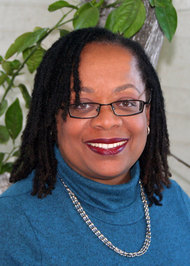
Valerie C. Woods is a writer/producer in television and film, and also is a publisher, editor and author. Woods currently is co-executive producer/writer on the critically acclaimed television drama series Queen Sugar, created by Ava DuVernay and airing on Oprah Winfrey Network (OWN). She also has been adjunct faculty for Stephens’ Master of Fine Arts in TV and Screenwriting program since 2015.

Recently, Woods served as creative director for Syd Field – The Art of Visual Storytelling. She is one of four Syd Field Screenwriting Method Instructors trained by Mr. Field. She also wrote the screen adaptation of the novel Tempest Rising by Diane McKinney-Whetstone, with the production company of actor/director Phylicia Rashad.

Queen sugar

In 2013, Woods founded the independent press BooksEndependent, which has published five titles, including Woods’ novel Katrin’s Chronicles: The Canon of Jacqueléne Dyanne. She also is the author of Something for Everyone (50 Original Monologues), which is published by Samuel French, Inc. In 2016, Woods produced a series of staged readings of scripts adapted from literary work via Staged/Lit.

During Woods’ 20+ years as a member of Writers Guild of America West, she has written on one-hour drama series for CBS, Lifetime, and Showtime. Credits include consulting producer/writer for the drama series Soul Food on Showtime Network and co-executive producer/writer on the drama series Any Day Now on Lifetime Network. Her episode “Family is Family” was nominated for a GLAAD Media Award. Her television career began after winning a fellowship with Walt Disney Studios.

#MentorMonday 3 - Valerie Woods - Stephens College MFA in TV and Screenwriting


Follow and Like the Stephens College MFA in TV and Screenwriting
Getting ready for my panel at DTLA Film Festival on Sunday via Instagram

Follow Rosanne on Instagram!

Getting ready for my panel at DTLA Film Festival on Sunday

Getting ready for my panel at DTLA Film Festival on Sunday via Instagram

Chatting with Maria Staroselets of the DTLA Film Festival before our panel discussion, Privileged Characters: How to recognize and avoid implicit bias in your screenwriting.

Video of this panel coming soon


Quotes from When Women Wrote Hollywood – 49 in a series – “…leading lady in the Selznick scenario department.”

Do you know about these women screenwriters? Many don’t. Learn more about them today! 

Buy “When Women Wrote Hollywood” Today!

Quotes from When Women Wrote Hollywood - 49 in a series -

The Morning Telegraph (NY) report April 17, 1921: “Sarah Y. Mason has returned to Hollywood after a year in New York as a leading lady in the Selznick scenario department. She has just completed an original story for screen purposes and has orders for several continuities. However, Mason contrives to divide her time equally between screen and society.”

The Six Degrees of Sarah Y. Mason and Victor Heerman
by Pamela L. Scott


Buy a signed copy of when Women Write Hollywood or Buy the Book on Amazon

Paperback Edition | Kindle Edition | Google Play Edition

* A portion of each sale from Amazon.com directly supports our blogs
** Many of these books may be available from your local library. Check it out!
† Available from the LA Public Library