18 Joanna Lee & Madeline Anderson From Women in Early TV for the American Women Writers National Museum [Video]

18 Joanna Lee & Madeline Anderson From Women in Early TV for the American Women Writers National Museum [Video]

Many thanks to Janice Law of the American Women Writers National Museum who invited me to give a short talk on The Women of Early TV.

I enjoyed sharing the names and careers of women like Peg Lynch, Gertrude Berg, Selma Diamond, and D.C. Fontana to the members who gathered on Zoom last Wednesday morning. There are so many more I could have talked about whose names don’t appear in mainstream books about the history of television so we have to learn who they are and carry those names forward ourselves.  It’s one of the missions of the Stephens College MFA in TV and Screenwriting – and has been one of my missions all my life.

RMW Rosanne Signature for Web

Transcript:

Then we have to think about who’s getting recognized. In this case, Joanna Lee – in the early mid-1970s – is the first female to win her Emmy Award for a drama right? We have Treva winning for a comedy. Just about eight years later, Joanna Lee is going to win for the Thanksgiving episode of The Waltons. She had been an actress in the 40s and had sadly a car accident which made it difficult for her to perform and be on set for long hours. So she turned to writing. She became a television writer working on all of these many shows right? All the way through and it’s interesting to see how she went from comedies – we always think girls have to be funny first – and then she started to do dramas right? The Mod Squad and then moved into Dynasty but she got her Emmy award for The Waltons. So this is a huge moment – again a female winning this award on her own. That’s a big deal. Outside of that are there women of color in early television. Not as many as we would like as is always the case however Madeleine Anderson came up through the news business right? She started doing a black journal out of Chicago originally and then she got jobs on Sesame Street. So through the PBS network, she started working for them doing children’s programming and The Electric Company. Always things with an educational bent. She’s the first African-American woman who ever produced a nationally aired television series, also on PBS, and also an educational series. So Madeleine Anderson’s someone whose name does not appear in most of our history books. That’s always been a problem for me.

Many thanks to Janice Law of the American Women Writers National Museum who invited me to give a short talk on The Women of Early TV.

I enjoyed sharing the names and careers of women like Peg Lynch, Gertrude Berg, Selma Diamond, and D.C. Fontana to the members who gathered on Zoom last Wednesday morning. There are so many more I could have talked about whose names don’t appear in mainstream books about the history of television so we have to learn who they are and carry those names forward ourselves. It’s one of the missions of the Stephens College MFA in TV and Screenwriting – and has been one of my missions all my life.

Watch this entire presentation


Women pioneers who created, produced, or shepherded many of America’s most wildly popular, early television programs will be profiled by Dr. Rosanne Welch.

Get your copy today!

04 Who Inspired You? from In Conversation with Dr. Rosanne Welch and Intellect Books [Video]

04 Who Inspired You? from In Conversation with Dr. Rosanne Welch and Intellect Books [Video]

Transcript:

Host: What women in filmmaking inspired you as a practicing filmmaking screenwriter?

Rosanne: I was the kid who watched a lot of tv because I was an only child and I lived with my immigrant Sicilian grandparents and my mom, but she was at work all day, especially in the summer vacation and that was before parents arranged play dates and drove you to your friend’s houses for so many hours and whatnot. You were just on your own. So you went to the library. You found a bunch of books. So I read up a lot of the early female screenwriters. People like Anita Loos and Adele Rogers St. John and so I knew they existed and I was really interested in their work, but it wasn’t available to see right? Nobody was showing that sort of thing on television. So tv shows and tv writers in that period really struck me. I did a book on The Monkees a few years ago because Treva Silverman was the first female writer of a television show — a comedy writer — who didn’t have a male partner and she eventually went to the Mary Tyler Moore Show and she won a couple of Emmys. So she had quite a good career. So I started to realize there were women doing this writing thing and then I started to look into older films and find names in the past but there was this period in Hollywood where the Silent period and a little bit into the Talkies is very much — I saw another academic years ago at a conference say that early aviation and early film were back-to-back and that women were deeply involved in both and as soon as they became money-making franchises and men created studios and were the bosses, they offered women who had done the job before jobs — new contracts — as junior writers and they’re really big women like Anita Loos whatever — I’ll just go write novels. I don’t need you. Like this is — I don’t — I’m not a junior anything. So they disappeared from the sort of textbooks that started to appear in film studies and it was all these men, right? So you really had to start looking for them and of course, now there are better books out there. Cari Beauchamp has a wonderful book on Francis Marion who is the first woman to win two Oscars for writing and she was the highest-paid screenwriter in Hollywood.


One of the benefits of attending conferences is that you can meet the editors from the companies that have published some of your books face to face. That happened at the recent SCMS conference where I met Intellect editor James Campbell and he invited me to be a guest on his InstagramLive show.

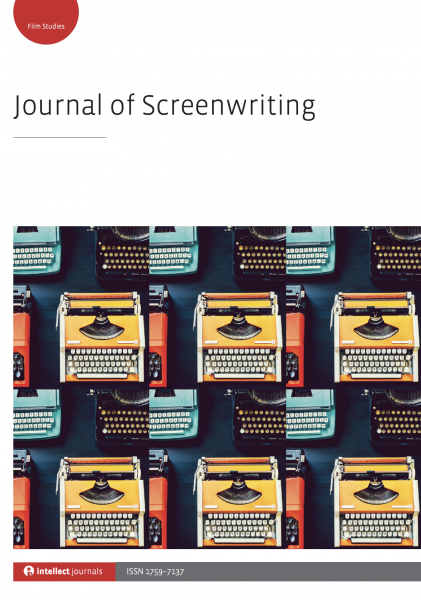
We chatted about my work with the Stephens College MFA in TV and Screenwriting, and then my work with co-editor Rose Ferrell on the Journal of Screenwriting’s special issue on Women in Screenwriting (Volume 11, Number 3) that came out recently and which featured articles about an international set of female screenwriters from Syria, Argentina, China and Canada (to name a few).

We even had time to nerd out on our own favorite classic films across the eras which brought up fun memories of Angels with Dirty Faces, Back to the Future, Bonnie and Clyde, and of course, all things Star Wars from the original 3 to The Mandalorian. It’s always so fun to talk to fellow cinephiles.
RMW Rosanne Signature for Web

Watch this entire presentation

With Intellect Books Editor James Campbell (@IntellectBooks)

Speaking with Dr. Rosanne Welch, Author, teacher, and television screenwriter. Today we cover everything from women in screenwriting to our favorite Jimmy Cagney movies and Friends.
Journal of Screenwriting Cover

17 Even More On Treva Silverman From Women in Early TV for the American Women Writers National Museum [Video]

17 Even More On Treva Silverman From Women in Early TV for the American Women Writers National Museum [Video]

Many thanks to Janice Law of the American Women Writers National Museum who invited me to give a short talk on The Women of Early TV.

I enjoyed sharing the names and careers of women like Peg Lynch, Gertrude Berg, Selma Diamond, and D.C. Fontana to the members who gathered on Zoom last Wednesday morning. There are so many more I could have talked about whose names don’t appear in mainstream books about the history of television so we have to learn who they are and carry those names forward ourselves.  It’s one of the missions of the Stephens College MFA in TV and Screenwriting – and has been one of my missions all my life.

RMW Rosanne Signature for Web

Transcript:

That particular season The Emmys also gave an overall Emmy for best writer of the whole year and Treva won that. So she’s the only person to win two Emmys in one year. Happens to be a female who worked alone right which I love. Now before that she worked on – she did a couple episodes of That Girl and I simply want to mention that because we often say Mary Tyler Moore was the first single woman on television. She was not. Actually, That Girl was because she was an actress but we don’t take that job seriously but she was the first show. She came on two seasons before Mary Tyler Moore and even before that we should say that Julia was the first working woman on television right and that’s an early just before Mary Tyler Moore as well. So we have a few things to think about in terms of Treva Silverman. After she did television she did script doctoring. So we don’t see her name come up very often because she’s someone that would be hired — in this case for this movie Romancing The Stone — to fix it right? There’s something wrong. We want to make this movie but it’s not working. In this case, the adorable thing was the Kathleen Turner character everyone thought was too harsh and what can we do to soften her up without giving her, you know, a boyfriend or whatever because she’s going to end up you know with Michael Douglas and Treva’s idea was the idea that has spawned a series of books on how to write film and that’s called Save The Cat. She brought in a cat. She wrote an early scene where Kathleen Turner was feeding her cat and because she loved a pet the audience loved her and that salvaged the character. So that’s the kind of script doctoring that she would do pretty much for the rest of her career.

Many thanks to Janice Law of the American Women Writers National Museum who invited me to give a short talk on The Women of Early TV.

I enjoyed sharing the names and careers of women like Peg Lynch, Gertrude Berg, Selma Diamond, and D.C. Fontana to the members who gathered on Zoom last Wednesday morning. There are so many more I could have talked about whose names don’t appear in mainstream books about the history of television so we have to learn who they are and carry those names forward ourselves. It’s one of the missions of the Stephens College MFA in TV and Screenwriting – and has been one of my missions all my life.

Watch this entire presentation


Women pioneers who created, produced, or shepherded many of America’s most wildly popular, early television programs will be profiled by Dr. Rosanne Welch.

Get your copy today!

03 Unreliable Narrators from In Conversation with Dr. Rosanne Welch and Intellect Books [Video]

03 Unreliable Narrators from In Conversation with Dr. Rosanne Welch and Intellect Books [Video]

Transcript:

I was at SCMS too, doing a paper and it was on Unreliable Narrators and a great example of that — this happens to many female writers — but also Nunnally Johnson wrote the adaptation of The Grapes Of Wrath which was filmed by John Ford and my example of — one of my examples is that obituaries are unreliable narrators because eventuallyNunnally Johnson married the actress Doris Bowden who played Rosa Sharon in the film. When she died just about five or six years ago you know in her 90s, her obituary said that she had starred in John Ford’s The Grapes Of Wrath and afterward married that film’s screenwriter. So her husband’s name didn’t appear in her obituary but the director of the film she made 50 years ago — his name appeared in her obituary. So i have to laugh at that because even John Ford — then I found some lovely quotes where he talked about how Nunnally Johnson directed on the page. He said you know this is the camera angle and this is what we need close up and this is all going to track and all those things and Ford said you know people are going to credit me with that and Nunnally Johnson said I don’t care who they credit. I know who did it. So it’s kind of a pity that people don’t recognize these names of the movies they love.


One of the benefits of attending conferences is that you can meet the editors from the companies that have published some of your books face to face. That happened at the recent SCMS conference where I met Intellect editor James Campbell and he invited me to be a guest on his InstagramLive show.

We chatted about my work with the Stephens College MFA in TV and Screenwriting, and then my work with co-editor Rose Ferrell on the Journal of Screenwriting’s special issue on Women in Screenwriting (Volume 11, Number 3) that came out recently and which featured articles about an international set of female screenwriters from Syria, Argentina, China and Canada (to name a few).

We even had time to nerd out on our own favorite classic films across the eras which brought up fun memories of Angels with Dirty Faces, Back to the Future, Bonnie and Clyde, and of course, all things Star Wars from the original 3 to The Mandalorian. It’s always so fun to talk to fellow cinephiles.

RMW Rosanne Signature for Web

Watch this entire presentation

With Intellect Books Editor James Campbell (@IntellectBooks)

Speaking with Dr. Rosanne Welch, Author, teacher, and television screenwriter. Today we cover everything from women in screenwriting to our favorite Jimmy Cagney movies and Friends.

Journal of Screenwriting Cover

Dr. Rosanne Welch Guests on Women in Film & Video DC Oscar Panel Podcast [Audio]

60854458c4d1acdf4e1c2f79c4137142d85d78e379bdafbd69bd34c85f5819adAs a warm-up to the upcoming Oscar ceremony, the Women in Film DC podcast invited me in my position as Executive Director of the Stephens College MFA in TV and Screenwriting to a panel discussion about the women who have won Oscars from the beginning of the famed award ceremony. Having watched most of the ceremonies from the time I sat in front of the TV in my grandparents’ house cross-legged and begged to stay up past 11pm on a Sunday/school night, I had plenty of information.  Then, as editor of When Women Wrote Hollywood I had the chance to talk about the many female screenwriters whose names aren’t well known, but who wrote or otherwise contributed to films from Queen Christina (Salka Viertel) to It’s a Wonderful Life (Frances Hackett) to The Piano (Jane Campion).

Listen to this podcast

Women in Film & Video DC

From Media & Monuments

Topics that come up include women’s writers penchant for using their art for social justice, how the rise of the studio-as-factory system affected female employment, and how will streaming services change what films can be made – and can be nominated. I hope you enjoy the listen:

Ahead of the 94th Academy Awards on March 27, 2022, board member Sandra Abrams sits down with two amazing women to discuss Oscar’s history on nominations of women in non-actor categories. Our guests are Dr. Rosanne Welch, Executive Director of the MFA in TV and Screenwriting Program at Stephens College, and Leslie Combemale, a syndicated film critic known as Cinema Siren, and the creator and host of WomenRockingHollywood – an annual panel at Comic Con in San Diego which highlights female filmmakers. The women reflect on female representation throughout Hollywood’s and the awards show’s history, how it has changed, and what they see for the future.

For more Oscar information

Dr. Rosanne Welch

Leslie Combemale: https://cinemasiren.com/ and https://lesliecombemale.com/ and https://womenrockinghollywood.com/

16 More On Treva Silverman From Women in Early TV for the American Women Writers National Museum [Video]

16 More On Treva Silverman From Women in Early TV for the American Women Writers National Museum [Video]

Many thanks to Janice Law of the American Women Writers National Museum who invited me to give a short talk on The Women of Early TV.

I enjoyed sharing the names and careers of women like Peg Lynch, Gertrude Berg, Selma Diamond, and D.C. Fontana to the members who gathered on Zoom last Wednesday morning. There are so many more I could have talked about whose names don’t appear in mainstream books about the history of television so we have to learn who they are and carry those names forward ourselves.  It’s one of the missions of the Stephens College MFA in TV and Screenwriting – and has been one of my missions all my life.

RMW Rosanne Signature for Web

Transcript:

She moved on from that show, as I said, to win two Emmys for writing this beloved show — The Mary Tyler Moore Show. When James Brooks put that show together and James again a very respectable Executive Producer in television. Love all of what he’s done. He was a very progressive thinking man and he knew that if the show was about a single woman they ought to have a female on staff and so he asked Treva if she would join the show. The Emmys she won twofold. She won this Emmy for writing an episode about Lou Grant. she had single female friends who thought Ed Asner was appealing but his character on the show, Lou, was married and they felt guilty for liking a man who had a wife because it meant that they might be you know stealing a man from another woman. So she came up with the idea that Lou’s wife and he should get a divorce but the progressive new thought was not because Lou did anything bad. He’s not a gambler. He’s not cheating on her. It was that Edie Grant had decided that she wasn’t fulfilled — that she hadn’t done in her life what she wanted to do. She had only ever served him and it was her turn before she got too old and that was such a wildly innovative idea and it was so poignant and so sad because the audience loved him but we liked her as well and we understood that this was such a problem and she had to take this chance. So it was a brilliant episode. It won her an Emmy.

Many thanks to Janice Law of the American Women Writers National Museum who invited me to give a short talk on The Women of Early TV.

I enjoyed sharing the names and careers of women like Peg Lynch, Gertrude Berg, Selma Diamond, and D.C. Fontana to the members who gathered on Zoom last Wednesday morning. There are so many more I could have talked about whose names don’t appear in mainstream books about the history of television so we have to learn who they are and carry those names forward ourselves. It’s one of the missions of the Stephens College MFA in TV and Screenwriting – and has been one of my missions all my life.

Watch this entire presentation


Women pioneers who created, produced, or shepherded many of America’s most wildly popular, early television programs will be profiled by Dr. Rosanne Welch.

Get your copy today!

02 On The Importance of Screenwriters from In Conversation with Dr. Rosanne Welch and Intellect Books [Video]

02 On The Imporatnce of Screenwriters from In Conversation with Dr. Rosanne Welch and Intellect Books [Video]

Transcript:

So I mostly am interested in that and screenwriting because in Hollywood the issue has always been — we have that “Auteur Theory” which has been fought about and we’ve argued about. We’re getting there but you still read in the newspapers the review of a film and they’ll say it belongs to the director. They’ll name you know so and so such and such film and maybe four paragraphs in you’ll find oh that person also wrote it. So they’re a writer-director. Why didn’t you say that right or five paragraphs in they’ll now mention who wrote the thing and you’re like well that’s what I want to know. That’s where the idea came from. I get it. Directors do cool things and they run the set and whatever but the theme and the characters and the dialogue — which is what we quote all the time — came from the writer and that’s the person that I feel like we should be — I don’t say they have to be higher than the director. Let’s get equal again, right, which again we were in the Silent Era. So that stuff interests me a lot.


One of the benefits of attending conferences is that you can meet the editors from the companies that have published some of your books face to face. That happened at the recent SCMS conference where I met Intellect editor James Campbell and he invited me to be a guest on his InstagramLive show.

We chatted about my work with the Stephens College MFA in TV and Screenwriting, and then my work with co-editor Rose Ferrell on the Journal of Screenwriting’s special issue on Women in Screenwriting (Volume 11, Number 3) that came out recently and which featured articles about an international set of female screenwriters from Syria, Argentina, China and Canada (to name a few).

We even had time to nerd out on our own favorite classic films across the eras which brought up fun memories of Angels with Dirty Faces, Back to the Future, Bonnie and Clyde, and of course, all things Star Wars from the original 3 to The Mandalorian. It’s always so fun to talk to fellow cinephiles.

RMW Rosanne Signature for Web

Watch this entire presentation

With Intellect Books Editor James Campbell (@IntellectBooks)

Speaking with Dr. Rosanne Welch, Author, teacher, and television screenwriter. Today we cover everything from women in screenwriting to our favorite Jimmy Cagney movies and Friends.

Journal of Screenwriting Cover

15 Treva Silverman From Women in Early TV for the American Women Writers National Museum [Video]

15 Treva Silverman From Women in Early TV for the American Women Writers National Museum [Video]

Many thanks to Janice Law of the American Women Writers National Museum who invited me to give a short talk on The Women of Early TV.

I enjoyed sharing the names and careers of women like Peg Lynch, Gertrude Berg, Selma Diamond, and D.C. Fontana to the members who gathered on Zoom last Wednesday morning. There are so many more I could have talked about whose names don’t appear in mainstream books about the history of television so we have to learn who they are and carry those names forward ourselves.  It’s one of the missions of the Stephens College MFA in TV and Screenwriting – and has been one of my missions all my life.

RMW Rosanne Signature for Web

Transcript:

Moving into the 1960s one of my favorite people is Treva Silverman. She is one of the first female writers to win an Emmy. In fact, she won two in the same year for writing without a male partner. All the previous women who had won had had a male partner. Treva was a solo writer. She originally wrote for The Monkees. One show that I have written an entire book about that I’m very interested in and I will credit her with the fact that in 58 episodes of a show about rock and roll singers, every girl they met had a job and a career. They did not ever date bimbos. They dated girls who were journalists and who were worked at record stores or there was one who was a princess and a princess is a job right? So I think Treva was the feminist voice on that show.

Many thanks to Janice Law of the American Women Writers National Museum who invited me to give a short talk on The Women of Early TV.

I enjoyed sharing the names and careers of women like Peg Lynch, Gertrude Berg, Selma Diamond, and D.C. Fontana to the members who gathered on Zoom last Wednesday morning. There are so many more I could have talked about whose names don’t appear in mainstream books about the history of television so we have to learn who they are and carry those names forward ourselves. It’s one of the missions of the Stephens College MFA in TV and Screenwriting – and has been one of my missions all my life.

Watch this entire presentation


Women pioneers who created, produced, or shepherded many of America’s most wildly popular, early television programs will be profiled by Dr. Rosanne Welch.

Get your copy today!

01 Introduction and Stephens College MFA In TV and Screenwriting from In Conversation with Dr. Rosanne Welch and Intellect Books [Video]

01 Introduction and Stephens College MFA In TV and Screenwriting from In Conversation with Dr. Rosanne Welch and Intellect Books [Video]


Transcript:

James: I just want to say welcome to everyone who’s joining us today. This is In Conversation. We’ll be chatting for another 45 minutes or so. I’m very pleased to have Dr. Rosanne Welch with me today who is a practicing screenwriter with some serious writing credits to her CV, which we’ll get into as well, but also she runs an MFA program and works as a major researcher involved in Intellect’s Journal of Screenwriting which we can also definitely discuss. So why don’t you tell us a little bit about your research interest? Is it just screenwriting you focus on or is there other aspects of film and history?

Rosanne: Well it’s largely yes film history as well but it kind of always focuses on women in film history because they’ve sort of been left behind on the cutting room floor. We’re getting there we’re seeing more involvement in that. I actually had a great conversation with the documentarian from the BBC who found me because I put a lot of my lectures online and in one of them I discuss research that we’re trying to do into a woman named Jennie Louise Toussaint. She was an African-American screenwriter in the Silent Era but the problem is her work was not preserved right? The films we know disintegrated. There are no paper scripts around. We know she existed because of advertisements in newspapers advertising her films that were playing. So they noticed that I had mentioned her and just said here’s someone we need to find more research on and they’re doing a BBC documentary on famous sisters of famous brothers — on accomplished women who were sisters of famous brothers and her brother was a Harlem Renaissance photographer. So they were like do you know anything more about her so we can do more on her. This is what I have. We’re all building on the knowledge. I mean that’s what a journal is for. We build on the knowledge that other people have found and eventually we get a bigger picture that didn’t exist.

One of the benefits of attending conferences is that you can meet the editors from the companies that have published some of your books face to face. That happened at the recent SCMS conference where I met Intellect editor James Campbell and he invited me to be a guest on his InstagramLive show.

We chatted about my work with the Stephens College MFA in TV and Screenwriting, and then my work with co-editor Rose Ferrell on the Journal of Screenwriting’s special issue on Women in Screenwriting (Volume 11, Number 3) that came out recently and which featured articles about an international set of female screenwriters from Syria, Argentina, China and Canada (to name a few).

We even had time to nerd out on our own favorite classic films across the eras which brought up fun memories of Angels with Dirty Faces, Back to the Future, Bonnie and Clyde, and of course, all things Star Wars from the original 3 to The Mandalorian. It’s always so fun to talk to fellow cinephiles.

RMW Rosanne Signature for Web

Watch this entire presentation

With Intellect Books Editor James Campbell (@IntellectBooks)

Speaking with Dr. Rosanne Welch, Author, teacher, and television screenwriter. Today we cover everything from women in screenwriting to our favorite Jimmy Cagney movies and Friends.

Journal of Screenwriting Cover

14 Joan Harrison From Women in Early TV for the American Women Writers National Museum [Video]

14 Joan Harrison From Women in Early TV for the American Women Writers National Museum [Video]

Many thanks to Janice Law of the American Women Writers National Museum who invited me to give a short talk on The Women of Early TV.

I enjoyed sharing the names and careers of women like Peg Lynch, Gertrude Berg, Selma Diamond, and D.C. Fontana to the members who gathered on Zoom last Wednesday morning. There are so many more I could have talked about whose names don’t appear in mainstream books about the history of television so we have to learn who they are and carry those names forward ourselves.  It’s one of the missions of the Stephens College MFA in TV and Screenwriting – and has been one of my missions all my life.

RMW Rosanne Signature for Web

Transcript:

Joan Harrison is a woman few people know about today because this man, Alfred Hitchcock, overshadowed all the writers of all his movies. We call them Hitchcock films but I find that very very disingenuous because in fact they were written by other people. Often this woman, Joan Harrison. She wrote, in fact, the only movie that Hitchcock ever won an Oscar for — Rebecca. She’s the woman who found the story, adapted it, wrote the script was on the set for all the production of it. She was originally his secretary. She began as the secretary and there were many people who never forgave that title however she wrote many other films. She began to produce films and we’re talking about early in the 40s, 50s. She’s going to move into the 1960s as the producer of the Alfred Hitchcock’s Presents program. So she’ll do TV production, executive producing, long before that ever existed for most people and very recently a friend of mine — I met her online doing other work — Christina Lane –she’s a professor out of the College of Florida. She wrote Phantom Lady. Of course, that’s the name of a film but also it’s the story of Joan Harrison’s life. So it’s the first full biography of a female producer of that time period that takes her work very seriously but notice how the subtitle still has to be “The forgotten woman behind Hitchcock.” That’s the name that we recognize. That’s the name people relate to. So her career has always been overshadowed by the fact that she worked for Hitchcock. There’s another book about writing with Hitchcock by I believe his name is Michael Shane, I’d have to double-check but he wrote several Hitchcock films and he wrote a book about writing with Hitchcock. About what it was like to work with him and as much as we call them Hitchcock films and I’m very against that auteur theory because I think the writer is the person who brings you your theme — that’s what they’re considered. So we have to remember the people behind the directing. They were the writers and this is a beautiful picture of her as a producer looking at a piece of edited film and making some choices. So she did the full gamut of work in these early days of television.

Many thanks to Janice Law of the American Women Writers National Museum who invited me to give a short talk on The Women of Early TV.

I enjoyed sharing the names and careers of women like Peg Lynch, Gertrude Berg, Selma Diamond, and D.C. Fontana to the members who gathered on Zoom last Wednesday morning. There are so many more I could have talked about whose names don’t appear in mainstream books about the history of television so we have to learn who they are and carry those names forward ourselves. It’s one of the missions of the Stephens College MFA in TV and Screenwriting – and has been one of my missions all my life.

Watch this entire presentation


Women pioneers who created, produced, or shepherded many of America’s most wildly popular, early television programs will be profiled by Dr. Rosanne Welch.

Get your copy today!