13 Even More On D. C. Fontana From Women in Early TV for the American Women Writers National Museum [Video]

13 Even More On D. C. Fontana From Women in Early TV for the American Women Writers National Museum [Video]

Many thanks to Janice Law of the American Women Writers National Museum who invited me to give a short talk on The Women of Early TV.

I enjoyed sharing the names and careers of women like Peg Lynch, Gertrude Berg, Selma Diamond, and D.C. Fontana to the members who gathered on Zoom last Wednesday morning. There are so many more I could have talked about whose names don’t appear in mainstream books about the history of television so we have to learn who they are and carry those names forward ourselves.  It’s one of the missions of the Stephens College MFA in TV and Screenwriting – and has been one of my missions all my life.

RMW Rosanne Signature for Web

Transcript:

There’s a great story. Nichelle Nichols was going to quit because, if you think about it, stereotypically, she was the secretary. She took calls for the captain on Star Trek. So she kind of thought this is a waste of my time. She’d been a big band singer. She had more to do with her life and in fact, the Reverend Dr. Martin Luther King met her at some fundraiser and said “Oh no-no. You are deeply important because you are showing young children that we belong in the future.” So she stayed on the show and looked then she did the movies and of course, Nichelle is as iconic as any of the early females in television. This is all the work of Dorothy Fontana and I think we need to recognize her name and be really interested in all her other work. She later went on to do Babylon 5 of course another science fiction show. She worked on the video game versions of Star Trek. So she stayed in that realm and was sort of the cover who knew all the history and how all the characters should be portrayed long after Gene Roddenberry passed away.

Many thanks to Janice Law of the American Women Writers National Museum who invited me to give a short talk on The Women of Early TV.

I enjoyed sharing the names and careers of women like Peg Lynch, Gertrude Berg, Selma Diamond, and D.C. Fontana to the members who gathered on Zoom last Wednesday morning. There are so many more I could have talked about whose names don’t appear in mainstream books about the history of television so we have to learn who they are and carry those names forward ourselves. It’s one of the missions of the Stephens College MFA in TV and Screenwriting – and has been one of my missions all my life.

Watch this entire presentation


Women pioneers who created, produced, or shepherded many of America’s most wildly popular, early television programs will be profiled by Dr. Rosanne Welch.

Get your copy today!

12 More On D. C. Fontana From Women in Early TV for the American Women Writers National Museum [Video]

12 More On D. C. Fontana From Women in Early TV for the American Women Writers National Museum [Video]

Many thanks to Janice Law of the American Women Writers National Museum who invited me to give a short talk on The Women of Early TV.

I enjoyed sharing the names and careers of women like Peg Lynch, Gertrude Berg, Selma Diamond, and D.C. Fontana to the members who gathered on Zoom last Wednesday morning. There are so many more I could have talked about whose names don’t appear in mainstream books about the history of television so we have to learn who they are and carry those names forward ourselves.  It’s one of the missions of the Stephens College MFA in TV and Screenwriting – and has been one of my missions all my life.

RMW Rosanne Signature for Web

Transcript:

She started out, as often happens to women, as an assistant to Gene Roddenberry. She had written short stories. She had actually written episodes of shows like The Big Valley and The High Chaparral. Again, two very progressive early shows. Problem was, how do you get a gig? She got a gig as his assistant but she was there at the very beginning. In the early books about Star Trek they will talk about how intrinsic she was to coming up with the fact that females needed to be important on the show because it was about the future and of course someone like Nichelle Nichols right? We had to have African-American representation in the future and this is going to be, again, so important to representation because Nichelle Nichols is going to inspire Mae Jemison, the first African-American female astronaut right? Mae Jemison saw Nichelle Nichols and knew that she could be in space because she saw it, so she could be it right?

Many thanks to Janice Law of the American Women Writers National Museum who invited me to give a short talk on The Women of Early TV.

I enjoyed sharing the names and careers of women like Peg Lynch, Gertrude Berg, Selma Diamond, and D.C. Fontana to the members who gathered on Zoom last Wednesday morning. There are so many more I could have talked about whose names don’t appear in mainstream books about the history of television so we have to learn who they are and carry those names forward ourselves. It’s one of the missions of the Stephens College MFA in TV and Screenwriting – and has been one of my missions all my life.

Watch this entire presentation


Women pioneers who created, produced, or shepherded many of America’s most wildly popular, early television programs will be profiled by Dr. Rosanne Welch.

Get your copy today!

02 Writing and Me from The Difficulties and Delicacies of Writing the First Female Doctor in 50+ years

It was great to be able to attend this year’s SD WhoCon in San Diego and present this lecture on “The Difficulties and Delicacies of Writing the First Female Doctor in 50+ years” in which I discuss how successful I think showrunner Christopher Chibnall was in making that transition.

It gave me a chance to talk about the creative work of a showrunner/screenwriter while also reconnecting to some friends we had met at this same convention some 3 years ago – and to talk about one of my favorite subjects – Doctor Who!

02 Writing and Me from The Difficulties and Delicacies of Writing the First Female Doctor in 50+ years

Transcript:

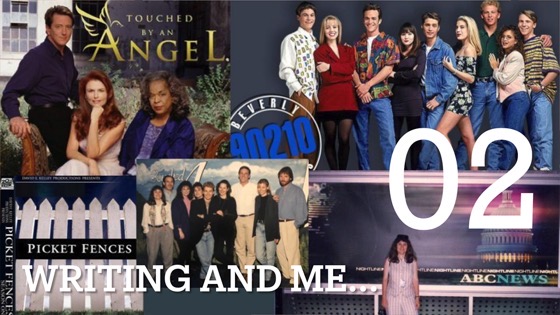
I came out of television into academia. So I worked on these shows earlier in my career and learned a lot from the people who ran them right? 90210. Very popular still. Always shocked about that because there’s been lots of teen shows but I think we learned that they took these teenagers seriously and when you take your character seriously, they become friends to the people who watch and I obviously believe that’s true in Doctor Who. We all have our favorite doctors. Mine actually goes back to classic Who. I’m a Peter Davidson person but our companions. I mean they are about bringing friends into our home. That’s how TV is different than film because you have to pay to go see the people in the films but these people come into our homes where we’re having coffee or you know having pizza or whatever. So I really think it’s interesting to look at why we fall in love with these characters and for me, of course, it comes from the writing.


Watch this entire presentation

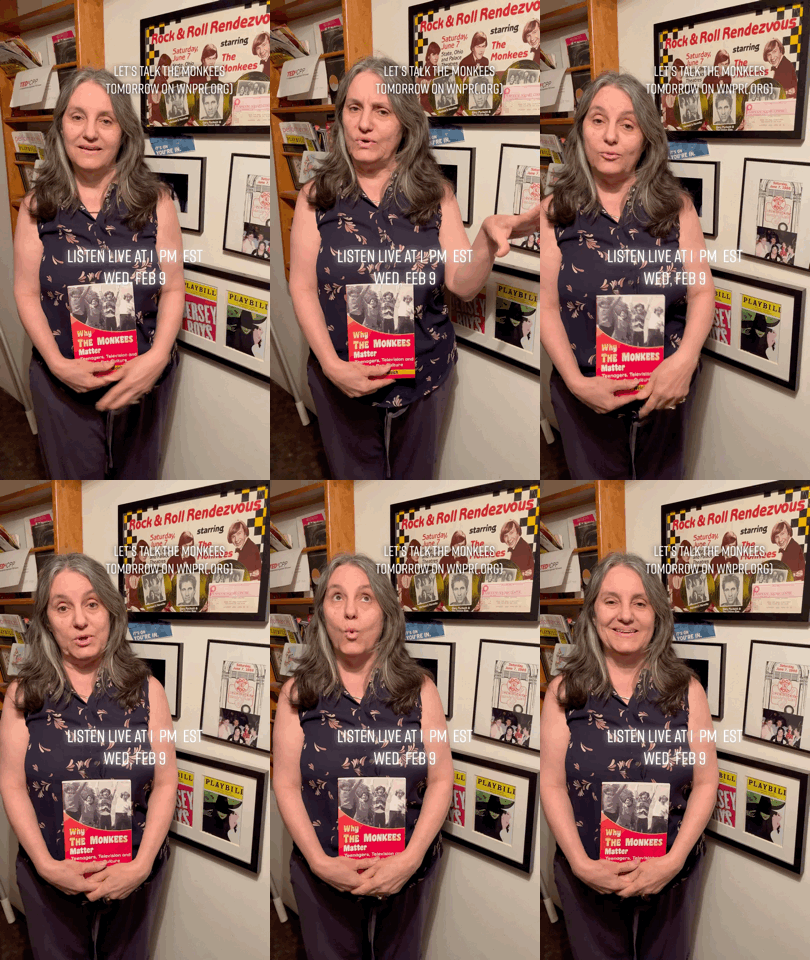
Rosanne is talking about The Monkees on The Colin McEnroe Show at WNPR Tomorrow (Feb 9, 1 pm)

Connecticut Public Radio WNPR Logo Download


@drrosannewelch I’m talking about The Monkees tomorrow on WNPR. Tune in live at 1 pm EST or listen to the archive. #themonkees #monkees #1960s #history #book #tv ♬ original sound – Dr. Rosanne Welch

Rosanne is talking aboiut The Monkees on The Colin McEnroe Show at WNPR Tomorrow (Feb 9, 1pm)

Tomorrow you can catch me chatting about Why The Monkees Matter on The Colin McEnroe Show on WNPR (or streaming online).

The whole show will cover The Monkees long and wonderful career from their music to the TV (my specialty)!   I’ll be in the 2nd segment from running from 1:28 to 1:43 p.m Eastern time (10:28-10:43 Pacific).

Get the Book Today!

01 Introduction from The Difficulties and Delicacies of Writing the First Female Doctor in 50+ years [Video] [Doctor Who]

It was great to be able to attend this year’s SD WhoCon in San Diego and present this lecture on “The Difficulties and Delicacies of Writing the First Female Doctor in 50+ years” in which I discuss how successful I think showrunner Christopher Chibnall was in making that transition.

It gave me a chance to talk about the creative work of a showrunner/screenwriter while also reconnecting to some friends we had met at this same convention some 3 years ago – and to talk about one of my favorite subjects – Doctor Who!

01 Introduction from The Difficulties and Delicacies of Writing the First Female Doctor in 50+ years [Video]

Transcript:

All right, ladies and gentlemen, it’s lovely to have you here. On my campuses, I’m kind of the Doctor of Doctor Who which makes people laugh. They’re like can you look at this academically and you can. What I’m going to talk about today is based on a chapter that I’ve written in a new book. I always feel bad about academic books. This thing is like 120 bucks because it’s meant for college libraries or whatnot and there are academics all over the UK and the US who’ve written chapters in it and of course it’s about the era of the New Dawn, the era of the Jody Whitaker Doctor. So when I saw this go up I said well I have a lot to say about screenwriting because officially this is who I am. I love that picture because it was taken at my college for an article they did on me. I worked for schools called Stephens College and we teach an MFA in screenwriting and so I always look at everything from the point of view of the person who wrote this material. I really am very interested in screenwriters more than directors because people sometimes will credit a director and I’m like well they didn’t make up the story. If you liked the twist or the character or piece of dialogue, they didn’t make that up. They just put the cameras at a lovely place and accented it. So let’s think about the people who wrote these things and so that’s what I do.


Watch this entire presentation

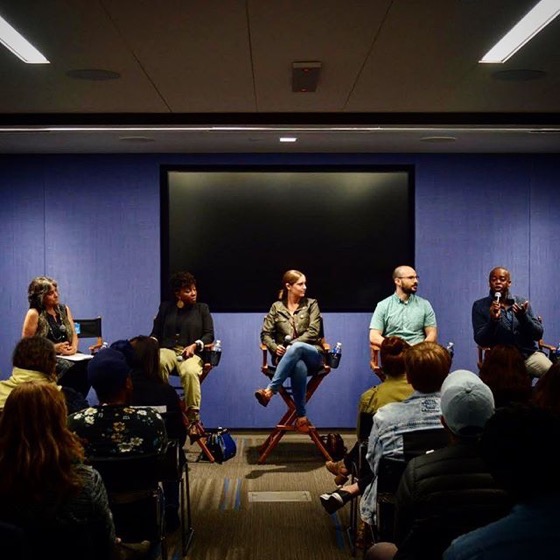
Dr. Rosanne Welch Moderates “More Than Queens and Crowns: Writing Female-Focused Historical Fiction” – Friday, January 7, 2022 – Writers Guild Foundation

Whenever I plan one of the Writers Guild Foundation panels that I host during our MFA Workshop I look for things I’m interested in hearing more about.  As I’ve enjoyed a few historical pieces recently it made sense to do a panel of writers in that genre. 

RMW Rosanne Signature for Web


Previous panel at the Writer Guild

More Than Queens and Crowns: Writing Female-Focused Historical Fiction
Friday, January 7, 2022
4:00 PM  5:30 PM
Zoom webinar

The WGF and Stephens College MFA in TV and Screenwriting team up for a virtual conversation on writing female-focused historical fiction TV series.

Whether the show takes place in 18th century England or the American suburbs of the 1960s, we ask TV writers and producers about their process for researching various eras, the creative decisions behind stories about real-life people and events, their experiences adapting from novels and literary works, and other lessons learned while writing in the genre.

  • Panelists:
    • Amberia Allen – Writer and Story Editor, The Wonder Years
    • Danielle Berrow – Writer and Executive Story Editor, Outlander
    • Robbie Macdonald – Writer and Executive Producer, Dickinson

Stay tuned for more panelist announcements!

Moderated by Dr. Rosanne Welch, Director of Stephens College MFA in TV and Screenwriting.

Panel starts at 4:00pm Pacific time.

Space is limited so RSVP now. After signing up, you’ll receive information on how to access the Zoom panel.

If you have any questions, please feel free to reach out to us at events@wgfoundation.org.

04 Selma Diamond From Women in Early TV for the American Women Writers National Museum [Video]

04 Selma Diamond From Women in Early TV for the American Women Writers National Museum [Video]

Many thanks to Janice Law of the American Women Writers National Museum who invited me to give a short talk on The Women of Early TV.

I enjoyed sharing the names and careers of women like Peg Lynch, Gerturde Berg, Selma Diamond and D.C. Fontana to the members who gathered on Zoom last Wednesday morning. There are so many more I could have talked about whose names don’t appear in mainstream books about the history of television so we have to learn who they are and carry those names forward ourselves.  It’s one of the missions of the Stephens College MFA in TV and Screenwriting – and has been one of my missions all my life.

RMW Rosanne Signature for Web

Transcript:

Next, we want to see Selma Diamond. Selma Diamond was an early writer on Your Show of Shows. Look at these names that she is with — Mel Tolkin, Larry Gelbart, Mel Brooks, and Selma Diamond right? She was such a fascinating woman but many people only know her from her part on Night Court which was a show in the late 80s. She stepped into that character. She actually passed away in the course of the show and was replaced by Marsha Warfield. So most people only know her from her acting career but in fact, she was a writer many years earlier. She had some comedy albums that were very very well respected and I happen to know right now her great-nephew is working on a documentary to tell the story of her career because sadly what happens to her and this woman, Lucy Kallen — Lucille Kallen, excuse me. She was also a writer on these early Sid Caesar shows right? So you can see her in this picture. She’s right there doing the work with everybody. She’s part of it everywhere you go except when we start to think about memorializing the people who worked on these shows. Now you have to think about how brilliant Lucille Kallen was. When tv went away from her right when it started to be something that they weren’t really giving her jobs in she began to write murder mysteries. The Tanglewood Murder. That whole CB Greenfield line is her. So she was already in the world of let’s have a continuing series. If I can’t do it on tv, I’ll do it in book form. So this is a woman who wrote all her career and I also happen to love this quote by her — a man’s home is his castle and his wife is the janitor. This is the kind of wit. She’s very much a Dorothy Parker type of person.

Many thanks to Janice Law of the American Women Writers National Museum who invited me to give a short talk on The Women of Early TV.

I enjoyed sharing the names and careers of women like Peg Lynch, Gerturde Berg, Selma Diamond and D.C. Fontana to the members who gathered on Zoom last Wednesday morning. There are so many more I could have talked about whose names don’t appear in mainstream books about the history of television so we have to learn who they are and carry those names forward ourselves. It’s one of the missions of the Stephens College MFA in TV and Screenwriting – and has been one of my missions all my life.

Watch this entire presentation


Women pioneers who created, produced or shepherded many of America’s most wildly popular, early television programs will be profiled by Dr. Rosanne Welch.

Get your copy today!

03 Gertrude Berg From Women in Early TV for the American Women Writers National Museum [Video]

03 Gertrude Berg From Women in Early TV for the American Women Writers National Museum [Video]

Many thanks to Janice Law of the American Women Writers National Museum who invited me to give a short talk on The Women of Early TV.

I enjoyed sharing the names and careers of women like Peg Lynch, Gerturde Berg, Selma Diamond and D.C. Fontana to the members who gathered on Zoom last Wednesday morning. There are so many more I could have talked about whose names don’t appear in mainstream books about the history of television so we have to learn who they are and carry those names forward ourselves.  It’s one of the missions of the Stephens College MFA in TV and Screenwriting – and has been one of my missions all my life.

RMW Rosanne Signature for Web

Transcript:

Gertrude Berg is a woman we need to know about. We think about early television. We think about diversity. In this case, it was considered quite diverse that there would be a Jewish family on television and so she wrote The Goldbergs, one of the earliest, again, sitcoms and these are the pile of scripts behind her because this ran as well on radio and then moved into television where she portrayed herself in the show right? So that’s a beautiful other thing. Long before they were Seinfeld in any of those other comics, she became the star of the show she also wrote. This impresses me because the double work involved in that is almost hard to explain and what’s really amazing about Molly Goldberg is in the 1940s she was voted the second most admired woman in America, right after the first lady Eleanor Roosevelt. Imagine that was showing us the early power of television and how those stories can move into our lives and really be part of something. So I found that absolutely fascinating.

Many thanks to Janice Law of the American Women Writers National Museum who invited me to give a short talk on The Women of Early TV.

I enjoyed sharing the names and careers of women like Peg Lynch, Gerturde Berg, Selma Diamond and D.C. Fontana to the members who gathered on Zoom last Wednesday morning. There are so many more I could have talked about whose names don’t appear in mainstream books about the history of television so we have to learn who they are and carry those names forward ourselves. It’s one of the missions of the Stephens College MFA in TV and Screenwriting – and has been one of my missions all my life.

Watch this entire presentation


Women pioneers who created, produced or shepherded many of America’s most wildly popular, early television programs will be profiled by Dr. Rosanne Welch.

Get your copy today!

02 Peg Lynch from “VISIBLE STARS: Women in Early TV” for the American Women Writers National Museum [Video]

02 Peg Lynch from

Many thanks to Janice Law of the American Women Writers National Museum who invited me to give a short talk on The Women of Early TV.

I enjoyed sharing the names and careers of women like Peg Lynch, Gerturde Berg, Selma Diamond and D.C. Fontana to the members who gathered on Zoom last Wednesday morning. There are so many more I could have talked about whose names don’t appear in mainstream books about the history of television so we have to learn who they are and carry those names forward ourselves.  It’s one of the missions of the Stephens College MFA in TV and Screenwriting – and has been one of my missions all my life.

RMW Rosanne Signature for Web

Transcript:

My teaching philosophy is that Words matter, Writers matter,. and Women Writers matter and they are far too often left out of the history books that we use to teach our incoming students. My school is Stephens College as Jen has so nicely told you and we teach a program in TV and Screenwriting — a master’s program — and I’m excited to say that we are all about representation on television and we’re going to see a little example of that in my presentation today. So let’s get to it. One of the first women — we credit her with inventing the sitcom which is a money maker for television for all these many, many years. Peg Lynch. She began in radio, as many of these women did, and she was writing short sketches — 10 and 15 minute sketches — called the Ethel and Albert Comedies and this is the first time she took sort of domestic life and made jokes out of it and put that on the media right? In this case, radio shows and eventually they became television shows and to her credit, she has 11,000 scripts. So think about that as if she was writing for a variety show if you will. It went on for many years. There were many many episodes. So she’s the first person who really got into the husband and wife having a chat and let’s make some jokes about how tough real-life can be. Often with the wife being a little smarter than the husband right? Being a step ahead of him but society allowed him to move forward and of course, that’s a pattern we’re gonna see repeated naturally in I Love Lucy.

Many thanks to Janice Law of the American Women Writers National Museum who invited me to give a short talk on The Women of Early TV.

I enjoyed sharing the names and careers of women like Peg Lynch, Gerturde Berg, Selma Diamond and D.C. Fontana to the members who gathered on Zoom last Wednesday morning. There are so many more I could have talked about whose names don’t appear in mainstream books about the history of television so we have to learn who they are and carry those names forward ourselves. It’s one of the missions of the Stephens College MFA in TV and Screenwriting – and has been one of my missions all my life.

Watch this entire presentation


Women pioneers who created, produced or shepherded many of America’s most wildly popular, early television programs will be profiled by Dr. Rosanne Welch.

Get your copy today!

01 Introduction from “VISIBLE STARS: Women in Early TV” for the American Women Writers National Museum [Video]

01 Introduction from

Many thanks to Janice Law of the American Women Writers National Museum who invited me to give a short talk on The Women of Early TV.

I enjoyed sharing the names and careers of women like Peg Lynch, Gerturde Berg, Selma Diamond and D.C. Fontana to the members who gathered on Zoom last Wednesday morning. There are so many more I could have talked about whose names don’t appear in mainstream books about the history of television so we have to learn who they are and carry those names forward ourselves.  It’s one of the missions of the Stephens College MFA in TV and Screenwriting – and has been one of my missions all my life.

RMW Rosanne Signature for Web

Transcript:

Well good morning everybody. I am going to dive right in so that we have a chance to get started. So I’m going to share my screen and you’re going to be able to see some photographs of some of these most wonderful women who are part of early Hollywood and early television and to me, they’re the people that we’re here to talk about right? So one of the beautiful things we have to do is look at who came before us. I teach a class in tv and screenwriting and I want people to recognize the people on whose shoulders we stand. So today we’re going to talk about the women of early tv. There are many more women to love than just Lucy. She’s the only one we hear about. She’s done some good work and we want to talk about that but we want to speak to all these other women who are so important. A little background on me very quickly. I’m a television writer. I worked on these programs. Touched by an Angel. Beverly Hills 90210 and Picket Fences which was a marvelous show and I also did a little documentary work with ABC News Nightline. So very excited about that. I’m also very happy with the fact that these are books that I have written. Particularly this one is about women in early Hollywood screenwriters and that interests me very much. So of course this is also an Encyclopedia on Women in American History and the Arts. It’s a four-volume set we put out a couple of years ago and we won a couple of awards from National Library Associations so we’re happy about that. I’m also on the board — the editorial board — for the Journal of Screenwriting and Written By magazine which is the magazine of the Writers Guild where we interview certain tv writers every week and also movie writers and it is free online at writtenby.org, if you’re interested in reading about people in the arts these days in the media arts.

Many thanks to Janice Law of the American Women Writers National Museum who invited me to give a short talk on The Women of Early TV.

I enjoyed sharing the names and careers of women like Peg Lynch, Gerturde Berg, Selma Diamond and D.C. Fontana to the members who gathered on Zoom last Wednesday morning. There are so many more I could have talked about whose names don’t appear in mainstream books about the history of television so we have to learn who they are and carry those names forward ourselves. It’s one of the missions of the Stephens College MFA in TV and Screenwriting – and has been one of my missions all my life.

Watch this entire presentation


Women pioneers who created, produced or shepherded many of America’s most wildly popular, early television programs will be profiled by Dr. Rosanne Welch.

Get your copy today!