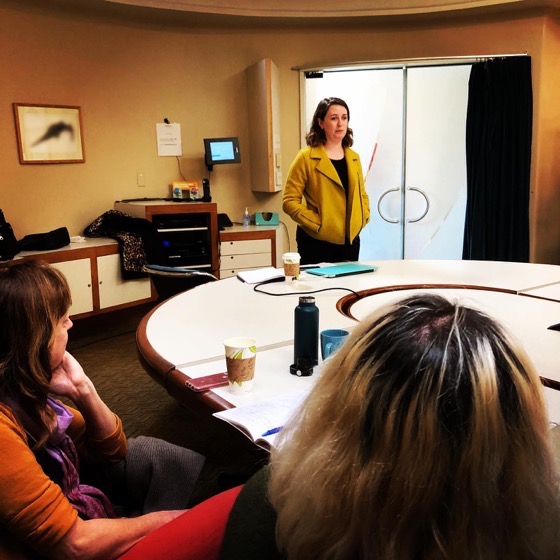

Lilliana Winkworth, of The Second City’s National Touring Company, gave a workshop on writing sketch comedy during this January’s MFA workshop at the Jim Henson Studios.
Follow and Like the Stephens College MFA in TV and Screenwriting
On Screenwriting and Media with Dr. Rosanne Welch
Writing, Film, Television and More!
Lilliana Winkworth, of The Second City’s National Touring Company, gave a workshop on writing sketch comedy during this January’s MFA workshop at the Jim Henson Studios.
Follow and Like the Stephens College MFA in TV and Screenwriting
Months of research went into the creation of the essays in “When Women Wrote Hollywood.” Here are some of the resources used to enlighten today’s film lovers to the female pioneers who helped create it.
From The “When Women Wrote Hollywood” Archives 12: Lois Weber in Early Hollywood by Shelley Stamp

†
† Available at Los Angeles Public Library
“Among early Hollywood’s most brilliant filmmakers, Lois Weber was considered one of the era’s ‘three great minds’ alongside D. W. Griffith and Cecil B. DeMille. Despite her accomplishments, Weber has been marginalized in relation to her contemporaries, who have long been recognized as fathers of American cinema. Drawing on a range of materials untapped by previous historians, Shelley Stamp offers the first comprehensive study of Weber’s remarkable career as director, screenwriter, and actress. Lois Weber in Early Hollywood provides compelling evidence of the extraordinary role that women played in shaping American movie culture. Weber made films on capital punishment, contraception, poverty, and addiction, establishing early cinema’s power to engage topical issues for popular audiences. Her work also grappled with the profound changes in women’s lives that unsettled Americans at the beginning of the twentieth century, and her later films include sharp critiques of heterosexual marriage and consumer capitalism. Mentor to many women in the industry, Weber demanded a place at the table in early professional guilds, decrying the limited roles available for women on screen and in the 1920s protesting the growing climate of hostility toward female directors. Through her examination of Weber’s career, Stamp demonstrates how female filmmakers who had played a part in early Hollywood’s bid for respectability were in the end written out of that industry’s history. Lois Weber in Early Hollywood is an essential addition to histories of silent cinema, early filmmaking in Los Angeles, and women’s contributions to American culture.”
Buy “When Women Wrote Hollywood” Today!
†
Paperback Edition | Kindle Edition | Google Play Edition
* A portion of each sale from Amazon.com directly supports our blogs
** Many of these books may be available from your local library. Check it out!
† Available from the LA Public Library
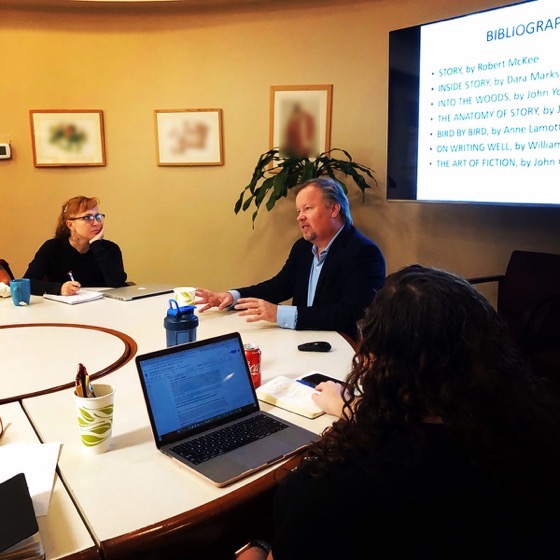
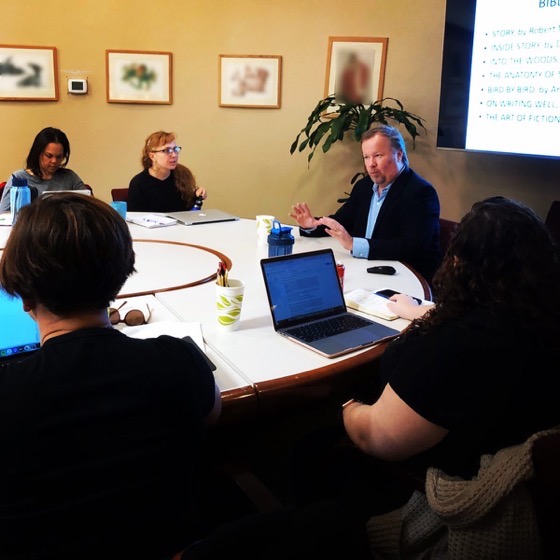
Screenwriter Thomas Dean Donnelly (Conan the Barbarian, Jax of Heart) lectured on How to Increase your Writing Productivity at the January workshop for the Stephens College MFA in TV and Screenwriting.
Follow and Like the Stephens College MFA in TV and Screenwriting
Serendipitous Learning at the Stephens College MFA in TV and Screenwriting Winter Workshop

Some of the best things about hosting the Stephens College MFA in TV and Screenwriting at the historic Jim Henson Studios (after the quality of our guest speakers, of course) is the accidental opportunity to meet writers working on the lot. After our graduate assistant met a writer in the studio kitchen, the current first -year class was invited to the set of a sizzle reel – a 3-minute trailer for a television show the writer-producers will use to shop around town for the funding the make the full show.
Follow and Like the Stephens College MFA in TV and Screenwriting
Watch this entire presentation
Subscribe to Rosanne’s Channel and receive notice of each new video!
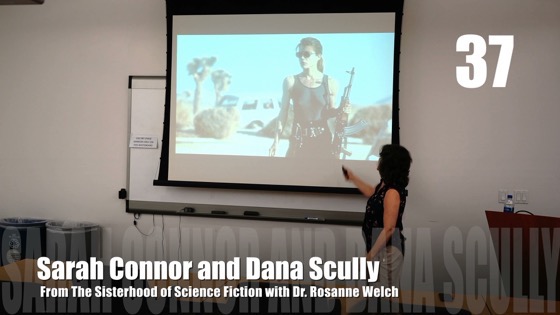
This one allowed me to riff on some of my favorite female science fiction writers across time, whether they be novelists or television writers. It also opened up a good conversation on what art we support and include in our lives – and what that art says to us and about us. — Rosanne
Transcript:
Of course, then we move over to Sarah Connor and the Terminator. Again. it’s this thing that gives everybody power. Not what I’m providing inside and Sarah Connor is pretty boss and pretty tough but it’s that gun we always go back to. So I don’t think about it’s– (Audience) I always remember her and even when I’m exercising when she’s doing the pull-ups. (Rosanne) Yes. (Audience) I — when I exercise, I think about her. (Rosanne) See that’s good. That’s– that’s the inner strength. That’s very cool yeah. That is the cool bit of it. Yeah. So we’re getting around to it. Of course through those movies we then come up with the X-Files and now we have Dana Scully who is all-powerful because it’s her brain. Not big on using the gun, right, that’s his job. She’s using her brain and she’s the more intellectual — the stronger one — in many ways. He’s the one running by his heart and his emotions and she’s the one running through her mind. So we’re switching the male and female sort of identifiers in this piece, which is pretty strong.
* A portion of each sale from Amazon.com directly supports our blogs
** Many of these books may be available from your local library. Check it out!
Podcast: Play in new window | Download
Subscribe: RSS
Every Monday we will be profiling a member of the Stephens College MFA in TV and Screenwriting 2020 graduating class. This exciting, fresh crop of writers are the future of the industry and are going on to do BIG things, so get to know them now! First up is Yousif Nash! #MeetTheGraduatesMonday

Yousif Nash is a true nerd who prides himself for having an encyclopedic knowledge on games, comics, anime, film, and television. An American born Iraqi, his parents regaled him with stories of their homeland, how it felt like a mystical land with history, culture, and wonder. It influenced him to become a storyteller, but he delayed that pursuit as he answered the call of duty and became an officer of the United States Air Force. When he left, he pursued writing seriously. He was accepted to the Writers Guild Foundation Veterans Workshop, worked on short and feature length films in his hometown, and is finishing his Masters of Fine Arts in TV Writing and Screenwriting from Stephens College. He just finished an internship at Hivemind (The Witcher, The Expanse) and is currently in another internship at Berlanti Productions (Arrow, The Flash, Riverdale) and Avi Arad’s Production Company (Spider-Man, Venom). He likes to write about nerds that suffer the normalcies of life, sci-fi, fantasy, and about Arab characters being normal people in America.
Follow and Like the Stephens College MFA in TV and Screenwriting
Highlighting the articles in the past editions of the Journal of Screenwriting, of which I am the Book Reviews Editor. Hopefully these abstracts will entice you to did a little deeper into the history and future of screenwriting. — Rosanne
Walter Reisch: The musical writer by Claus Tieber
Academy Award-winning Austrian screenwriter Walter Reisch’s (1903–83) career started in Austrian silent cinema and ended in Hollywood. Reisch wrote the screenplays for silent films, many of them based on musical topics (operetta films, biopics of musicians, etc.). He created the so-called Viennese film, a musical subgenre, set in an almost mythological Vienna. In my article I am analysing the characteristics of his writing in which music plays a crucial part. The article details the use of musical devices in his screenplays (his use of music, the influence of musical melodrama, instructions and use of songs and leitmotifs). The article closes with a reading of the final number in the last film he was able to make in Austria: Silhouetten (1936).
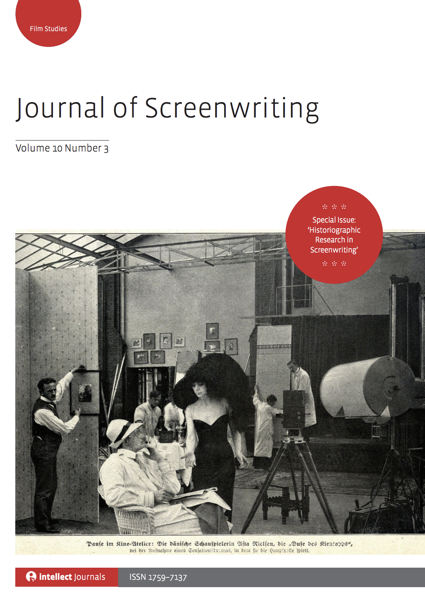
The Journal of Screenwriting is an international double-blind peer-reviewed journal that is published three times a year. The journal highlights current academic and professional thinking about the screenplay and intends to promote, stimulate and bring together current research and contemporary debates around the screenplay whilst encouraging groundbreaking research in an international arena. The journal is discursive, critical, rigorous and engages with issues in a dynamic and developing field, linking academic theory to screenwriting practice.
Get your copy and subscription to the Journal of Screenwriting Today!
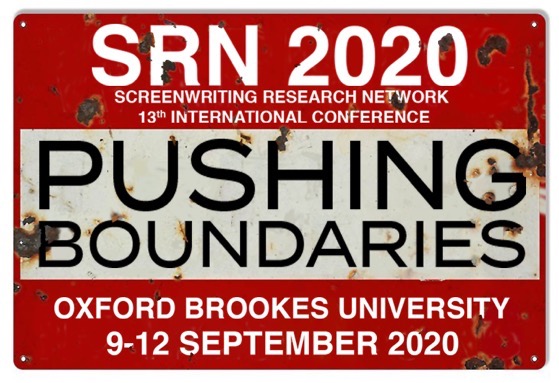
Join me at the Screenwriting Research Network’s Annual Conference in Oxford, UK
* A portion of each sale from Amazon.com directly supports our blogs
** Many of these books may be available from your local library. Check it out!
Mentoris Project Podcast: Relentless Visionary: Alessandro Volta With Author, Michael Berick
![Mentoris Project Podcast: Relentless Visionary: Alessandro Volta With Author, Michael Berick [Audio]](https://rosannewelch.com/wp-content/uploads/2020/02/mentoris-podcast-volta.png)
Read Relentless Visionary: Alessandro Volta
Podcast: Play in new window | Download
Subscribe: RSS
Subscribe Via iTunes | Google Play | TuneIn | RSS
If asked to list important inventors, few remember to include Alessandro Volta. Yet, his is a household name more spoken than that of Alexander Graham Bell, the Wright Brothers, or even Thomas Edison. That’s because the terms “volt” and “voltage” can be attributed to Volta, the inventor of the “Voltaic pile,” which is recognized as the first electric battery. A product of the Age of Enlightenment—a time when ideas about reason, science, literature and liberty took center stage—Volta employed a very modern, hands-on approach to his work. Though he had no formal education, he was the first person to identify the gas known as methane, and created the first authoritative list of conducting metals. Alessandro Volta saw things not just as they were, but as what they could be. He was a disrupter, an innovator and a visionary. Above all, he was relentless. Without Volta’s hunger to create and his drive to invent and discover, we might not have electric cars, laptops, cellphones, and hearing aids today.
About the Author
Michael Berick is a writer and journalist, whose work has appeared in outlets such as the Los Angeles Times, Entertainment Weekly, LA Weekly, AAA Westways Magazine, and the San Francisco Chronicle. He has written about European chocolate destinations, reviewed artist Ed Ruscha’s retrospective, and penned press material for the Grammy-nominated boxset, Battleground Korea: Songs And Sounds Of America’s Forgotten War. He also might possibly be the only music critic to have voted in both the Fids and Kamily Music Awards and the Village Voice’s annual Pazz & Jop Poll. Hailing from Cleveland, Ohio, Berick currently lives in Los Angeles with wife, playwright/screenwriter Jennifer Maisel, and their daughter and dog.
Follow @mentorisproject on Instagram
Visit the Mentoris Project for more!
Also from the Mentoris Project
Want to use these books in your classroom? Contact the Mentoris Project!`
Part of the California State University, Fullerton Faculty Noon Time Talks at the Pollak Library.
Watch this entire presentation

Subscribe to Rosanne’s Channel and receive notice of each new video!
Transcript:
Fay Kanin is very cool. She was married to Garson Kanin’s brother and so they worked together and not only in movies but now we’re blending into the television era and she wrote this brilliant TV movie. She got an Emmy Award with Carol Burnett and it was about a mother who found out her son had been killed in Vietnam by friendly fire but the government had said it was enemy fire and she — when she — in looking into how he died — discovered that and then she wanted to make it known so people understood that was one of the risks that your children were taking when they joined the military. It’s a very powerful TV movie. There she is with her husband Michael. These are some of the other things that they did that everybody knows.
Dr. Rosanne Welch discusses the women in her new book “When Women Wrote Hollywood” which covers female screenwriters from the Silents through the early 1940s when women wrote over 50% of films and Frances Marion was the highest paid screenwriter (male or female) and the first to win 2 Oscars. Yet, she fails to appear in film history books, which continue to regurgitate the myth that male directors did it all – even though it’s been proven that the only profitable movies Cecil B. de Mille ever directed were all written by Jeannie Macpherson film ever won for Best Picture was written by Robert E. Sherwood (who people have heard of, mostly due to his connection to Dorothy Parker) and Joan Harrison.
Buy a signed copy of when Women Wrote Hollywood
Paperback Edition | Kindle Edition | Google Play Edition
* A portion of each sale from Amazon.com directly supports our blogs
** Many of these books may be available from your local library. Check it out!
† Available from the LA Public Library
Podcast: Play in new window | Download
Subscribe: RSS
Enjoy This Clip? Watch this entire presentation and Buy Why The Monkees Matter: Teenagers, Television and American Pop Culture
From Denver Pop Culture Con 2019.
Wherever you go, you find Monkees fans and the Denver Popular Culture Con was no different. Amid rooms full of caped crusaders and cosplay creations, I was initially not sure how many folks would attend a talk on a TV show from the 1960s – but happily I was met by a nice, engaged audience for my talk on Why the Monkees Matter – and afterward they bought books! What more could an author ask for?
Subscribe to Rosanne’s Channel and receive notice of each new video!
Transcript
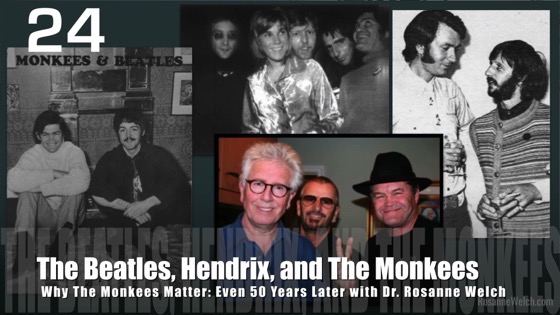
Speaking of The Beatles, as I said they actually did know each other. They hung out with each other. They respected each other. When Davy Jones died there was a clip of Paul McCartney and he was doing a little ‘Here They Come” bit and going you know I remember them I liked them. It was so cool. So they were respected by lots of people. Peter himself attended the Monterey Pop Festival with Micky Dolenz who’s not in this picture. Again behind him is Janis Joplin as we said but also at the Pop Festival is when they met this young, really great guitar player who they invited to come along as the opening act to their concerts the next season and his name was Jimi Hendrix and they thought he was so flamboyant and so much of a character that it would match the characters they were playing. Except after about 6 or 7 concerts he quit because all the kids were doing was yelling please bring Davey onstage and they didn’t recognize the quality of Jimi Hendrix. So he left. He was never angry at them and they were friends and obviously, sadly he died just a couple of years later. There’s some great footage — photographs of them sitting in hotel rooms together riffing and playing and again all respecting each other’s work. So I think that’s really cool.
Buy Why The Monkees Matter: Teenagers, Television and American Pop Culture
A hit television show about a fictitious rock band, The Monkees (1966-1968) earned two Emmys–Outstanding Comedy Series and Outstanding Directorial Acheivement in Comedy.
Capitalizing on the show’s success, the actual band formed by the actors, at their peak, sold more albums than The Beatles and The Rolling Stones combined, and set the stage for other musical TV characters from The Partridge Family to Hannah Montana. In the late 1980s, the Monkees began a series of reunion tours that continued into their 50th anniversary.
This book tells the story of The Monkees and how the show changed television, introducing a new generation to the fourth-wall-breaking slapstick created by Laurel and Hardy and the Marx Brothers.
Its creators contributed to the innovative film and television of 1970s with projects like Bob & Carol & Ted & Alice, The Mary Tyler Moore Show, Laugh-In and Welcome Back, Kotter. Immense profits from the show, its music and its merchandising funded the producers’ move into films such as Head, Easy Riderand Five Easy Pieces.
McFarland (Direct from Publisher) | Amazon | Kindle Edition | Nook Edition
Want to use “Why The Monkees Matter” in your classroom?
Order Examination Copies, Library and Campus Bookstore orders directly from McFarland

Podcast: Play in new window | Download
Subscribe: RSS


