09 A Special Issue on Women Screenwriters from In Conversation with Dr. Rosanne Welch and Intellect Books [Video]

09 A Special Issue on Women Screenwriters from In Conversation with Dr. Rosanne Welch and Intellect Books [Video]

Transcript:

Now the special issue we just did, I co-edited with Rose Farrell who’s at Edith Cowan University in Australia, and what I love about – we all come from this group called the Screenwriting Research Network, which meets internationally once a year, although not this year because of COVID. We were supposed to be in Oxford and we didn’t get to go but through that, we were just sitting around having a chat one day with the editor Craig Batty and I teased him because there’s always a special issue. There’s an issue on animation. There’s an issue in children’s films. I said why didn’t we ever do an issue on women and he stopped and he went, you could do it if you want. It’s like more work right but you want to see something done. Sometimes you just have to do it yourself. So then I was very smart because I knew how much work it would be and I called Rose and I said Rose do you want to do this with me and she was like oh what a great idea. So we did internationally this work you know going through zoom and going through our email and whatnot but she was the voice that said not only should this be about women but this should be about international women. We have published much about films in the UK and in the United States. What else can we find? So I’m really proud of the fact that you’ll find articles in there – a female writer from Syria – a female writer from Zimbabwe. We’ve got writers from Israel. We’ve got stories from Brazil. Peru. Argentina.

One of the benefits of attending conferences is that you can meet the editors from the companies that have published some of your books face to face. That happened at the recent SCMS conference where I met Intellect editor James Campbell and he invited me to be a guest on his InstagramLive show.

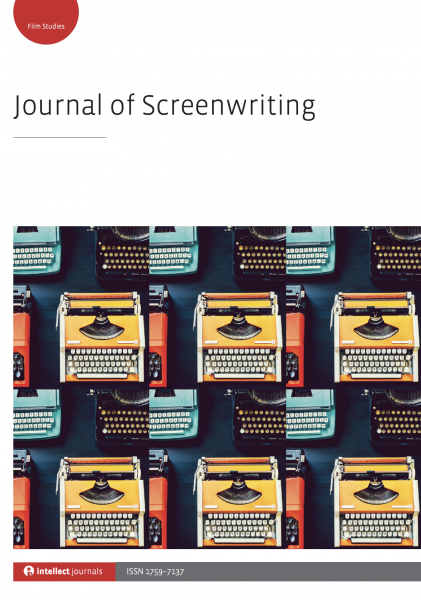
We chatted about my work with the Stephens College MFA in TV and Screenwriting, and then my work with co-editor Rose Ferrell on the Journal of Screenwriting’s special issue on Women in Screenwriting (Volume 11, Number 3) that came out recently and which featured articles about an international set of female screenwriters from Syria, Argentina, China and Canada (to name a few).

We even had time to nerd out on our own favorite classic films across the eras which brought up fun memories of Angels with Dirty Faces, Back to the Future, Bonnie and Clyde, and of course, all things Star Wars from the original 3 to The Mandalorian. It’s always so fun to talk to fellow cinephiles.

RMW Rosanne Signature for Web

Watch this entire presentation

With Intellect Books Editor James Campbell (@IntellectBooks)

Speaking with Dr. Rosanne Welch, Author, teacher, and television screenwriter. Today we cover everything from women in screenwriting to our favorite Jimmy Cagney movies and Friends.

Journal of Screenwriting Cover

03 Teaching the History of Screenwriting from When Men Forget Women: The Many Ways Male Screenwriters Fail to Mention their Female Colleagues [Video]

Nearly two years ago I had the pleasure of being invited to join a panel at the then upcoming SCMS (Society of Cinema and Media Studies) conference set for Seattle.  As you know that was canceled due to Covid with the hopes of reconvening in Colorado in 2021.  That became a virtual conference but our group decided to reapply our panel and we four were able to ‘meet’ on Zoom on Sunday and present:  Writing Between the Lines: Feminist Strategies for Historical Absences, Cliché, and the Unreliable Narrator. 

Here you can watch a clip from my part of the presentation,

“When Men Forget Women: The Many Ways Male Screenwriters Fail to Mention their Female Colleagues in Oral Histories”

03 Teaching the History of Screenwriting from When Men Forget Women: The Many Ways Male Screenwriters Fail to Mention their Female Colleagues [Video]
Transcript:

I don’t teach the history of film. I teach the history of screenwriting because the history of film equals the history of directors which becomes a history of great men and great men are very unreliable narrators. They just are right? So let’s start with directors. Directors are terrible narrators. Alfred Hitchcock in his biographies has said that he learned everything he knew about making movies from a middle-aged American woman. He did not even name her, all right? He did not even name her which means she disappears in history but she was, in fact, Eve Unsell. Eve Unsell had been discovered by Beatrice DeMille, more than the mother to Cecil B. DeMille. She was, in fact, a screenwriter and a playwright and she helped many women get started in the business. Eve became a writer for Famous Players Laskey. She had her own production company – one of the earliest women to have her own production company – and she was so beloved by Famous Players Laskey – they sent her to England to right the mixed up studio they had started there and while in England she trained this young kid named Alfred what’s his name again. She told him everything she knew about making films and he can’t even remember to put her name in a book about him. That makes me crazy.


Watch this entire presentation

Dr. Rosanne Welch at Broadcast Educators Association (BEA) 2022

Broadcast Educators Association (BEA) 2022

I attended my first Broadcast Educators Association (BEA) conference last weekend on the invite of Dr. Ed Fink, my former department chair, and greatly enjoyed hosting a pitchathon for graduation bachelor students interested in creating their own television shows. 

My co-panelists included two fun colleagues who have become good friends  –  Jon Vandergriff (Stephens College) and David Morgassen (CSUF).  We gave feedback on 9 different pitches and followed it up with a Q&A about the world of being a professional writer.  The audience was so interested and engaged that after our session ended, we all grabbed a table together and kept talking until we closed the venue down for the night.

Dr. Rosanne Welch at Broadcast Educators Association (BEA) 2022

Meeting potential MFA candidates is one reason to attend events like this one – but mostly it’s to make new friends in the academic world and strengthen the friendships you’ve already created; to learn how they approach the teaching of screenwriting or media history and bring those ideas back to my own classrooms. 

On this trip, I met professors from Illinois and Michigan and reconnected with folks I’ve worked with at CSUF and elsewhere.  Having lunch and hashing over which films or television shows to teach and how to best help students learn to analyze these in order to improve their writing is the heart of such a conference.  Meeting the students and hearing their ideas is the icing on the cake.

Stephens College MFA in TV and Screenwriting

08 More On Dorothy Parker and A Star Is Born from In Conversation with Dr. Rosanne Welch and Intellect Books [Video]

08 More On Dorothy Parker and A Star Is Born from In Conversation with Dr. Rosanne Welch and Intellect Books [Video]

Transcript:

So she was writing what she knew, right? So, I think you can look into every version of that movie – and there have been four now – including the most recent, right, and see the ghost of her voice existing because the raw honesty of that experience – of feeling like how can I be with a man who the world was making feel less than me when I feel like we are equals but it’s going to eventually erode this relationship. That’s just really – and there are some lines from the first film – from 1937 – it was remade with Judy Garland in 1954 by Moss Hart who’s a famous Broadway playwright – but he, in his memoirs says that he used a lot of scenes verbatim because they were just so good there was no point to rewrite them. So, it’s wonderful to look for that sort of thing. So, if I was going to write about that movie, I don’t care that George Cukor directed the Judy Garland version. I care what voice – what writer’s voice do I see trace through that.

One of the benefits of attending conferences is that you can meet the editors from the companies that have published some of your books face to face. That happened at the recent SCMS conference where I met Intellect editor James Campbell and he invited me to be a guest on his InstagramLive show.

We chatted about my work with the Stephens College MFA in TV and Screenwriting, and then my work with co-editor Rose Ferrell on the Journal of Screenwriting’s special issue on Women in Screenwriting (Volume 11, Number 3) that came out recently and which featured articles about an international set of female screenwriters from Syria, Argentina, China and Canada (to name a few).

We even had time to nerd out on our own favorite classic films across the eras which brought up fun memories of Angels with Dirty Faces, Back to the Future, Bonnie and Clyde, and of course, all things Star Wars from the original 3 to The Mandalorian. It’s always so fun to talk to fellow cinephiles.

RMW Rosanne Signature for Web

Watch this entire presentation

With Intellect Books Editor James Campbell (@IntellectBooks)

Speaking with Dr. Rosanne Welch, Author, teacher, and television screenwriter. Today we cover everything from women in screenwriting to our favorite Jimmy Cagney movies and Friends.

Journal of Screenwriting Cover

02 How Do We Get Forgotten? from When Men Forget Women: The Many Ways Male Screenwriters Fail to Mention their Female Colleagues [Video]

Nearly two years ago I had the pleasure of being invited to join a panel at the then upcoming SCMS (Society of Cinema and Media Studies) conference set for Seattle.  As you know that was canceled due to Covid with the hopes of reconvening in Colorado in 2021.  That became a virtual conference but our group decided to reapply our panel and we four were able to ‘meet’ on Zoom on Sunday and present:  Writing Between the Lines: Feminist Strategies for Historical Absences, Cliché, and the Unreliable Narrator. 

Here you can watch a clip from my part of the presentation,

“When Men Forget Women: The Many Ways Male Screenwriters Fail to Mention their Female Colleagues in Oral Histories”

02 How Do We Get Forgotten? from When Men Forget Women: The Many Ways Male Screenwriters Fail to Mention their Female Colleagues [Video]

 
Transcript: My teaching philosophy is Words Matter. Writers Matter. Women Writers Matter and we need to pay more attention to them. So we’re back to what I’m originally talking about. How do we get forgotten in the books? Well, this is a lovely example not from screenwriting but from art. When this painting sold – the painting of David And Goliath – it was assumed to belong to Giovanni Francesco but in fact, it belonged to Artemisia and Artemisia Gentileschi is just now coming out as someone that we’re going to learn more about in the art world. So this happens to us all the time – it happens to women all the time.

(technical issues)

She painted that. Artemisia that’s her self-portrait. she painted David and Goliath. We’re doing this in all the different worlds and I think we need to pay attention to how we’re doing it in Hollywood.

Our intrepid panel leader, Christina Lane (author of Phantom Lady – the new biography of writer-producer Joan Harrison) kept us connected across the time.  Other panel participants included Philana Payton (UCLA) who is researching the memoirs of Eartha Kitt and Vicki Callahan (USC) who covered the career of Mabel Normand.  I was happy to highlight the many female screenwriters whose histories were left on the cutting room floor thanks to the unreliable narrators of their work who included directors, film reviewers, and husbands – all who left the female writers out of their own memories.


Watch this entire presentation

Screenwriter Clara Beranger – From Silents to Talkies to Teaching – Dr. Rosanne Welch, Script Magazine, April 2022

Screenwriter Clara Beranger - From Silents to Talkies to Teaching - Dr. Rosanne Welch, Script Magazine, April 2022


As with several silent film screenwriters, earlier careers in journalism and playwriting during the 1910s brought Clara Beranger to Hollywood. She would amass 85 credits between 1913 and 1934, bridging the worlds of silent and sound films.

Born Clara Strouse in Baltimore, Maryland on January 14, 1886, to a department store dynasty, she graduated in 1907 as a Phi Beta Kappa at Goucher College. She gained her professional surname when she married Albert Berwanger and kept it (except for the ‘w’) after their divorce. They had one child, a daughter named Frances, in 1909.

Read Screenwriter Clara Beranger – From Silents to Talkies to Teaching


Read about more women from early Hollywood


46 Screenwriting Mistakes: Write Something New… from Worry and Wonder | The Courier Thirteen Podcast [Video]

Watch the entire presentation – Worry and Wonder | The Courier Thirteen Podcast | Episode # 29 here

46 Screenwriting Mistakes: Write Something New... from Worry and Wonder | The Courier Thirteen Podcast [Video]

Transcript:

Rosanne:…and then the second-biggest – and many people will tell you this – and it’s not just in classes and what you read – doing readership all over town – never write something that looks like I’ve seen it before, because why do I need you? I need to see something that’s different and that’s where you – your personal. perspective comes from, right? I need to see something I haven’t seen before and that doesn’t mean it has to be edgier and worse and mean and nasty, but there’s just – there’s an honesty to it that I didn’t expect. That’s what I want to see.

Host: ..and that’s perspective that gives you that.

Rosanne: Exactly.

Host: I feel like I’ve learned so much today.

It’s always fun to sit down with students and share stories about entering the television industry and how things work at all stages and I had that opportunity the other day.

Daniela Torres, a just-graduated (Congratulations!) student of the Columbia College Semester in LA program asked me to guest on a podcast she had recently begun hosting with another college student she met during her internship (good example of networking in action!).

We could have talked all morning (the benefit of a 3 hour class session) but we held it to about an hour and fifteen minutes or so. Hopefully, along the way I answered some questions you might have about how the business works. So often it amounts to working hard at being a better writer and gathering a group of other talented, hard-working people around you so you can all rise together.

Dr. Rosanne Welch is a television writer with credits that include Beverly Hills 90210, Picket Fences, ABCNEWS: Nightline and Touched by an Angel. She also teaches Television Writing and the Art of Film at San Jose State University.

Rosanne discusses what made shows like Beverly Hills 90210 compelling, what to do and not to do when attempting to pitch a show to broadcast or streaming, what most young writers neglect in their writing process, and much more!

The Courier Thirteen Podcast is available on YouTube, Spotify, Apple Podcasts, SoundCloud, and Audible.

07 Dorothy Parker and A Star Is Born from In Conversation with Dr. Rosanne Welch and Intellect Books [Video]

07 Dorothy Parker and A Star Is Born from In Conversation with Dr. Rosanne Welch: Screenwriter

Transcript:

Host: Why don’t you tell us more about the Journal of Screenwriting in general and then your special issue specifically.

Rosanne: Sure. Well, obviously it’s in the title. It’s about Screenwriting. So, anyone who sends some material in, we don’t want to hear about how the director affected the movie. We want to hear about what research you’ve done to prove deeper things. Like, for instance, I’m doing a presentation tomorrow on A Star Is Born. The original A Star is Born. That was written – people largely don’t know – by Dorothy Parker – who they do know as a famous female from New York who wrote essays and poetry and her husband, Alan Campbell and you don’t know his name, do you? No one’s ever heard of Alan Campbell. They got married when she was already famous. He was an actor on Broadway. He wanted to work in Hollywood. So that’s why they moved here. She didn’t want to come to LA. There was that whole New York is better than LA kind of feeling,. but they wrote this movie and I would contend that it’s her voice in this movie because they lived a life where she was always more famous than her husband and it destroyed their marriage. They ended up getting divorced. Later on, he died of a drug overdose.

One of the benefits of attending conferences is that you can meet the editors from the companies that have published some of your books face to face. That happened at the recent SCMS conference where I met Intellect editor James Campbell and he invited me to be a guest on his InstagramLive show.

We chatted about my work with the Stephens College MFA in TV and Screenwriting, and then my work with co-editor Rose Ferrell on the Journal of Screenwriting’s special issue on Women in Screenwriting (Volume 11, Number 3) that came out recently and which featured articles about an international set of female screenwriters from Syria, Argentina, China and Canada (to name a few).

We even had time to nerd out on our own favorite classic films across the eras which brought up fun memories of Angels with Dirty Faces, Back to the Future, Bonnie and Clyde, and of course, all things Star Wars from the original 3 to The Mandalorian. It’s always so fun to talk to fellow cinephiles.

RMW Rosanne Signature for Web

Watch this entire presentation

With Intellect Books Editor James Campbell (@IntellectBooks)

Speaking with Dr. Rosanne Welch, Author, teacher, and television screenwriter. Today we cover everything from women in screenwriting to our favorite Jimmy Cagney movies and Friends.

Journal of Screenwriting Cover

01 Introduction from When Men Forget Women: The Many Ways Male Screenwriters Fail to Mention their Female Colleagues [Video]

Nearly two years ago I had the pleasure of being invited to join a panel at the then upcoming SCMS (Society of Cinema and Media Studies) conference set for Seattle.  As you know that was canceled due to Covid with the hopes of reconvening in Colorado in 2021.  That became a virtual conference but our group decided to reapply our panel and we four were able to ‘meet’ on Zoom on Sunday and present:  Writing Between the Lines: Feminist Strategies for Historical Absences, Cliché, and the Unreliable Narrator. 

Here you can watch a clip from my part of the presentation,

“When Men Forget Women: The Many Ways Male Screenwriters Fail to Mention their Female Colleagues in Oral Histories”

01 Introduciton from When Men Forget Women: The Many Ways Male Screenwriters Fail to Mention their Female Colleagues [Video]

 
Transcript: That was marvelous and I’m so excited about this panel because we’re all talking a little bit about everything which is really nice. Yes, love men. Don’t want to pick on men. Married to a man. Have a son but there you go. We’re going to talk about how men forget women in the archives. First, I would like to acknowledge that I am speaking from the traditional lands of the Tongva people and I want to respect their elders and their people that came before us. This was the ground of Los Angeles all the way out to the Catalina islands and I think it’s something worth people studying. Very briefly about me. I was a television writer for 20 years. So I wrote on 90210 and Picket Fences and Touched by an Angel. Currently, I’m kind of using words from my book When Women Wrote Hollywood which is about the early silent screenwriters – female screenwriters – and how they have been forgotten. I also am the book review editor for the Journal of Screenwriting. So if you ever want to write a review or have a book that needs reviewing, let me know because I’d love to do that and I’m on the editorial board for Written By magazine which I always suggest people read. It is free digitally online about every six weeks the Writer’s Guild comes out with it and there are some wonderful interviews with movie star – movie writers and tv writers. So that’s kind of the world I’m in. I am the executive director of the Stephens College TV and Screenwriting MFA and our mantra is Write, Reach and Represent because I think that’s what writing is all about. The school is actually in Missouri but it’s a low residency program so people come to LA and we work at the Jim Henson Studios. So talk about Mabel Normand who worked at Charlie Chaplin studios with him. This was originally Charlie Chaplin Studios before A&M Records and Jim Henson. So it’s a beautiful piece of Hollywood memorabilia.

Our intrepid panel leader, Christina Lane (author of Phantom Lady – the new biography of writer-producer Joan Harrison) kept us connected across the time.  Other panel participants included Philana Payton (UCLA) who is researching the memoirs of Eartha Kitt and Vicki Callahan (USC) who covered the career of Mabel Normand.  I was happy to highlight the many female screenwriters whose histories were left on the cutting room floor thanks to the unreliable narrators of their work who included directors, film reviewers, and husbands – all who left the female writers out of their own memories.


Watch this entire presentation

45 Screenwriting Mistakes: Lack of Research… from Worry and Wonder | The Courier Thirteen Podcast [Video]

Watch the entire presentation – Worry and Wonder | The Courier Thirteen Podcast | Episode # 29 here

45 Screenwriting Mistakes: Lack of Research... from Worry and Wonder | The Courier Thirteen Podcast [Video]

Transcript:

Host: What’s like mistakes that you see in young writer scripts that are like most common? Like just an aspect of writing that a lot of young writers don’t get or have trouble with at first?

Rosanne: There’s probably a couple of things. I see, sometimes, that people don’t take the time to do the research they need into the world they want to write about. It’s really not good to come into class with a first act, let’s say, or an outline and if I want to ask you a question about how doctors would really do that and you say I haven’t looked into it yet. Don’t write it until you’ve looked into it. I’ve had people write cop shows where cops do things they don’t – you can’t do. It doesn’t work that way, right? Oh well, I didn’t know that. Well, you’re writing a cop show. Go figure out what happens the day after they shoot somebody. They don’t just go back to their desk. There are all kinds of stuff that happens or actually, you’re trying to think. I’ve always had examples of that or people who do different things or they have doctors do different things like that’s not how a doctor – that’s not how a hospital works. Didn’t you pay attention to that? Have you ever been to a hospital, you know, you can’t do that. You must know – you must be the expert in the room when you have brought in a story about a certain time or place. I laughed because I had someone once who was writing a piece that took place in the 70s and she had the parents strap their child into the car seat before putting them in the car and I stopped and I said did you research the history of car seats? Do you know that they didn’t start until the mid-80s? In the 70s you strapped your kid into a seat belt – if you bothered with that at all – because not all cars had seat belts. She had no idea. She thought since there had been car seats since her childhood they had always existed and I was like I now know that you didn’t do your homework. I’m not going to hire a writer onto my show who didn’t take the time to look into the period they were writing about. So you got to do your research. I think that’s probably the biggest mistake I see.

It’s always fun to sit down with students and share stories about entering the television industry and how things work at all stages and I had that opportunity the other day.

Daniela Torres, a just-graduated (Congratulations!) student of the Columbia College Semester in LA program asked me to guest on a podcast she had recently begun hosting with another college student she met during her internship (good example of networking in action!).

We could have talked all morning (the benefit of a 3 hour class session) but we held it to about an hour and fifteen minutes or so. Hopefully, along the way I answered some questions you might have about how the business works. So often it amounts to working hard at being a better writer and gathering a group of other talented, hard-working people around you so you can all rise together.

Dr. Rosanne Welch is a television writer with credits that include Beverly Hills 90210, Picket Fences, ABCNEWS: Nightline and Touched by an Angel. She also teaches Television Writing and the Art of Film at San Jose State University.

Rosanne discusses what made shows like Beverly Hills 90210 compelling, what to do and not to do when attempting to pitch a show to broadcast or streaming, what most young writers neglect in their writing process, and much more!

The Courier Thirteen Podcast is available on YouTube, Spotify, Apple Podcasts, SoundCloud, and Audible.