19 More Favorite Films from In Conversation with Dr. Rosanne Welch [Video]

19 More Favorite Films from In Conversation with Dr. Rosanne Welch [Video]

Transcript:

Host: Is that your is that your favorite period of filmmaking or are you you know are you all over the place with what you watch when it comes to cinema.

Rosanne: I am all over the place because it depends on the story and and the stories that stick with me you know. I love that movie. I love a lot of movies from that period but I also love a lot of movies like “Bonnie and Clyde.” How could you not love “Bonnie and Clyde?” Warren Beatty films are wonderful and but on the – and there I am two gangster movies – but I also love “Heaven Can Wait” another Warren Beatty. Written by Elaine May who’s wonderful and gets lost in the history books but yeah that’s a beautiful film. So I like that period. You know it’s funny.

Host: Is that the new Hollywood period kind of thing?

Rosanne: The New Hollywood Period but also the movies that then I grew up with when they were new. I mean I think when you think about scripts “Back to the Future” is the absolute most tightest best-written movie I can think of. You can watch that movie in every single bit. There’s a great bit in the beginning you know he’s got to have that piece of paper that tells him that when the clock is going to strike – when the lightning’s gonna strike and it’s because his girlfriend comes to him – he gets the paper from a lady. Just oh we’re saving the clock tower you know here’s a fundraising flyer but a teenage boy would throw that away. So you know they had to sit there and go why would he keep it? Well, his girlfriend comes up and says I’m staying at my grandmother’s house this weekend. Here’s her number so you can call me. so it’s his girlfriend’s phone number that’s important and of course, you couldn’t do that in the modern day because he’d have a smartphone and he wouldn’t need the piece of paper but just every detail is so perfectly covered in that movie that you cannot love it.

One of the benefits of attending conferences is that you can meet the editors from the companies that have published some of your books face to face. That happened at the recent SCMS conference where I met Intellect editor James Campbell and he invited me to be a guest on his InstagramLive show.

We chatted about my work with the Stephens College MFA in TV and Screenwriting, and then my work with co-editor Rose Ferrell on the Journal of Screenwriting’s special issue on Women in Screenwriting (Volume 11, Number 3) that came out recently and which featured articles about an international set of female screenwriters from Syria, Argentina, China and Canada (to name a few).

We even had time to nerd out on our own favorite classic films across the eras which brought up fun memories of Angels with Dirty Faces, Back to the Future, Bonnie and Clyde, and of course, all things Star Wars from the original 3 to The Mandalorian. It’s always so fun to talk to fellow cinephiles.

RMW Rosanne Signature for Web

Watch this entire presentation


With Intellect Books Editor James Campbell (@IntellectBooks)

Speaking with Dr. Rosanne Welch, Author, teacher, and television screenwriter. Today we cover everything from women in screenwriting to our favorite Jimmy Cagney movies and Friends.
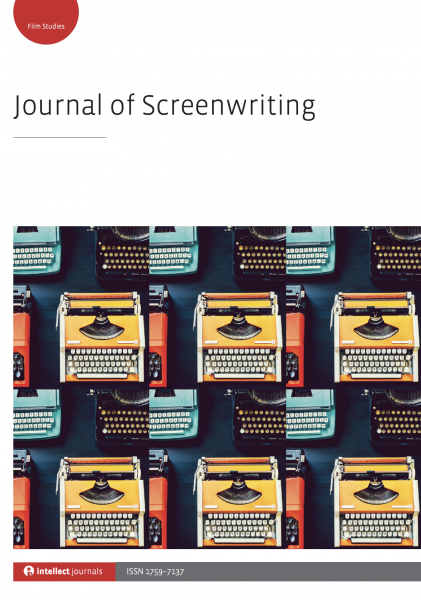
Journal of Screenwriting Cover

STOP FORGETTING TO NAME THE WRITERS! by Dr. Rosanne Welch

STOP FORGETTING TO NAME THE WRITERS!

STOP FORGETTING TO NAME THE WRITERS! by Dr. Rosanne Welch

Once again I’ve had to email a film screening program about the blurb they posted about an upcoming screening and Q&A with the creators of a new film. Here’s the post I read:

When single father Max (John Cho) discovers he has a terminal disease, he decides to try and cram all the years of love and support he will miss with his teenage daughter Wally (Mia Isaac) into the time he has left with her. With the promise of long-awaited driving lessons, he convinces Wally to accompany him on a road trip from California to New Orleans for his 20th college reunion, where he secretly hopes to reunite her with her mother who left them long ago. A wholly original, emotional and surprising journey, Don’t Make Me Go explores the unbreakable, eternal bond between a father and daughter from both sides of the generational divide with heart and humor along for the ride. From Amazon Studios, #DontMakeMeGo will begin streaming July 15 globally only on Prime Video.

Why We Love It: Don’t Make Me Go is an emotional and beautiful exploration of the struggle between chasing your dreams or settling on the safe choices. Mia Isaac and John Cho’s chemistry is captivating in this one of a kind father-daughter road trip film. Bring tissues.

Here’s the email I had to send to the programmer:

I saw your announcement and wondered if Don’t Make Me Go is “A wholly original, emotional and surprising journey, Don’t Make Me Go explores the unbreakable, eternal bond between a father and daughter from both sides of the generational divide with heart and humor along for the ride” then WHY wasn’t the writer, Vera Herbert, invited to this live discussion? Or even mentioned in your post, which makes the reader assume that the director is a writer-director, giving them all the credit for what sounds like a film based on characters, situation, theme, and dialogue – none of which are under the auspices of a director.

As the Executive Director of an MFA in TV and Screenwriting, I subscribe to all your posts to see what events I might want to bring my MFA candidates to – but I only attend events that include writers. It’s an insult to not even name the writer. The auteur theory was invented years ago by French film reviewers who found it simpler to list directors since many were writer-directors and sometimes a film is written by 2 people which was unwieldy in a review. That’s why it exists and it’s a shame for film experts/programmers/educators to continue that practice. More women have written films than directed them (the Joan Harrison/Hitchcock team is an example) so it was another way to erase the creative work of women when we only mention directors. I would say “Please stop” but I’m tired of saying “Please”.

Dr. Rosanne Welch

Vintage Film Projector, Hollywood Heritage Museum (Lasky-DeMille Barn) via Instagram [Photography]

Vintage Film Projector, , Hollywood Heritage Museum (Lasky-DeMille Barn) via Instagram [Photography]

Follow me on Instagram

DeMille Office, Hollywood Heritage Museum (Lasky-DeMille Barn) via Instagram

Visit The Hollywood Heritage Museum

03 Unreliable Narrators from What Is a Western? Interview Series: When Women Wrote Westerns from the Autry Museum of the American West [Video]

03 Unreliable Narrators from What Is a Western? Interview Series: When Women Wrote Westerns from the Autry Museum of the American West [Video]

Transcript:

The question about why we forget women screenwriters is bothering us for a long time and one of the things we fall back on is this thing called unreliable narrators and it’s really sad to think that many of these early women writers – and there were more women writing films in the early silent days than there were men. It was a Wild West of a job and so we always let women in in the beginning. We did the same thing in aviation. Tons of female flyers. They’re doing all kinds of contests flying from here to Cleveland. I don’t know why Cleveland did it with hub right and all these contests and then when it becomes a business we say oh no no no this is now a place where men can make money. You ladies should leave and we essentially leave them behind. So, one whenever we became a business – both in aviation and in Hollywood – they took women who had been producers, they’d been directors, they’d written their own material and the guys running the studio suddenly said um here’s your new contract. You’re now a junior writer and you can work with this guy and they were like thank you I’ll go back to new york and I’ll write novels right. So that’s Anita Loos and “Gentlemen Prefer Blondes” and you know Francis Marion who’s probably the most famous early female screenwriter. They just started writing novels where they could again be in charge of the whole story. You know why should they be treated that way.


The Stephens College MFA in TV and Screenwriting is building a relationship with the Autry Museum of the American West since both organizations are devoted to bringing out more diverse and untold stories.  Last year we were able to take our cohort of graduating MFA candidates to the museum’s theatre for a showing of Michael Wilson’s Salt of the Earth and we had plans to present a film of our choice this year – but of course the pandemic changed all that.  Instead, Autry Curator Josh Garrett-Davis asked me if I would sit for an interview about female screenwriters in the western genre and so “When Women Wrote Westerns” came to be a part of their “What Is a Western? Interview Series”. 

I had a great time discussing so many wonderful women writers – from Jeanne MacPherson to D.C. Fontana to Edna Ferber to Emily Andras.  If you love westerns I suggest you watch Josh’s other interviews covering everything from the work of Native Americans in Western movies to films in the western-horror hybrid. — RMW Rosanne Signature for Web


What this entire presentation

As part of a series exploring the significance of the Western genre and the ways in which the movies shape our understanding of the American West, Autry Curator Josh Garrett-Davis interviews Professor Rosanne Welch about the women screenwriters of Hollywood and their contributions to the Western genre.

Find more information at the Autry Museum of the American West

What Is a Western? Gidget (1959) – Part Of The Series What Is A Western? Film Series – Autry Museum of the American West [Event]

I’m pleased to have been invited to give the introductory remarks before a showing of the 1959 Gidget film at the Autry Museum of the American West (in Griffith Park).

Join us on Saturday, August 6, 2022, at 1:30 PM. I’ll be giving a shortened version of the presentation I made when we attended the Screenwriting Research Network conference held in New Zealand a few years ago.

In a nutshell, I trace Gidget, the Little Girl with Big Ideas from its origins as a novel, its transformation into a film franchise, and then into a TV series. Along the way, we’ll discover how this one story created a new myth about how teenagers reinvented the West. — Rosanne

What Is a Western? Gidget (1959) – Part Of The Series What Is A Western? Film Series – Autry Museum of the American West [Event]

What Is a Western? Gidget (1959) – Part Of The Series What Is A Western? Film Series – Autry Museum of the American West

Saturday, August 6, 2022, 1:30 p.m.
The Autry: Wells Fargo Theater

Appropriate For: Families
Admission: Free for Autry Members | Museum Admission Included With Ticket
RSVP/Reservations:  Reservations Recommended | Space Is Limited

RESERVE NOW

What Is a Western? Gidget (1959) – Part Of The Series What Is A Western? Film Series – Autry Museum of the American West [Event]

Considered to be the first of the “beach party” movies, this coming-of-age tale is based on the true story of Kathy Kohner and her experiences as a young woman in the then-niche and masculine sport of surfing. Widely credited with the mainstreaming of surfing culture in the United States, it also inspired many films and television series featuring the character of Gidget.

Introduced by Rosanne Welch, executive director, Stephens College MFA in TV and Screenwriting

Directed by Paul Wendkos | Starring Sandra Dee, James Darren, and Cliff Robertson

Screenplay by Gabrielle Upton | Based on a novel by Frederick Kohner

The What is a Western? Film Series explores the wide range of movies that can be considered Westerns, and the ways in which they shape our understanding of the American West. Each screening includes a guest lecturer who will introduce the film and explain its significance in the genre.


Original documents acquiring the barn for DeMille/Famous Players Lasky, Hollywood Heritage Museum (Lasky-DeMille Barn) via Instagram [Photography]

Original documents acquiring the barn for DeMille/Famous Players Lasky,  Hollywood Heritage Museum (Lasky-DeMille Barn) via Instagram [Photography]

Follow me on Instagram

DeMille Office, Hollywood Heritage Museum (Lasky-DeMille Barn) via Instagram

Visit The Hollywood Heritage Museum

18 ”Angels With Dirty Faces“ from In Conversation with Dr. Rosanne Welch [Video]

18 ”Angels With Dirty Faces“ from In Conversation with Dr. Rosanne Welch [Video]

Transcript:

Host: What are your what’s your favorite Jimmy Cagney movie if you have one?

Rosanne: Oh gosh I like angels and actually have my students watch “Angels With Dirty Faces” because it’s such a very perfect movie from that period right? It’s him and Pat O’Brien. He’s the gangster who’s about to go to the death you know to to to be executed and Pat O’Brien is a priest and the beginning of that movie is their two little boys – two young boys – who are robbing a train like you know stealing pencils or something and they the cops see him and they start running and the cops catch Jimmy Cagney but they don’t catch Pat O’Brien’s character and of course the concept is he goes to juvenile hall he learns how to be a bigger criminal whereas the other guy gets to go and become a priest and so it’s the perfect like I mean it’s funny because it seems cheesy but in fact it’s really about the fact that it’s about nurturing right and and how we should take children and give them better things so they want to be they can be better in life and then there’s a great ending that no one’s ever sure and it’s wonderful when the ending makes the audience think because the priest goes to his friend on the eve of his execution because there’s a bunch of boys in the neighborhood who think he’s cool and the priest is like oh no they’ll grow up to be like him and not like me. So it goes to his friend and he says you gotta do something that keeps them from making a martyr out of you and he’s like I’m never gonna do that. I’m strong and brave and everything and then they come to take him to the electric chair and he falls apart and you never know is he really just not he’s a coward he’s scared to death of dying or is he doing his priest friend a favor.

Host: Yeah i think it’s a very powerful movie.

One of the benefits of attending conferences is that you can meet the editors from the companies that have published some of your books face to face. That happened at the recent SCMS conference where I met Intellect editor James Campbell and he invited me to be a guest on his InstagramLive show.

We chatted about my work with the Stephens College MFA in TV and Screenwriting, and then my work with co-editor Rose Ferrell on the Journal of Screenwriting’s special issue on Women in Screenwriting (Volume 11, Number 3) that came out recently and which featured articles about an international set of female screenwriters from Syria, Argentina, China and Canada (to name a few).

We even had time to nerd out on our own favorite classic films across the eras which brought up fun memories of Angels with Dirty Faces, Back to the Future, Bonnie and Clyde, and of course, all things Star Wars from the original 3 to The Mandalorian. It’s always so fun to talk to fellow cinephiles.

RMW Rosanne Signature for Web

Watch this entire presentation


With Intellect Books Editor James Campbell (@IntellectBooks)

Speaking with Dr. Rosanne Welch, Author, teacher, and television screenwriter. Today we cover everything from women in screenwriting to our favorite Jimmy Cagney movies and Friends.

Journal of Screenwriting Cover

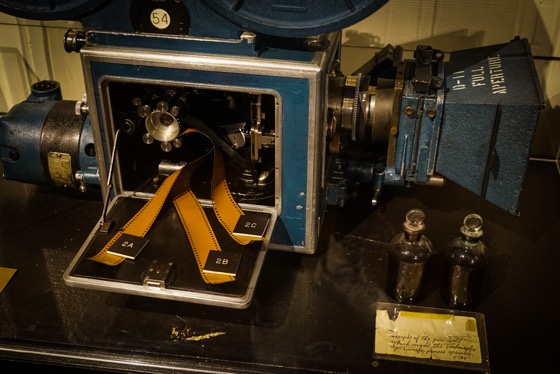
3-strip Technicolor Film Camera , Hollywood Heritage Museum (Lasky-DeMille Barn)

3-strip Technicolor Film Camera , Hollywood Heritage Museum (Lasky-DeMille Barn)

Follow me on Instagram

DeMille Office, Hollywood Heritage Museum (Lasky-DeMille Barn) via Instagram

Visit The Hollywood Heritage Museum

02 Why Study Women Screenwriters from What Is a Western? Interview Series: When Women Wrote Westerns from the Autry Museum of the American West [Video]

02 Why Study Women Screenwriters from What Is a Western? Interview Series: When Women Wrote Westerns from the Autry Museum of the American West [Video]

Transcript:

Host: Our guest today is Rosanne Welch. She’s a former screenwriter and historian and a professor at the MFA program in Screenwriting and TV writing at Stephens College. She’s the editor of the book “When Women Wrote Hollywood” as well as the author of numerous other books that you can check out but welcome. Thanks for joining us today Rosanne.

Rosanne: Thanks for asking me. I love to talk about women screenwriters.

Host: That’s great yeah so we’re going to focus on a sub-topic within the book you edited When Women Wrote Westerns. How do we see the history of tv and film differently when we learn about these women screenwriters who are often forgotten and perhaps why were they forgotten in the first place.

Rosanne: The why is always sad to learn but we’re learning it in all of our history classes no matter what we teach in this country and we’re getting very good at that right? We’re learning that the people who told the stories were the winners and in fact, there were many many more stories that were left on the cutting room floor if you will. So having different people write – in this case, we’re discussing women – another gender looking at this perspective of the experience they had right? All those men didn’t come West by themselves. They generally brought women with them or met women here right because nobody wants to be alone for 20 years of their life right? So they have a different perspective of what happened and including them in the story makes the story richer because we need to understand who really were the founders of our country and who were the people who caused the trouble when they came out here right? If we’re colonizing an area that was already inhabited women were part of that too. So women have to take a shot about that and recognize that in their own privilege they came and thought this place belonged to them.


The Stephens College MFA in TV and Screenwriting is building a relationship with the Autry Museum of the American West since both organizations are devoted to bringing out more diverse and untold stories.  Last year we were able to take our cohort of graduating MFA candidates to the museum’s theatre for a showing of Michael Wilson’s Salt of the Earth and we had plans to present a film of our choice this year – but of course the pandemic changed all that.  Instead, Autry Curator Josh Garrett-Davis asked me if I would sit for an interview about female screenwriters in the western genre and so “When Women Wrote Westerns” came to be a part of their “What Is a Western? Interview Series”. 

I had a great time discussing so many wonderful women writers – from Jeanne MacPherson to D.C. Fontana to Edna Ferber to Emily Andras.  If you love westerns I suggest you watch Josh’s other interviews covering everything from the work of Native Americans in Western movies to films in the western-horror hybrid. — RMW Rosanne Signature for Web


What this entire presentation

As part of a series exploring the significance of the Western genre and the ways in which the movies shape our understanding of the American West, Autry Curator Josh Garrett-Davis interviews Professor Rosanne Welch about the women screenwriters of Hollywood and their contributions to the Western genre.

Find more information at the Autry Museum of the American West

Nickelodeon, Hollywood Heritage Museum (Lasky-DeMille Barn)

Nickelodeon, Hollywood Heritage Museum (Lasky-DeMille Barn)

Follow me on Instagram

DeMille Office, Hollywood Heritage Museum (Lasky-DeMille Barn) via Instagram

Visit The Hollywood Heritage Museum