The new classics: 10 of the best feminist films you need to watch in your lifetime

The new classics: 10 of the best feminist films you need to watch in your lifetime

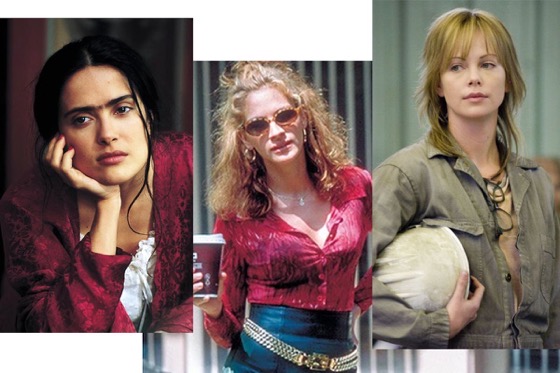
Recently, I was quite happy when sent this link to a RUSSH website and their article The new classics: 10 of the best feminist films you need to watch in your lifetime.

Why? Because among the 10 they chose are 3 that Peg and I cover in the new book American Women’s History on Film (On the Basis of Sex, Hidden Figures, Confirmation):

Check out the rest in American Women’s History on Film:

Remember, you don’t have to buy the book to read it – you can request that your local library buy a copy that can then be shared with many, many others!

My Reading Vacation over Winter Break

When a semester ends – even before grades are finished and posted – I dive into reading books I’ve been hoarding. While I love to physically travel on a break, one can’t travel across the WHOLE break, so books became my in-chair vacations.

This week I found myself immersed in two books that can best be described as biographies of books as much as they are biographies of writers. I’m not even a huge fan of The Great Gatsby but I found myself fascinated by the idea that Maureen Corrigan based a whole book on “How The Great Gatsby Came to Be and Why it Endures.”  

So for my first trip I visited 1920s New York and the life and (sad) times of F. Scott and Zelda Fitzgerald. Again, not a fan of the actual Gatsby, but now a big fan of the book about the book. You can’t get much more meta than that.

I followed that up with Imani Perry’s Looking for Lorraine: The Radiant and Radical Life of Lorraine Hansberry (author of the play A Raisin in the Sun).

There I visited 1950s Harlem to find her and her circle of Black poets and writers and activists who truly did change the country through pacifist protests – and art. While most people recognize Hansberry as the author of the play, many don’t know that she also wrote the screenplay for the film. That’s catalogued in yet another book that I had already read: A Raisin in the Sun: The Unfilmed Original Screenplay which has a forward by Spike Lee.

Hope you’re finding some fun books to tuck into over this holiday season. You’ve probably heard about the Icelandic tradition of Jolabokaflod, which translates into “Christmas Book Flood.”

 Icelandic tradition of Jolabokaflod

The tradition is to give or receive new books on Christmas Eve and then read them late into the night. I’ve always read before bed. It helps me fall asleep so I’m not sure I could read all night long – but I’m more than happy to read all DAY long. THAT’s what I call a vacation.

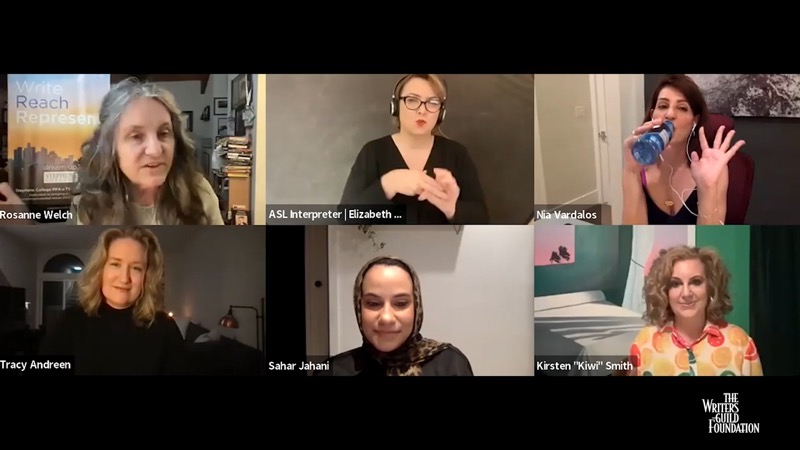
Rosanne Hosts WGA Panel: Anatomy of a Meet Cute: Writing Romantic Comedies, Zoom Webinar, Fri. Jan. 13, 2023, 6pn-730pm

During every Stephens College MFA in TV and Screenwriting Residency Workshop our program co-sponsors (with the WGA) a Zoom panel of writers focusing on a particular topic and which I have the pleasure of hosting. This January 13th the topic is “Writing Rom-Coms”

Guests who have RSVP’d so far are Nia Vardalos (My Big Fat Greek Wedding) and Kirsten “Kiwi” Smith (Legally Blonde/10 Things I Hate About You).

I can’t wait to talk all about the hard work of making people falling in love look easy. My personal point is that choosing your life mate is one of the most important decisions most people will ever make so rom-coms are more important than detective films or even war movies since not all of us will be in those situations. It’s going to be a fun conversation!


Anatomy of a Meet Cute: Writing Romantic Comedies

Friday, January 13, 2023

6:00 PM – 7:30 PM

Zoom webinar

Join us and RSVP here


From the WGA Foundation…

We team up once again with Stephens College MFA in Television and Screenwriting for a virtual panel on writing romantic comedies. Moderator and Stephens College MFA Director Dr. Rosanne Welch explores the genre with our panel of screenwriters to learn they approach crafting their screenplays, their thoughts on the essential elements of a rom-com, how the genre has evolved through the years, and why rom-coms continue to be an enduring comfort watch.

Panelists:

  • Kirsten “Kiwi” Smith – Writer/Producer, Trinkets, Legally Blonde films, 10 Things I Hate About You, The Ugly Truth
  • Nia Vardalos – Writer/Director/Actor, My Big Fat Greek Wedding films, Larry Crowne, I Hate Valentine’s Day
  • Stay tuned for more panelist announcements!

Panel starts at 6:00pm Pacific time. 

After signing up, you’ll receive information on how to access the Zoom panel. 

If you have any questions, please feel free to reach out to us at events@wgfoundation.org.

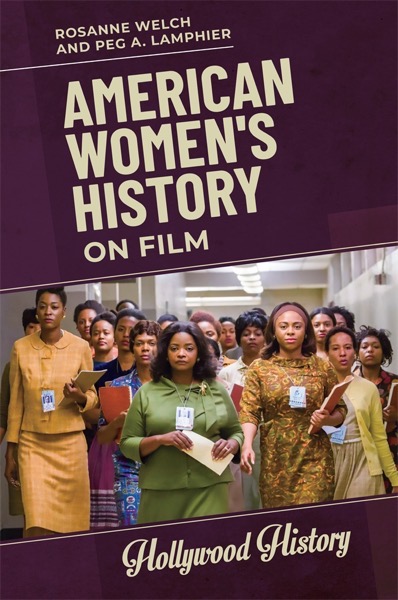
New Book Available: American Women’s History on Film – Hollywood History Series #2 – Dr. Rosanne Welch and Dr. Peg Lamphier

It never grows old… today the 2nd book in the Hollywood History series that I co-wrote with my dear friend and colleague, Peg Lamphier, arrived on my doorstep. American Women’s History on Film covers 10 films that focus on some area of women’s history, usually through the eyes of a bio-pic since that is mostly the way women’s history is told.

New Book Available: American Women’s History on Film - Hollywood History Series #2

American Women’s History on Film is part of the Hollywood History series from ABC-Clio that included our earlier title The Civil War on Film. What’s been most fun about being part of this project has been the perfect way it split between my and Peg’s specialties. She is a Civil War historian, and my specialty is Screenwriting Studies — together we are both women’s history professors – so each book focused on an area in which one of us had perfect expertise.

Hollywood History Civil War On Film cover

As well, we learned from earlier books that we had to be very specific about the cover art we wanted on each of these books – that it should have a female presence on the Civil War book (since the assumption was they’d choose some photo of male soldiers on a battlefield) so for that book, they gave us a photo including Sally Field playing Mary Todd Lincoln beside Daniel Day Lewis in Lincoln. For the current book, we were even more specific and requested women of color – and they gave us this lovely photo from Hidden Figures.

A new review of “When Women Wrote Hollywood”

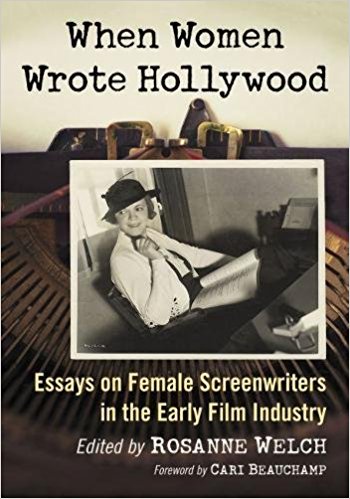
It’s been 4 years since publication of ‘When Women Wrote Hollywood’, a collection of essays by the inaugural class of the Stephens College MFA in TV and Screenwriting but reviews continue to arrive in our inbox including this one today:

“WHEN WOMEN WROTE HOLLYWOOD” is a collection of more than 20 essays focusing on the lives of female screenwriters of the Golden Age of Hollywood. Their writings helped create unforgettable stories and characters beloved by audiences to this 2022 year. Whoever heard of Ida May Park, Eve Unsell, Gene Gauntier, Lillian Hellman, Adela Rogers St. Johns, Anita Loos, let alone what they wrote. Absolutely a must read for the serious Hollywood buff, or student of cinema resolute in finding a career in the motion picture industry.”

ARGunners

Many congratulations to all the writers who contributed to this volume. It is a staple of the History of Screenwriting courses in our Stephens College MFA in TV and Screenwriting – and at a few other schools as I’ve been told.

Perhaps a sequel is in order…?

SRN 2023 Conference, Columbia, Missouri USA – Call for Papers – Proposals Due January 6, 2022

SRN 2023 Conference, Columbia, Missouri USA - Call for Papers - Proposals Due January 6, 2022

CALL FOR PAPERS

SRN 2023: GENDER AND THE FEMALE GAZE

September 20-23, 2023

The SRN (Screenwriting Research Network) is comprised of scholars, writers, and practice-based researchers. Started in 2006, the network currently has 700 members from 50+ countries. The aim of the annual International Conference is to continue, and expand, discussions around the screenplay and to strengthen a rapidly emerging, and global, research network. For more information, please visit our website: http://screenwritingresearch.com

The 15th annual conference is organized by the Stephens College MFA in TV and Screenwriting and the School of Integrative Studies at Stephens College. The arts and humanities thrive in Columbia, Missouri, as dozens of on- and off-campus performances occur year-round at Stephens, making the College one of Columbia’s premier centers for the performing arts.

Call for Papers:

Coming from a host college that focuses on female participation in the arts, the conference theme “Gender and the Female Gaze” wants to discuss the contributions of female screenwriters and the plethora of female-focused stories told on screen from the Silent Era through the modern-day. We encourage and embrace research that is around women of different ethnicities, religious and cultural backgrounds, and particularly hope to engage topics which relate to minority cultures within minority (and majority) communities.

We are thus particularly interested in abstracts for presentations on (but not limited to) the following topics:

  • Female screenwriters in silent cinema
  • The influence of female writer (-directors) in contemporary culture
  • Case studies on individual female screenwriter’s work
  • Patterns in the women-centered stories that have been brought to the screen
  • Historiography of manuals and screenwriting pedagogy where this reflects the work of female screenwriters
  • Censorship of women’s stories and women’s writings
  • Female screenwriters within writing partnerships
  • The work of female screenwriters within script production (e.g. as showrunners, script editors or consultants)
  • The question of a female voice within screenwriting
  • The cultural influence of female characters created by female screenwriters
  • The way life experiences led to the story told
  • The challenges to their projects screenwriters often meet which speak to political, religious, gender or other barriers which may not apply to their male counterparts.
  • The real-world impact of the script on its audiences and society.
  • Examples of the ways women stepped out of traditional roles to work for change and an improved future for themselves and their communities through screenwriting.
  • How female screen stories tackled issues of culture, religion, identity, gender and race
  • How women have negotiated screen industry norms and practices, biases and social hurdles in order to tell their screen stories.
  • Ways in which the professional woman’s everyday life (e.g. romance, marriage, parenthood status or citizenship) has been challenged or made more challenging because of her professional work, and vice versa.
  • Issues caused by unreliable narrators of history
  • Studies of cultural appropriation in screenwriting; cultural imperialism; cultural disconnect and/or discord which comes about through discourses of power
  • Research into the ways in which money/ finance precludes certain stories from being told, even by successful screenwriters

Proposals for presentations beyond the theme of the conference are also welcome. The aim of the SRN being to foster research that rethinks the screenplay in relation to its histories, theories, values, and creative practices, any proposal underpinned by such research will be considered. We expect papers on the broad topics of pedagogy, theory, and practice – but even those may reflect the conference theme via the choices of writers chosen for inclusion in the study.

Essential Information:

Deadline for abstracts: January 6, 2023
Acceptances: February 15th, 2023
Registration by: June 30, 2023

Submissions via email and contact:

Rosanne Welch
rwelch@stephens.edu

Submission of abstracts/proposals

  • Proposals/Abstracts can be sent as either a Word or PDF document: please indicate
  • “yourname_PROPOSALTYPE” (i.e. paper or panel) clearly in the file title and in the subject heading of your submission.
  • All presentations will be delivered in person, in English, and be underpinned by original research work being conducted by the presenter. Multiple presenters (max. 2) for co-written papers are allowed.

1.) Proposals for traditional 20-minute papers, followed by Q&A. They should include:

  • Title
  • Author’s name
  • Affiliation (university, independent, practitioner, etc.)
  • Contact details
  • Abstract (max. 300 words)
  • 4-6 keywords
  • short bio (max 150 words), detailing your research activity, publications and/or screenwriting practice – and if the piece contributes to the conference theme please note.

2.) Proposals for Pre-constituted panels

Proposals for pre-constituted panels can be submitted by any of the presenters or the Chair of the panel and should include:

  • title of the panel
  • brief outline (100 words maximum) of the overall topic
  • abstracts of all the presentations – no more than 3 papers – following abstract guidelines listed above.

Abstracts should follow the guidelines for individual papers as above and include short bios and contact details of both the speakers and the panel Chair. Wherever possible, the Chair should NOT be one of the presenters. If a proposal for a pre-constituted panel does not include a Chair, the Conference Committee will appoint one. All proposals should indicate “Panel Proposal SRN 2022 in the file title and in the subject heading of the submission email.

Website and registration

The Website for the conference will include a wealth of useful information (e.g., registration, travel arrangements, accommodation options), as well as all the updates and the program leading up to the Conference. It will go live in early December.

The conference fee is expected to be in the region of $120 USD.

03 Jeanne Macpherson & Suso Cecchi d’Amico From Jeanne to Suso to Julie to Spike: How Jeanne Macpherson’s Manual on Screenwriting Influenced Italian Realism which Influenced Black Independent Film in the U.S. [Video]

03 Jeanne Macpherson & Suso Cecchi d'Amico From Jeanne to Suso to Julie to Spike: How Jeanne Macpherson’s Manual on Screenwriting Influenced Italian Realism which Influenced Black Independent Film in the U.S. [Video]

Transcript:

So she wrote just a little bit in this piece that was published all about her theories of screenwriting. Many other women of the day had written in this and what’s interesting is Emilio Cecci came to the states to study how Hollywood did film so he could bring that to Cine Citta and make some money in Italy and he had a daughter named Suso Cecchi d’Amico and she became the core screenwriter in the world of Italian Neo-Realism. She remembered in many interviews that she had read this booklet, as she described it, and that what she kept in mind were these things that Jeanne had said about screenwriting – the three elements: The crucial moment. The beginning of new and the end of the first one. Seems pretty basic but these people were thinking how do we make movies work and so this was new ideas to them. So it’s a woman taking information from another woman mentoring her into how she will run her career in an entirely different country. Which also I think is lovely to fit into in Claus’s theme and she remembered that for many years she was interviewed and there were oral histories done of her and she always kept going back to this one thing she’d read from Jeanne Macpherson which I think is beautiful.

Watch this entire presentation

At the recent Screenwriting Research Network conference in Vienna, I gave this talk titled “From Jeanne to Suso to Julie to Spike: How Jeanne Macpherson’s Manual on Screenwriting Influenced Italian Realism which Influenced Black Independent Film in the U.S.”

In the talk, I trace the ways a manual about screenwriting by silent film writer Jeanne Macpherson influenced Suso Cecchi d’Amici who began to utilize Macpherson’s ideas and became the queen of Italian neorealism screenwriting in Europe. Then those Italian neo-realist screenwriters in turn inspired the Los Angeles School of Black Independent Film Makers (the L.A. School). In turn, such as Charles Burnett, Billy Woodberry, Haile Gerima, and Julie Dash and their ideas fueled Spike Lee. Finally, when he became the first Black man to head the jury at the Cannes Film Festival (where Suso had once served) his choice of films influenced yet another generation of screenwriters.

From Jeanne to Suso to Julie to Spike:  How Jeanne Macpherson’s Manual on Screenwriting Influenced Italian Realism which Influenced Black Independent Film in the U.S. (Complete)

02 Who was Jeanne Macpherson? From Jeanne to Suso to Julie to Spike: How Jeanne Macpherson’s Manual on Screenwriting Influenced Italian Realism which Influenced Black Independent Film in the U.S. [Video]

02 Who was JeanneMacpherson? From Jeanne to Suso to Julie to Spike: How Jeanne Macpherson’s Manual on Screenwriting Influenced Italian Realism which Influenced Black Independent Film in the U.S. [Video]

Transcript:

So we’ll start back with Jeanne McPherson. This is Jeannie McPherson and yes that’s a picture of her with Cecil B Demille. So this is mostly where you see her photographs in the world. She was also an aviator and several years ago at a conference, I saw a marvelous presentation on how women are always there at the beginning of a new thing like the Wild West and women aviators in America and all over the world were doing flying until it became a job that made money and then suddenly women couldn’t be hired to fly anymore and you had to have had experience in the military, where they hadn’t allowed women to fly. So suddenly you couldn’t be a pilot anymore and certainly couldn’t be an astronaut until they broke that rule. So same thing happened in early Hollywood. All these women are working like crazy and then suddenly it becomes the system and they’re all slowly petered out. Often it was because the movie Moguls offered them new contracts – after 20 years of working as screenwriters and being their own directors and casting – they were offered contracts as Junior writers to work with men who would teach them how to do it and to that they said: “I’m going home and writing my own novel.” So they and they didn’t know that by doing that they pulled themselves out of the history and therefore we’re archaeologically discovering all of them.

Watch this entire presentation

At the recent Screenwriting Research Network conference in Vienna, I gave this talk titled “From Jeanne to Suso to Julie to Spike: How Jeanne Macpherson’s Manual on Screenwriting Influenced Italian Realism which Influenced Black Independent Film in the U.S.”

In the talk, I trace the ways a manual about screenwriting by silent film writer Jeanne Macpherson influenced Suso Cecchi d’Amici who began to utilize Macpherson’s ideas and became the queen of Italian neorealism screenwriting in Europe. Then those Italian neo-realist screenwriters in turn inspired the Los Angeles School of Black Independent Film Makers (the L.A. School). In turn, such as Charles Burnett, Billy Woodberry, Haile Gerima, and Julie Dash and their ideas fueled Spike Lee. Finally, when he became the first Black man to head the jury at the Cannes Film Festival (where Suso had once served) his choice of films influenced yet another generation of screenwriters.

From Jeanne to Suso to Julie to Spike:  How Jeanne Macpherson’s Manual on Screenwriting Influenced Italian Realism which Influenced Black Independent Film in the U.S. (Complete)

Dr. Rosanne Welch hard at work, as always. Off to Vienna for the #screenwritingresearchnetwork Conference then Sicily to see family next week.

Dr. Rosanne Welch hard at work, as always. Off to Vienna for the #screenwritingresearchnetwork Conference then Sicily to see family next week.
Follow me on Instagram

More from my Instagram Feed

01 Introduction From Jeanne to Suso to Julie to Spike: How Jeanne Macpherson’s Manual on Screenwriting Influenced Italian Realism which Influenced Black Independent Film in the U.S. [Video]

01 Introduction From Jeanne to Suso to Julie to Spike:  How Jeanne Macpherson’s Manual on Screenwriting Influenced Italian Realism which Influenced Black Independent Film in the U.S. [Video]

Transcript:

…The woman I’m going to start with is Jeannie McPherson who is also a famous silent film screenwriter of that period. As famous as Marion was in her own day. Forgotten much in the history books because she wrote for Cecil B. Demille. She wrote all the films that he made that made money. She was also one of his three mistresses and so textbooks tell you she was his mistress and they forget the part where she wrote the movies that made him money. Yes. So I love Jeannie and I borrowed this title from this play which I love “Vanyan and Sonya and Masha and Spike.” It just seemed to suit me perfectly but I wanted to credit the author. I did not make up the title. I’m Rosanne Welch. I am working with Stephens College which is in Missouri but we run our MFA programs in Los Angeles. So it confuses everybody because I live in LA. I don’t live in Missouri. Our theme of our program is Write, Reach and Represent which of course suits everything that everyone’s been talking about today. I’m very excited about that. My background is that I came from being a television screenwriter and wrote on all these shows and then came into Academia and was like how are people learning how to do this because not everybody’s very good at it and then I’ve written on these various Books. Thank you for mentioning “When Women Wrote Hollywood” which has chapters on Jeannie and many of these other women we can talk about. I also am the book review editor for “The Journal Of Screenwriting” so if you want to review a book – you have a book that needs reviewing – let me know because we always need more reviews all right. So that’s a good thing and we’re here doing Global Screenwriting.

Watch this entire presentation

At the recent Screenwriting Research Network conference in Vienna, I gave this talk titled “From Jeanne to Suso to Julie to Spike: How Jeanne Macpherson’s Manual on Screenwriting Influenced Italian Realism which Influenced Black Independent Film in the U.S.”

In the talk, I trace the ways a manual about screenwriting by silent film writer Jeanne Macpherson influenced Suso Cecchi d’Amici who began to utilize Macpherson’s ideas and became the queen of Italian neorealism screenwriting in Europe. Then those Italian neo-realist screenwriters in turn inspired the Los Angeles School of Black Independent Film Makers (the L.A. School). In turn, such as Charles Burnett, Billy Woodberry, Haile Gerima, and Julie Dash and their ideas fueled Spike Lee. Finally, when he became the first Black man to head the jury at the Cannes Film Festival (where Suso had once served) his choice of films influenced yet another generation of screenwriters.

From Jeanne to Suso to Julie to Spike:  How Jeanne Macpherson’s Manual on Screenwriting Influenced Italian Realism which Influenced Black Independent Film in the U.S. (Complete)