13 Even More On D. C. Fontana From Women in Early TV for the American Women Writers National Museum [Video]

13 Even More On D. C. Fontana From Women in Early TV for the American Women Writers National Museum [Video]

Many thanks to Janice Law of the American Women Writers National Museum who invited me to give a short talk on The Women of Early TV.

I enjoyed sharing the names and careers of women like Peg Lynch, Gertrude Berg, Selma Diamond, and D.C. Fontana to the members who gathered on Zoom last Wednesday morning. There are so many more I could have talked about whose names don’t appear in mainstream books about the history of television so we have to learn who they are and carry those names forward ourselves.  It’s one of the missions of the Stephens College MFA in TV and Screenwriting – and has been one of my missions all my life.

RMW Rosanne Signature for Web

Transcript:

There’s a great story. Nichelle Nichols was going to quit because, if you think about it, stereotypically, she was the secretary. She took calls for the captain on Star Trek. So she kind of thought this is a waste of my time. She’d been a big band singer. She had more to do with her life and in fact, the Reverend Dr. Martin Luther King met her at some fundraiser and said “Oh no-no. You are deeply important because you are showing young children that we belong in the future.” So she stayed on the show and looked then she did the movies and of course, Nichelle is as iconic as any of the early females in television. This is all the work of Dorothy Fontana and I think we need to recognize her name and be really interested in all her other work. She later went on to do Babylon 5 of course another science fiction show. She worked on the video game versions of Star Trek. So she stayed in that realm and was sort of the cover who knew all the history and how all the characters should be portrayed long after Gene Roddenberry passed away.

Many thanks to Janice Law of the American Women Writers National Museum who invited me to give a short talk on The Women of Early TV.

I enjoyed sharing the names and careers of women like Peg Lynch, Gertrude Berg, Selma Diamond, and D.C. Fontana to the members who gathered on Zoom last Wednesday morning. There are so many more I could have talked about whose names don’t appear in mainstream books about the history of television so we have to learn who they are and carry those names forward ourselves. It’s one of the missions of the Stephens College MFA in TV and Screenwriting – and has been one of my missions all my life.

Watch this entire presentation


Women pioneers who created, produced, or shepherded many of America’s most wildly popular, early television programs will be profiled by Dr. Rosanne Welch.

Get your copy today!

04 My Writing from The Difficulties and Delicacies of Writing the First Female Doctor in 50+ years [Video] [Doctor Who]

It was great to be able to attend this year’s SD WhoCon in San Diego and present this lecture on “The Difficulties and Delicacies of Writing the First Female Doctor in 50+ years” in which I discuss how successful I think showrunner Christopher Chibnall was in making that transition.

It gave me a chance to talk about the creative work of a showrunner/screenwriter while also reconnecting to some friends we had met at this same convention some 3 years ago – and to talk about one of my favorite subjects – Doctor Who!

04 My Writing from The Difficulties and Delicacies of Writing the First Female Doctor in 50+ years [Video] [Doctor Who]

Transcript:

So Written By Magazine. Journal of Screenwriting again obviously coming from that standpoint and California History. I do some pop culture for them so I’m trying to figure out how to get some Doctor Who in there right? A little — I’m a little behind on Matt having actually been in the West but maybe I’ll get something on there. This is the piece that I did for Written By and as I said it’s a sample over there. It was really fun to sort of sit in the room with him. I do think he’s one of my favorite writers and that made me very happy and then these are a bunch of other books and things that I’ve written so you kind of know where I’m coming from and where these opinions come from.


Watch this entire presentation

26 Dorothy Parker and Social Justice from “Female Creatives & A Star Is Born” [Video]

26 The Status of Men... from

Transcript:

I think it’s important to remember what it could have been if we’d had a chance to see a Whitney Houston version. I think that would have been an incredible movie. I’m still bummed I’m never going to get to see it and I think it’d really be cool if Dorothy had lived to see it all but she didn’t. She died in 1967 and I think it’s interesting to point out why it is Martin Luther King in this picture. People may or may not know that if you buy any of her writing — if you buy the portable Dorothy Parker — you will find that she gave all her money, when she died, to the Reverend Dr. Martin Luther King. She did not know, of course, that he would die a year later and all of his estate went to the NAACP. So if you buy any of her writing, you’re supporting the NAACP and that’s because even as a young woman at the age of 27 she was reviewing broadway plays and she reviewed Emperor Jones and she had this quote about how people — how the producers in Broadway at that time — because it wasn’t you know she wasn’t involved in Hollywood — they were wasting the genius of the African-American community. Obviously, she’s using word of the day but she recognized the genius that was being lost. So she wanted to support the cause of social — civil rights — social justice and civil rights and I think that’s pretty cool.

Watch this entire presentation

Connections at conferences matter! Through the most recent SCMS, I met Vicki Callahan, whose film history focus right now is on Mabel Normand. When she learned I could put together a lecture on the importance of the female voice in the A Star is Born franchise she asked me to give that lecture to her master students.

It made for a great opportunity for me to hone the ideas I’m working on for a chapter on that franchise that I’m writing for a new book from Bloomsbury: The Bloomsbury Handbook Of International Screenplay Theory. It’s always nice when one piece of research can be purposed in other ways – and it’s always fun revisiting such a female-centric film franchise – one that drew the talents of such powerful performers as Janet Gaynor, Judy Garland, Barbara Streisand, and Lady Gaga.

Find out why in this lecture!

RMW Rosanne Signature for Web


Watch this entire presentation

12 More On D. C. Fontana From Women in Early TV for the American Women Writers National Museum [Video]

12 More On D. C. Fontana From Women in Early TV for the American Women Writers National Museum [Video]

Many thanks to Janice Law of the American Women Writers National Museum who invited me to give a short talk on The Women of Early TV.

I enjoyed sharing the names and careers of women like Peg Lynch, Gertrude Berg, Selma Diamond, and D.C. Fontana to the members who gathered on Zoom last Wednesday morning. There are so many more I could have talked about whose names don’t appear in mainstream books about the history of television so we have to learn who they are and carry those names forward ourselves.  It’s one of the missions of the Stephens College MFA in TV and Screenwriting – and has been one of my missions all my life.

RMW Rosanne Signature for Web

Transcript:

She started out, as often happens to women, as an assistant to Gene Roddenberry. She had written short stories. She had actually written episodes of shows like The Big Valley and The High Chaparral. Again, two very progressive early shows. Problem was, how do you get a gig? She got a gig as his assistant but she was there at the very beginning. In the early books about Star Trek they will talk about how intrinsic she was to coming up with the fact that females needed to be important on the show because it was about the future and of course someone like Nichelle Nichols right? We had to have African-American representation in the future and this is going to be, again, so important to representation because Nichelle Nichols is going to inspire Mae Jemison, the first African-American female astronaut right? Mae Jemison saw Nichelle Nichols and knew that she could be in space because she saw it, so she could be it right?

Many thanks to Janice Law of the American Women Writers National Museum who invited me to give a short talk on The Women of Early TV.

I enjoyed sharing the names and careers of women like Peg Lynch, Gertrude Berg, Selma Diamond, and D.C. Fontana to the members who gathered on Zoom last Wednesday morning. There are so many more I could have talked about whose names don’t appear in mainstream books about the history of television so we have to learn who they are and carry those names forward ourselves. It’s one of the missions of the Stephens College MFA in TV and Screenwriting – and has been one of my missions all my life.

Watch this entire presentation


Women pioneers who created, produced, or shepherded many of America’s most wildly popular, early television programs will be profiled by Dr. Rosanne Welch.

Get your copy today!

03 Russell T Davies from The Difficulties and Delicacies of Writing the First Female Doctor in 50+ years [Video] [Doctor Who]

It was great to be able to attend this year’s SD WhoCon in San Diego and present this lecture on “The Difficulties and Delicacies of Writing the First Female Doctor in 50+ years” in which I discuss how successful I think showrunner Christopher Chibnall was in making that transition.

It gave me a chance to talk about the creative work of a showrunner/screenwriter while also reconnecting to some friends we had met at this same convention some 3 years ago – and to talk about one of my favorite subjects – Doctor Who!

03 Russell T Davies from The Difficulties and Delicacies of Writing the First Female Doctor in 50+ years [Video] [Doctor Who]

Transcript:

I also am on the editorial board for different things. Written By Magazine is the magazine of the Writers Guild. I have a sample of it over there. I got lucky one time when Russell was in town doing Miracle Day the editor was like I know you’re a Doctor Who fan. Would you like to interview him and I was like yes I would love to sit in a room and chat with him and it turned out few journalists are as Whovian of a fan as I. So we ended up chatting longer than I was meant to be there and the publicist would walk by and go “Are you all done yet?” and I thought. oh, they’re going to kick me out, and then Russell was like in a minute and he’d send the publicist away. So I laughed.


Watch this entire presentation

Elinor Glyn Recognized “It” Before Anyone Else -Because She Had “It” – Dr. Rosanne Welch, Script magazine, February 2022

Script contributor Dr. Rosanne Welch celebrates the female screenwriters who came before us with this month's spotlight on author turned Hollywood screenwriter Elinor Glyn.

From Marilyn Monroe to Lady Gaga it seems one actress every generation is said to have “It” but few know that a female screenwriter of the silent era coined that still current phrase. Meet Elinor Glyn. Her life as a high society wife in England fed the novel-writing success that brought Glyn an invitation to Hollywood at the age of 56.

Through marriage, she had gained the glamour of being a member of the titled nobility. Yet she soon learned he had less funds than could support their lifestyle, so Glyn became a writer, publishing a book a year to keep her family’s finances afloat. Her ‘naughty’ novels – because they involved women involved in torrid affairs — became best sellers. That success caused the Hearst publishing company to sign Glyn to write articles and – recognizing the power of the film industry – Glyn included a clause for the motion picture rights.

Read Elinor Glyn Recognized “It” Before Anyone Else – Because She Had “It”


Read about more women from early Hollywood


A TED Talk Worth Watching – “Saving the World Vs Kissing the Girl” by Lindsay Doran

I am quite a fan of TED Talks – for their content and the spiffy way they illustrate a talk should go in a quick 20 minutes or so.  I often show students one of my favorites – Chimamanda Adiche’s “The Danger of a Single Story” and show my friend, Art Benjamin’s TED Talks in some of my humanities courses.  I was deeply pleased to be asked to give my own TED Talk, “A Female Voice In The Room”,  when CalPolyPomona hosted their own TED@CPP event a few years ago.  So when I find a new one worth sharing – I share it. 

The latest TED Talk to catch my attention was given by film producer Lindsay Doran in 2012.  “Saving the World Vs Kissing the Girl” is a fascinating look at how ‘action’ movies end on the announcement of the success to someone the protagonist is in a relationship with, making the culmination of the relationship more important than the ‘saving the world’ part. 

For instance, at the end of Rocky he doesn’t say “Yo, Adrian, I won” because he doesn’t win the fight.  He only survived it. The movie ends with Rocky and Adrian struggling to get to each other in the crowd. When they reach each other, they clutch each other saying, “I love you” over and over again. THAT’s the win.

A TED Talk Worth Watching -  “Saving the World Vs Kissing the Girl” by Lindsay Doran

Using Dirty Dancing, Karate Kid, and The King’s Speech she explains how positive relationships are more important than positive accomplishments in films.  They always end with the healing of a primary relationship. Heroes who don’t win their fight (Rocky in Rocky, George Bailey in It’s A Wonderful Life, Atticus Finch in To Kill A Mockingbird) are so inspirational because they win their relationships. 

Then she says that women don’t need to learn that relationships are more important than accomplishments in life – men do.  So perhaps these action films are women’s way of teaching that lesson that no man is a failure who has friends.

I LOVE that idea!

25 How Did The Characters Grow? from “Female Creatives & A Star Is Born” [Video]

25 How Did The Characters Grow? from

Transcript:

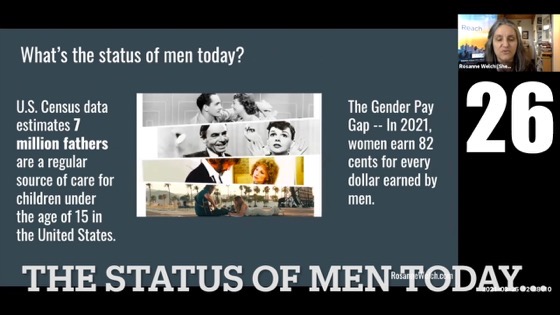
Think about how men feel today. I think men have changed. That’s why they gave more attention to Bradley Cooper’s character. There are seven million men who are sort of stay-at-home dads. That’s a huge thing. That’s a huge difference. There are a lot more men getting used to the fact that their wives will have more money than they do right? Colleges are like 60% women, 40% men which means you’re likely to be in a marriage where your wife will make more money than you, and your generation is likely to be more comfortable with that. I think that’s a good thing. I think it’s important to see that the female characters grow a little bit in every one of these iterations. The last two are more ethnic women. That wouldn’t have happened before right? Barbara is so clearly a Jewish woman and very proud of it and Allie represents herself as a Sicilian American woman. Her father is a Sicilian guy who owns a bunch of limos, you know. He’s a driver for a limo company. This is a very New York Sicilian kind of thing. In both cases, the women in these last two films — the female performers — wrote the songs they had their characters sing, and they both won Academy Awards for writing one of those songs. Which is a huge deal right to me again making it more of a female franchise. Allie accepts more of the stuff that happened to Janet Gaynor. You know, look at me. Check me out. Make sure that you know I can change. I’ll do anything you want to be successful. She accepts the dancers and things she doesn’t need and in this case, people feel like she was more on her own because she didn’t say I’m Mrs. anybody but she took his name which was again following that pattern of respecting him. So I think it’s really important to remember them.

Watch this entire presentation

Connections at conferences matter! Through the most recent SCMS, I met Vicki Callahan, whose film history focus right now is on Mabel Normand. When she learned I could put together a lecture on the importance of the female voice in the A Star is Born franchise she asked me to give that lecture to her master students.

It made for a great opportunity for me to hone the ideas I’m working on for a chapter on that franchise that I’m writing for a new book from Bloomsbury: The Bloomsbury Handbook Of International Screenplay Theory. It’s always nice when one piece of research can be purposed in other ways – and it’s always fun revisiting such a female-centric film franchise – one that drew the talents of such powerful performers as Janet Gaynor, Judy Garland, Barbara Streisand, and Lady Gaga.

Find out why in this lecture!

RMW Rosanne Signature for Web


Watch this entire presentation

11 D. C. Fontana From Women in Early TV for the American Women Writers National Museum [Video]

11 D. C. Fontana From Women in Early TV for the American Women Writers National Museum [Video]

Many thanks to Janice Law of the American Women Writers National Museum who invited me to give a short talk on The Women of Early TV.

I enjoyed sharing the names and careers of women like Peg Lynch, Gertrude Berg, Selma Diamond, and D.C. Fontana to the members who gathered on Zoom last Wednesday morning. There are so many more I could have talked about whose names don’t appear in mainstream books about the history of television so we have to learn who they are and carry those names forward ourselves.  It’s one of the missions of the Stephens College MFA in TV and Screenwriting – and has been one of my missions all my life.

RMW Rosanne Signature for Web

Transcript:

Most importantly the first woman who began in Star Trek — Dorothy Catherine Fontana. Now, this is something very important to me for us to recognize. She was told that boys would not watch programs or read books — she wrote short stories — that were written by a girl if they had male protagonists. So she was encouraged by both her publisher and her television agent to go by her initials DC which meant that legions of girls did not know that DC Fontana, their favorite Star Trek writer, was a female right, and that’s been, I think, a problem for years. We continue to do that. When I was a kid in high school you read The Outsiders by S. E. Hinton — Susan Elizabeth Hinton — because no one thought anyone would write a book about gang kids written by a girl. likewise, I think — I’d like to think we grow out of these things but in fact, in my son’s childhood, the major giant best-selling book around the world was written by J. K. Rowling because no one thought boys would read a book by a girl named Joanne. So we really need to get rid of that idea. We also need to recognize the women who came before us who were following that. So Dorothy Fontana…

Many thanks to Janice Law of the American Women Writers National Museum who invited me to give a short talk on The Women of Early TV.

I enjoyed sharing the names and careers of women like Peg Lynch, Gertrude Berg, Selma Diamond, and D.C. Fontana to the members who gathered on Zoom last Wednesday morning. There are so many more I could have talked about whose names don’t appear in mainstream books about the history of television so we have to learn who they are and carry those names forward ourselves. It’s one of the missions of the Stephens College MFA in TV and Screenwriting – and has been one of my missions all my life.

Watch this entire presentation


Women pioneers who created, produced, or shepherded many of America’s most wildly popular, early television programs will be profiled by Dr. Rosanne Welch.

Get your copy today!

02 Writing and Me from The Difficulties and Delicacies of Writing the First Female Doctor in 50+ years

It was great to be able to attend this year’s SD WhoCon in San Diego and present this lecture on “The Difficulties and Delicacies of Writing the First Female Doctor in 50+ years” in which I discuss how successful I think showrunner Christopher Chibnall was in making that transition.

It gave me a chance to talk about the creative work of a showrunner/screenwriter while also reconnecting to some friends we had met at this same convention some 3 years ago – and to talk about one of my favorite subjects – Doctor Who!

02 Writing and Me from The Difficulties and Delicacies of Writing the First Female Doctor in 50+ years

Transcript:

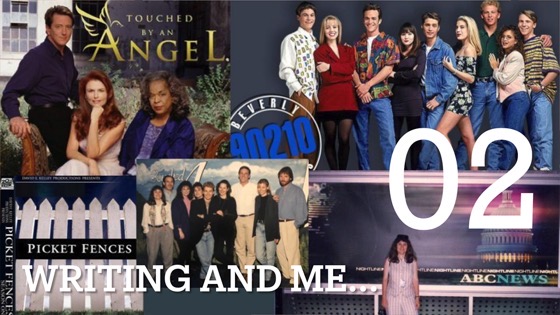
I came out of television into academia. So I worked on these shows earlier in my career and learned a lot from the people who ran them right? 90210. Very popular still. Always shocked about that because there’s been lots of teen shows but I think we learned that they took these teenagers seriously and when you take your character seriously, they become friends to the people who watch and I obviously believe that’s true in Doctor Who. We all have our favorite doctors. Mine actually goes back to classic Who. I’m a Peter Davidson person but our companions. I mean they are about bringing friends into our home. That’s how TV is different than film because you have to pay to go see the people in the films but these people come into our homes where we’re having coffee or you know having pizza or whatever. So I really think it’s interesting to look at why we fall in love with these characters and for me, of course, it comes from the writing.


Watch this entire presentation