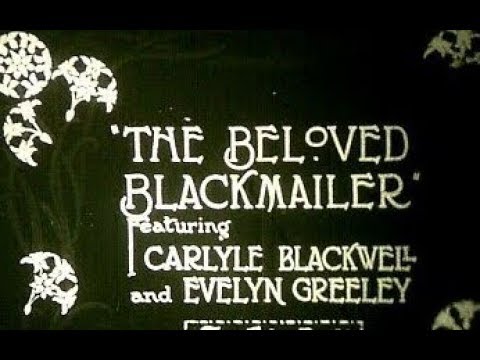
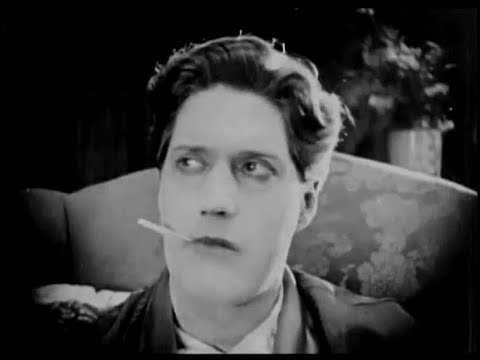
The spoiled, somewhat “mama’s boy” young son of a railroad magnate and the pretty young daughter of the magnate’s partner set out to stop their respective fathers from their constant quarreling. In the process they find themselves falling for each other. – IMDB
* A portion of each sale from Amazon.com directly supports our blogs
** Many of these books may be available from your local library. Check it out!
† Available from the LA Public Library
Months of research went into the creation of the essays in “When Women Wrote Hollywood.” Here are some of the resources used to enlighten today’s film lovers to the female pioneers who helped create it.
†
†
* A portion of each sale from Amazon.com directly supports our blogs ** Many of these books may be available from your local library. Check it out! † Available from the LA Public Library
During the ’30s and ’40s, Hollywood produced a genre of madcap comedies that emphasized reuniting the central couple after divorce or separation. Their female protagonists were strong, independent, and sophisticated. Here, Stanley Cavell names this new genre of American film―“the comedy of remarriage”―and examines seven classic movies for their cinematic techniques and for such varied themes as feminism, liberty, and interdependence.
Included are Adam’s Rib, The Awful Truth, Bringing Up Baby, His Girl Friday, It Happened One Night, The Lady Eve, and The Philadelphia Story. – Amazon
* A portion of each sale from Amazon.com directly supports our blogs
** Many of these books may be available from your local library. Check it out!
† Available from the LA Public Library
Min and Bill is a 1930 American Pre-Code comedy-drama film starring Marie Dressler and Wallace Beery, and based on Lorna Moon’s 1929 novel Dark Star, adapted by Frances Marion and Marion Jackson. The film tells the story of dockside innkeeper Min’s tribulations as she tries to protect the innocence of her adopted daughter Nancy, all while loving and fighting with boozy fisherman Bill, who resides at the inn.
Min and Bill stars Marie Dressler (Min), Wallace Beery (Bill), Dorothy Jordan (Nancy), and Marjorie Rambeau (Bella, Nancy’s ill-reputed mother), and was directed by George W. Hill. Dressler won the Academy Award for Best Actress in 1931 for her performance in this film.[2]
This film was such a runaway hit that it and its near-sequel Tugboat Annie, which re-teamed Dressler and Beery in similar roles, boosted both to superstar status. Dressler topped Quigley Publications’ annual Top Ten Money Making Stars Poll of movie exhibitors in 1933, and the two pairings with Dressler were primarily responsible for Beery becoming MGM’s highest-paid actor in the early 1930s, before Clark Gable took over that crown; — Wikipedia
* A portion of each sale from Amazon.com directly supports our blogs
** Many of these books may be available from your local library. Check it out!
† Available from the LA Public Library
Months of research went into the creation of the essays in “When Women Wrote Hollywood.” Here are some of the resources used to enlighten today’s film lovers to the female pioneers who helped create it.
As a woman who wrote or cowrote over sixty produced films, a producer who championed strong female roles, and a Hollywood insider with a career spanning over three decades, Jane Murfin may be one of the most prolific but least known writers of the 1920s and ’30s.
Jane Murfin was born Jane Macklem in Quincy, Michigan. Her first marriage, in 1907, to lawyer James Murfin, lasted less than five years, but Jane adopted his surname and would use it—excluding the brief period in the late 1910s when she and Jane Cowl used the pseudonym Allan Langdon Martin—throughout her life. Although the 1910 US Census records list her as living as a housewife in Michigan with her lawyer-husband James, according to Murfin family correspondence from 1967, Jane moved shortly after to New York City while her husband remained in Michigan. According to the University of Michigan in Ann Arbor, James eventually became a school regent, after a long career teaching law, and even has a gate on the grounds named after him.
* A portion of each sale from Amazon.com directly supports our blogs
** Many of these books may be available from your local library. Check it out!
† Available from the LA Public Library
Ben Hur is a 1907 American silent drama film set in ancient Rome, the first screen adaptation of Lew Wallace’s popular 1880 novel Ben-Hur: A Tale of the Christ. Co-directed by Sidney Olcott and Frank Oakes Rose, this “photoplay” was produced by the Kalem Company of New York City, and its scenes, including the climactic chariot race, were filmed in the city’s borough of Brooklyn.[5][a]
While this film is significant for being the first motion-picture adaptation of Wallace’s novel, its production also served as a landmark case of copyright infringement by an early American film studio. In 1908 Kalem was successfully sued for representing parts of Wallace’s book on screen without obtaining permission from the author’s estate. Copies of the film, which survive, are now in the public domain and are readily available for free viewing online in the collections of various digital archives and on streaming services. — Wikipedia
* A portion of each sale from Amazon.com directly supports our blogs
** Many of these books may be available from your local library. Check it out!
† Available from the LA Public Library
Months of research went into the creation of the essays in “When Women Wrote Hollywood.” Here are some of the resources used to enlighten today’s film lovers to the female pioneers who helped create it.
COMEDY OUTLOOK SADDENS SPEWACK; Calls Times ‘Unfortunate’ for the Writer of Humor — Cites ‘Method’ School as ‘Grim’ By Louis Calta
* A portion of each sale from Amazon.com directly supports our blogs
** Many of these books may be available from your local library. Check it out!
† Available from the LA Public Library
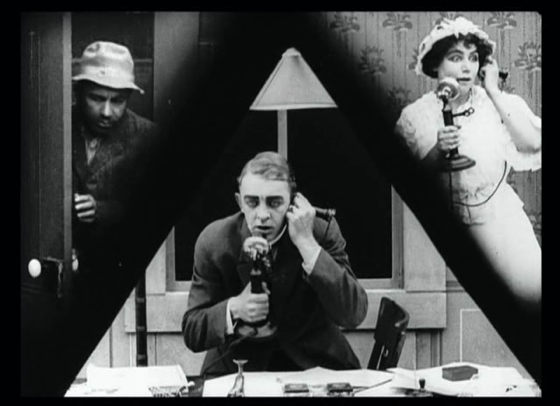
Suspense is a 1913 American silent short film thriller directed by Lois Weber and Phillips Smalley. Weber also wrote the scenario and stars in the film with Valentine Paul. The film features early examples of a split screen shot[1] and a car chase. The Internet Movie Database lists Lon Chaney as having an unconfirmed and uncredited brief role;[2] however, this is disputed by silentera.com, which states “Despite attributions to the contrary, Lon Chaney does not appear in the film.”[3][4][5]
A print of the film is preserved at the film archive of the British Film Institute.[6]
A servant leaves a new mother with only a written letter of notice, placing her key under the doormat as she leaves. Her exit attracts the attention of a tramp to the house. As the husband has previously phoned that he is working late, the wife decides not to ring back when she finds the note but does ring back when she sees the tramp. Her husband listens, horrified, as she documents the break-in and then the tramp cuts the line. The husband steals a car and is immediately pursued by the car’s owner and the police, who nearly but don’t quite manage to jump into the stolen car during a high-speed chase. The husband manages to gain a lead over the police but then accidentally strikes a man smoking in the road and checks to see that he is okay. Meanwhile, the tramp is breaking into the room where the wife has locked herself and her baby, violently thrusting himself through the wood door, carrying a large knife. At that moment the husband arrives, pursued by the police. As the husband runs towards the home, the police fire warning shots into the air, panicking the hobo. He runs down the stairs, to be met by the husband at the front door. After a short struggle, he overpowers the hobo, who is then grabbed by the police. The husband runs upstairs, everything is explained, and all is forgiven as the couple embrace. — Wikipedia
* A portion of each sale from Amazon.com directly supports our blogs ** Many of these books may be available from your local library. Check it out! † Available from the LA Public Library
* A portion of each sale from Amazon.com directly supports our blogs
** Many of these books may be available from your local library. Check it out!
† Available from the LA Public Library
Months of research went into the creation of the essays in “When Women Wrote Hollywood.” Here are some of the resources used to enlighten today’s film lovers to the female pioneers who helped create it.
* A portion of each sale from Amazon.com directly supports our blogs
** Many of these books may be available from your local library. Check it out!
† Available from the LA Public Library
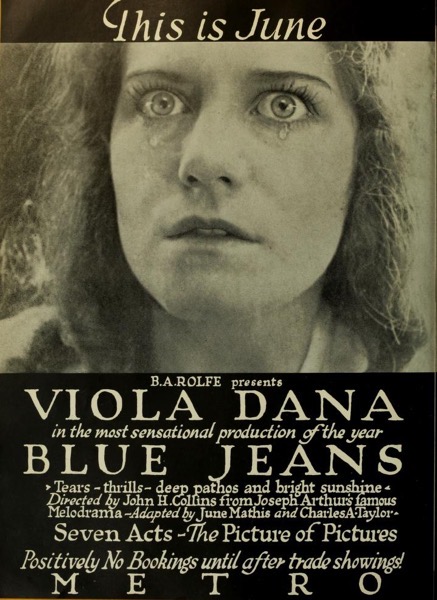
Perry Bascom comes to the town of Rising Sun, Indiana, to take charge of the sawmills which have for years been managed by his father’s best friend, Col. Henry Clay Risener. His father’s half-brother, Jack, has brought the name into disrepute in the town, so he (Perry) decides to be known as Jim Nelson. Perry sees June, who has been sent away from the poorhouse. He shares his lunch with her and protects her from the attentions of Ben Boone, the political bully of the town. — IMDB
Blue Jeans is a 1917 American silent drama film, based on the 1890 play Blue Jeans by Joseph Arthur that opened in New York City to great popularity. The sensation of the play was a dramatic scene where the unconscious hero is placed on a board approaching a huge buzz saw in a sawmill, later imitated to the point of cliché.[1][2]
Prints survive at several archives including the George Eastman House Motion Picture Collection.[3][1] — Wikipedia
* A portion of each sale from Amazon.com directly supports our blogs ** Many of these books may be available from your local library. Check it out! † Available from the LA Public Library
* A portion of each sale from Amazon.com directly supports our blogs
** Many of these books may be available from your local library. Check it out!
† Available from the LA Public Library
Months of research went into the creation of the essays in “When Women Wrote Hollywood.” Here are some of the resources used to enlighten today’s film lovers to the female pioneers who helped create it.
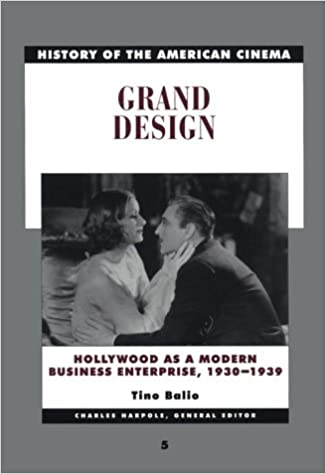
The advent of color, big musicals, the studio system, and the beginning of institutionalized censorship made the thirties the defining decade for Hollywood. The year 1939, celebrated as “Hollywood’s greatest year,” saw the release of such memorable films as Gone with the Wind, The Wizard of Oz, and Stagecoach. It was a time when the studios exercised nearly absolute control over their product as well as over such stars as Bette Davis, Clark Gable, and Humphrey Bogart. In this fifth volume of the award-winning series History of the American Cinema, Tino Balio examines every aspect of the filmmaking and film exhibition system as it matured during the Depression era.
* A portion of each sale from Amazon.com directly supports our blogs
** Many of these books may be available from your local library. Check it out!
† Available from the LA Public Library
 †
†

 †
†