Elinor Glyn Recognized “It” Before Anyone Else -Because She Had “It” – Dr. Rosanne Welch, Script magazine, February 2022

Script contributor Dr. Rosanne Welch celebrates the female screenwriters who came before us with this month's spotlight on author turned Hollywood screenwriter Elinor Glyn.

From Marilyn Monroe to Lady Gaga it seems one actress every generation is said to have “It” but few know that a female screenwriter of the silent era coined that still current phrase. Meet Elinor Glyn. Her life as a high society wife in England fed the novel-writing success that brought Glyn an invitation to Hollywood at the age of 56.

Through marriage, she had gained the glamour of being a member of the titled nobility. Yet she soon learned he had less funds than could support their lifestyle, so Glyn became a writer, publishing a book a year to keep her family’s finances afloat. Her ‘naughty’ novels – because they involved women involved in torrid affairs — became best sellers. That success caused the Hearst publishing company to sign Glyn to write articles and – recognizing the power of the film industry – Glyn included a clause for the motion picture rights.

Read Elinor Glyn Recognized “It” Before Anyone Else – Because She Had “It”


Read about more women from early Hollywood


A TED Talk Worth Watching – “Saving the World Vs Kissing the Girl” by Lindsay Doran

I am quite a fan of TED Talks – for their content and the spiffy way they illustrate a talk should go in a quick 20 minutes or so.  I often show students one of my favorites – Chimamanda Adiche’s “The Danger of a Single Story” and show my friend, Art Benjamin’s TED Talks in some of my humanities courses.  I was deeply pleased to be asked to give my own TED Talk, “A Female Voice In The Room”,  when CalPolyPomona hosted their own TED@CPP event a few years ago.  So when I find a new one worth sharing – I share it. 

The latest TED Talk to catch my attention was given by film producer Lindsay Doran in 2012.  “Saving the World Vs Kissing the Girl” is a fascinating look at how ‘action’ movies end on the announcement of the success to someone the protagonist is in a relationship with, making the culmination of the relationship more important than the ‘saving the world’ part. 

For instance, at the end of Rocky he doesn’t say “Yo, Adrian, I won” because he doesn’t win the fight.  He only survived it. The movie ends with Rocky and Adrian struggling to get to each other in the crowd. When they reach each other, they clutch each other saying, “I love you” over and over again. THAT’s the win.

A TED Talk Worth Watching -  “Saving the World Vs Kissing the Girl” by Lindsay Doran

Using Dirty Dancing, Karate Kid, and The King’s Speech she explains how positive relationships are more important than positive accomplishments in films.  They always end with the healing of a primary relationship. Heroes who don’t win their fight (Rocky in Rocky, George Bailey in It’s A Wonderful Life, Atticus Finch in To Kill A Mockingbird) are so inspirational because they win their relationships. 

Then she says that women don’t need to learn that relationships are more important than accomplishments in life – men do.  So perhaps these action films are women’s way of teaching that lesson that no man is a failure who has friends.

I LOVE that idea!

11 D. C. Fontana From Women in Early TV for the American Women Writers National Museum [Video]

11 D. C. Fontana From Women in Early TV for the American Women Writers National Museum [Video]

Many thanks to Janice Law of the American Women Writers National Museum who invited me to give a short talk on The Women of Early TV.

I enjoyed sharing the names and careers of women like Peg Lynch, Gertrude Berg, Selma Diamond, and D.C. Fontana to the members who gathered on Zoom last Wednesday morning. There are so many more I could have talked about whose names don’t appear in mainstream books about the history of television so we have to learn who they are and carry those names forward ourselves.  It’s one of the missions of the Stephens College MFA in TV and Screenwriting – and has been one of my missions all my life.

RMW Rosanne Signature for Web

Transcript:

Most importantly the first woman who began in Star Trek — Dorothy Catherine Fontana. Now, this is something very important to me for us to recognize. She was told that boys would not watch programs or read books — she wrote short stories — that were written by a girl if they had male protagonists. So she was encouraged by both her publisher and her television agent to go by her initials DC which meant that legions of girls did not know that DC Fontana, their favorite Star Trek writer, was a female right, and that’s been, I think, a problem for years. We continue to do that. When I was a kid in high school you read The Outsiders by S. E. Hinton — Susan Elizabeth Hinton — because no one thought anyone would write a book about gang kids written by a girl. likewise, I think — I’d like to think we grow out of these things but in fact, in my son’s childhood, the major giant best-selling book around the world was written by J. K. Rowling because no one thought boys would read a book by a girl named Joanne. So we really need to get rid of that idea. We also need to recognize the women who came before us who were following that. So Dorothy Fontana…

Many thanks to Janice Law of the American Women Writers National Museum who invited me to give a short talk on The Women of Early TV.

I enjoyed sharing the names and careers of women like Peg Lynch, Gertrude Berg, Selma Diamond, and D.C. Fontana to the members who gathered on Zoom last Wednesday morning. There are so many more I could have talked about whose names don’t appear in mainstream books about the history of television so we have to learn who they are and carry those names forward ourselves. It’s one of the missions of the Stephens College MFA in TV and Screenwriting – and has been one of my missions all my life.

Watch this entire presentation


Women pioneers who created, produced, or shepherded many of America’s most wildly popular, early television programs will be profiled by Dr. Rosanne Welch.

Get your copy today!

01 Introduction from The Difficulties and Delicacies of Writing the First Female Doctor in 50+ years [Video] [Doctor Who]

It was great to be able to attend this year’s SD WhoCon in San Diego and present this lecture on “The Difficulties and Delicacies of Writing the First Female Doctor in 50+ years” in which I discuss how successful I think showrunner Christopher Chibnall was in making that transition.

It gave me a chance to talk about the creative work of a showrunner/screenwriter while also reconnecting to some friends we had met at this same convention some 3 years ago – and to talk about one of my favorite subjects – Doctor Who!

01 Introduction from The Difficulties and Delicacies of Writing the First Female Doctor in 50+ years [Video]

Transcript:

All right, ladies and gentlemen, it’s lovely to have you here. On my campuses, I’m kind of the Doctor of Doctor Who which makes people laugh. They’re like can you look at this academically and you can. What I’m going to talk about today is based on a chapter that I’ve written in a new book. I always feel bad about academic books. This thing is like 120 bucks because it’s meant for college libraries or whatnot and there are academics all over the UK and the US who’ve written chapters in it and of course it’s about the era of the New Dawn, the era of the Jody Whitaker Doctor. So when I saw this go up I said well I have a lot to say about screenwriting because officially this is who I am. I love that picture because it was taken at my college for an article they did on me. I worked for schools called Stephens College and we teach an MFA in screenwriting and so I always look at everything from the point of view of the person who wrote this material. I really am very interested in screenwriters more than directors because people sometimes will credit a director and I’m like well they didn’t make up the story. If you liked the twist or the character or piece of dialogue, they didn’t make that up. They just put the cameras at a lovely place and accented it. So let’s think about the people who wrote these things and so that’s what I do.


Watch this entire presentation

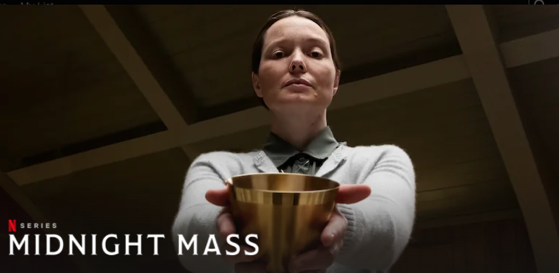
Mike Flannagan and “Midnight Mass”: 11 years in the making

Midnight mass

If you haven’t seen this short 3 minute ‘featurette’ where Mike Flannagan explains the impetus for writing the show “Midnight Mass”, it’s worth your time. 

Most importantly, he discusses how he started writing the script in 2010 (so it took 11 years to become what it became); that he thought it would be a movie first until he realized how deep the story should be; and that it came from a scary “what if” question he had in his own life. 

This short conversation is a great look into the mind of a writer (even if you haven’t watched the show and might not even intend to because horror scares you….the lessons are all still evident in this conversation).

05 The Missing Women Part 2 From Women in Early TV for the American Women Writers National Museum [Video]

05 The Missing Women Part 2 From Women in Early TV for the American Women Writers National Museum [Video]

Many thanks to Janice Law of the American Women Writers National Museum who invited me to give a short talk on The Women of Early TV.

I enjoyed sharing the names and careers of women like Peg Lynch, Gertrude Berg, Selma Diamond, and D.C. Fontana to the members who gathered on Zoom last Wednesday morning. There are so many more I could have talked about whose names don’t appear in mainstream books about the history of television so we have to learn who they are and carry those names forward ourselves.  It’s one of the missions of the Stephens College MFA in TV and Screenwriting – and has been one of my missions all my life.

RMW Rosanne Signature for Web

Transcript:

However, those two ladies were so important to the creation of Rose Marie — this character on the beloved Dick Van Dyke Show. This is one of the most important characters really in television history and many many female tv writers today will tell you that they knew this job was possible because they saw her do it on the fictional Dick Van Dyke Show and The Dick Van Dyke Show was a fictionalization of the staff writing for Sid Caesar right? Carl Reiner’s character is meant to be a personification of that. So these are the typical gentlemen who worked for him and she is a representation of Lucille and Selma Diamond sort of wrapped together. A woman who never got married right? Couldn’t find a guy. This is a very stereotypical vision of a career gal as they would say back in the day but she inspired many many women all the way up through Tina Fey and I think it’s always important to think about the power of television. One of my favorite stories has nothing to do with tv writers but to do with a Supreme Court Justice Sonia Sotomayor, who says she learned that she could be a lawyer someday by watching Perry Mason as a child. She learned that lawyers existed and that it was a job that required college and so she did well in school so that she could move forward and look she’s on the Supreme Court today. So television has a lot of power and the visuals women see on television are very very important to the ideas. You have to see it so that you can be it right? So Rose Marie stands for a lot of things — a representation of the women who truly did come before her and an inspiration to the women who came after.

Many thanks to Janice Law of the American Women Writers National Museum who invited me to give a short talk on The Women of Early TV.

I enjoyed sharing the names and careers of women like Peg Lynch, Gertrude Berg, Selma Diamond, and D.C. Fontana to the members who gathered on Zoom last Wednesday morning. There are so many more I could have talked about whose names don’t appear in mainstream books about the history of television so we have to learn who they are and carry those names forward ourselves. It’s one of the missions of the Stephens College MFA in TV and Screenwriting – and has been one of my missions all my life.

Watch this entire presentation


Women pioneers who created, produced, or shepherded many of America’s most wildly popular, early television programs will be profiled by Dr. Rosanne Welch.

Get your copy today!

23 Why Return to the US? from Concord Days: Margaret Fuller in Italy [Video]

In researching and writing my book on Giuseppe and Anita Garibaldi and the unification of Italy (A Man Of Action Saving Liberty: A Novel Based On The Life Of Giuseppe Garibaldi)  I re-discovered the first American female war correspondent – Margaret Fuller — who I had first met in a college course on the Transcendentalists. I was once again fascinated by a life lived purposefully.

Then I found Tammy Rose’s podcast on the Transcendentalists – Concord Days – and was delighted when she asked me to guest for a discussion of Fuller’s work in Italy as both a journalist – and a nurse. — Rosanne

23 Why Return to the US?  from Concord Days: Margaret Fuller in Italy [Video]

Watch this entire presentation

Concord Days sends love to Margaret Fuller on the anniversary of her death in 1850.

The conversation focuses on Margaret’s exciting days in ITALY!

Dr. Rosanne Welch takes us through her adventures and enthusiastically reminds us what she was like when she was living her best life!

Transcript:

Tammy: So here’s a question that I’m never really sure. Were they were coming for a visit or were they coming to move permanently or was it sort of…

Rosanne: I believe the idea was they were going to move permanently because she could do more work there and she wanted to publish the book and it had to be published in the United States. So even if — yeah maybe not permanent the wrong way to say it — it was going to be a period of time so that piece could be done and the kind of — she knew that the United States needed to come and support what was happening in Italy as well. So I think it’s twofold. Her career is gonna move forward with this and he’s thinking he’s gonna help get the kind of support because Garibaldi lived in the states for a little bit too after one of his failures. So he knew that if you got people there on your side you would have the support you needed. So they had business reasons, as well as I’m sure she kind of wanted to show off her kid to her friends, because as you said earlier, that wasn’t part of her planned life story and when I was a kid I was never going to have kids because I thought that’s not something I want to do and then Ii changed my mind at 32 because a writer friend of mine actually said if you want to be a writer and you want all the experiences that a writer can have, you’re turning down an experience that only half the planet can have and it was it a conversation which again makes me think about Margaret talking to these women. What are the possibilities in your life and what have you told yourself you should or shouldn’t do based on what society will say about you and I did think having a kid would get in the way of having a career and then I realized no because you could do it your way and Margaret did right I think in that moment, in those periods in her life, she was really happy and I think that was you know the other reason she wanted to come back and show everybody, look I did it all.

05 The Missing Women From Women in Early TV for the American Women Writers National Museum [Video]

05 The Missing Women From Women in Early TV for the American Women Writers National Museum [Video]

Many thanks to Janice Law of the American Women Writers National Museum who invited me to give a short talk on The Women of Early TV.

I enjoyed sharing the names and careers of women like Peg Lynch, Gerturde Berg, Selma Diamond and D.C. Fontana to the members who gathered on Zoom last Wednesday morning. There are so many more I could have talked about whose names don’t appear in mainstream books about the history of television so we have to learn who they are and carry those names forward ourselves.  It’s one of the missions of the Stephens College MFA in TV and Screenwriting – and has been one of my missions all my life.

RMW Rosanne Signature for Web

Transcript:

…and here’s the problem. See all these men that we’re seeing in the pictures. All these men are who are remembered for writing for Sid Caesar. You’ve got Carl Reiner. You’ve got Woody Allen. You’ve got Larry Gelbart, who’s going to go on to do M*A*SH for us. These men are icons of comedy. When they came together to be recognized both Lucille and Selma had passed away. So when it was time to take this photograph, this is what people will remember about the writers of these classic iconic early comedies. They will not remember that women were on board for those things. The other sad thing to realize is this is still the visual of what a writing staff looks like on a late-night comedy show. When Stephen Colbert’s show won the Emmy a few years ago, there’s one female writer among the 13 male writers on that show. It is an issue that is still with us today in television. So we have to think about it, but sadly because this is such a great photograph, people will forget way down here it says not pictured the two ladies who didn’t happen to be able to be there that day.

Many thanks to Janice Law of the American Women Writers National Museum who invited me to give a short talk on The Women of Early TV.

I enjoyed sharing the names and careers of women like Peg Lynch, Gerturde Berg, Selma Diamond and D.C. Fontana to the members who gathered on Zoom last Wednesday morning. There are so many more I could have talked about whose names don’t appear in mainstream books about the history of television so we have to learn who they are and carry those names forward ourselves. It’s one of the missions of the Stephens College MFA in TV and Screenwriting – and has been one of my missions all my life.

Watch this entire presentation


Women pioneers who created, produced or shepherded many of America’s most wildly popular, early television programs will be profiled by Dr. Rosanne Welch.

Get your copy today!

04 Selma Diamond From Women in Early TV for the American Women Writers National Museum [Video]

04 Selma Diamond From Women in Early TV for the American Women Writers National Museum [Video]

Many thanks to Janice Law of the American Women Writers National Museum who invited me to give a short talk on The Women of Early TV.

I enjoyed sharing the names and careers of women like Peg Lynch, Gerturde Berg, Selma Diamond and D.C. Fontana to the members who gathered on Zoom last Wednesday morning. There are so many more I could have talked about whose names don’t appear in mainstream books about the history of television so we have to learn who they are and carry those names forward ourselves.  It’s one of the missions of the Stephens College MFA in TV and Screenwriting – and has been one of my missions all my life.

RMW Rosanne Signature for Web

Transcript:

Next, we want to see Selma Diamond. Selma Diamond was an early writer on Your Show of Shows. Look at these names that she is with — Mel Tolkin, Larry Gelbart, Mel Brooks, and Selma Diamond right? She was such a fascinating woman but many people only know her from her part on Night Court which was a show in the late 80s. She stepped into that character. She actually passed away in the course of the show and was replaced by Marsha Warfield. So most people only know her from her acting career but in fact, she was a writer many years earlier. She had some comedy albums that were very very well respected and I happen to know right now her great-nephew is working on a documentary to tell the story of her career because sadly what happens to her and this woman, Lucy Kallen — Lucille Kallen, excuse me. She was also a writer on these early Sid Caesar shows right? So you can see her in this picture. She’s right there doing the work with everybody. She’s part of it everywhere you go except when we start to think about memorializing the people who worked on these shows. Now you have to think about how brilliant Lucille Kallen was. When tv went away from her right when it started to be something that they weren’t really giving her jobs in she began to write murder mysteries. The Tanglewood Murder. That whole CB Greenfield line is her. So she was already in the world of let’s have a continuing series. If I can’t do it on tv, I’ll do it in book form. So this is a woman who wrote all her career and I also happen to love this quote by her — a man’s home is his castle and his wife is the janitor. This is the kind of wit. She’s very much a Dorothy Parker type of person.

Many thanks to Janice Law of the American Women Writers National Museum who invited me to give a short talk on The Women of Early TV.

I enjoyed sharing the names and careers of women like Peg Lynch, Gerturde Berg, Selma Diamond and D.C. Fontana to the members who gathered on Zoom last Wednesday morning. There are so many more I could have talked about whose names don’t appear in mainstream books about the history of television so we have to learn who they are and carry those names forward ourselves. It’s one of the missions of the Stephens College MFA in TV and Screenwriting – and has been one of my missions all my life.

Watch this entire presentation


Women pioneers who created, produced or shepherded many of America’s most wildly popular, early television programs will be profiled by Dr. Rosanne Welch.

Get your copy today!

Dr. Rosanne Welch Interviewed by the Journal of American Popular Culture – Fall 2021

What a lovely Christmas gift.

I was more than honored a couple of months ago when Leslie Kreiner Wilson (Associate Professor of Creative Writing & Film at Pepperdine University) asked to interview me for the special segment of the Journal of American Popular Culture called “Conversations with Scholars of American Popular Culture.

It was published this week in the Fall 2021 issue. 

Leslie and I found we share such similar interests in the ways women and their work is recorded in history that we could have stayed on the phone for hours – as it is we traversed topics ranging from how we both teach Anita Loos and other female screenwriters of Early Hollywood; how I found feminist messages in The Monkees thanks to the writing of Treva Silverman; how working on encyclopedias allowed me to curate which women were remembered; how Wally Funk, who learned to fly in the aviation program as a student at Stephens College became one of the Mercury 13 and finally made it into space on a SpaceX flight last year. 

It all boiled down to the fact that we both have dedicated our careers to writing about powerful women.  It’s nice to find kindred spirits in academia (all nods to author Lucy Maude Montgomery for teaching me the phrase ‘kindred spirits” when I read Anne of Green Gables – another story about an empowered young woman that deserves more attention).

RMW Rosanne Signature for Web

Americana double eagle 1900

Dr. Rosanne Welch Interviewed by the Journal of American Popular Culture - Fall 2021Dr. Rosanne Welch Interviewed by the Journal of American Popular Culture - Fall 2021

Featured Guest:
Rosanne Welch

Rosanne Welch is the Executive Director of the MFA in TV and Screenwriting Program at Stephens College where she teaches the History of Screenwriting as well as Writing the One-Hour Drama. She has written for such television shows as Beverly Hills 90210, Picket Fences, Touched by an Angel, ABC/Nightline – as well as publishing novels.

Her critical studies books include Why the Monkees Matter: Teenagers, Television, and American Pop Culture (McFarland, 2016) and The Civil War on Film (with Peg A. Lamphier, ABC-CLIO, 2020). In addition to publishing many chapters and journal articles, she has written or edited several essay collections and encyclopedias such as Encyclopedia of Women in Aviation and Space (ABC-CLIO, 1998); Women in American History (with Peg A. Lamphier, ABC-CLIO, 2017); When Women Wrote Hollywood (McFarland, 2018); and Technical Innovation in American History (with Peg A. Lamphier, ABC-CLIO, 2019).

Dr. Welch sits on the Editorial Board for the Writers Guild Written By magazine and the California History Journal. She also serves as the Book Reviews editor for the Journal of Screenwriting where last year she co-edited (with Rose Ferrell) a Special Issue on Women in Screenwriting (11.3). Dr. Welch holds a Ph.D. in twentieth century American history with a focus on film from Claremont Graduate University.

We talked to her about her teaching, research, and writing, which consistently empowers women.


When you were writing Touched by an Angel, were you conscious of writing a strong female-centered show? Was that discussed in the writers’ room?

Oh yes, I always felt the show was really Cagney & Lacey without guns. I’m Sicilian-American, so I’m loud and assertive. People thought I would write for Roma Downey’s sweet, quiet character, but soon realized my personality was better suited for Della Reese. I wrote her dialogue.

The series was about two women trying to change people’s lives for the better. When they resisted the change, God was mentioned, and then they changed. We were empowering women to empower others.

What attracted you to directing the MFA program at Stephens College and teaching the History of Screenwriting?

The history of film is usually taught as the history of directors, which is the history of great white men. Why don’t we equally teach women and men’s contribution to the industry? I want students to know how important women were and are to the movies and television. Stephens is a woman’s college, but the graduate program is co-ed, so we get a lot of cool feminist guys who want to know the full truth, too.

I want them to know about Anita Loos and Gentleman Prefer Blondes – haven’t we heard enough about F. Scott Fitzgerald and The Great Gatsby? I teach the fact that Nora Ephron got an Oscar nomination [with Alice Arlen] for a serious drama they never heard of – Silkwood. They only know her for her funny stuff. When I teach Rocky, I want them to learn about Norma Rae, written by a woman – Harriet Frank Jr. and her husband, Irving Ravetch. How can they not know about Norma Rae? How can they not know all the unrecognized contributions of women in this industry?

I liked how Fosse/Verdon showed how important Gwen was to his career. Most of my students never even heard of Gwen Verdon. I made them watch the show. You know, her daughter was a producer. I think that’s why it was so good. She was saying, “Now mom gets her due.”

I teach the women in the beginning of film, then I do the men, Trumbo, all that, then I return to the women screenwriters emerging in the late seventies and early eighties. But they need to know Lucille Kallen and Selma Diamond, the only women in Sid Caesar’s famous writers’ room for Your Show of Shows in the 1950s. And writers like Suzanne De Passe – she co-wrote Lady Sings the Blues in the 1970s and was nominated for an Oscar, but is rarely included in most film history courses.

Your first book was Why the Monkees Matter. It might surprise readers to know you have a chapter on feminism, gender, and sexuality in relation to the show.

The Monkees was my favorite show when I was a kid. I went back and re-watched all the episodes as a pop culture-cultural studies professor and realized there were a lot of feminist messages that I hadn’t caught when I was little.

I focus on Treva Silverman who was a prominent television writer in the sixties and seventies with The Mary Tyler Moore Show, That Girl, The Monkees, He & She, and Room 222. She won two Emmys in 1974. Most people don’t know there was a woman in the writers’ room. A woman in the room makes a huge difference.

For example, every single girl who dated one of the main characters on the show had a job. Not one was a bubble head or waiting to get married, so someone else could take care of her. They had jobs – in record stores, television studios, reporting the news. That was an interesting message to send in 1966. Every time we met a girl, she was defined by her job first.

In the first episode that aired, Princess Bettina of Harmonica turns down the cute boy because she has “responsibilities for the welfare of [her] people.” They even flip the trope in the episode of the girl getting kidnapped and the boys having to save her. Here, The Monkees get kidnapped, and Princess Bettina has to save them. When they meet the Julie Newmar character in another episode, she’s working on a Ph.D., and they learn “the fastest way to a woman’s heart is through her mind.”

At the end of the book, I make the point that if you were to girl in 1966, you learned that if you wanted to date a Monkee you should be a woman of value. That was an interesting feminist thought – that you should think about your purpose in the world and be led by it.

You have published several encyclopedias. What is it about that form that excites you?

Choice. I get to choose who is included. When ABC-CLIO put me on Technical Innovation in American History, there were no women. They also didn’t included innovations that have made women’s lives easier such as dishwashers and vacuum cleaners. Having a say in who or what is included makes a difference in how we teach and understand history. We, as women writers, have the ability to be our own gatekeepers.

For Women in American History, I was able to include people like Cyndi Lauper who others might dismiss as a silly pop star, but she was the first woman in history to win a Tony for writing the lyrics and music without a male partner. Her Broadway musical Kinky Boots got thirteen nominations. I like having a say in who’s going to be remembered and why.

You collected essays written by your students for When Women Write the Movies and the publisher asked you to write a chapter as well. You did. Tell us why you chose to focus on Ruth Gordon.

A lot of people attribute the feminism of the Spencer-Tracey films to Katherine Hepburn, but I contend that Ruth Gordon deserves the credit. She co-wrote those films with her husband Garson Kanin who was a cool guy, and they were Oscar-nominated for Pat and Mike and Adam’s Rib.

George Cukor gets the credit for the film because he directed it. However, Ruth’s voice comes through in the feminist message of Hepburn’s character. Gordon essentially invented the popular culture image as a feminist that Hepburn enjoyed – more from the power of the characters Ruth wrote than the events of Hepburn’s actual life.

Gordon is more famous as an actress – she won an Oscar for Rosemary’s Baby and starred in Harold and Maude, which has become a cult classic – but she was an accomplished writer and hard worker – working and writing plays and films all the way until her death.

In 2020, you published The Civil War on Film with Peg A. Lamphier. What was the most interesting thing you learned in writing and researching the book?

Right up front, we asked the publishers to make sure there was a female in the photo chosen for the front cover, and they listened. Sally Field as Mrs. Lincoln appears on the cover along with Daniel Day Lewis. Yes! Usually, Civil War studies only feature the men – and usually men in uniform glorying war which was not the message of our book at all.

You know, Glory is the film that historians and scholars point to as the best, most accurate Civil War movie ever made, so I was surprised that they didn’t include the fact that Harriet Tubman was a spy at that point and could have been included in that story – a young woman running around doing things – not the old lady in the rocker – the one image we have of her.

Written by boys. Produced by boys. Reminds us why it’s important to have a woman in the room. I’m writing a chapter right now about the women who created A Star Is Born. When Dorothy Parker wrote it – and Joan Didion remade it for Barbara Streisand – I could see the female gaze, but the last version by Bradley Cooper, Will Fetters, and Eric Roth focused on the man’s point of view. It didn’t work creatively. Frankly, it became more like A Star Is Dying.

What’s the most interesting story from your first encyclopedia Women and Aviation in Space?

The Powder Puff Derbies are interesting – women flying in races all across the country from Cleveland to Los Angeles. You know, they said Amelia Earhart was not the best flyer – others were better than she was, but she had a publicist for a husband.

Women were tested as Mercury 13 astronauts, and they did very well – better than the men in some cases – but the program was quickly cancelled.

But the most interesting story is the WASPS. Over a thousand women were flying in World War II – the Women Airforce Service Pilots – civilian volunteers flying all the military planes. They delivered the new ones to bases, worked as test pilots, hoped to join the military, but that program was cancelled after two years.

It would be many years before women got their due. One of the original Mercury pilots Wally Funk just went up in the Blue Origin launch at the age of 82. She said she can’t wait to go up again. Happily enough, she learned aviation as a student at Stephens College in the run up to World War II.

I have so much respect for these women because they love one thing so much they don’t want to do anything else. It’s passion. I feel that as a writer. I must write. It’s my passion.

What’s next? What are you writing now?

I’m editing the ABC-CLIO Women Making History Series, a set of biographies with primary documents (so we can let these women speak for themselves). We’re working on Ida B. Wells, Sally Ride, Delores Huerta, and Wilma Mankiller now. We’ve recently published books on Ruth Bader Ginsburg, Hillary Clinton, Gloria Steinem, and Helen Keller.

I’m also writing a chapter for Palgrave – “Women Screenwriters in Early Silent Film” and one for Bloomsbury on A Star is Born. The next book I’m finishing is similar to the Civil War one – this one on Women’s History on Film – a collection of films about moments in women’s history.

And in a completely other vein, though still connected to celebrating empowered women, I just published a chapter in Doctor Who New Dawn: Essays on the Jodie Whittaker Era which details the work of screenwriter/showrunner Christopher Chibnall in creating the first female incarnation of this fifty year old sci-fi icon.

So you enjoy writing about powerful women.

Clearly, women who make things happen fascinate me. In fact, last year I published a novel about Giuseppe Garibaldi, the man who united Italy in 1860, and in the research I discovered his Brazillian-born wife, Anita, joined his band of soldiers and fought side by side for that dream. I enjoyed bringing her story to the forefront of his oft-told (at least in Italy) tale.

Interestingly enough, Anita Garibaldi brought me back to American History when she crossed paths with journalist and Transcendentalist Margaret Fuller, who was the first correspondent sent to Italy to cover the fight for unification. The two women worked together as nurses for fallen soldiers. Imagine what they talked about as they created their cross-cultural friendship.

So even when writing about an international couple, I found my way back to an icon of American popular culture.

Fall 2021
Leslie Kreiner Wilson, Interviewer and Editor