Part of the problem was and is that civil wars create particular problems that World War II does not. In our Civil War we didn’t fight outsiders such as the Germans or the Japanese, we fought ourselves. In this way a civil war is a family fight and afterward we are forced to live with our family.
Subscribe to Rosanne’s Channel and receive notice of each new video!
Transcript:
Previously in the United States, the only way we could see a movie from Brazil would be if it won an Oscar or if it was nominated for an Oscar right and these are the only films that had wide release in the United States before Netflix because you would have to go to a theater. You would have to be the kind of person who liked to see international films, who were willing to read subtitles. I noticed — my son is 21 — and I notice in his generation there is more of a comfort with reading subtitles. He watches, because of Netflix, a lot of Japanese anime — a lot of movies from around the world — he doesn’t mind. About 10 years ago, before Netflix. if I assigned an international movie — and I would often assign some Italian films to my film students — they would complain because reading the screen was boring. Now it’s become more acceptable so that we have this opportunity. So until Netflix, this was the only way that in the United States we would have been exposed to any of these films except Kiss of the Spider Woman because that was a co-production between Brazil and the United States so it won some Oscars and we knew about it.
Watch this entire presentation
A Note About This Presentation
A clip from my keynote speech at the 10th Screenwriters´(hi)Stories Seminar for the interdisciplinary Graduation Program in “Education, Art, and History of Culture”, in Mackenzie Presbyterian University, at São Paulo, SP, Brazil, focused on the topic “Why Researching Screenwriters (has Always) Mattered.” I was especially pleased with the passion these young scholars have toward screenwriting and it’s importance in transmitting culture across the man-made borders of our world.
To understand the world we have to understand its stories and to understand the world’s stories we must understand the world’s storytellers. A century ago and longer those people would have been the novelists of any particular country but since the invention of film, the storytellers who reach the most people with their ideas and their lessons have been the screenwriters. My teaching philosophy is that: Words matter, Writers matter, and Women writers matte, r so women writers are my focus because they have been the far less researched and yet they are over half the population. We cannot tell the stories of the people until we know what stories the mothers have passed down to their children. Those are the stories that last. Now is the time to research screenwriters of all cultures and the stories they tell because people are finally recognizing the work of writers and appreciating how their favorite stories took shape on the page long before they were cast, or filmed, or edited. But also because streaming services make the stories of many cultures now available to a much wider world than ever before.
Many thanks to Glaucia Davino for the invitation.
* A portion of each sale from Amazon.com directly supports our blogs ** Many of these books may be available from your local library. Check it out! † Available from the LA Public Library
Subscribe to Rosanne’s Channel and receive notice of each new video!
Transcript:
A Friend of mine runs this comic company called Kymera Press. It’s all women artists. All women writers. So it’s comics by women for women and she’s doing a series right now which is Mary Shelley Presents. She’s taking some of these women I talked about earlier and graphic-noveling comic-booking their ghost stories in this format right? So she’s going to ComicCon and doing all that stuff. So Mary Shelley never goes away and the effect of women in horror never goes away which I think is really cool.
So that’s it. That’s me. That’s what I have to say about How Women Write Horror and what we take from horror when we take it in.
A Note About This Presentation
A clip from my keynote speech at the 10th Screenwriters´(hi)Stories Seminar for the interdisciplinary Graduation Program in “Education, Art, and History of Culture”, in Mackenzie Presbyterian University, at São Paulo, SP, Brazil, focused on the topic “Why Researching Screenwriters (has Always) Mattered.” I was especially pleased with the passion these young scholars have toward screenwriting and it’s importance in transmitting culture across the man-made borders of our world.
To understand the world we have to understand its stories and to understand the world’s stories we must understand the world’s storytellers. A century ago and longer those people would have been the novelists of any particular country but since the invention of film, the storytellers who reach the most people with their ideas and their lessons have been the screenwriters. My teaching philosophy is that: Words matter, Writers matter, and Women writers matte, r so women writers are my focus because they have been the far less researched and yet they are over half the population. We cannot tell the stories of the people until we know what stories the mothers have passed down to their children. Those are the stories that last. Now is the time to research screenwriters of all cultures and the stories they tell because people are finally recognizing the work of writers and appreciating how their favorite stories took shape on the page long before they were cast, or filmed, or edited. But also because streaming services make the stories of many cultures now available to a much wider world than ever before.
Many thanks to Glaucia Davino for the invitation.
* A portion of each sale from Amazon.com directly supports our blogs ** Many of these books may be available from your local library. Check it out! † Available from the LA Public Library
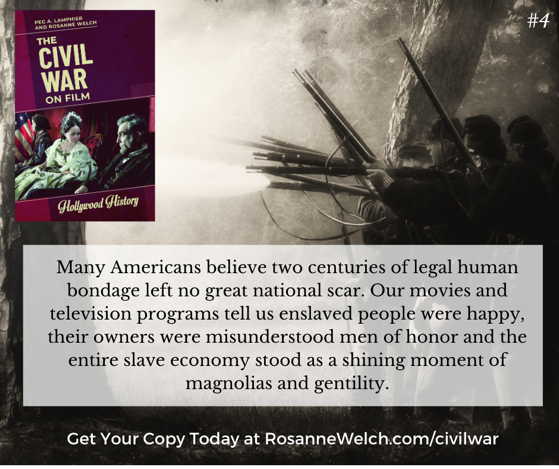
Many Americans believe two centuries of legal human bondage left no great national scar. Our movies and television programs tell us enslaved people were happy, their owners were misunderstood men of honor and the entire slave economy stood as a shining moment of magnolias and gentility.
Subscribe to Rosanne’s Channel and receive notice of each new video!
Transcript:
One of my favorite examples of how important it is to see culture travel through these streaming services is the film — it’s called Coco in the United States. It’s called Vivo here. When my cousins — my cousins are from Sicily — my grandparents immigrated to the United States from Sicily and their relatives stayed behind. So I’m related and connected to third and fourth cousins who live there. They came to visit me at Christmas this year and we were discussing Halloween, which I laughed at because I noticed some Halloween decorations in places I traveled around town today, and my cousin said in Italy Halloween is not very important because of course being a Catholic country what is important is that this is the Day of All Souls and so it’s a religious holiday. Only in you know only in Italy is that important and I said oh haven’t you ever heard of the Day of the Dead in Mexico and she had not because in Italy they haven’t studied Mexican culture. So I mentioned this movie which she had never seen but her 10-year-old son had seen it. The problem was on Netflix it was only running in English or Spanish and they’re Italian but their 10-year-old is studying Spanish in school. So at my house, we turned on Netflix. We watched the movie in Spanish with English subtitles to remind me because I’d seen it but I wanted to remember the story and any time the Italians lost track of this Spanish language we would pause and the ten-year-old would translate the Spanish into Italian and we’d all catch up and continue and in that way, they learned the story of the Day of the Dead — Dia de Los Muertos through this movie and they were so moved by the theme of the movie which again is such a universal theme that we should honor our ancestors and that we owe it to them right to live up to their history. It was a beautiful example of what Netflix is capable of doing — what streaming services are capable of doing for us and how important story is.
Watch this entire presentation
A Note About This Presentation
A clip from my keynote speech at the 10th Screenwriters´(hi)Stories Seminar for the interdisciplinary Graduation Program in “Education, Art, and History of Culture”, in Mackenzie Presbyterian University, at São Paulo, SP, Brazil, focused on the topic “Why Researching Screenwriters (has Always) Mattered.” I was especially pleased with the passion these young scholars have toward screenwriting and it’s importance in transmitting culture across the man-made borders of our world.
To understand the world we have to understand its stories and to understand the world’s stories we must understand the world’s storytellers. A century ago and longer those people would have been the novelists of any particular country but since the invention of film, the storytellers who reach the most people with their ideas and their lessons have been the screenwriters. My teaching philosophy is that: Words matter, Writers matter, and Women writers matte, r so women writers are my focus because they have been the far less researched and yet they are over half the population. We cannot tell the stories of the people until we know what stories the mothers have passed down to their children. Those are the stories that last. Now is the time to research screenwriters of all cultures and the stories they tell because people are finally recognizing the work of writers and appreciating how their favorite stories took shape on the page long before they were cast, or filmed, or edited. But also because streaming services make the stories of many cultures now available to a much wider world than ever before.
Many thanks to Glaucia Davino for the invitation.
* A portion of each sale from Amazon.com directly supports our blogs ** Many of these books may be available from your local library. Check it out! † Available from the LA Public Library
Subscribe to Rosanne’s Channel and receive notice of each new video!
Transcript:
A perfect example of taking horror and blending in social commentary right and putting those together so the horror is that one extra level above what you thought it could be right and that’s what makes it stand out. That’s what makes it Oscar-worthy right? He’s doing exactly what Toni Morrison did but doing it in a film. He’s still talking about the horror of slavery and what it meant to this country in a whole different type of story which I think is really cool. I think it’s cool because all of this is coming full circle now as Netflix is about excuse me CW is about to open a new show called The Shelley Society about Mary Shelley and all her buddies who battled monsters back in their own day which sounds an awful lot like a redo of Buffy, just with a famous character in it right? I think that’s going to be really fascinating. I really want that to work. It’s being done by the gentleman who’s doing Riverdale, which is taking the Archie comics and readapting them. I think that’s pretty cool.
A Note About This Presentation
A clip from my keynote speech at the 10th Screenwriters´(hi)Stories Seminar for the interdisciplinary Graduation Program in “Education, Art, and History of Culture”, in Mackenzie Presbyterian University, at São Paulo, SP, Brazil, focused on the topic “Why Researching Screenwriters (has Always) Mattered.” I was especially pleased with the passion these young scholars have toward screenwriting and it’s importance in transmitting culture across the man-made borders of our world.
To understand the world we have to understand its stories and to understand the world’s stories we must understand the world’s storytellers. A century ago and longer those people would have been the novelists of any particular country but since the invention of film, the storytellers who reach the most people with their ideas and their lessons have been the screenwriters. My teaching philosophy is that: Words matter, Writers matter, and Women writers matte, r so women writers are my focus because they have been the far less researched and yet they are over half the population. We cannot tell the stories of the people until we know what stories the mothers have passed down to their children. Those are the stories that last. Now is the time to research screenwriters of all cultures and the stories they tell because people are finally recognizing the work of writers and appreciating how their favorite stories took shape on the page long before they were cast, or filmed, or edited. But also because streaming services make the stories of many cultures now available to a much wider world than ever before.
Many thanks to Glaucia Davino for the invitation.
* A portion of each sale from Amazon.com directly supports our blogs ** Many of these books may be available from your local library. Check it out! † Available from the LA Public Library
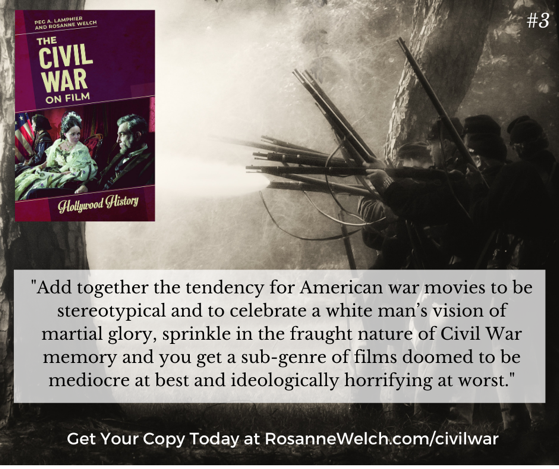
“Add together the tendency for American war movies to be stereotypical and to celebrate a white man’s vision of martial glory, sprinkle in the fraught nature of Civil War memory and you get a sub-genre of films doomed to be mediocre at best and ideologically horrifying at worst.”
Subscribe to Rosanne’s Channel and receive notice of each new video!
Transcript:
I read once that Tennessee Williams, who’s a famous playwright in the United States, had said that most writers work from the emotions of the first six years of their life and some people laughed at that and I laughed at that and then I realized that in many episodes that I had written, a recurring theme that I tend to go to is that — to be a father is the most important job in your life and you should take it seriously. My father left when I was six years old. Until looking backward at things that I had written I did not notice the repetition of that theme. Clearly, it means something to me. Everybody doesn’t have that experience but everybody has been abandoned in some way or another. We recognize that emotion of loss and that’s what we sell
Watch this entire presentation
A Note About This Presentation
A clip from my keynote speech at the 10th Screenwriters´(hi)Stories Seminar for the interdisciplinary Graduation Program in “Education, Art, and History of Culture”, in Mackenzie Presbyterian University, at São Paulo, SP, Brazil, focused on the topic “Why Researching Screenwriters (has Always) Mattered.” I was especially pleased with the passion these young scholars have toward screenwriting and it’s importance in transmitting culture across the man-made borders of our world.
To understand the world we have to understand its stories and to understand the world’s stories we must understand the world’s storytellers. A century ago and longer those people would have been the novelists of any particular country but since the invention of film, the storytellers who reach the most people with their ideas and their lessons have been the screenwriters. My teaching philosophy is that: Words matter, Writers matter, and Women writers matte, r so women writers are my focus because they have been the far less researched and yet they are over half the population. We cannot tell the stories of the people until we know what stories the mothers have passed down to their children. Those are the stories that last. Now is the time to research screenwriters of all cultures and the stories they tell because people are finally recognizing the work of writers and appreciating how their favorite stories took shape on the page long before they were cast, or filmed, or edited. But also because streaming services make the stories of many cultures now available to a much wider world than ever before.
Many thanks to Glaucia Davino for the invitation.
* A portion of each sale from Amazon.com directly supports our blogs ** Many of these books may be available from your local library. Check it out! † Available from the LA Public Library
The reviewer (from the University College of North Manitoba, Canada) singled out several chapters for being outstanding for various reasons. They found Amelia Phillips’s chapter on Jeanne Macpherson to demonstrate “exacting research”, Julie Berkobien’s chapter on Francis and Albert Hackett to be “beautifully crafted” and Chase Thompson’s chapter on Lois Weber to be “trailblazing”. They found that Pamela Scott gives “thorough and measured” coverage to the scripts of Sarah Y. Mason and Victor Heerman; Laura Kirk “comprehensively” examines Sam and Bella Spewak’s signature style; Kelly Zinge authored “carefully detailed discussion” of Lillian Hellman’s confrontation with the Blacklist, and that Elizabeth Dwyer’s work on Dorothy Parker is “riveting.”
Congratulations to all the contributors to our book!
* A portion of each sale from Amazon.com directly supports our blogs
** Many of these books may be available from your local library. Check it out!
† Available from the LA Public Library