15 Fuller, History, and Back to America from Concord Days: Margaret Fuller in Italy [Video]

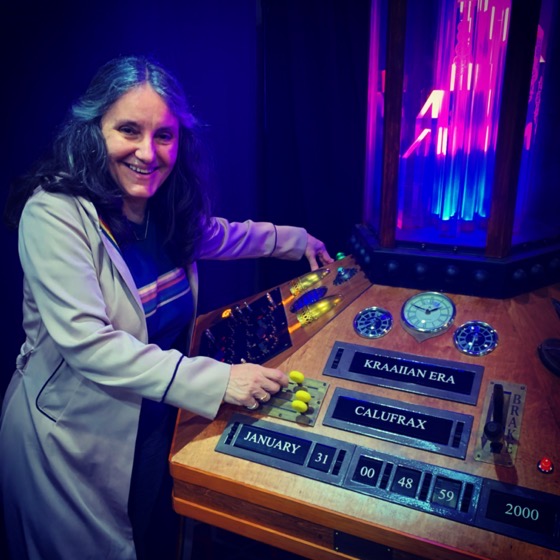
In researching and writing my book on Giuseppe and Anita Garibaldi and the unification of Italy (A Man Of Action Saving Liberty: A Novel Based On The Life Of Giuseppe Garibaldi)  I re-discovered the first American female war correspondent – Margaret Fuller — who I had first met in a college course on the Transcendentalists. I was once again fascinated by a life lived purposefully.

Then I found Tammy Rose’s podcast on the Transcendentalists – Concord Days – and was delighted when she asked me to guest for a discussion of Fuller’s work in Italy as both a journalist – and a nurse. — Rosanne

15  Fuller, History, and Back to America from Concord Days: Margaret Fuller in Italy [Video]

Watch this entire presentation

Concord Days sends love to Margaret Fuller on the anniversary of her death in 1850.

The conversation focuses on Margaret’s exciting days in ITALY!

Dr. Rosanne Welch takes us through her adventures and enthusiastically reminds us what she was like when she was living her best life!

Transcript:

Tammy: She’s right at the front lines. She’s doing all of these dispatches and then she’s also writing essentially the history of this very tight period right? So she goes like what was it like 1847 something like that. The quote that I read was from 1848…

Rosanne: …and her plan was to document the whole thing which would have been such an incredible (thing) from an American perspective and with this idea of we did it and now you’re doing it too and of course, Italy will complete this in 1860 which is when we’re breaking apart right? So it’s an interesting parallel history. Yeah, I think my biggest regret is I want — I wanted to read that book right and it’s gonna go down.

Tammy: Let’s talk about the most heartbreaking piece of this story because Margaret has been fighting her whole life to get recognized. She has done all the hard work. She’s literally shown up at the battlefield right and in addition to all of the work that she’s done for women, she’s also fought to have a beautiful marriage — that is a love marriage. It’s legal and she has a child which I you know as a as a woman you know we wouldn’t necessarily call her a feminist but I like of her day I think she was a pretty strong feminist and she might not have ever had that vision for herself. So she has this beautiful vision. She has a manuscript. She has like an 18-month-old child. She has a new husband and she says, “Why don’t I go back to America”, right?

On The Writers of Doctor Who: Maxine Alderton and The Haunting of the Villa Diodati

On The Writers of Doctor Who: Maxine Alderton and The Haunting of the Villa Diodati

While preparation for some lectures I was giving at the San Diego Who Con (a small and friendly, all vaxxed and masked politely convention celebrating the English sci-fi drama Doctor Who) I researched how the new showrunner, Chris Chibnall, turned the 50 year old character into a female (long story unless you know the show).

That lead me to researching the writers he chose for the last two seasons to bring more diverse stories to the show.

On The Writers of Doctor Who: Maxine Alderton and The Haunting of the Villa Diodati

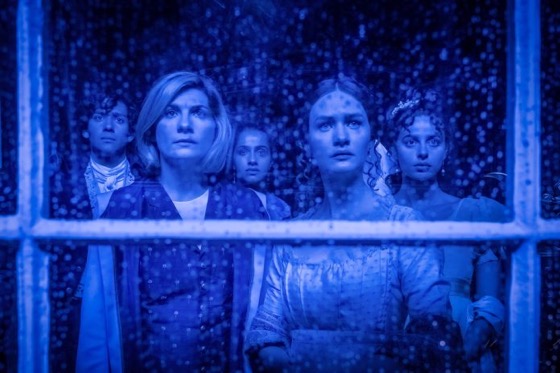
One such story, The Haunting of the Villa Diodati, written by Maxine Alderton, involved meeting Mary Woolstencroft on the weekend of inventing Frankenstein. For that I found this post about the importance of writing soaps and how, because so many women do it, it has often been dismissed as lesser writing – but in fact, of course, it is not. I think it is yet another area of bias against female writers that needs to be quashed.

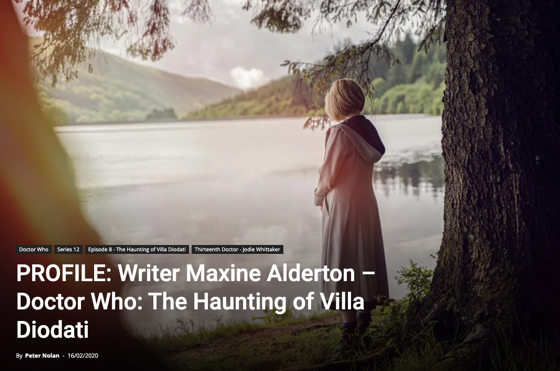
PROFILE: Writer Maxine Alderton – Doctor Who: The Haunting of Villa Diodati

Maxie Alderton joins the world of Doctor Who this Sunday, far from her usual stomping ground of Emmerdale. But as the architect of some of the soap opera’s most innovative and exciting episodes of the past decade, she’s a name to watch
 
At first glance Maxine Alderton, writer of The Haunting of Villa Diodati, seems like a strange fit for Doctor Who. After all, of the new writers to join the Doctor Who team this season, she easily has the least background in science fiction and fantasy. And her main track record so far has been across the Yorkshire Dales for popular soap opera Emmerdale. But as soon as you scratch the surface she quickly emerges as an exciting and dynamic writer. One showing every sign of bringing something very special to Doctor Who indeed.

Read the entire article

Watch the trailer for this episode


22 Bridgerton from Worry and Wonder | The Courier Thirteen Podcast [Video]

Watch the entire presentation – Worry and Wonder | The Courier Thirteen Podcast | Episode # 29 here

22 Bridgerton from Worry and Wonder | The Courier Thirteen Podcast [Video]

Transcript:

For instance, Bridgerton came out of the blue and took everybody by surprise and it was like “Oh my god, Bridgerton. Oh my god, did you see Bridgerton?” and everybody’s talking about it, etc etc. I mean it had a little bit of a built-in audience because it’s based on a book series. So that’s why all the streamers and the networks, they’re desperate to take IP — intellectual property — because you bring in an audience, and then their just going to amplify that audience by making the film version of it — the tv version of it — the limited series version of it — and then they’re going to build and build, right? So they’re really interested in that and Bridgerton was a good example of how that works and then they added the Shonda Rimes sort of gloss to it and suddenly — I had never heard of the book series — I had never read the book series. I didn’t know it existed but I certainly knew Bridgerton existed and then I had to watch it because 3 or 4 people — and I’m not necessarily a fan of those kinds of romance dramas, but everybody said you’ve got to watch this so I gave it a shot. I gave it a first episode. I always try to give things a first episode as we were saying before and if it connects, I’ll go to the next one. Right? Sometimes even if the first doesn’t work I’ll give it a second one cause what I do know is when you are making a pilot you’ve gotten so many notes from the network and the production company and you’ve had to dance for so many people to make sure they all keep saying yes to you, then it’s not necessarily exactly what you originally wanted to do but once they say yes and you get on the air the next episode is going to look more like what you’ve always wanted. So, if it works on the second one then I will stick with it. If I don’t get it on the second one then I stop watching.

It’s always fun to sit down with students and share stories about entering the television industry and how things work at all stages and I had that opportunity the other day.

Daniela Torres, a just-graduated (Congratulations!) student of the Columbia College Semester in LA program asked me to guest on a podcast she had recently begun hosting with another college student she met during her internship (good example of networking in action!).

We could have talked all morning (the benefit of a 3 hour class session) but we held it to about an hour and fifteen minutes or so. Hopefully, along the way I answered some questions you might have about how the business works. So often it amounts to working hard at being a better writer and gathering a group of other talented, hard-working people around you so you can all rise together.

Dr. Rosanne Welch is a television writer with credits that include Beverly Hills 90210, Picket Fences, ABCNEWS: Nightline and Touched by an Angel. She also teaches Television Writing and the Art of Film at San Jose State University.

Rosanne discusses what made shows like Beverly Hills 90210 compelling, what to do and not to do when attempting to pitch a show to broadcast or streaming, what most young writers neglect in their writing process, and much more!

The Courier Thirteen Podcast is available on YouTube, Spotify, Apple Podcasts, SoundCloud, and Audible.

09 Parker, Grandmothers, and Husbands from “Female Creatives & A Star Is Born” [Video]

09 Parker, Grandmothers, and Husbands from

Transcript:

Okay. Here’s where I find Dorothy Parker’s female focus coming to us. It begins with this grandmother. A female character has the money to give her granddaughter what she needs to follow her dream. That’s a big deal. Thinking that a woman in that period — who is now some 50 years older than the woman starring in the film — could have agency and could choose to give the money and trust her granddaughter when her own parents are not trusting her. I think that relationship is so key. That maternal relationship is a very big deal. Dorothy Parker’s mother died when she was quite young. I think she was 9 or 10. She didn’t like her stepmother but she liked her grandmother. So clearly that’s represented in this piece. Also even though Esther seems a little weak and fluffy at some points, she certainly stands up for herself when she needs to right? In this, we see Norman is a very desperate and envious guy. Some of what we read about Alan Campbell, he was desperate to succeed. He was desperate to be famous. After they divorced and he couldn’t get a job screenwriting, a producer literally said to him “Look, get back together with the old lady. She’s the one we want. Together we’ll hire you.” Imagine how humiliating that would be for someone and not man or woman but I want to be talented. I want to be recognized as someone of quality but I can’t be without attaching myself to this other person.

Watch this entire presentation

Connections at conferences matter! Through the most recent SCMS, I met Vicki Callahan, whose film history focus right now is on Mabel Normand. When she learned I could put together a lecture on the importance of the female voice in the A Star is Born franchise she asked me to give that lecture to her master students.

It made for a great opportunity for me to hone the ideas I’m working on for a chapter on that franchise that I’m writing for a new book from Bloomsbury: The Bloomsbury Handbook Of International Screenplay Theory. It’s always nice when one piece of research can be purposed in other ways – and it’s always fun revisiting such a female-centric film franchise – one that drew the talents of such powerful performers as Janet Gaynor, Judy Garland, Barbara Streisand, and Lady Gaga.

Find out why in this lecture!

RMW Rosanne Signature for Web


On Arthur Laurents and The Way We Were

Thewaywewere

Going to YouTube to find a fun clip to add to someone’s FB post generally leads down the rabbit hole (thank you Lewis Carroll for inventing Alice’s Adventures in Wonderland and therefore inventing the phrase “down the rabbit hole”). 

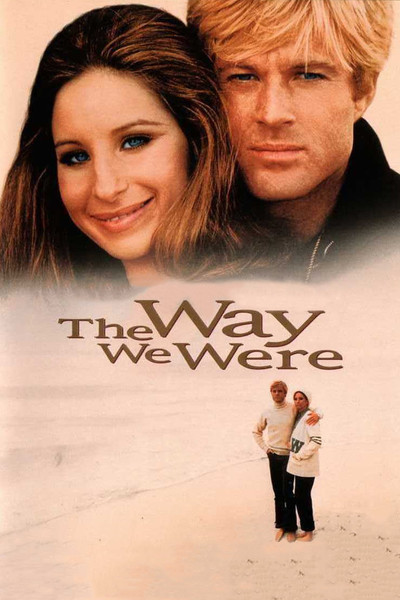
Last week it led me to clips from The Way We Were, written by Arthur Laurents and starring Barbra Streisand and Robert Redford.

I had re-read Laurents’ autobiography — Original Story — over the summer since I love reading about how writers came up with their best work (and his book had a whole chapter on it complete with explanations for a bad cut by the director and studio execs that destroyed a key reason the couple splits up – spoiler alert).

Iconic is overused but it fits here. That love story with an unexpected but completely organic ending is a classic for a reason – all the parts added up to the perfect whole.  I wanted to highlight this scene because of the power it gives the female character and the fear that power can have on the equally powerful male character.  I can’t think of too many scenes that can do that – enhanced by the power both of these superstars brought to their performances.

Resources

14 Fuller, Women, and War from Concord Days: Margaret Fuller in Italy [Video]

In researching and writing my book on Giuseppe and Anita Garibaldi and the unification of Italy (A Man Of Action Saving Liberty: A Novel Based On The Life Of Giuseppe Garibaldi)  I re-discovered the first American female war correspondent – Margaret Fuller — who I had first met in a college course on the Transcendentalists. I was once again fascinated by a life lived purposefully.

Then I found Tammy Rose’s podcast on the Transcendentalists – Concord Days – and was delighted when she asked me to guest for a discussion of Fuller’s work in Italy as both a journalist – and a nurse. — Rosanne

14 Fuller, Women, and War from Concord Days: Margaret Fuller in Italy [Video]

Watch this entire presentation

Concord Days sends love to Margaret Fuller on the anniversary of her death in 1850.

The conversation focuses on Margaret’s exciting days in ITALY!

Dr. Rosanne Welch takes us through her adventures and enthusiastically reminds us what she was like when she was living her best life!

Transcript:

Tammy: In America, we don’t really have titles. We don’t really understand that level of society but over there it’s a thing.

Rosanne: Even if there’s no money associated with it, there’s an honor to it. You are of the upper classes even if you don’t have the money to go with it and that’s a big deal.

Tammy: Exactly. Exactly. yeah so and and and also another important point you had you had mentioned this before, so Garibaldi’s wife had like gone into battle like really with a baby like on her. It’s like she’s literally — she’s not just a nurse she’s she’s also nursing like while she’s on the battlefront right?

Rosanne: That’s so beautifully said. That’s exactly right, right? They end up having four children and there’s a statue of her in Rome because Mussolini tried to use her reputation to support his work. Look how dedicated she was to her country. There’s a statue of her with the child at her breast while she’s riding and she was a great horsewoman and she trained the cavalry. The men trusted her because Garibaldi trusted her but of course after they had a couple of kids when they’re in Rieti and they’re doing all this stuff it was like now you can’t risk yourself dying. So please stay behind and behind meant you’re dealing with the bloody leftovers. You know we’re not even in M*A*S*H days where you’ve got legitimate drugs to help people. I mean they’re just — it’s carnage and that’s what her and Margaret were doing — working together in this hospital while they had their kids around and their men were off and maybe that report the next body that comes in could be your husband.

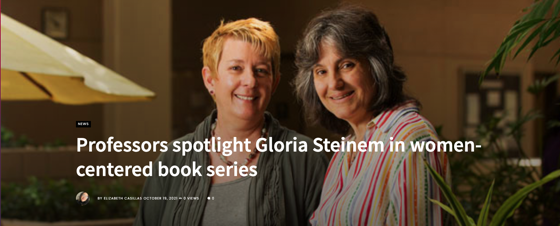
Professors Dr. Rosanne Welch and Dr. Peg Lamphier spotlight Gloria Steinem in women-centered book series – PolyPost

What’s normal in my world is working on books with my friend and colleague, Dr. Peg Lamphier, about brilliant women in U.S. history.  What’s not normal is having a brilliant young journalism student, Elizabeth Casillas, approach us to write an article about our work. 

This article in the PolyPost is the outcome of both of those events. 

It covers the latest book in the series Peg and I are editing:  Women Making History where we were asked to create 8 women’s biographies to include in the series – with the best part being we then chose the 8 writers for the job. That meant giving a few of them their first book project ever.  That is when this job become the most fun.  This article covers the latest book on the life of Gloria Steinem, written by William Pruden (the only male author in the whole series – why?  Because women’s history IS U.S. History so men can – and should – highlight it, too).


Professors Dr. Rosanne Welch and Dr. Peg Lamphier spotlight Gloria Steinem in women-centered book series - PolyPost

Peg Lamphier and Rosanne Welch, lecturers in the Interdisciplinary General Education Department, teamed up to co-edit “Gloria Steinem: A Life in American History,” the second installment of their book series focused on women’s contribution to American history and culture released Aug. 2.

The book, written by William Prudent and published by ABC-CLIO, covers the life of feminist journalist Gloria Steinem. After previously working with ABC-CLIO on “Women in American History,” an encyclopedia dedicated to detailing women’s contributions in American history and culture, Lamphier and Welch were sought out by the publishing firm to co-edit a larger book series.

Other subjects in the book series include Ruth Bader Ginsburg, Hillary Clinton, Helen Keller, Sally Ride, Eleanor Roosevelt, Ida B. Wells and Delores Huerta.

“If we’re going to have a series on women, what I want is books on women that don’t have 13 other books about them,” said Lamphier on the decision to incorporate Steinem into the series. “We keep trotting out the same women; it’s like we can only know 10 women at a time in America, so we got some people like Wilma Mankiller and Gloria Steinem.” A world-renowned feminist, Steinem’s life experiences were crucial to the feminist movement which compelled the lecturers to include her story in the series.

Read the entire article


21 You Can’t Keep Up With TV Shows from Worry and Wonder | The Courier Thirteen Podcast [Video]

Watch the entire presentation – Worry and Wonder | The Courier Thirteen Podcast | Episode # 29 here

21 You Can't Keep Up With TV Shows from Worry and Wonder | The Courier Thirteen Podcast [Video]

Transcript:

Host: Was it called the little things?

Rosanne: Yeah it just came out on me on Netflix or HBO sorry.

Host: Yeah HBO Max.

Rosanne: Brand new so, again, you can’t keep up with 420 TV shows

Host: No, you can’t yeah.

Roanne: That’s that’s why buzz and word of mouth is now one of the most important things. It kind of always was but when there were only three or four channels or even 50 cable channels, you found things that people gelled around, and then it became a big event like Mad Men or something like that or Breaking Bad. Now it really becomes your little circle of friends. You recommend a show. I watch it. I tell somebody else I know outside of that circle. They might tell their group. That has become such an important sort of Venn diagram. Who’s seen this and who’s seen that and if you like this you’ll like that and we — that’s where we get our information from. So it’s a really important conversation for people to have for the benefit of the programs to get their audiences.

It’s always fun to sit down with students and share stories about entering the television industry and how things work at all stages and I had that opportunity the other day.

Daniela Torres, a just-graduated (Congratulations!) student of the Columbia College Semester in LA program asked me to guest on a podcast she had recently begun hosting with another college student she met during her internship (good example of networking in action!).

We could have talked all morning (the benefit of a 3 hour class session) but we held it to about an hour and fifteen minutes or so. Hopefully, along the way I answered some questions you might have about how the business works. So often it amounts to working hard at being a better writer and gathering a group of other talented, hard-working people around you so you can all rise together.

Dr. Rosanne Welch is a television writer with credits that include Beverly Hills 90210, Picket Fences, ABCNEWS: Nightline and Touched by an Angel. She also teaches Television Writing and the Art of Film at San Jose State University.

Rosanne discusses what made shows like Beverly Hills 90210 compelling, what to do and not to do when attempting to pitch a show to broadcast or streaming, what most young writers neglect in their writing process, and much more!

The Courier Thirteen Podcast is available on YouTube, Spotify, Apple Podcasts, SoundCloud, and Audible.

08 A Star Is Born (1937) from “Female Creatives & A Star Is Born” [Video]

08 A Star Is Born (1937) from

Transcript:

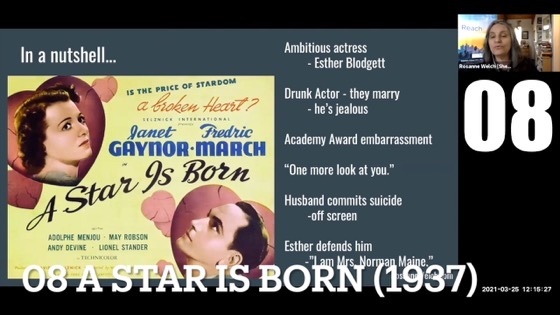
In a nutshell, what do we see in the first version of A Star Is Born?” We have this ambitious actress. We have a drunken actor, not a director. They do marry and he is jealous of her despite how bad that makes him feel. We have this classic scene where she wins an Academy Award and he shows up drunk and destroys and humiliates the evening right? We have this classic line “Can I have one more look at you”, right before I kill myself but you don’t know that’s what I’m about to do right? We have the husband committing suicide off-screen. We’re going to see him walk off into the ocean. We’re not going to see him dead on our screen and of course, we’re going to have this ending where she defends him to the society that destroyed him — to Hollywood — by saying “I am Mrs. Norman Maine” and there’s a lot — we’ll talk about this a little if we have some time — there’s some argument. My undergrad students nowadays will say they hate that line and they’re seeing it as her stepping back and losing her identity and I don’t think that’s how it was intended. I think if we think again about the time period, this was her asserting this man meant something and you people ruined him and I will not forget him right? So it’s an interesting line to see. Everything changes as we move through society and we bring our own baggage to what we watch. So we have to think about that. It was intended to be a monument to him and not a detriment to her at this point.

Watch this entire presentation

Connections at conferences matter! Through the most recent SCMS, I met Vicki Callahan, whose film history focus right now is on Mabel Normand. When she learned I could put together a lecture on the importance of the female voice in the A Star is Born franchise she asked me to give that lecture to her master students.

It made for a great opportunity for me to hone the ideas I’m working on for a chapter on that franchise that I’m writing for a new book from Bloomsbury: The Bloomsbury Handbook Of International Screenplay Theory. It’s always nice when one piece of research can be purposed in other ways – and it’s always fun revisiting such a female-centric film franchise – one that drew the talents of such powerful performers as Janet Gaynor, Judy Garland, Barbara Streisand, and Lady Gaga.

Find out why in this lecture!

RMW Rosanne Signature for Web


June Mathis: An Eye for Talent — Dr. Rosanne Welch, Script magazine, October 2021

June Mathis: An Eye for Talent -- Dr. Rosanne Welch, Script magazine, October 2021

Though she wrote over 100 films in the Silent Era and was a founding member of the Academy of Motion Picture Arts and Sciences, June Mathis appears in film history books (when she does) as a writer-producer with an eye for talent in that she gave both Buster Keaton and Rudolph Valentino their debuts on film.

She came to film from an early career as a child in vaudeville, despite suffering from undiagnosed heart issues. Born as June Hughes in 1887 in Leadville, Colorado there was no father listed and the child would later take Mathis, the last name of her stepfather, as her own.

Read June Mathis: An Eye for Talent — Dr. Rosanne Welch, Script magazine, October 2021


Read about more women from early Hollywood