Dr. Rosanne Welch’s Chapter in Doctor Who – New Dawn: Essays on the Jodie Whittaker Era from Manchester University Press Now Available

Dr. Rosanne Welch's Chapter in Doctor Who - New Dawn: Essays on the Jodie Whittaker Era  from Manchester University Press Now Available

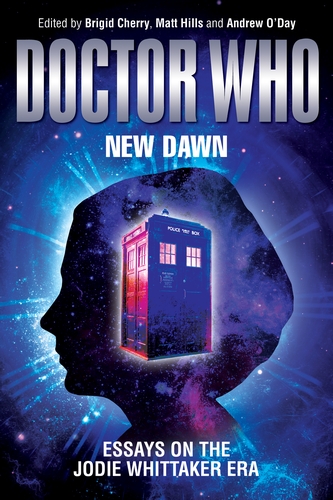
I’m happy to announce the publication of Doctor Who New Dawn: Essays on the Jodie Whittaker Era for which I was invited to write a chapter. 

My focus was on the delicate work showrunner/writer Chris Chibnall had to do in realizing this new Doctor so it’s called “She is Wise and Unafraid” Writing the First Female Doctor and a Diverse Universe for her to Protect

I touch on the myriad decisions a showrunner makes in creating a character from costuming to sidekicks (called companions in the Whoniverse) to dialogue.   I was excited to have been invited to contribute to this collection and proud to showcase the way screenwriters work.

I know academic books can be expensive but you can always ask your local or college library to order a copy for you to read!  


Doctor Who – new dawn explores the latest cultural moment in this long-running BBC TV series: the casting of a female lead. Analysing showrunner Chris Chibnall and Jodie Whittaker’s era means considering contemporary Doctor Who as an inclusive, regendered brand. Featuring original interview material with cast members, this edited collection also includes an in-depth discussion with Segun Akinola, composer of the iconic theme tune’s current version. The book critically address the series’ representations of diversity, as well as fan responses to the thirteenth Doctor via the likes of memes, cosplay and even translation into Spanish as a grammatically gendered language. In addition, concluding essays look at how this moment of Who has been merchandised, especially via the ‘experience economy’, and how official/unofficial reactions to UK lockdown helped the show to further re-emphasise its public-service potential.

P.S. You can check out the trailer for Jodie’s upcoming 3rd season here:

19 Bingability from Worry and Wonder | The Courier Thirteen Podcast [Video]

Watch the entire presentation – Worry and Wonder | The Courier Thirteen Podcast | Episode # 29 here

19 Bingability rom Worry and Wonder | The Courier Thirteen Podcast [Video]

Transcript:

HOST: They do a really good job of holding the tension for you to keep watching on to the next episode and I think that’s really well done yeah so.

Rosanne: We used to think when streaming came along that wouldn’t be as important because the idea of leaving a show with a bit of a cliffhanger was so you’d wait a week and you’d remember to come back the next Thursday at nine o’clock or whatever that was and then we’re like oh streaming. You just binge right through it you don’t need it but of course, Netflix will say no no now we need what they’ll call the binge-ability factor. Oh yeah, we need you to see the thing that says next episode and click that right away. We want you to watch five in a row. That’s just as important as coming back next week and I think that’s really a funny — we thought there was a change there and it’s not necessary at all.

HOST: Yeah just because it’s on this platform where you can binge it doesn’t mean that people will automatically just go to the next episode if you don’t make it enticing for them to do so. I mean I’ve watched a lot. I’ve started a lot of shows on Netflix and I didn’t move on to the next episode like you didn’t

Rosanne: It didn’t catch you.

HOST: — I don’t see the reason.

It’s always fun to sit down with students and share stories about entering the television industry and how things work at all stages and I had that opportunity the other day.

Daniela Torres, a just-graduated (Congratulations!) student of the Columbia College Semester in LA program asked me to guest on a podcast she had recently begun hosting with another college student she met during her internship (good example of networking in action!).

We could have talked all morning (the benefit of a 3 hour class session) but we held it to about an hour and fifteen minutes or so. Hopefully, along the way I answered some questions you might have about how the business works. So often it amounts to working hard at being a better writer and gathering a group of other talented, hard-working people around you so you can all rise together.

Dr. Rosanne Welch is a television writer with credits that include Beverly Hills 90210, Picket Fences, ABCNEWS: Nightline and Touched by an Angel. She also teaches Television Writing and the Art of Film at San Jose State University.

Rosanne discusses what made shows like Beverly Hills 90210 compelling, what to do and not to do when attempting to pitch a show to broadcast or streaming, what most young writers neglect in their writing process, and much more!

The Courier Thirteen Podcast is available on YouTube, Spotify, Apple Podcasts, SoundCloud, and Audible.

45 Casting and Production Issues from There And Back Again: Writing and Developing for American TV [Video]

45 Casting and Production Issues from There And Back Again: Writing and Developing for American TV [Video]

Thanks to the gracious invitation from my Screenwriting Research Network colleague Paolo Russo – and a grant he was able to procure (and in the before-Covid time) I was able to spend a week at Oxford Brookes University working with the screenwriting masters students in Paolo’s course. At the culmination of the week, I gave this lecture on how writers rooms worked in the States.

Transcript:

But now I had to deal with everybody else and their stereotypes. One of which was oh so the gang should clearly be Black or Hispanic and I was like no no we’ve done that too much. In my neighborhood, they were Armenian gangs at the time. Not that you want to pick on any one group but you know it was a new group that hadn’t been picked on too much on TV. I argued for a good solid two days in that room why it should be an Armenian gang and I kept getting flack about America doesn’t understand that. They only understand these two groups blah blah and I was losing that battle and one of the producers told me to shut up and I kept talking because I didn’t want to lose that battle until finally, the person who usurped me was the casting director who knew that was the storyline we were playing with and he came in the room and he said I don’t have an Armenian actor who could be a guest star but I have this guy Renoly Santiago who had just done Hackers, Conair and oh the Michelle Pfeiffer movie where she’s a teacher and she used to be the military. it’s not Stand and Deliver… Dangerous Minds. He had just started all three of those movies and he was willing to do a television episode. So the casting director came in and said we got him. He’s Hispanic. That’s the gang and I lost the argument based on the popularity of the guest actor they could get.

Watch this entire presentation

Subscribe to Rosanne’s Channel and receive notice of each new video!


* A portion of each sale from Amazon.com directly supports our blogs
** Many of these books may be available from your local library. Check it out!
† Available from the LA Public Library

From The Journal Of Screenwriting V6 Issue 1: From ‘What Can be Seen and Heard’ to ‘What Can be Sensed and Thought’: Almodovar’s moving textuality in the screenplay of Todo sobre mi madre/All about my Mother (1999) by Christian Abes

Highlighting the articles in the past editions of the Journal of Screenwriting, of which I am the Book Reviews Editor. Hopefully these abstracts will entice you to did a little deeper into the history and future of screenwriting. — Rosanne


From ‘What Can be Seen and Heard’ to ‘What Can be Sensed and Thought’: Almodovar’s moving textuality in the screenplay of Todo sobre mi madre/All about my Mother (1999) by Christian Abes

A screenplay is a text in transit and in constant tension between the written and the audio-visual dimensions, resulting in a process of a great potentiality. Such a phenomenon can be perceived in Pedro Almodóvar’s screenwriting, in which a distinct idea of style and creative process emerges. The screenwriting of objectivity and exteriority gives way to a generous, dynamic and expressive text. This study highlights how the screenplay can be shaped within a peculiar and poetic textuality, mixing technical references with insight and more abstract comments, i.e. presenting itself simultaneously as a perceptual and as a conceptual text. What if the effects resulting from the audio-visual metaphors of Almodóvar’s screenplay for Todo sobre mi madre/All about my Mother (1999) were ‘present’ only in the screenplay? What if such deviation from classical rules engenders an experimental space within screenwriting that eventually expands the very idea of ‘screenplay’ itself?

From The Journal Of Screenwriting V6 Issue 1: From ‘What Can be Seen and Heard’ to ‘What Can be Sensed and Thought’: Almodovar’s moving textuality in the screenplay of Todo sobre mi madre/All about my Mother (1999) by Christian Abes


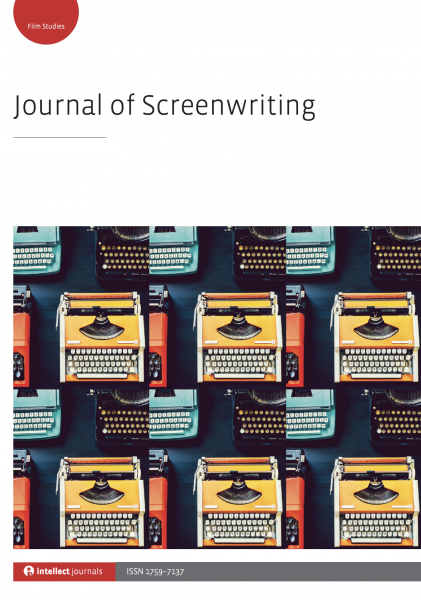
Journal of Screenwriting Cover

The Journal of Screenwriting is an international double-blind peer-reviewed journal that is published three times a year. The journal highlights current academic and professional thinking about the screenplay and intends to promote, stimulate and bring together current research and contemporary debates around the screenplay whilst encouraging groundbreaking research in an international arena. The journal is discursive, critical, rigorous and engages with issues in a dynamic and developing field, linking academic theory to screenwriting practice. 

Get your copy and subscription to the Journal of Screenwriting Today!


* A portion of each sale from Amazon.com directly supports our blogs
** Many of these books may be available from your local library. Check it out!

18 Murdoch Mysteries from Worry and Wonder | The Courier Thirteen Podcast [Video]

Watch the entire presentation – Worry and Wonder | The Courier Thirteen Podcast | Episode # 29 here

18 Murdoch Mysteries from Worry and Wonder | The Courier Thirteen Podcast [Video]

Transcript:

Rosanne: The Murdoch Mysteries? The one about the cops…

Host: I think so yeah.

Rosanne: Canada’s got some interesting tv. Interesting business there too. It’s called Murdoch Mysteries. It’s on Netflix for a few seasons. It’s run for ten seasons. It’s about a constable. It is what they call their police in Canada in the turn of the century 1900. So you’re getting a period piece and his girlfriend, who becomes his wife later on, is the coroner because she was a rich woman who learned to be a doctor but nobody will trust you to be a doctor. So she basically cuts up cadavers and helps solve crimes and what they did beautifully is they’re very interesting little you know detective stories but they have a lovely cast of surrounding characters and eventually they married these two people and in the States if you marry characters the show’s over right? Bones they got married shows done. Castle they got married shows done. We don’t understand that the day after you get married like that’s when the story starts.

Host: Yeah there’s this trope that marriage and then that’s the end game. Like the end game was getting married but there’s nothing after that yet yeah.

Rosanne: Whereas they’ve been I think married for four or five seasons now and you know they’re perfectly interesting and fun and work together.

It’s always fun to sit down with students and share stories about entering the television industry and how things work at all stages and I had that opportunity the other day.

Daniela Torres, a just-graduated (Congratulations!) student of the Columbia College Semester in LA program asked me to guest on a podcast she had recently begun hosting with another college student she met during her internship (good example of networking in action!).

We could have talked all morning (the benefit of a 3 hour class session) but we held it to about an hour and fifteen minutes or so. Hopefully, along the way I answered some questions you might have about how the business works. So often it amounts to working hard at being a better writer and gathering a group of other talented, hard-working people around you so you can all rise together.

Dr. Rosanne Welch is a television writer with credits that include Beverly Hills 90210, Picket Fences, ABCNEWS: Nightline and Touched by an Angel. She also teaches Television Writing and the Art of Film at San Jose State University.

Rosanne discusses what made shows like Beverly Hills 90210 compelling, what to do and not to do when attempting to pitch a show to broadcast or streaming, what most young writers neglect in their writing process, and much more!

The Courier Thirteen Podcast is available on YouTube, Spotify, Apple Podcasts, SoundCloud, and Audible.

44 Sneaky Methods from There And Back Again: Writing and Developing for American TV [Video]

44 Sneaky Methods from There And Back Again: Writing and Developing for American TV [Video]

Thanks to the gracious invitation from my Screenwriting Research Network colleague Paolo Russo – and a grant he was able to procure (and in the before-Covid time) I was able to spend a week at Oxford Brookes University working with the screenwriting masters students in Paolo’s course. At the culmination of the week, I gave this lecture on how writers rooms worked in the States.

Transcript:

Well, first of all, I wanted to pitch a show. I’d read an article about a priest in LA who worked with gang kids who were also parents and I wanted to do something where a boy had to pick whether he should be — oh look it’s a father episode — more devoted to the family he created or to the gang that was his fake family right? He had to learn that the gang wasn’t real but his own family was real.

I wanted to pitch that but I knew that one of the other episode guys– one of the other writers — didn’t like to do things with gangs. I was like well that’s stupid that’s writing out a whole sort of storyline. So I had to get my boss alone and the boss on this show happened to be a female and interestingly enough there’s one place that a girl writer could follow a female producer that none of the boys could follow us — the loo — ladies and gentlemen, so I waited until she went to the bathroom one day and I followed her in and while I was washing my hands very vigorously I said “Martha I’ve just read this marvelous article about this priest who works with gang boys and I thought what if he did an episode about a teenage gang dad,” and she was like “Well that’s marvelous. We should do that. Let’s talk about it,” and we went back into the room, where there were two guys I knew didn’t want to do anything about gangs and she pitched it and they can’t say no to the boss. So I got it.

Watch this entire presentation

Subscribe to Rosanne’s Channel and receive notice of each new video!


* A portion of each sale from Amazon.com directly supports our blogs
** Many of these books may be available from your local library. Check it out!
† Available from the LA Public Library

From The Journal Of Screenwriting V5 Issue 3: ‘Want to Cook?’: Static and fluid layering in The Sopranos and Breaking Bad by Jeff Rush

Highlighting the articles in the past editions of the Journal of Screenwriting, of which I am the Book Reviews Editor. Hopefully these abstracts will entice you to did a little deeper into the history and future of screenwriting. — Rosanne


‘Want to Cook?’: Static and fluid layering in The Sopranos and Breaking Bad by Jeff Rush

Neo-Baroque scholars argue that, because television serials build their story arc on episodic rather than linear structure, they feature the paradigmatic over the syntagmatic axis of story development. This article will extend that argument, claiming that, unlike three-act structure, serial story structure layers character against generic tropes and, as a result, limits character development. It will propose two such strategies for this layering: the static, where the trope remains the same, and the fluid, where the character moves from one trope to the other in the course of the story. In The Sopranos, the example of static layering, even though Tony Soprano pulls against the trope of the gangster don, he always returns to it. By contrast, in Breaking Bad, the example of fluid layering, Walter White is allowed to move through a series of tropes, evolving as a character as he does. However, the evolution is limited by the theme-and-variations style, which ultimately requires that subsequent variations play off of, and recapitulate, the initial theme.

From The Journal Of Screenwriting V5 Issue 3: ‘Want to Cook?’: Static and fluid layering in The Sopranos and Breaking Bad by Jeff Rush


Journal of Screenwriting Cover

The Journal of Screenwriting is an international double-blind peer-reviewed journal that is published three times a year. The journal highlights current academic and professional thinking about the screenplay and intends to promote, stimulate and bring together current research and contemporary debates around the screenplay whilst encouraging groundbreaking research in an international arena. The journal is discursive, critical, rigorous and engages with issues in a dynamic and developing field, linking academic theory to screenwriting practice. 

Get your copy and subscription to the Journal of Screenwriting Today!


* A portion of each sale from Amazon.com directly supports our blogs
** Many of these books may be available from your local library. Check it out!

New Presentation: “She is Wise and Unafraid”: Writing the 1st Female Doctor and a Diverse Universe for her to Protect, Screenwriting Research Network Conference 2021, Oxford, UK

New Presentation: “She is Wise and Unafraid”: Writing the 1st Female Doctor and a Diverse Universe for her to Protect, Screenwriting Research Network Conference 2021, Oxford, UK

New Presentation: “She is Wise and Unafraid”: Writing the 1st Female Doctor  and a Diverse Universe for her to Protect, Screenwriting Research Network Conference 2021, Oxford, UK

For this year’s SRN (Screenwriting Research Network) conference – which had to be online due to the continuing pandemic – I presented a short discussion of the chapter I wrote for a new book an old favorite show – Doctor Who.

The book is called Doctor Who New Dawn: Essays on the Jodie Whittaker Era and my chapter is titled “She is Wise and Unafraid,”: Writing the 1st Female Doctor and a Diverse Universe for her to Protect.”


I cover the ways in which I believe executive producer/showrunner Chris Chibnall used the tools of his writing trade to create the first female Doctor in the show’s over 50-year history. Those included casting and costuming, dialogue and diversity. In my opinion, Chibnall made a promise to diversify the show on all levels (not just by changing the gender of the lead character) and by hiring a diverse slate of writers who created stories under his direction I believe he kept that promise.


17 More On Wynonna Earp from Worry and Wonder | The Courier Thirteen Podcast [Video]

Watch the entire presentation – Worry and Wonder | The Courier Thirteen Podcast | Episode # 29 here

17 More On Wynonna Earp from Worry and Wonder | The Courier Thirteen Podcast [Video]

Transcript:

Well, many things worked about the show. One of which was her sister was a lesbian and she and the female sheriff in town had a relationship and Emily Andreas, who produced the show in Canada knew the trope of killing your gays and she made a promise upfront that neither of these women would ever die and, sure enough, as you get to the end of the 4th season, the last episode is their wedding which is really quite beautiful after you’ve watched the characters across 4 years. but the fact that she did that to counter this negative thing that had been happening in tv and because you knew that. the fun was in always getting one of those 2 women in a terrible situation that they should have died and you knew they were going to have to work their way out of it and so often you would say “Oh, don’t tell me how something’s going to end because I need the tension of worrying.” I didn’t have to worry about them dying but I had to wonder — so it’s worry and wonder, are the 2 most important things for an audience that pulls them through a show — I had to wonder how’d they get out of it. So it still worked and I thought that was brilliant. So I think that’s a really good show and people probably think it’s an American show because it was on American TV as well.

It’s always fun to sit down with students and share stories about entering the television industry and how things work at all stages and I had that opportunity the other day.

Daniela Torres, a just-graduated (Congratulations!) student of the Columbia College Semester in LA program asked me to guest on a podcast she had recently begun hosting with another college student she met during her internship (good example of networking in action!).

We could have talked all morning (the benefit of a 3 hour class session) but we held it to about an hour and fifteen minutes or so. Hopefully, along the way I answered some questions you might have about how the business works. So often it amounts to working hard at being a better writer and gathering a group of other talented, hard-working people around you so you can all rise together.

Dr. Rosanne Welch is a television writer with credits that include Beverly Hills 90210, Picket Fences, ABCNEWS: Nightline and Touched by an Angel. She also teaches Television Writing and the Art of Film at San Jose State University.

Rosanne discusses what made shows like Beverly Hills 90210 compelling, what to do and not to do when attempting to pitch a show to broadcast or streaming, what most young writers neglect in their writing process, and much more!

The Courier Thirteen Podcast is available on YouTube, Spotify, Apple Podcasts, SoundCloud, and Audible.

43 Protecting Your Story from There And Back Again: Writing and Developing for American TV [Video]

43 Protecting Your Story from There And Back Again: Writing and Developing for American TV [Video]

Thanks to the gracious invitation from my Screenwriting Research Network colleague Paolo Russo – and a grant he was able to procure (and in the before-Covid time) I was able to spend a week at Oxford Brookes University working with the screenwriting masters students in Paolo’s course. At the culmination of the week, I gave this lecture on how writers rooms worked in the States.

Transcript:

As I’m thinking about this idea, I didn’t pitch it for a while because I knew the answer would be to marry them and I didn’t want to do that and then one day Mrs. Doubtfire was on TV and I was watching. It reminded me of the article and I thought “Oh I will immediately pitch the story where the wife is already remarried” because the answer from angels can’t be get a second divorce in order to go right. So that was my reasoning around why they didn’t get back together and when I pitched it, it worked because I got the story I wanted and not the story that would have been molded from somebody else’s opinion. It’s hard when you’re in a writer’s room and you’re not the head of it because you are doing their show. It’s what they want done right but you have to keep some of yourself inside there too because that’s the theme. That’s the attitude. That’s the voice that you’re bringing to the story. So I couldn’t pitch it until I knew that I could protect the full story the way I wanted it to come out.

Watch this entire presentation

Subscribe to Rosanne’s Channel and receive notice of each new video!


* A portion of each sale from Amazon.com directly supports our blogs
** Many of these books may be available from your local library. Check it out!
† Available from the LA Public Library