“Pickering’s Harem”, Henrietta Swan Levitt, Edwin Hubble, and More on Women in Science

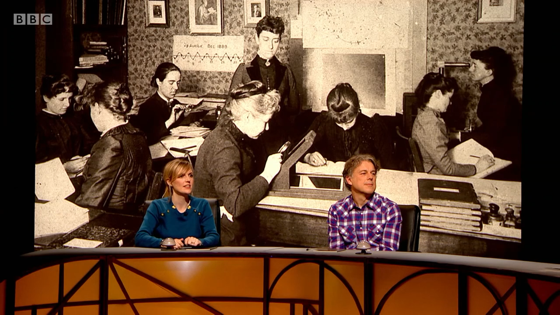
Research on Edwin Hubble lead me to learn more about this set of female mathematicians – and in that wonderful way the synergy of the world seems to work they were then discussed on a UK comedy game show starring Sandy Toksvig – and I learned even more!

Henrietta Swan Levitt figured out how to measure the distance from the earth of pulsating stars.  Edwin Hubble then used her calculations to discover the Milky Way.  One of the game show guests asks when she gets credit and the answer is – only anecdotally from Hubble reminding people of her work.  Why you might ask?  For two reasons…  

upper body and face of Henrietta Swan Leavitt
Public Domain, Link

First, Levitt was part of what was nicknamed Pickering’s Harem.  Edward Pickering ran the Harvard Observatory and found his male employees who analyzed data from the skies incompetent and slow so one day he said, “My maid could do it better.”  The male staff said “Go ahead” so Pickering did hire a slew of women and as they worked so well he hired more women.  Annie Jump Cannon manually classified 350,000 stars in her career.  Yet, in that way misogyny takes over, rather than call them fellow mathematicians or astronomers, the women became… Pickering’s Harem. I also learned that this lead to the Harem effect — a phenomenon where male executives hire female assistants as they are cheaper and work harder.  The jokes of these game show celebrities reminded me of the misogyny of naming the women Pickering’s Harem.  We didn’t call the men of the Mercury project “Jackie Kennedy’s consorts”.  I mean what a way to demean a set of highly educated women.  
The Second reason Henrietta Swan Levitt did not receive full credit for her discovery is that Swedish mathematician Gösta Mittag-Leffler DID want to nominate Levitt for the 1926 Nobel Prize for Physics – but she had died 4 years earlier and the Prize can’t be awarded posthumously (I wonder what male thought up that dumb rule – and why?).  Thankfully, Hubble always mentioned Levitt – but textbooks do not necessarily.  At the end of the segment the host then covers the many lies Hubble told in his lifetime as a means of polishing his less than elegant background. 

Amazing what you can learn from a UK game show.

From The Journal Of Screenwriting V4 Issue 1: expensive words, cheap images: ‘Scripting’ the adapted screenplay by Alex Munt

Highlighting the articles in the past editions of the Journal of Screenwriting, of which I am the Book Reviews Editor. Hopefully these abstracts will entice you to did a little deeper into the history and future of screenwriting. — Rosanne


expensive words, cheap images: ‘Scripting’ the adapted screenplay by Alex Munt

This article explores ‘scripting’ the adapted screenplay for budget film models, including microbudget features, DIY film-making and creative practice-led research. It highlights the lack of attention given to the adapted screenplay in the field of adaptation studies, and works with notions of intermediality, and transmediality, to privilege the screenplay as the primary site for creative interaction in the adaptation process. In the context of small-scale, budget film-making practices the focus is towards modes of scripting that rely on working with images, both as part of the screenplay form/format and more directly, in ‘writing’ with moving images, with the screenplay situated within production. This article argues that in consideration of the adapted screenplay, for budget film-making, the relationship between words and images is realigned. The impact of digital media culture together with the advance of digital film-making will accelerate this. Two case studies are presented. The first is Mala No he (1985), the debut feature film of Gus Van Sant, based on the novella by Walt Curtis. The second is LBF (2011), the author’s own debut feature film, based on the novel Living Between Fucks (2006) by Cry Bloxsome. This article aims to engage screenwriting researchers, independent/budget film-makers and creative arts practitioners.

From The Journal Of Screenwriting V4 Issue 1: expensive words, cheap images: ‘Scripting’ the adapted screenplay by Alex Munt


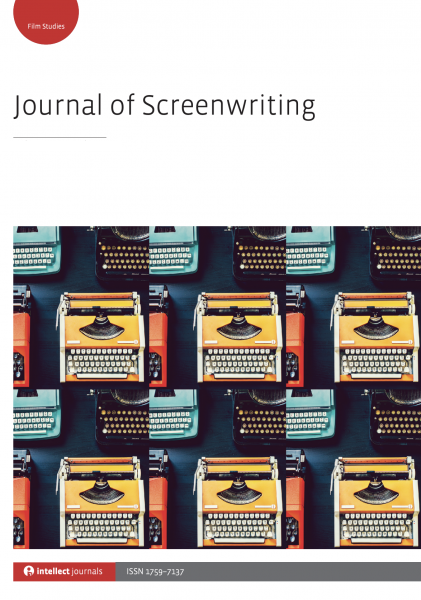
Journal of Screenwriting Cover

The Journal of Screenwriting is an international double-blind peer-reviewed journal that is published three times a year. The journal highlights current academic and professional thinking about the screenplay and intends to promote, stimulate and bring together current research and contemporary debates around the screenplay whilst encouraging groundbreaking research in an international arena. The journal is discursive, critical, rigorous and engages with issues in a dynamic and developing field, linking academic theory to screenwriting practice. 

Get your copy and subscription to the Journal of Screenwriting Today!


* A portion of each sale from Amazon.com directly supports our blogs
** Many of these books may be available from your local library. Check it out!

The Civil War On Film – 19 in a series – …so many white Americans have wished to live in a world in which African Americans are not angry over past and present injustices…

The Civil War On Film - 19 in a series - ...so many white Americans have wished to live in a world in which African Americans are not angry over past and present injustices...

This fictional vision of slavery was pervasive many years after the war, up to and including GWTW. In her book Clinging to Mammy (2007), Micki McElya posits the idea that “the myth of the faithful slave lingers because so many white Americans have wished to live in a world in which African Americans are not angry over past and present injustices, a world in which white people were and are not complicit, in which the injustices themselves—of slavery, Jim Crow, and ongoing structural racism—seem not to exist at all.”.

Movies profiled in this book:

A Woman Wrote That – 15 in a series – Clueless – Wr: Amy Heckerling

This new “A Woman Wrote That” post is an echo of the Writers Guild campaign of a few years ago (“A Writer Wrote That”) where they noted famous movie quotes and credited the screenwriter rather than the director.  The difference here being that we will be posting lines from films written by female screenwriters.  Feel free to share! — Rosanne

A Woman Wrote That - 15 in a series - Clueless - Wr: Amy Heckerling

AMBER

Ms. Stoeger, my plastic surgeon doesn’t want me doing any activity where balls fly at my nose.

Event: ScriptChat with Dr. Rosanne Welch – Complete Transcript

I had a lot of fun on my first Twitter Chat last Sunday. Jeanne Veillette Bowerman of #Scriptchat had invited to talk about how to behave in a writers room alongside what are the benefits of an MFA in TV and Screenwriting (such as the one we offer from Stephens College).  

Happily, I had just interviewed Gloria Calderon Kellet who had an MFA and who had said so astutely that no one requires that in Hollywood but taking 2 years to invest in herself and her craft meant she had material that was truly of high enough quality to offer up when future producers offered to read her work.  So that was nice!

As to Twitter, I knew being short and concise is the bread and butter of Twitter but… wow… I’m clearly a much longer storyteller and kept running over the limit and having to use ellipses to extend a sentence or a thought.  But folks seemed to enjoy it and even said I had ‘dropped pearls’ so that was nice to hear as well.

Check out #Scriptchat every Sunday night at 5pmPST/8pmET for more fun guests.


Event: ScriptChat with Dr. Rosanne Welch – Sunday, February 14, 2021 - 4PM PDT

ScriptChat with Dr. Rosanne Welch from Sunday, February 14, 2021

Read the entire transcript

Where’s Her Movie? Labor Activist, Anna LoPizzo – 8 in a series

“Where’s HER Movie” posts will highlight interesting and accomplished women from a variety of professional backgrounds who deserve to have movies written about them as much as all the male scientists, authors, performers, and geniuses have had written about them across the over 100 years of film.  This is our attempt to help write these women back into mainstream history.  — Rosanne

Where's Her Movie? Labor Activist, Anna LoPizzo - 8 in a series

Anna LoPizzo was a striker killed during the Lawrence Textile Strike (also known as the Bread and Roses Strike), considered one of the most significant struggles in U.S. labor history. Eugene Debs said of the strike, “The Victory at Lawrence was the most decisive and far-reaching ever won by organized labor.”[1] Author Peter Carlson saw this strike conducted by the militant Industrial Workers of the World (IWW) as a turning point. He wrote, “Wary of [a war with the anti-capitalist IWW], some mill owners swallowed their hatred of unions and actually invited the AFL to organize their workers.[2]

Anna LoPizzo’s death was significant to both sides in the struggle. Wrote Bruce Watson in his epic Bread and Roses: Mills, Migrants, and the Struggle for the American Dream, “If America had a Tomb of the Unknown Immigrant paying tribute to the millions of immigrants known only to God and distant cousins compiling family trees, Anna LoPizzo would be a prime candidate to lie in it.”[3] — Wikipedia

10 The Writer’s Voice from There And Back Again: Writing and Developing for American TV [Video] (1 minute 3 seconds)

10 The Writer's Voice from There And Back Again: Writing and Developing for American TV

Thanks to the gracious invitation from my Screenwriting Research Network colleague Paolo Russo – and a grant he was able to procure (and in the before-Covid time) I was able to spend a week at Oxford Brookes University working with the screenwriting masters students in Paolo’s course. At the culmination of the week, I gave this lecture on how writers rooms worked in the States.

Transcript:

Stephen Cannell — who I’m going to talk about briefly in a second — he was in a writer’s pool and he was asked to write an episode of this one day and the reason he stood out and became then his own showrunner was because he had the craziest little idea. Rather than worry about what’s the crime this week and what’s the problem the cops are involved with, he just thought what would happen if the police were assigned to work in a police car which kept breaking down all day. Just a funny little idea which then was the theme of the whole episode. How do you do your job when you’re not providing the proper equipment and that made other people in Universal buzz about this new cool writer and they pretty much thought he had a particular voice and to me that’s the most important thing and you hear this word a thousand times. What does it mean? How do you do it? What does it prove? I’m gonna make you do a little exercise practicing that because writer’s voice is style plus opinion. You have a style of writing and you have something to say, right? That’s the theme. If you don’t have a theme you have no reason to write anything.

Watch this entire presentation

Subscribe to Rosanne’s Channel and receive notice of each new video!


* A portion of each sale from Amazon.com directly supports our blogs
** Many of these books may be available from your local library. Check it out!
† Available from the LA Public Library

Drs. Rosanne Welch and Sarah Clark discuss The Monkees “Monkees A La Carte” episode on the Zilch Podcast’s Monkees 101 Series [Audio]

It’s time for another Monkees 101, co-hosted by myself and Dr. Sarah Clark on the Zilch podcast. This time we discuss and debate “Monkees A La Carte” where the show spoofs all the classic gangster characters.  I always enjoy chatting with Dr. Clark since she’s the Monkees music uber fan to match my TV show uber fan-ness – all with a dash of the kind of research we both do in our day gigs as professors!

RMW Rosanne Signature for Web

Drs. Rosanne Welch and Sarah Clark discuss The Monkees “Monkees A La Carte” episode on the Zilch Podcast's Monkees 101 Series [Audio]

Zilch & The PTFB Team, Sarah Clark, and Tim Powers are co-hosting a Stranger Things Have Happened Zoom Listening Party on FEBRUARY 13 AT 4:00 Eastern, featuring appearances by Glenn Gretlund, Mark Kleiner, James Lee Stanley, and others!

Register Here

After Tim and Sarah plug the listening party (and get a little silly), Sarah and Rosanne discuss “Monkees a la Carte, which aired November 21, 1966. “A gangster has taken over the boys’ favorite Italian restaurant, so they disguise themselves as The Purple Flower Gang.”

Listen Now

Stephens College MFA Alumni Chase Thompson and Michael Burke Talk About Their MFA Experience on the Starcatcher Podcast [Audio Except]

In this clip from a recent Starcatcher podcast film professor (and MFA alum) and host – Chase Thompson – interviews Tech Theatre professor (and MFA alum) Michael Blake about their time as MFA candidates in our Stephens College MFA in TV and Screenwriting program. 

They both mention the great feedback they received from their writing mentors, which made me thankful for the dedication of the many marvelous mentors in our program. Then the part that made me smile the most… They each reflected on how important it was in the History of Screenwriting courses to learn about all the female screenwriters who founded Hollywood and how often those women were left out of mainstream histories of the era.

It’s a very powerful example of how history takes time — and deep research — or someone(s) will be left out.

RMW Rosanne Signature for Web

Stephens College MFA Alumni Chase Thompson and Michael Burke Talk About Their MFA Experience on the Starcatcher Podcast [Audio Except]

Join me for a conversation with Stephens College’s Director of Production, Michael Burke. A former graduate of the Stephens Theatre program, Michael talks about his path to production, his background, why Theatre majors are so good at saying thank you, and his predictions on where the road Theater is heading after the pandemic is over.

Listen to this excerpt

Listen to the entire Starcatcher Podcast Episode

From The Journal Of Screenwriting V4 Issue 1: Communication and the various voices of the screenplay text by Ann Igelström

Highlighting the articles in the past editions of the Journal of Screenwriting, of which I am the Book Reviews Editor. Hopefully these abstracts will entice you to did a little deeper into the history and future of screenwriting. — Rosanne


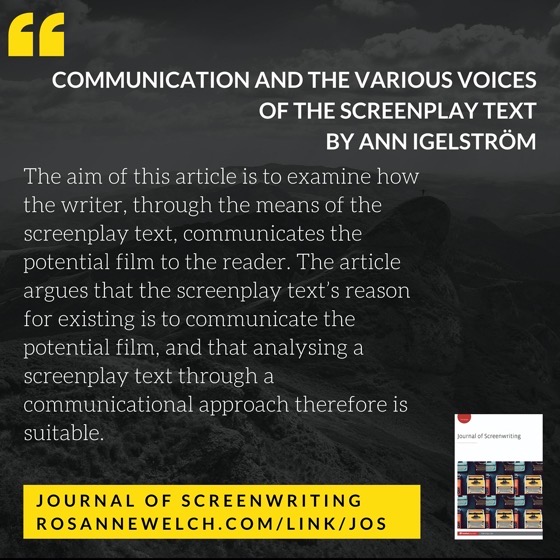
Communication and the various voices of the screenplay text by Ann Igelström

The aim of this article is to examine how the writer, through the means of the screenplay text, communicates the potential film to the reader. The article argues that the screenplay text’s reason for existing is to communicate the potential film, and that analysing a screenplay text through a communicational approach therefore is suitable. The author will ask what type of information is communicated, who it is that communicates and how the communication appears in the text. The article will propose a model that displays the different narrating voices that can be found in screenplay texts, and a set terminology for the narrating voices that clearly position them in relation to the text and the information they provide will be proposed. The examination of extracts from published screenplays further enables the author to identify how the use of the different narrating voices situates the reader at a certain distance from the story.

From The Journal Of Screenwriting V4 Issue 1: Communication and the various voices of the screenplay text by Ann Igelström


Journal of Screenwriting Cover

The Journal of Screenwriting is an international double-blind peer-reviewed journal that is published three times a year. The journal highlights current academic and professional thinking about the screenplay and intends to promote, stimulate and bring together current research and contemporary debates around the screenplay whilst encouraging groundbreaking research in an international arena. The journal is discursive, critical, rigorous and engages with issues in a dynamic and developing field, linking academic theory to screenwriting practice. 

Get your copy and subscription to the Journal of Screenwriting Today!


* A portion of each sale from Amazon.com directly supports our blogs
** Many of these books may be available from your local library. Check it out!