From The “When Women Wrote Hollywood Archives 30: “Frederica Sagor Maas, 1900 – 2012 on Notebook.” MUBI. David Hudson

Months of research went into the creation of the essays in “When Women Wrote Hollywood.” Here are some of the resources used to enlighten today’s film lovers to the female pioneers who helped create it.

From The “When Women Wrote Hollywood Archives 30: “Frederica Sagor Maas, 1900 – 2012 on Notebook.” MUBI. David Hudson

From The

“Frederica Sagor Maas, a pioneering female screenwriter who scored her first big success with The Plastic Age, a smash hit for ‘It Girl’ Clara Bow in 1925, died Jan 5.” She was 111. Mike Barnes in the Hollywood Reporter: “Because she was a woman, Maas was typically assigned work on flapper comedies and light dramas. Her efforts includes such other Bow films as Dance Madness (1926), Hula (1927) and Red Hair (1928); two films featuring Norma Shearer, His Secretary (1925) and The Waning Sex (1926); the Greta Garbo drama Flesh and the Devil (1926); and the Louise Brooks film Rolled Stockings (1927)…. In 1927, she married Ernest Maas, a producer at Fox, and they wrote as a team but struggled to sell scripts…. The pair, interrogated by the FBI for allegedly Communist activities, were out of the business by the early 1950s. Ernest Mass died in 1986 at age 94. In 1999, at the urging of film historian Kevin Brownlow, Maas published her autobiography, The Shocking Miss Pilgrim: A Writer in Early Hollywood. She was 99 at the time.”

Read More


Buy “When Women Wrote Hollywood” Today!


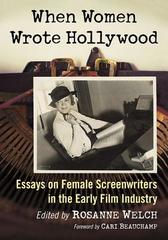
When Women Wrote Hollywood: Essays on Female Screenwriters in the Early Film Industry

Paperback Edition | Kindle Edition | Google Play Edition

Help Support Local Bookstores — Buy at Bookshop.org

* A portion of each sale from Amazon.com directly supports our blogs
** Many of these books may be available from your local library. Check it out!
† Available from the LA Public Library

15 Toni Morrison and Beloved from When Women Write Horror with Dr. Rosanne Welch [Video] (1 minute)

Watch this entire presentation

15 Toni Morrison and Beloved from When Women Write Horror with Dr. Rosanne Welch

Subscribe to Rosanne’s Channel and receive notice of each new video!


In honor of Halloween – and in service to my teaching philosophy —

“Words Matter. Writers Matter. Women Writers Matter.”

I presented this holiday lecture “When Women Write Horror” on Tuesday, October 29th, 2019. Researching the many, many women who have written horror stories – in novels, films and television – brought new names to my attention who I am excited to start reading. I hope you will be, too!

Transcript:

In our class, we go from Shirley Jackson, We deal with probably the most respected haunted house story in American literature — which is Beloved by Toni Morrison, who passed away just earlier this year because what she’s doing is using, again, like Pauline Hopkins, the history of slavery and what those ghosts are for all of our society right because it’s the story of a woman — based on a true story — a woman who did not want her children to grow up in slavery so she ran away with them and when the master almost captured them, she wanted to kill her children rather than make them live as slaves but she only succeeded in killing one of them before the rest were recaptured and now she lives with a ghost of the little girl who is named Beloved because that’s the only thing she could afford to put on the tombstone. Instead of Dearly Beloved it’s just Beloved.

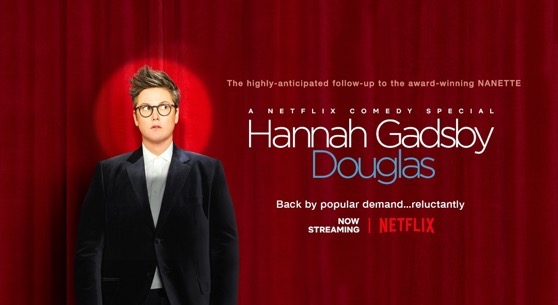
With Hannah Gadsby’s new special “Douglas”!

If you have Netflix, watch Hannah Gadsby’s new special “Douglas” (that’s her dog’s name) for the writing, the laughter, the catharsis – and the Louis CK joke.

When I was a kid, the general idea was ‘women weren’t funny and/or powerful enough to dominate an audience’ or they could only be funny if they made fun of their looks (Phyllis Diller) – which is something Gadsby tackled in her first show, Nanette. 

Words matter. Writing matters. Women writers matter.

With Hannah Gadsby's new special

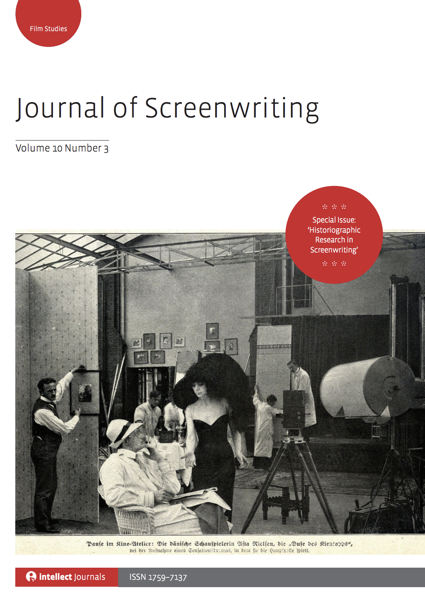
From The Journal Of Screenwriting V1 Issue 2: The constructive use of film genre for the screenwriter: mental space of film genre first exploration by Jule Selbo

Highlighting the articles in the past editions of the Journal of Screenwriting, of which I am the Book Reviews Editor. Hopefully these abstracts will entice you to did a little deeper into the history and future of screenwriting. — Rosanne


The constructive use of film genre for the screenwriter: mental space of film genre first exploration by Jule Selbo

This article aims to examine components of film genre that may be of practical use to the screenwriter in the creative ideation process as well as in the construction of a screenplay. The varying uses of the term genre has led to a misunderstanding of its efficacious place in the screenwriter’s toolbox and it is my intent to forge beyond genre studies of historical, marketing, iconographic and thematic perspectives and focus on the implications of film genre in the development of a screenplay. To achieve this objective, film genre will be explored in relation to the philosophical constructs proposed by Gilles Fauconnier and George Lakoff, specifically the idea of mental space as it relates to the building of a film narrative into an idealized cognitive model that appeals to and attracts a specific audience.


The Journal of Screenwriting is an international double-blind peer-reviewed journal that is published three times a year. The journal highlights current academic and professional thinking about the screenplay and intends to promote, stimulate and bring together current research and contemporary debates around the screenplay whilst encouraging groundbreaking research in an international arena. The journal is discursive, critical, rigorous and engages with issues in a dynamic and developing field, linking academic theory to screenwriting practice. 

Get your copy and subscription to the Journal of Screenwriting Today!


* A portion of each sale from Amazon.com directly supports our blogs
** Many of these books may be available from your local library. Check it out!

If You Haven’t Watched Crip Camp…

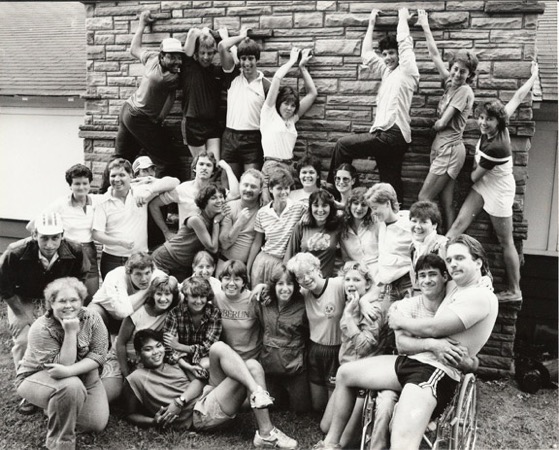
If you haven’t watched Crip Camp on Netflix you haven’t heard of the amazing leader of the Disabled Rights Movement of the 1960s-1980s – Judy Heumann – or about the sit-ins she coordinated in San Francisco and D.C. – or about how the Black Panther’s brought food to them in their 23 day sit-in in San Francisco or how the machinists union rented trucks to drive them around D.C. since busses weren’t accessible (the thing they were demonstrating to change!). And Heumann arranged it all with the help of other kids she’d met at Camp Jened, a camp for kids with disabilities.

A groundbreaking summer camp galvanizes a group of teens with disabilities to help build a movement, forging a new path toward greater equality.

If You Haven't Watch Crip Camp...

It reminded me of the summer I spent as a counselor at a similar camp in Ohio – Camp Cheerful – during my college years.

CampCheerful

From The “When Women Wrote Hollywood Archives 29: Eighty Odd Years in Hollywood: Memoir of a Career in Film and Television by John Meredyth Lucas

Months of research went into the creation of the essays in “When Women Wrote Hollywood.” Here are some of the resources used to enlighten today’s film lovers to the female pioneers who helped create it.

From The “When Women Wrote Hollywood Archives 29: Eighty Odd Years in Hollywood: Memoir of a Career in Film and Television by John Meredyth Lucas

From The

John Meredyth Lucas, son of silent screen star and screenwriter Bess Meredyth (Ben-Hur, The Sea Beast, When a Man Loves, Don Juan) and stepson of renowned Hungarian-born director Michael Curtiz (Casablanca, Mildred Pierce, Yankee Doodle Dandy, Life with Father), came of age in Hollywood during the 1930s. Lucas went on to an impressive career of his own as a writer-producer-director. He made films with Hal Wallis, Ross Hunter, Walt Disney, and others, and he wrote, produced, and directed such classic television series as Mannix, The Fugitive and Star Trek. Completed shortly before his death in 2002, Lucas’ memoir is filled with never-before-told recollections of many Hollywood greats and features previously unpublished photographs. With Lucas, we go behind the scenes, onto the studio lots and into the parties with family friends John Barrymore, Joan Crawford, Errol Flynn and Jack Warner, to name just a few. It’s a boy’s-eye-view of Hollywood in a time of glamour, decadence, and the golden years of filmmaking. — Amazon


Buy “When Women Wrote Hollywood” Today!


When Women Wrote Hollywood: Essays on Female Screenwriters in the Early Film Industry

Paperback Edition | Kindle Edition | Google Play Edition

Help Support Local Bookstores — Buy at Bookshop.org

* A portion of each sale from Amazon.com directly supports our blogs
** Many of these books may be available from your local library. Check it out!
† Available from the LA Public Library

14 Beetlejuice from When Women Write Horror with Dr. Rosanne Welch [Video] (1 minute 16 seconds)

Watch this entire presentation

14 Beetlejuice from When Women Write Horror with Dr. Rosanne Welch

Subscribe to Rosanne’s Channel and receive notice of each new video!


In honor of Halloween – and in service to my teaching philosophy —

“Words Matter. Writers Matter. Women Writers Matter.”

I presented this holiday lecture “When Women Write Horror” on Tuesday, October 29th, 2019. Researching the many, many women who have written horror stories – in novels, films and television – brought new names to my attention who I am excited to start reading. I hope you will be, too!

Transcript:

For me what’s interesting is other haunted house books and films — Beetlejuice being one of the more famous ones and now we’re looking at the influence here of a female actress coming into a piece because this film was written by Michael McDowell and Warren Skerin but because we have Geena Davis, who today is in charge of the Geena Davis Women in Hollywood faction — she made sure that her character had power. She had some agency inside the film. It’s about a couple that gets killed on their honeymoon and they go into hell and they meet Beetlejuice and what’s interesting is that the end they have to get rid of him. She’s the one who kills him. Not the husband. Not the male character. It’s the female character who does the thing that gets rid of the bad guy. So she saves the day and I think it’s adorable at the end of the film there’s a little human girl who can see the ghosts and they have a party not because she met a boy because she got an A in her math test. That’s a girl idea. This is what we celebrate. We don’t sully the boys come and go like buses right but the a in the math test that’s a hot thing. We’re happy about that. So you can see the influence of the female voice in this story — in this haunted house story. So I think that’s rather cool.

From The Journal Of Screenwriting V1 Issue 2: Collaboration and control in the development of Janet Green’s screenplay Victim by Jill Nelmes

Highlighting the articles in the past editions of the Journal of Screenwriting, of which I am the Book Reviews Editor. Hopefully these abstracts will entice you to did a little deeper into the history and future of screenwriting. — Rosanne


Collaboration and control in the development of Janet Green’s screenplay Victim by Jill Nelmes

This article discusses the draft screenplays and correspondence held in the Janet Green collection concerned with the writing of Victim (1961), one of three social issue films that Green wrote for producer Michael Relph and director Basil Dearden. Victim was the first film to openly depict homosexuality in Britain and went through a long and difficult development process. From the letters we find out about the complex relationship between those developing the film and the tensions during the writing of the different drafts. The collection is especially interesting because the correspondence not only allows a study of the writer and the producer/director/writer relationship but also, in the case of Victim, the role of the British Board of Film Censors as well as the participation of Green’s husband, John McCormick and lead actor Dirk Bogarde. The complex mix of argument, negotiation and collaboration suggests a struggle for control of ideas in the development process between the players involved. How decisions are made as to the content of each draft is recorded in the letters, allowing a fascinating picture to build up about the creation of the screenplay, which, as Janet Green explains, was written with the shadow of the censor’s axe (JG 10/6: 25/10/60).


The Journal of Screenwriting is an international double-blind peer-reviewed journal that is published three times a year. The journal highlights current academic and professional thinking about the screenplay and intends to promote, stimulate and bring together current research and contemporary debates around the screenplay whilst encouraging groundbreaking research in an international arena. The journal is discursive, critical, rigorous and engages with issues in a dynamic and developing field, linking academic theory to screenwriting practice. 

Get your copy and subscription to the Journal of Screenwriting Today!


* A portion of each sale from Amazon.com directly supports our blogs
** Many of these books may be available from your local library. Check it out!
From The “When Women Wrote Hollywood Archives 28: Narrative ‘Confidence Games’: Framing the Blonde Spectacle in Gentlemen Prefer Blondes (1925) and Nights at the Circus (1984)

Months of research went into the creation of the essays in “When Women Wrote Hollywood.” Here are some of the resources used to enlighten today’s film lovers to the female pioneers who helped create it.

From The “When Women Wrote Hollywood Archives 28: Narrative ‘Confidence Games’: Framing the Blonde Spectacle in Gentlemen Prefer Blondes (1925) and Nights at the Circus (1984)

From The

From The

“So tomorrow we will be in England bright and early. And I really feel quite thrilled because Mr. Eisman sent one a cable this morning, as he does every morning, and he says to take advantage of everybody we meet as traveling is the highest form of education.” Lorelei Lee in Gentlemen Prefer Blondes)

What makes Lorelei Lee from Anita Loos’s novel Gentlemen Prefer Blondes (Gm) on appealing is her ability to manipulate her own image and effectively become miswess of her own grand confidence game. Throughout the novel, it is clear that Lorelei is aware of herself as an image, and she constantly adjusts this image whew “take advantage. of the situation aromd her. In effect, she is smaner than she looks, and she uses this to her rhetorkal (and financial) ad-vantage. Recently. Christina Britzolakis has questioned the viability of reading the”ferninine spectacle” as a particularly feminist undertaking? Although Brit-zolakis is right to point to the patriarchal underpinnings that inform the male gaze,’ argue that the rhetorical construction of the wise-cracIdng, self-reflexive blonde often enacts a critique on the system of commodification and ob-jectification that she appears to uphold, thus meriting more critical and schol-arly attention.’ More specifically, tlotestigste the parallel rhetorical strategies in Anita Loos’s novel Gentlemen Prefer Blondes and Angela Carter’s Nights at Me Circus to reveal the self-reflexive and ultimately subversive nature oft de-liberately constructed blonde spectacle.’ In contrast, the main character in Dorothy Parker’s then story “Big Blonde.. Hazel Motes. is not in control of her own narrative and thus her “performance” as a blonde has disastrous re-sultn a brief analysis of Parker’s use of the blonde spectacle will provide a use-fid contrast to Loos’s Lorelei Lee and Carter’s main character, Sophie Fevvers. Loos and Carter draw our Mention to the image ofblonde beauty as a valuable

Read More


Buy “When Women Wrote Hollywood” Today!


When Women Wrote Hollywood: Essays on Female Screenwriters in the Early Film Industry

Paperback Edition | Kindle Edition | Google Play Edition

Help Support Local Bookstores — Buy at Bookshop.org

* A portion of each sale from Amazon.com directly supports our blogs
** Many of these books may be available from your local library. Check it out!
† Available from the LA Public Library

Drs. Rosanne Welch and Sarah Clark discuss The Monkees “The Chaperone” episode on the Zilch Podcast’s Monkees 101 Series [Audio]

Drs. Rosanne Welch and Sarah Clark discuss The Monkees “The Chaperone” episode on the Zilch Podcast’s Monkees 101 Series 


When I finished writing the book and going to book signings or conferences where I could keep talking about The Monkees I thought I was done.  Then Sarah Clark, PhD emailed and asked me if I’d like to do a segment called “Monkees 101” where we both put our PhD hats and talked about each episode in terms of how it fit into the world in which it aired – sociologically, ideologically and even sometimes politically – covering what was going on in the news the week the show aired and covering the lives of the crafts people who came together to make the show.  How could I say no?  Here’s our latest installment, on an episode called “The Chaperone” which involves Micky in drag as the writers borrowed from the classic play Charlie’s Aunt.


Drs. Rosanne Welch and Sarah Clark discuss The Monkees “The Chaperone” episode on the Zilch Podcast's Monkees 101 Series [Audio]

Monkees 101 with Rosanne Welch and Sarah Clark discuss the 9th episode of “The Monkees” -“The Chaperone” & Christine Wolfe and Sarah talk Monkees News! “Davy has fallen for a beautiful woman, only to find out that her father is a retired Army General who will only let her go to events with a chaperone. The Monkees plot how to convince the General that she will have a chaperone to an upcoming party so Davy can meet her”

Listen to this episode


Want to learn more about The Monkees? Buy Why The Monkees Matter: Teenagers, Television and American Pop Culture


A hit television show about a fictitious rock band, The Monkees (1966-1968) earned two Emmys–Outstanding Comedy Series and Outstanding Directorial Acheivement in Comedy.

Capitalizing on the show’s success, the actual band formed by the actors, at their peak, sold more albums than The Beatles and The Rolling Stones combined, and set the stage for other musical TV characters from The Partridge Family to Hannah Montana. In the late 1980s, the Monkees began a series of reunion tours that continued into their 50th anniversary.

This book tells the story of The Monkees and how the show changed television, introducing a new generation to the fourth-wall-breaking slapstick created by Laurel and Hardy and the Marx Brothers.

Its creators contributed to the innovative film and television of 1970s with projects like Bob & Carol & Ted & Alice, The Mary Tyler Moore Show, Laugh-In and Welcome Back, Kotter. Immense profits from the show, its music and its merchandising funded the producers’ move into films such as Head, Easy Riderand Five Easy Pieces.

McFarland (Direct from Publisher) | Amazon | Kindle Edition | Nook Edition

Want to use “Why The Monkees Matter” in your classroom?

Order Examination Copies, Library and Campus Bookstore orders directly from McFarland

McFarland Company logo