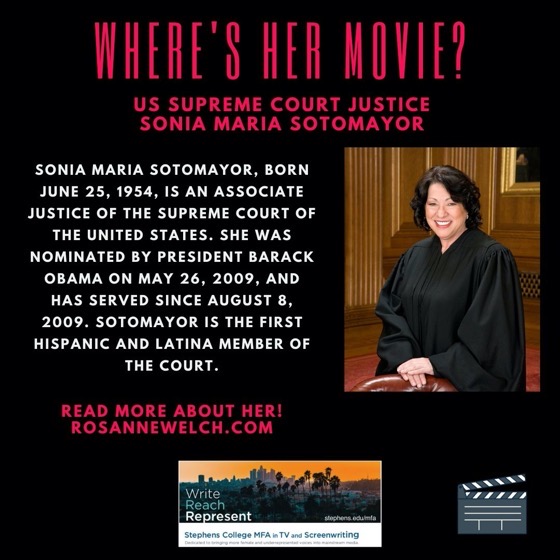
“Where’s HER Movie” posts will highlight interesting and accomplished women from a variety of professional backgrounds who deserve to have movies written about them as much as all the male scientists, authors, performers, and geniuses have had written about them across the over 100 years of film. This is our attempt to help write these women back into mainstream history. — Rosanne
In the latest installment of Monkees 101 – a segment of the Zilch: A Monkees Podcast which I co-host with Dr. Sarah Clark. We’re covering all 58 episodes of the show one at a time.
In the story Mike writes a new song, but the publishing company he tries to sell it to tries to rip him off and his musician pals come to his rescue. Lots of fun meta-moments for all the cast.
The Zilch Staff drops Tour News AND the “Dolenz Sings Nesmith” track lists before a double-header episode! First up Sarah talks to Nashville musician Walter Cherry about his ambitious 5(!) album Monkees cover project, and then it’s time for Monkees 101! Sarah and Rosanne talk I’ve Got a Little Song here, which aired November 28, 1966. Mike writes a new song, but the publishing company he tries to sell it to tries to rip him off.
Subscribe to Rosanne’s Channel and receive notice of each new video!
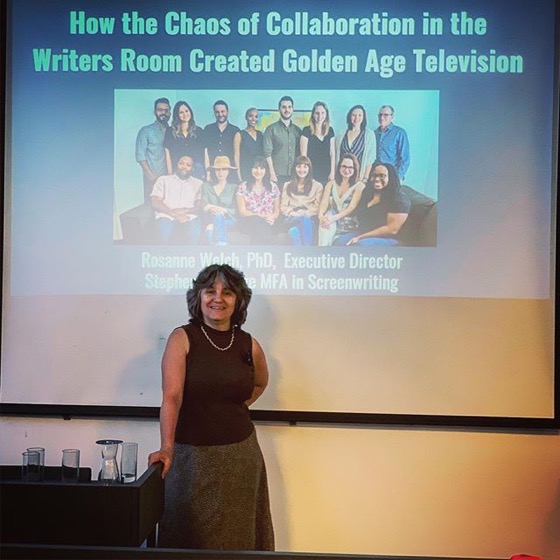
When the folks hosting the conference announced their theme as “Screen Narratives: Chaos and Order” the word ‘chaos’ immediately brought to mind writers rooms. I offered a quick history of writers rooms (the presentations are only 20 minutes long) and then quoted several current showrunners on how they compose their rooms and how they run them.
Transcript
I did a whole book on The Monkees and they had one of the first writer’s rooms in a sort of a kid’s show sitcom and so I had the chance to meet with and interview all these writers back in about three years ago who were all in their late 70s and so heard about their stories of how the room operated. It was very important to have a female. It was the first sitcom that had a femle on staff and so she added a perspective. So it started the idea that we need inclusion in our rooms. We need to hear all the different perspectives. I thought that was pretty cool. So that’s the book and the article that I wrote for Written By.
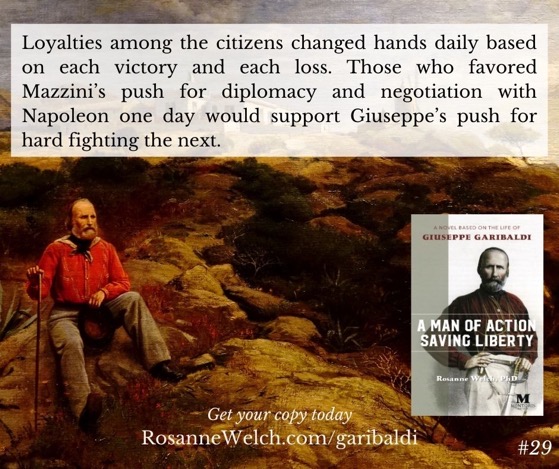
Loyalties among the citizens changed hands daily based on each victory and each loss. Those who favored Mazzini’s push for diplomacy and negotiation with Napoleon one day would support Giuseppe’s push for hard fighting the next.
Realizing the location would be as much a character as any person, Turner negotiated for some of the scenes to be filmed on the actual Gettysburg battlefield itself, an unprecedented National Park Service allowance, though strict federal regulations ruled out any scenes showing opposing fire or combat. In this way, Turner can be compared to David O. Selznick in terms of the way he too obsessed over every detail of the production in ways producers do not always do.
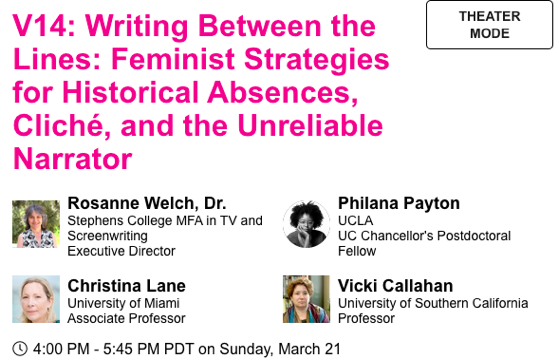
Nearly two years ago I had the pleasure of being invited to join a panel at the then upcoming SCMS (Society of Cinema and Media Studies) conference set for Seattle. As you know that was canceled due to Covid with the hopes of reconvening in Colorado in 2021. That became a virtual conference but our group decided to reapply our panel and we four were able to ‘meet’ on Zoom on Sunday and present: Writing Between the Lines: Feminist Strategies for Historical Absences, Cliché, and the Unreliable Narrator.
Here you can watch my part of the presentation,
“When Men Forget Women: The Many Ways Male Screenwriters Fail to Mention their Female Colleagues in Oral Histories”
Our intrepid panel leader, Christina Lane (author of Phantom Lady – the new biography of writer-producer Joan Harrison) kept us connected across the time. Other panel participants included Philana Payton (UCLA) who is researching the memoirs of Eartha Kitt and Vicki Callahan (USC) who covered the career of Mabel Normand. I was happy to highlight the many female screenwriters whose histories were left on the cutting room floor thanks to the unreliable narrators of their work who included directors, film reviewers, and husbands – all who left the female writers out of their own memories.
V14 Writing Between the Lines: Feminist Strategies for Historical Absences, Cliché, and the Unreliable Narrator
Chair: Christina Lane, University of Miami
Co-Chair: Vicki Callahan, University of Southern California
Vicki Callahan, University of Southern California, “Still Looking for Mabel Normand” Philana Payton, University of Southern California, “Eartha Kitt vs. Eartha Mae: Black Women, Self-Fragmentation, and the Politics of Hollywood Stardom” Rosanne Welch, Stephens College, “When Men Forget Women: The Many Ways Male Screenwriters Fail to Mention their Female Colleagues in Oral Histories” Christina Lane, University of Miami, “Alternative Writing Strategies: Notes on Discovering the ‘Women Who Knew’ Joan Harrison”
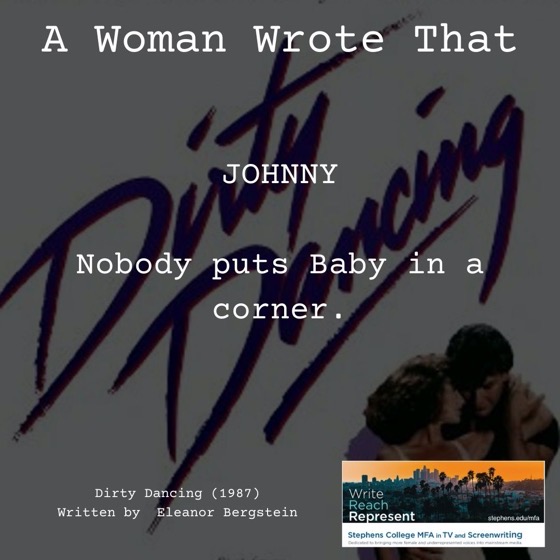
This new “A Woman Wrote That” post is an echo of the Writers Guild campaign of a few years ago (“A Writer Wrote That”) where they noted famous movie quotes and credited the screenwriter rather than the director. The difference here being that we will be posting lines from films written by female screenwriters. Feel free to share! — Rosanne
“Where’s HER Movie” posts will highlight interesting and accomplished women from a variety of professional backgrounds who deserve to have movies written about them as much as all the male scientists, authors, performers, and geniuses have had written about them across the over 100 years of film. This is our attempt to help write these women back into mainstream history. — Rosanne
Salomé Ureña (October 21, 1850 – March 6, 1898) was a Dominican poet and an early proponent of women’s higher education in the Dominican Republic.
Around 1881, Salomé with the help of her husband opened one of the first centers of higher education for young women in the Dominican Republic, which she named “Instituto de Señoritas”. Within five years, the first six female teachers had graduated from the Institute, something uncommon at the time. — Wikipedia
Subscribe to Rosanne’s Channel and receive notice of each new video!
When the folks hosting the conference announced their theme as “Screen Narratives: Chaos and Order” the word ‘chaos’ immediately brought to mind writers rooms. I offered a quick history of writers rooms (the presentations are only 20 minutes long) and then quoted several current showrunners on how they compose their rooms and how they run them.
Transcript
In terms of the history of writer’s rooms, comedy always sort of had them and we know that going back into the early days of the George Burns and Gracie Allen Show. He had a team of writers including his brother who worked with him. So comedy always knew that it needed a group. It was as if they knew the sitcom was an outgrowth of standup comedy or those vaudeville acts they had all been in. Of course, we love The Dick Van Dyke Show taught many people in America — many females in America — you could write for television because there was a female character writing of television, right, in the ’60s. So that taught us we had a place in this business which is a good thing. Neil Simon worked in early TV comedy shows and so he then glamourized that in his play so that’s a way that people learn about writer’s rooms. They see it operate and this was a room that included very famous men. Larry Gelbart who did M*A*S*H. Woody Allen who we can say other things about these days.
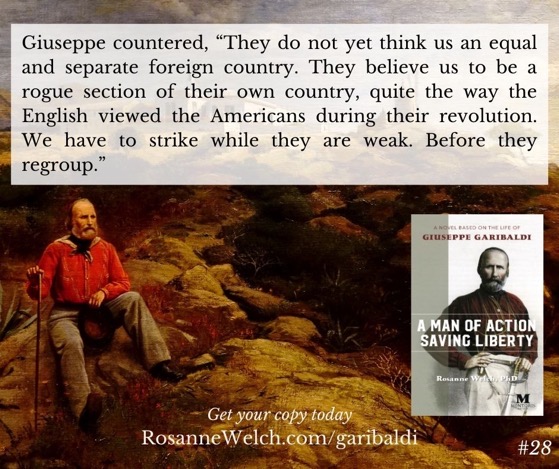
Giuseppe countered, “They do not yet think us an equal and separate foreign country. They believe us to be a rogue section of their own country, quite the way the English viewed the Americans during their revolution. We have to strike while they are weak. Before they regroup.”