The Importance of Endings

The Importance of Endings

I had typed out one of those quotes I tend to use all the time –

“So much time and so little to do. Wait a minute. Strike that. Reverse it.”

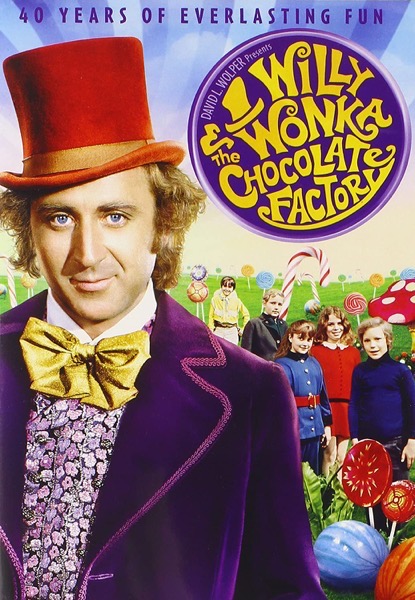
— and in my habit I wanted to credit the writer of the quote, which we all know comes from the movie, Willy Wonka and the Chocolate Factory, adapted by David Seltzer from the book by Roald Dahl. 

My question became “Did that line come from the book OR the film OR both?”  I couldn’t find any clarification on that right away – but I did find this great NPR interview with Seltzer about how he changed the ending of the film because the director felt “It ends with the word, yippee? He said that’s not a screen play. That’s not a movie. You can’t do that” so Seltzer rewrote the ending to be this:

Mr. SELTZER: It ends with the word, yippee? He said that’s not a screen play. That’s not a movie. You can’t do that.

COHEN: So, what did you do?

Mr. SELTZER: I said, well, let me think about it. You know, how long do I have? He said, how long? We’re standing here. It’s $30,000 an hour. You tell me. And, I said, well, give me a second. And I think it was about 6 in the morning. And I walked down, literally, looked over the lake in Maine. I thought, what the hell am I going to do? My head space was totally out of this movie. I could barely remember what had led up to this but I thought, OK, it’s a fairy tale. It’s a children’s story, and how do children’s stories end? I don’t know. How could – how do they end? They end with, they all lived happily ever after. But that’s not good. That’s not what a screenwriter writes. And so I took a deep swallow and I went to the phone. I said, Mel, OK, listen carefully. They’re going up in the spaceship and looking at the ground disappear. And Willy Wonka announces to Charlie that the chocolate factory is his. Then, Willy Wonka looks at him and he says, but Charlie – in a very cautious voice – you do know what happened to the little boy who suddenly got everything he ever wanted, don’t you? And fear comes across Charlie’s face and he says, no, what? And Willy says, he lived happily ever after. And it was a long pause, and I thought my career as a screenwriter is over.


35 More on Margaret Nagle from There And Back Again: Writing and Developing for American TV [Video]

35 More on  Margaret Nagle from There And Back Again: Writing and Developing for American TV [Video]

Thanks to the gracious invitation from my Screenwriting Research Network colleague Paolo Russo – and a grant he was able to procure (and in the before-Covid time) I was able to spend a week at Oxford Brookes University working with the screenwriting masters students in Paolo’s course. At the culmination of the week, I gave this lecture on how writers rooms worked in the States.

Transcript:

She then moved into running a show called Red Band Society which only ran for one season and that’s a whole other conversation but I wanted to mention briefly because tone is something that we try to teach but it’s very difficult. It’s almost as difficult as style but if you go online which you can on youtube and look for the theme song the opening to this show Braccialetti Rossi which was done in Italy. They are both adaptations of a book. This show is so beautiful and magic and lovable and you just want to be with these children in their terminally ill part of this hospital and everybody’s wonderful. In this show, the opening shows what huge jerks every one of these children was before they got struck down with their disease. So I don’t really care if they die. The phone is all wrong. I need to love them and root for them and I find them being mean to each other. The one girl is this awful cheerleader who’s just and then she does so she got the tone wrong which fascinates me because when you are well practiced you don’t think that’s going to happen but that’s another show.

Watch this entire presentation

Subscribe to Rosanne’s Channel and receive notice of each new video!


* A portion of each sale from Amazon.com directly supports our blogs
** Many of these books may be available from your local library. Check it out!
† Available from the LA Public Library

From The Journal Of Screenwriting V5 Issue 2: ‘A story is not a story but a conference’: Story conferences and the classical studio system by Claus Tieber

Highlighting the articles in the past editions of the Journal of Screenwriting, of which I am the Book Reviews Editor. Hopefully these abstracts will entice you to did a little deeper into the history and future of screenwriting. — Rosanne


‘A story is not a story but a conference’: Story conferences and the classical studio system by Claus Tieber

In analyzing the script development of Grand Hotel (1932, Edmund Goulding), this article brings an insight into the workings of the classical studio system and the way screenwriting was organized and understood during this era. The protocols of story conferences that took place at MGM under the leadership of producer Irving Thalberg deliver an exhaustive picture of the whole process, from the first screen idea, to getting the rights for a novel, to the final discussions after the screening of a rough cut. The protocols deliver evidence of screenwriting as an ongoing work in progress that was done not by a single screenwriter, but by a group of film-makers, constantly discussing all elements of the production. The concerns of the participants of these conferences included more than just storytelling; they also focused on the emotional reactions of the audience and the presentation of stars. The criteria these decisions were based upon are not ‘rules’ of storytelling, but reasonable assumptions about the audience’s reactions. Screenwriting within the studio system was not an ongoing fight between screenwriters and producers, but an ongoing discussion about every detail of a film, constituting a rather modern and democratic system of film development.

From The Journal Of Screenwriting V5 Issue 2: ‘A story is not a story but a conference’: Story conferences and the classical studio system by Claus Tieber


Journal of Screenwriting Cover

The Journal of Screenwriting is an international double-blind peer-reviewed journal that is published three times a year. The journal highlights current academic and professional thinking about the screenplay and intends to promote, stimulate and bring together current research and contemporary debates around the screenplay whilst encouraging groundbreaking research in an international arena. The journal is discursive, critical, rigorous and engages with issues in a dynamic and developing field, linking academic theory to screenwriting practice. 

Get your copy and subscription to the Journal of Screenwriting Today!


* A portion of each sale from Amazon.com directly supports our blogs
** Many of these books may be available from your local library. Check it out!

08 Playing The Game… from Worry and Wonder | The Courier Thirteen Podcast | Episode # 29 [Video]

Watch the entire presentation – Worry and Wonder | The Courier Thirteen Podcast | Episode # 29 here

08 Playing The Game... from Worry and Wonder | The Courier Thirteen Podcast | Episode # 29 [Video]

Transcript:

…and you really need to understand how the business works not just the people management then but now move up to understanding how the network makes their decisions and how do you sell things to them. I mean I’ve had showrunning friends who will tell stories about how there were moments they wanted in a script and they knew the network wouldn’t like those moments. Maybe they’re pushing the envelope on something. So they put in a couple of worse moments knowing that when the network said oh you can’t do that or that or that they’d go I hear what you’re saying. I understand. I won’t do that or that but I’ve got to have this and they’d get the one thing they really wanted. So they were playing a little chess game as well right? So at every level, there’s an understanding of what do people need. How do I give them what I want and still what they need at the same time.

It’s always fun to sit down with students and share stories about entering the television industry and how things work at all stages and I had that opportunity the other day.

Daniela Torres, a just-graduated (Congratulations!) student of the Columbia College Semester in LA program asked me to guest on a podcast she had recently begun hosting with another college student she met during her internship (good example of networking in action!).

We could have talked all morning (the benefit of a 3 hour class session) but we held it to about an hour and fifteen minutes or so. Hopefully, along the way I answered some questions you might have about how the business works. So often it amounts to working hard at being a better writer and gathering a group of other talented, hard-working people around you so you can all rise together.

Dr. Rosanne Welch is a television writer with credits that include Beverly Hills 90210, Picket Fences, ABCNEWS: Nightline and Touched by an Angel. She also teaches Television Writing and the Art of Film at San Jose State University.

Rosanne discusses what made shows like Beverly Hills 90210 compelling, what to do and not to do when attempting to pitch a show to broadcast or streaming, what most young writers neglect in their writing process, and much more!

The Courier Thirteen Podcast is available on YouTube, Spotify, Apple Podcasts, SoundCloud, and Audible.

34 Margaret Nagle and Warm Springs from There And Back Again: Writing and Developing for American TV [Video]

34 Margaret Nagle and Warm Springs from There And Back Again: Writing and Developing for American TV [Video]

Thanks to the gracious invitation from my Screenwriting Research Network colleague Paolo Russo – and a grant he was able to procure (and in the before-Covid time) I was able to spend a week at Oxford Brookes University working with the screenwriting masters students in Paolo’s course. At the culmination of the week, I gave this lecture on how writers rooms worked in the States.

Transcript:

And Margaret Nagle came off of Boardwalk Empire. She’s a pretty brilliant writer in many ways. She started her career — she was an actress. She moved into writing and she knew she needed to write something powerful and different. You’ve got to find something that hasn’t been done million times before and Warm Springs was the story of Franklin Roosevelt and the time he spent at a spa when he had polio. We’ve seen a million Franklin Roosevelt stories in America because he’s one of our big heroes right? We’ve seen the relationship with Eleanor. We’ve seen the relationship with his mistress. We’ve seen World War II in any different way you can figure it out. Nobody had done the story of how a rich boy dealt with being diagnosed with polio. What did he do and how did he survive and it was in the spa full of other people who weren’t famous or rich and he had to meet people he had never met in his normal life and that’s what formed the man who became the president who created all the programs that helped us survive the depression and the war and so that was a brilliant idea for us and it was just reading history and she stumbled on that thought. Why have i never seen this story? I’ll write it. What a lovely idea. Reading history is a brilliant thing to do.

Watch this entire presentation

Subscribe to Rosanne’s Channel and receive notice of each new video!


* A portion of each sale from Amazon.com directly supports our blogs
** Many of these books may be available from your local library. Check it out!
† Available from the LA Public Library

Ruth Gordon (with Her Husband, Garson Kanin) — Truly The Marrying Kind, Dr. Rosanne Welch, Script magazine, July 2021

 Ruth Gordon (with Her Husband, Garson Kanin) -- Truly The Marrying Kind, Dr. Rosanne Welch, Script magazine, July 2021

Mention the name of Ruth Gordon and most people remember her as an actress ranging from Abe Lincoln in Illinios (1940) to Harold and Maude (1971) or for her Academy Award-winning role in Rosemary’s Baby (1968). The impromptu acceptance speech she made that night identified her as the writer she actually was. Being 72 at the time she quipped, “I can’t tell you how encouraging a thing like this is.”

Ruth Gordon Jones came into the world on October 30, 1896 in Quincy, Massachusetts. Though her sea captain father seemed steeped in the past, she convinced him to let her move into the new century by moving to New York as a single nineteen-year-old to study acting. She began appearing on Broadway in Peter Pan in 1915. Acting in movies soon beckoned, as did writing them, which was enhanced when she married her second husband, director Garson Kanin.

Read Ruth Gordon (with Her Husband, Garson Kanin) — Truly The Marrying Kind, Dr. Rosanne Welch, Script magazine, July 2021 on the Script web site


Read about more women from early Hollywood


From The Journal Of Screenwriting V5 Issue 2: Normatizing the silent drama: Photoplay manuals of the 1910s and early 1920s by Terry Bailey

Highlighting the articles in the past editions of the Journal of Screenwriting, of which I am the Book Reviews Editor. Hopefully these abstracts will entice you to did a little deeper into the history and future of screenwriting. — Rosanne


Normatizing the silent drama: Photoplay manuals of the 1910s and early 1920s by Terry Bailey

The first instructional manuals to cover the writing of photoplays for silent drama emerged in 1911. In the wake of ‘Scenario Fever’, their style was often hyperbolic, and they claimed a great need in the film industry for new dramatic scenarists. In truth, few readers of manuals, or clients of the ‘schools’ that often distributed them, attained professional status. This article uses primary and secondary sources to examine the origins and content of the silent screenwriting manuals, and determines that, despite their poor record in fulfilling their ostensible purpose, they served valuable social functions. By overlooking screen drama’s debt to Victorian theatre and vaudeville, they served to normatize screenwriting practice in its own right, and thus helped to legitimize film’s sense of itself as a new medium. The uniform nature of their content, shaped by manual writers who were often working scenarists, suggests their reliability in clarifying aspects of screenwriting practice that lay behind the creation of silent films, and justifies their use as resources in film studies.

From The Journal Of Screenwriting V5 Issue 2: Normatizing the silent drama: Photoplay manuals of the 1910s and early 1920s by Terry Bailey


Journal of Screenwriting Cover

The Journal of Screenwriting is an international double-blind peer-reviewed journal that is published three times a year. The journal highlights current academic and professional thinking about the screenplay and intends to promote, stimulate and bring together current research and contemporary debates around the screenplay whilst encouraging groundbreaking research in an international arena. The journal is discursive, critical, rigorous and engages with issues in a dynamic and developing field, linking academic theory to screenwriting practice. 

Get your copy and subscription to the Journal of Screenwriting Today!


* A portion of each sale from Amazon.com directly supports our blogs
** Many of these books may be available from your local library. Check it out!

William Blinn, Brian’s Song, Purple Rain, and Screenwriting

William Blinn, Screenwriting, Brian's Song, and Purple Rain

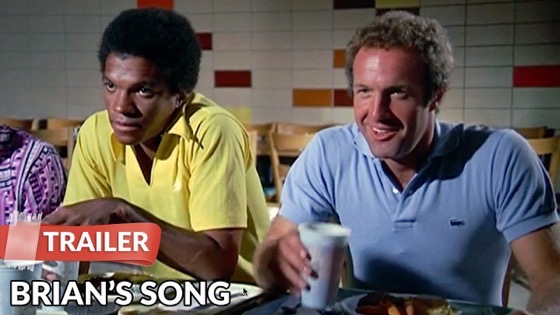
Sometimes I love the way the internet lets you drill down layer after layer of research when you only had one small question – but you learn things you forgot you wanted to know.  When I saw a question on Quora’s Ask a Screenwriter forum about the best “Based on a True Story” films the one that came immediately to mind was Brian’s Song so first I found the trailer:

Naturally then, I wanted to know who wrote it, which brought me to the film’s Wikipedia page, which brought me to William Blinn’s Wikipedia page

There I came to find that not only did he win an Emmy for writing that TV film but also one for writing on the original Roots.  Here he receives the Paddy Chayefsky Laurel Award for Television for “a WGA guild member who has advanced the literature of television and made outstanding contributions to the profession of the television writer.”

His advice to young writers is to “get off you’re a** and do the work” and to “Tell the truth in an interesting way.”

(If you listen to nothing else in this blog post – listen to that speech!).

Blinn was nominated 3 times for episodes of Fame. And he won Humanitas and Peabody Awards along the way.   Blinn also produced Starsky and Hutch (both the TV show and the 2004 movie!). Finally, he co-wrote Purple Rain

THAT is a career –  and you probably have never heard of him. 

Finally, I came to remember how much I had resisted watching “a football movie”  but I kept hearing how much other people loved it so when it re-ran on the 11:30pm film one night I snuck out of bed in the childhood home I shared with my grandparents and watched the film – finding myself sobbing as it ended.  I had never seen a film about such a strong male friendship – and I have rarely seen on as strong since.

Yay for the internet – and Yay for William Blinn.

07 It’s Show Business…Not Show Art…from Worry and Wonder | The Courier Thirteen Podcast | Episode # 29 [Video]

Watch the entire presentation – Worry and Wonder | The Courier Thirteen Podcast | Episode # 29 here

07 It's Show Business...Not Show Art...from Worry and Wonder | The Courier Thirteen Podcast | Episode # 29 [Video]

Transcript:

Host: This might be a really sad thing to say, but do you think that, sometimes, it’s not always the best writers who get their pitches up but it’s the people who can work the room, by either maneuvering around, can get their stuff into the ears of the right people and then present that?

Rosanne: That is very true. I wouldn’t say — I mean you have to be a good writer to get in the room in the first place or they wouldn’t have hired you across all those stacks — you’ve seen all the things you’ve read for —

Host: Yeah. No. There’s a lot of crap to filter through. Absolutely.

Rosanne: Absolutely. So, generally speaking, you had to be a certain level to get in the room, but, yeah, it’s the people who can work — you have to work both things. A friend of mine is fond of saying, “It’s called show business. not show art.” So business is half of the job.

It’s always fun to sit down with students and share stories about entering the television industry and how things work at all stages and I had that opportunity the other day.

Daniela Torres, a just-graduated (Congratulations!) student of the Columbia College Semester in LA program asked me to guest on a podcast she had recently begun hosting with another college student she met during her internship (good example of networking in action!).

We could have talked all morning (the benefit of a 3 hour class session) but we held it to about an hour and fifteen minutes or so. Hopefully, along the way I answered some questions you might have about how the business works. So often it amounts to working hard at being a better writer and gathering a group of other talented, hard-working people around you so you can all rise together.

Dr. Rosanne Welch is a television writer with credits that include Beverly Hills 90210, Picket Fences, ABCNEWS: Nightline and Touched by an Angel. She also teaches Television Writing and the Art of Film at San Jose State University.

Rosanne discusses what made shows like Beverly Hills 90210 compelling, what to do and not to do when attempting to pitch a show to broadcast or streaming, what most young writers neglect in their writing process, and much more!

The Courier Thirteen Podcast is available on YouTube, Spotify, Apple Podcasts, SoundCloud, and Audible.

33 Terence Winter and Boardwalk Empire from There And Back Again: Writing and Developing for American TV [Video]

33 Terence Winter and Boardwalk Empire from There And Back Again: Writing and Developing for American TV [Video]

Thanks to the gracious invitation from my Screenwriting Research Network colleague Paolo Russo – and a grant he was able to procure (and in the before-Covid time) I was able to spend a week at Oxford Brookes University working with the screenwriting masters students in Paolo’s course. At the culmination of the week, I gave this lecture on how writers rooms worked in the States.

Transcript:

Terence Winter on Boardwalk Empire. He came off of The Sopranos so he had a very good pedigree and then he moved into Boardwalk Empire and the idea of how you parse out the story and this comes from structure. At what point to do give out what information. How do you string the audience along. I think that’s really interesting. That’s a whole other conversation.

Watch this entire presentation

Subscribe to Rosanne’s Channel and receive notice of each new video!


* A portion of each sale from Amazon.com directly supports our blogs
** Many of these books may be available from your local library. Check it out!
† Available from the LA Public Library