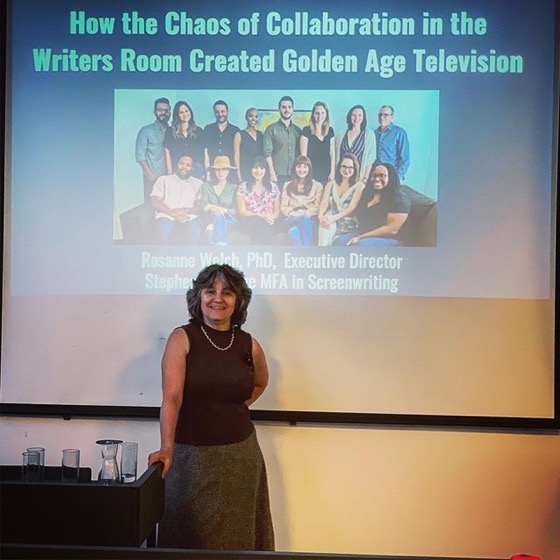
500+!!!! Also, send your Questions and see complete clips and presentations on my YouTube Channel

@drrosannewelch

500+!!!! Also, send your ##Questions and see complete ##clips and ##presentations on my ##YouTube ##screenwriting ##doctorwho ##history

♬ original sound – Dr. Rosanne Welch


500+!!!! Also, send your Questions and see complete clips and presentations on my YouTube Channel


Read more about screenwriting with these books

* A portion of each sale from Amazon.com directly supports our blogs
** Many of these books may be available from your local library. Check it out!
† Available from the LA Public Library

“A Man Of Action Saving Liberty: A Novel Based On The Life Of Giuseppe Garibaldi” – 36 in a series

New York City in 1850 was a hodgepodge of some 700,000 peoples from all over the world. Giuseppe silently thanked Nicoletta every day for making him read the poems of Percy Shelley in English when he was a child for it made his transition easier. He watched so many other immigrants struggle with communicating in such a strange language. If anything, despite the accent he too carried, his command of language showed off his education, which helped some people accept him more easily than others of his countrymen.

Get your copy of A Man Of Action Saving Liberty Today!

24 Diversity Makes Better Product from There And Back Again: Writing and Developing for American TV [Video]

24 Diversity Makes Better Product from There And Back Again: Writing and Developing for American TV [Video]

Thanks to the gracious invitation from my Screenwriting Research Network colleague Paolo Russo – and a grant he was able to procure (and in the before-Covid time) I was able to spend a week at Oxford Brookes University working with the screenwriting masters students in Paolo’s course. At the culmination of the week, I gave this lecture on how writers rooms worked in the States.

Transcript:

One of the big things about writer’s rooms these days is being as inclusive as we can be. You guys are better at that. I’m always impressed with British shows because it’s always kind of a mix of people — the ones that I get to see in America, all right, but that’s impressive to me and of course, we all know you went so far as to make The Doctor a woman. That’s huge. At least that was huge news in the states. I don’t know if it was huge news here but we’re very happy about that. So finally from the 90s and beyond we’re getting more inclusive writing rooms right, but you might notice we don’t yet have too many Asian American writers I mean there’s a lot of ethnicities not completely being represented but writer/producers are more responsible to that idea now because they recognize it makes the product better because a collaboration of many ideas is always going to be a more layered piece that you’re presenting.

Watch this entire presentation

Subscribe to Rosanne’s Channel and receive notice of each new video!


* A portion of each sale from Amazon.com directly supports our blogs
** Many of these books may be available from your local library. Check it out!
† Available from the LA Public Library

Dorothy Parker: Born to be a Star of Poignant and Pointed Word Play, Dr. Rosanne Welch, Script magazine, May 2021

Dorothy Parker: Born to be a Star of Poignant and Pointed Word Play, Dr. Rosanne Welch, Script magazine, May 2021

Mention of the name “Dorothy Parker” conjures up thoughts of New York’s famed Algonquin Round Table and the lone woman (though Edna Ferber and Ruth Gordon often stopped by) trading quips with the greatest male writers of her day. Few know that Parker pounced on Hollywood, following in the footsteps of many those male writers looking for a quick – and hefty – payoff. Parker’s second husband Alan Campbell (who knew she was married?) had heard the call of the West but her name in their shared credits cinched those extra 000s on their shared studio checks.

The imbalance of fame in their marriage lead to one of Hollywood’s greatest stories, one that is remade in almost every generation. But Parker lived emotional experience gave the story its birth. If you’ve seen any of the myriad versions of A Star is Born I believe you have seen into Parker’s heart as much as if you’ve read any of her poetry or short stories. All these writings share a voice dripped in sarcastic wit and word play used as brain armor to combat an ever-present tide of melancholia and loneliness.\

Star originally focused on an up and coming actress (Janet Gaynor) who falls in love with a partner whose fame is on the wane. Remade in 1954 for an up and coming musical comedy performer (Judy Garland) it was reconfigured for a rock star (Barbara Streisand) in 1976 and a pop star (Lady Gaga) in 2018. All but the latest version share the tragic concept that society couldn’t condone a woman more successful than her man. Parker’s lived emotional experience encompassed more sadness than her marriage.

Born Dorothy Rothschild in New Jersey in 1893, her mother died when she was five years old. Her father raised her with the help of a stepmother Parker disliked. In her late teens Parker, who was even then witty, wrote what she characterized as ‘light verse’ that didn’t sell – until it did. Parker’s reputation as a writer grew from writing for The New Yorker and then publishing Enough Rope, a collection of poetry, in 1926.

Her first marriage failed after her husband returned from World War I. Her second ended in divorce, remarriage and then Campbell died of a drug over dose. Her career largely never wavered, moving from magazines to screenplays, including Saboteur for which Alfred Hitchcock courted her contributions and counted them as so important he offered her a shared cameo in the film.

You can find comments about how Parker and Campbell worked together in S.J.Perelman’s published letters or in reminiscences of prolific (and also married) screenwriters Frances Goodrich and Albert Hackett who had the office next door. It amounts to the idea that Dottie, as she was called by friends, did the bulk of the writing and character creation and Campbell did not. You’ll hear more about Goodrich next month! Meanwhile, it is hard to decide which cultural icon has become a more enduring and influential touchstone to the twentieth century – A Star is Born or Dorothy Parker.

Read Dorothy Parker: Born to be a Star of Poignant and Pointed Word Play on the Script web site


Read about more women from early Hollywood


23 The importance of A Voice in the Room There And Back Again: Writing and Developing for American TV [Video]

23 The importance of A Voice in the Room There And Back Again: Writing and Developing for American TV [Video]

Thanks to the gracious invitation from my Screenwriting Research Network colleague Paolo Russo – and a grant he was able to procure (and in the before-Covid time) I was able to spend a week at Oxford Brookes University working with the screenwriting masters students in Paolo’s course. At the culmination of the week, I gave this lecture on how writers rooms worked in the States.

Transcript:

So, for instance, we were doing a story once about a young little girl. She was nine years old and she happened to be a young girl of color. She was lost at a park or something like that and you know the first thing that came to us — what do we do next in the story — well she’s gonna go find a policeman and the two African-American women in her room went “Oh no she’s not. My parents told me never to go to a policeman” and we were like but I was always told to find a policeman if I got lost somewhere. Yeah because you’re not a woman of color. So you can be safe with them. That was a whole new perspective, right? A perspective that I would not have had had I not had that other voice in the room.

Watch this entire presentation

Subscribe to Rosanne’s Channel and receive notice of each new video!


* A portion of each sale from Amazon.com directly supports our blogs
** Many of these books may be available from your local library. Check it out!
† Available from the LA Public Library

A Woman Wrote That – 27 in a series – 10 Things I Hate About You (1999) Written by Karen McCullah & Kirsten Smith

This new “A Woman Wrote That” post is an echo of the Writers Guild campaign of a few years ago (“A Writer Wrote That”) where they noted famous movie quotes and credited the screenwriter rather than the director.  The difference here being that we will be posting lines from films written by female screenwriters.  Feel free to share! — Rosanne

A Woman Wrote That - 27 in a series - 10 Things I Hate About You (1999) Written by Karen McCullah & Kirsten Smith

KAT

But mostly I hate the way I don’t hate you. Not even close, not even a little bit, not even at all.

Where’s Her Movie? Fashion Designer, Anne Lowe – 20 In A Series

“Where’s HER Movie” posts will highlight interesting and accomplished women from a variety of professional backgrounds who deserve to have movies written about them as much as all the male scientists, authors, performers, and geniuses have had written about them across the over 100 years of film.  This is our attempt to help write these women back into mainstream history.  — Rosanne

Where's Her Movie? Fashion Designer, Anne Lowe  - 20 In A Series

Ann Cole Lowe (December 14, 1898 – February 25, 1981) was an American fashion designer and the first African American to become a noted fashion designer.[1] Lowe’s one-of-a-kind designs were a favorite among high society matrons from the 1920s to the 1960s. She was best known for designing the ivory silk taffeta wedding dress worn by Jacqueline Bouvier when she married John F. Kennedy in 1953 — Wikipedia

22 People of Color and Television from There And Back Again: Writing and Developing for American TV [Video]

22 People of Color and Television from There And Back Again: Writing and Developing for American TV [Video]

Thanks to the gracious invitation from my Screenwriting Research Network colleague Paolo Russo – and a grant he was able to procure (and in the before-Covid time) I was able to spend a week at Oxford Brookes University working with the screenwriting masters students in Paolo’s course. At the culmination of the week, I gave this lecture on how writers rooms worked in the States.

Transcript:

Still, there’s something missing in writer’s rooms in America.

There’s some girls in that picture because it’s executive produced by a girl.

Missing something else. (Audience: people of color)People of color because you know they exist in the world.Isn’t that interesting but they were not yet existing on very many TV shows. Again a whole font of stories not being told — not being told correctly. On my show Touched by Angel we had we had two women of color and you have to remember that you only have experiences until you do research that come from your own life and that’s good and that’s a building block but it’s not everything right?

Watch this entire presentation

Subscribe to Rosanne’s Channel and receive notice of each new video!


* A portion of each sale from Amazon.com directly supports our blogs
** Many of these books may be available from your local library. Check it out!
† Available from the LA Public Library

11 Donald Bellisario from How The Chaos Of Collaboration in the Writers Room Created Golden Age Television [Video]

With the full recording of “How The Chaos Of Collaboration in the Writers Room Created Golden Age Television”

11 Donald Bellisario from How The Chaos Of Collaboration in the Writers Room Created Golden Age Television [Video]

Subscribe to Rosanne’s Channel and receive notice of each new video!


When the folks hosting the conference announced their theme as “Screen Narratives: Chaos and Order” the word ‘chaos’ immediately brought to mind writers rooms. I offered a quick history of writers rooms (the presentations are only 20 minutes long) and then quoted several current showrunners on how they compose their rooms and how they run them.

Transcript

Don Belisario gave us the military on television and that is a very distinct voice in America. It speaks to a part of the population that doesn’t feel they’re serviced by television right which they think is all run by liberal elites. So to glorify our military is the thing that is very popular in some parts of the country and that’s because Don Belisario was from the military. So he wanted to express that part of his life in writing.

For more information on the Screenwriting Research Network, visit

Screenwriting Research Network Conference, Porto, Portugal, All Sessions


Ready to present my talk yesterday at the Screenwriting Research Conference here in Porto, Portugal via Instagram

Follow me on Instagram


* A portion of each sale from Amazon.com directly supports our blogs
** Many of these books may be available from your local library. Check it out!

From The Journal Of Screenwriting V4 Issue 3: The pleasure of immersion: Some thoughts on how The Singing Detective sustains narrative by Anne Karpf

Highlighting the articles in the past editions of the Journal of Screenwriting, of which I am the Book Reviews Editor. Hopefully these abstracts will entice you to did a little deeper into the history and future of screenwriting. — Rosanne


The pleasure of immersion: Some thoughts on how The Singing Detective sustains narrative by Anne Karpf

This article argues that while Dennis Potter’s television drama series The Singing Detective is commonly celebrated for its multi-layered narrative and the post-modern way that it played with genre, another of its critical features has remained relatively neglected: the sustained narrative pleasure that it afforded. It suggests that Potter allowed viewers the deep immersive experience of realist TV drama and storytelling, even while he was experimenting with narrative, so providing a bridge between modernist and traditional forms, and rewarding viewers (who had to try and integrate the series’ different fragments and layers into some sort of quasi-cohesive narrative) with abundant dramatic gratification. Narrative, it claims, is not effaced, only displaced, partly onto the central character of Marlow, whose subjectivity unifies the fragmented narrative. Potter broke radically with the conventions of TV medical drama, and the painful experience of Marlow-as-patient acts as another binding agent.

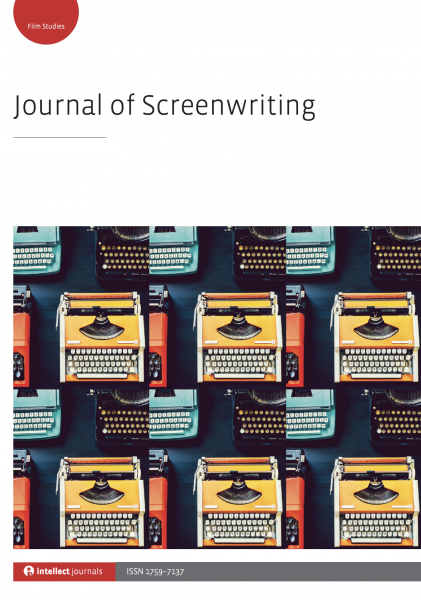
From The Journal Of Screenwriting V4 Issue 3: The pleasure of immersion: Some thoughts on how The Singing Detective sustains narrative by Anne Karpf


Journal of Screenwriting Cover

The Journal of Screenwriting is an international double-blind peer-reviewed journal that is published three times a year. The journal highlights current academic and professional thinking about the screenplay and intends to promote, stimulate and bring together current research and contemporary debates around the screenplay whilst encouraging groundbreaking research in an international arena. The journal is discursive, critical, rigorous and engages with issues in a dynamic and developing field, linking academic theory to screenwriting practice. 

Get your copy and subscription to the Journal of Screenwriting Today!


* A portion of each sale from Amazon.com directly supports our blogs
** Many of these books may be available from your local library. Check it out!