Yet Mitchell created a heroine who never glorified the “Lost Cause” the way other characters in the movie did. In fact, Mitchell urged producer David O. Selznick to hire her friend, Susan Myrick, a newspaper columnist from Macon, Georgia, as a technical consultant precisely because of her “common sense and utter lack of sentimentality about ‘The Old South’” (Flamini 1975). Yet, in spite of Scarlett’s own practical attitude, the film does glorify the Old South and conform to Lost Cause mythology.
When I finished writing the book and going to book signings or conferences where I could keep talking about The Monkees I thought I was done. Then Sarah Clark, PhD emailed and asked me if I’d like to do a segment called “Monkees 101” where we both put our PhD hats and talked about each episode in terms of how it fit into the world in which it aired – sociologically, ideologically and even sometimes politically – covering what was going on in the news the week the show aired and covering the lives of the crafts people who came together to make the show. How could I say no? Here’s our latest installment, “Here Come the Monkees (Pilot)”.
Zilch #161 Monkees 101-10 “Here Come the Monkees (Pilot)” Zilch talks The Monkees TV show, Season 1 Episode 10 In the series pilot which aired November 14, 1966. “The group auditions for the Sweet Sixteen Party, and Davy falls for a sweet 16-year-old.” Aired 1/7/21
Since Anita could not wield a gun in one hand and a child in the other, Anita followed with the other camp wives, despite Giuseppe’s pleas that she stay behind until the baby was weaned. Instead, she rode with the three-month-old Menotti on the saddle in front of her. When the troops came to a stream swollen by recent rains, Giuseppe turned his poncho so the hood was in front and wrapped Menotti inside it so he could keep the wet child warm with his body heat.
Highlighting the articles in the past editions of the Journal of Screenwriting, of which I am the Book Reviews Editor. Hopefully these abstracts will entice you to did a little deeper into the history and future of screenwriting. — Rosanne
The article examines and re-evaluates Nora Ephron’s screenplays; it argues that Ephron’s popularity with female viewers, and her association with the derided category of ‘chick-flicks’, has caused critics to overlook her important contribution to female screenwriting in the last twenty years. Since the late 1980s, Ephron has created a number of highly successful mainstream, popular screenplays that skilfully articulate and express the conflicting pressures experienced by young women, while still offering a positive view of ‘feminine’ culture. Through an analysis of key features of Ephron’s romantic comedies – such as the characteristics of the Ephron heroine, the use of parallel narrative and the symbolic significance of mother/daughter relationships, the article argues that Ephron’s narratives offset specific negative cultural stereotypes of single and professional women from the 1990s and noughties through a sympathetic, feminist-influenced approach to contemporary gender roles, expectations and courtship rituals. Ephron’s screenplays offer an uplifting vision of feminine culture and attributes in which patriarchal attitudes are countered and defeated by the optimism, resourcefulness and integrity of the female heroine.
The Journal of Screenwriting is an international double-blind peer-reviewed journal that is published three times a year. The journal highlights current academic and professional thinking about the screenplay and intends to promote, stimulate and bring together current research and contemporary debates around the screenplay whilst encouraging groundbreaking research in an international arena. The journal is discursive, critical, rigorous and engages with issues in a dynamic and developing field, linking academic theory to screenwriting practice.
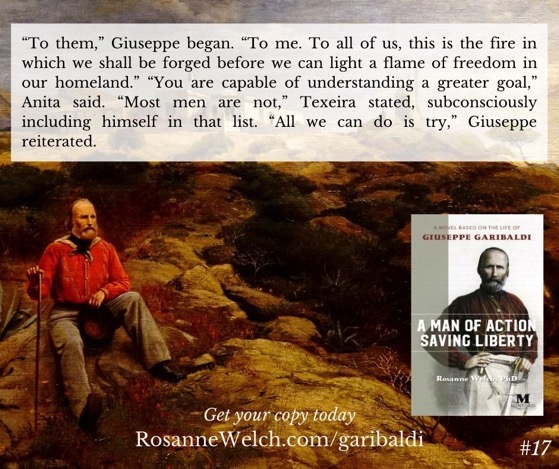
“To them,” Giuseppe began. “To me. To all of us, this is the fire in which we shall be forged before we can light a flame of freedom in our homeland.” “You are capable of understanding a greater goal,” Anita said. “Most men are not,” Texeira stated, subconsciously including himself in that list. “All we can do is try,” Giuseppe reiterated.
Though the NAACP had little success banning the film, in part because film boards were all white and in part because the film was a monster success, they did prompt a national discussion about the film’s racism. Reformer Jane Addams condemned the film as ahistorical and prejudiced, while President Woodrow Wilson, himself an ex-historian (if such a creature can be said to exist), believed the film “terribly true.”
Highlighting the articles in the past editions of the Journal of Screenwriting, of which I am the Book Reviews Editor. Hopefully these abstracts will entice you to did a little deeper into the history and future of screenwriting. — Rosanne
This article addresses the long-lived literary and popular culture assumption that the beloved characters of Nick and Nora Charles in the MGM film The Thin Man (1934) were representations of the relationship between novelist Dashiell Hammett and his lover, playwright Lillian Hellman. However, in a comparison of the screenplay to the novel, the screenplay’s specific dialogue and plot changes incorporated by married screenwriters Frances Goodrich Hackett and Albert Hackett can lead to a different conclusion. I will explore the Nick and Nora marriage that has served for so many years as a benchmark in romantic comedy relationships and propose that, in fact, this relationship was based largely on the marriage shared by the Hackett’s. The results of my exploration suggests credit to the screenwriting couple and serves as evidence that some screenplay adaptations often prove more enduring than their original source material.
The Journal of Screenwriting is an international double-blind peer-reviewed journal that is published three times a year. The journal highlights current academic and professional thinking about the screenplay and intends to promote, stimulate and bring together current research and contemporary debates around the screenplay whilst encouraging groundbreaking research in an international arena. The journal is discursive, critical, rigorous and engages with issues in a dynamic and developing field, linking academic theory to screenwriting practice.
Subscribe to Rosanne’s Channel and receive notice of each new video!
Transcript:
When I was in Italy last visiting my cousin he has a little daughter named Carlotta which is Charlotte in English and he had never heard of Charlotte’s Web as neither the book nor the movie. So we bought a copy to show his daughter when she gets a little older and it was so beautiful to see the title of this book that I had always known in another language and then to know that they would share that story together with her and now we have this connection across the ocean that her — their child and my son knew the same story right? So it’s the culture. It’s the stories that teach our culture. This is a program from Canada that airs in the United States because of Netflix and I always have to say, people think Canada and the United States are the same place but we’re not. The Canadians have an entirely different culture which is often so much nicer than ours. So much more peaceful.
Watch this entire presentation
A Note About This Presentation
A clip from my keynote speech at the 10th Screenwriters´(hi)Stories Seminar for the interdisciplinary Graduation Program in “Education, Art, and History of Culture”, in Mackenzie Presbyterian University, at São Paulo, SP, Brazil, focused on the topic “Why Researching Screenwriters (has Always) Mattered.” I was especially pleased with the passion these young scholars have toward screenwriting and it’s importance in transmitting culture across the man-made borders of our world.
To understand the world we have to understand its stories and to understand the world’s stories we must understand the world’s storytellers. A century ago and longer those people would have been the novelists of any particular country but since the invention of film, the storytellers who reach the most people with their ideas and their lessons have been the screenwriters. My teaching philosophy is that: Words matter, Writers matter, and Women writers matte, r so women writers are my focus because they have been the far less researched and yet they are over half the population. We cannot tell the stories of the people until we know what stories the mothers have passed down to their children. Those are the stories that last. Now is the time to research screenwriters of all cultures and the stories they tell because people are finally recognizing the work of writers and appreciating how their favorite stories took shape on the page long before they were cast, or filmed, or edited. But also because streaming services make the stories of many cultures now available to a much wider world than ever before.
Many thanks to Glaucia Davino for the invitation.
* A portion of each sale from Amazon.com directly supports our blogs ** Many of these books may be available from your local library. Check it out! † Available from the LA Public Library
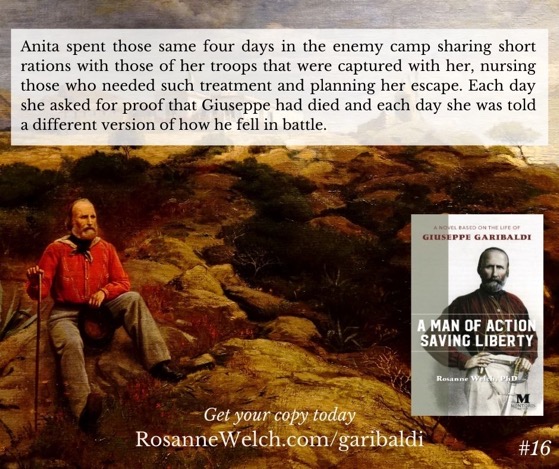
Anita spent those same four days in the enemy camp sharing short rations with those of her troops that were captured with her, nursing those who needed such treatment and planning her escape. Each day she asked for proof that Giuseppe had died and each day she was told a different version of how he fell in battle.
Lost Cause ideology, in its many iterations, maintained its grip on American movies for nearly eighty years, from Birth of a Nation (1915) to Gettysburg (1993). This national enthusiasm for the Lost Cause suggests white Americans, regardless of their regional roots, enjoy and believe the narrative.

![Drs. Rosanne Welch and Sarah Clark discuss The Monkees “Here Come the Monkees (Pilot)” episode on the Zilch Podcast’s Monkees 101 Series [Audio]](https://rosannewelch.com/wp-content/uploads/2021/01/Zilch161sm.jpg)


![42 Sharing Culture Internationally from Why Researching Screenwriters Has Always Mattered [Video] (50 seconds)](https://rosannewelch.com/wp-content/uploads/2020/12/rmw-sao-paolo-42.png)