From The Journal Of Screenwriting V3 Issue 2: Frances Marion: Censorship and the Screenwriter in Hollywood, 1929-1931 by Leslie Kreiner Wilson

Highlighting the articles in the past editions of the Journal of Screenwriting, of which I am the Book Reviews Editor. Hopefully these abstracts will entice you to did a little deeper into the history and future of screenwriting. — Rosanne


Frances Marion: Censorship and the Screenwriter in Hollywood, 1929-1931 by Leslie Kreiner Wilson

The careful study of the screenplay – including archival study – can clarify our view of film history. While some film historians argue studios and studio bosses disregarded censors in the early 1930s before the Production Code Administration (PCA) was formed, archival research reveals screenwriter Frances Marion faced escalating censorship pressure at MGM in 1929 and 1930 as she moved through several drafts for Anna Christie (1930), The Big House (1930) and The Secret Six (1931). This research provides insight into the nature of the problems Marion faced and exposes the day-to-day frustrations and complications in the life of one screenwriter struggling to create art within a convoluted matrix of censorship negotiations as the Production Code was being drafted and ratified.

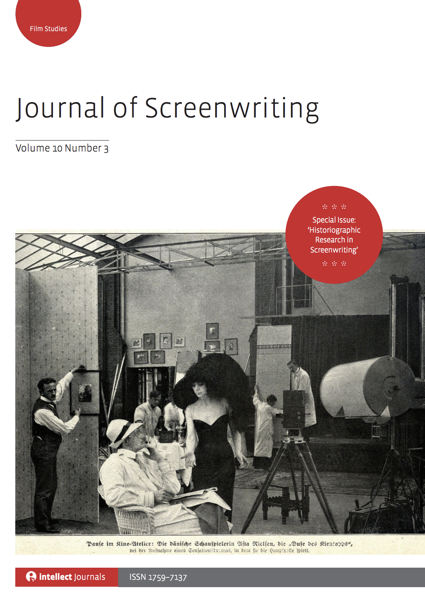
Journal of Screenwriting Cover

The Journal of Screenwriting is an international double-blind peer-reviewed journal that is published three times a year. The journal highlights current academic and professional thinking about the screenplay and intends to promote, stimulate and bring together current research and contemporary debates around the screenplay whilst encouraging groundbreaking research in an international arena. The journal is discursive, critical, rigorous and engages with issues in a dynamic and developing field, linking academic theory to screenwriting practice. 

Get your copy and subscription to the Journal of Screenwriting Today!


* A portion of each sale from Amazon.com directly supports our blogs
** Many of these books may be available from your local library. Check it out!

Announcing the Journal of Screenwriting Special Issue: Women in Screenwriting with Editors, Dr. Rosanne Welch and Dr. Rose Ferrell

I’m happy to announce the publication of a special issue of the Journal of Screenwriting focused on “Women in Screenwriting” that I co-edited with my SRN colleague Rose Ferrell, lecturer at the Western Australian Academy of Performing Arts, at Edith Cowan University. 

While focusing on females was our first mandate, our second mandate was to be as international as possible.  This issue, then, includes articles about women in screenwriting covering five continents including countries such as Japan, China, Syria, Argentina, Brazil, Peru, Zimbabwe and Canada. — Rosanne

Announcing the Journal of Screenwriting Special Issue: Women in Screenwriting with Editors, Dr. Rosanne Welch and Dr.  Rose Ferrell


Contents
Volume (11): Issue (3)
Cover date: 2020

  • Editorial introduction by Rose Ferrell, Rosanne Welch
  • Tang Cheng: The first female animation screenwriter and director in the People’s Republic of China by Shaopeng Chen
  • Scouting for scripts: Mizuki Yōko and social issue film in post-war Japan by Lauri Kitsnik
  • Who is the author of Neria (1992) – and is it a Zimbabwean masterpiece or a neo-colonial enterprise? by Agnieszka Piotrowska
  • The Hakawati’s Daughter: How the Syrian revolution inspired a rewrite by Rana Kazkaz
  • The silent women: The representation of Israeli female soldiers in Israeli women’s films by Mira Moshe, Matan Aharoni
  • How the scripts of Latin American screenwriters Lucrecia Martel (Argentina), Anna Muylaert (Brazil) and Claudia Llosa (Peru) have made a mark on the world stage by Margaret McVeigh, Clarissa Mazon Miranda
  • ‘Polite, no chill’ for the win: How Emily Andras engaged fans and overcame problematic tropes in Wynonna Earp by Tanya N. Cook
  • Battle of the sketches: Short form and feminism in the comedy mode by Stayci Taylor
  • Anita Loos Rediscovered: Film Treatments and Fiction, Cari Beauchamp and Mary Anita Loos (eds) (2003) by Cierra Winkler
  • Modern Film Dramaturgy: An Introduction, Kristen Stutterheim (2019) by Andrew Wickwire
  • Nobody’s Girl Friday: The Women Who Ran Hollywood, J. E. Smyth (2018) by Toni Anita Hull
  • How to Write for Moving Pictures: A Manual of Instruction and Information, Marguerite Bertsch (1917) by Diane Barley

Read article abstracts


Journal of screenwriting 94737 800x600

The Journal of Screenwriting is an international double-blind peer-reviewed journal that is published three times a year. The journal highlights current academic and professional thinking about the screenplay and intends to promote, stimulate and bring together current research and contemporary debates around the screenplay whilst encouraging groundbreaking research in an international arena. The journal is discursive, critical, rigorous and engages with issues in a dynamic and developing field, linking academic theory to screenwriting practice. 

Get your copy and subscription to the Journal of Screenwriting Today!


* A portion of each sale from Amazon.com directly supports our blogs
** Many of these books may be available from your local library. Check it out!

41 UK TV In The US from Why Researching Screenwriters Has Always Mattered [Video] (39 seconds)

Watch this entire presentation

41 UK TV In The US from Why Researching Screenwriters Has Always Mattered [Video] (39 seconds)

Subscribe to Rosanne’s Channel and receive notice of each new video!


Transcript:

Just in the United States, this show finished a six-season run. It’s from England and we’d always had programming from England because we had that in our national channel always brought in stuff from England because in the United States we think the English folks are smarter and more intellectual than we are right? We think that they’re just better because they have Shakespeare and we don’t. So we like English programming but what I liked was it taught me about a book series I had never heard of right? So I was exposed to some literature from another country that way. likewise, this is from years ago but this book series was a tv show in England that aired in the United States which I liked a lot.

Watch this entire presentation

A Note About This Presentation

A clip from my keynote speech at the 10th Screenwriters´(hi)Stories Seminar for the interdisciplinary Graduation Program in “Education, Art, and History of Culture”, in Mackenzie Presbyterian University, at São Paulo, SP, Brazil, focused on the topic “Why Researching Screenwriters (has Always) Mattered.” I was especially pleased with the passion these young scholars have toward screenwriting and it’s importance in transmitting culture across the man-made borders of our world.

To understand the world we have to understand its stories and to understand the world’s stories we must understand the world’s storytellers. A century ago and longer those people would have been the novelists of any particular country but since the invention of film, the storytellers who reach the most people with their ideas and their lessons have been the screenwriters. My teaching philosophy is that: Words matter, Writers matter, and Women writers matte, r so women writers are my focus because they have been the far less researched and yet they are over half the population. We cannot tell the stories of the people until we know what stories the mothers have passed down to their children. Those are the stories that last. Now is the time to research screenwriters of all cultures and the stories they tell because people are finally recognizing the work of writers and appreciating how their favorite stories took shape on the page long before they were cast, or filmed, or edited. But also because streaming services make the stories of many cultures now available to a much wider world than ever before.

Many thanks to Glaucia Davino for the invitation.


* A portion of each sale from Amazon.com directly supports our blogs
** Many of these books may be available from your local library. Check it out!
† Available from the LA Public Library

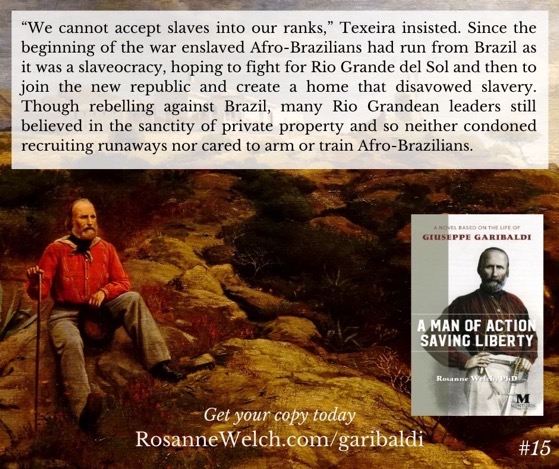
“A Man Of Action Saving Liberty: A Novel Based On The Life Of Giuseppe Garibaldi” – 15 in a series

“We cannot accept slaves into our ranks,” Texeira insisted. Since the beginning of the war enslaved Afro-Brazilians had run from Brazil as it was a slaveocracy, hoping to fight for Rio Grande del Sol and then to join the new republic and create a home that disavowed slavery. Though rebelling against Brazil, many Rio Grandean leaders still believed in the sanctity of private property and so neither condoned recruiting runaways nor cared to arm or train Afro-Brazilians.

Get your copy of A Man Of Action Saving Liberty Today!

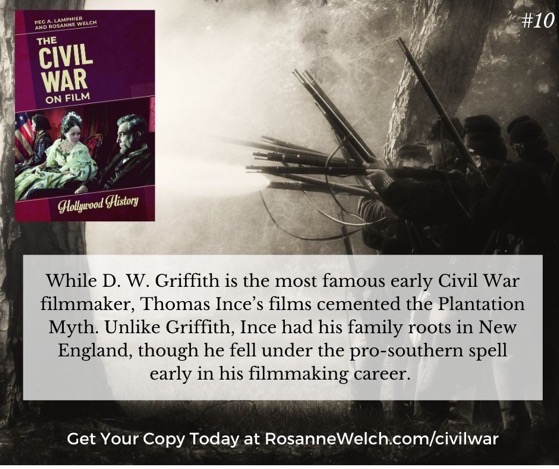
The Civil War On Film – 10 in a series – …Thomas Ince’s films cemented the Plantation Myth.

The Civil War On Film - 10  in a series - ...Thomas Ince’s films cemented the Plantation Myth.

While D. W. Griffith is the most famous early Civil War filmmaker, Thomas Ince’s films cemented the Plantation Myth. Unlike Griffith, Ince had his family roots in New England, though he fell under the pro-southern spell early in his filmmaking career.

Movies profiled in this book:

From The Journal Of Screenwriting V3 Issue 1: Imitation and adaptation: A screenwriting pedagogy by Debbie Danielpour

Highlighting the articles in the past editions of the Journal of Screenwriting, of which I am the Book Reviews Editor. Hopefully these abstracts will entice you to did a little deeper into the history and future of screenwriting. — Rosanne


Imitation and adaptation: A screenwriting pedagogy by Debbie Danielpour

Because originality is highly valued in all the arts, it initially appears counterproductive to teach screenwriting students the craft by encouraging them to imitate established genres or to adapt literature. This pedagogical method, however, teaches students genre-specific narrative structure and conventions, avoids the paralysis that sometimes comes with ‘complete’ artistic freedom and ultimately allows students to discern the qualities of their unique ‘voice’. Countless contemporary American films are adaptations, sequels, parodies or mashups, yet many fear that learning via imitation will cause students to write derivative or cliché scripts. By exploring the history of emulation in art and the fact that the value placed on originality is relatively new, the pedagogic push for originality starts to appear short-sighted. Further analysis reveals how reaching for ‘highly original’ may produce innovation but few screenplays of critical value. Identifying an example of ‘original’ within the genre boundaries of the horror screenplay demonstrates how a screenwriter can break new ground while still writing within the conventions of the genre. Fiction to Film Adaptations also prove to be highly innovative and original works, ultimately refining the definition of creativity, innovation and originality in screenplay writing.


The Journal of Screenwriting is an international double-blind peer-reviewed journal that is published three times a year. The journal highlights current academic and professional thinking about the screenplay and intends to promote, stimulate and bring together current research and contemporary debates around the screenplay whilst encouraging groundbreaking research in an international arena. The journal is discursive, critical, rigorous and engages with issues in a dynamic and developing field, linking academic theory to screenwriting practice. 

Get your copy and subscription to the Journal of Screenwriting Today!


* A portion of each sale from Amazon.com directly supports our blogs
** Many of these books may be available from your local library. Check it out!

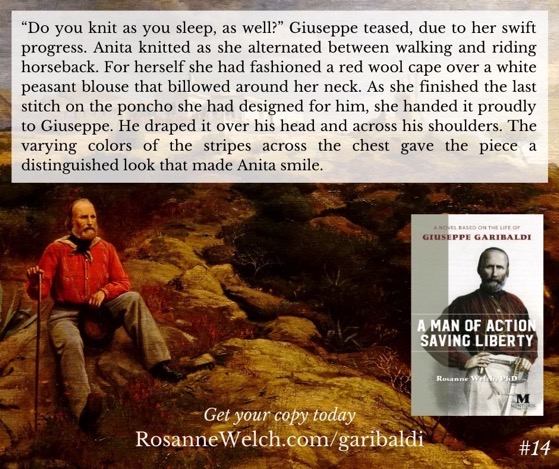
“A Man Of Action Saving Liberty: A Novel Based On The Life Of Giuseppe Garibaldi” – 14 in a series

“Do you knit as you sleep, as well?” Giuseppe teased, due to her swift progress. Anita knitted as she alternated between walking and riding horseback. For herself she had fashioned a red wool cape over a white peasant blouse that billowed around her neck. As she finished the last stitch on the poncho she had designed for him, she handed it proudly to Giuseppe. He draped it over his head and across his shoulders. The varying colors of the stripes across the chest gave the piece a distinguished look that made Anita smile.

Get your copy of A Man Of Action Saving Liberty Today!

The Civil War On Film – 9 in a series – The earliest films were pro-Union…

The Civil War On Film - 9  in a series - The earliest films were pro-Union...

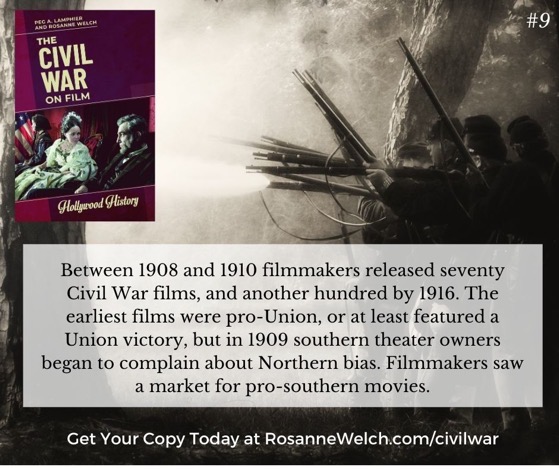
Between 1908 and 1910 filmmakers released seventy Civil War films, and another hundred by 1916. The earliest films were pro-Union, or at least featured a Union victory, but in 1909 southern theater owners began to complain about Northern bias. Filmmakers saw a market for pro-southern movies.

Movies profiled in this book:

From The Journal Of Screenwriting V3 Issue 1: Storyworld: the Bigger Picture, investigating the world of multi-platform/transmedia production…by Anna Zaluczkowska

Highlighting the articles in the past editions of the Journal of Screenwriting, of which I am the Book Reviews Editor. Hopefully these abstracts will entice you to did a little deeper into the history and future of screenwriting. — Rosanne


Storyworld: the Bigger Picture, investigating the world of multi-platform/transmedia production and its affect on storytelling processes by Anna Zaluczkowska

My investigations into transmedia and multi-platform production practices reveal that writers for film and TV could soon need to become content creators (directors or producers or craftspeople in addition to being writers), blurring the distinctions between concept, creation, production and post-production. This article explores this phenomenon of multi-platform/transmedia production, mostly in the United Kingdom, and in particular its storytelling processes through a study of a small but successful company, Bellyfeel, based in Manchester, United Kingdom. Bellyfeel have given me complete access to their work and established an online environment where I can study their practice/writing. I will contextualize the creative practice of the company with the work of Henry Jenkins, and suggest that, in the contemporary marketplace, it may be necessary for the writer to be focused on the production process and the technological aspects of this process in order to understand how product is created and functions in this new environment.


The Journal of Screenwriting is an international double-blind peer-reviewed journal that is published three times a year. The journal highlights current academic and professional thinking about the screenplay and intends to promote, stimulate and bring together current research and contemporary debates around the screenplay whilst encouraging groundbreaking research in an international arena. The journal is discursive, critical, rigorous and engages with issues in a dynamic and developing field, linking academic theory to screenwriting practice. 

Get your copy and subscription to the Journal of Screenwriting Today!


* A portion of each sale from Amazon.com directly supports our blogs
** Many of these books may be available from your local library. Check it out!

“A Man Of Action Saving Liberty: A Novel Based On The Life Of Giuseppe Garibaldi” – 13 in a series

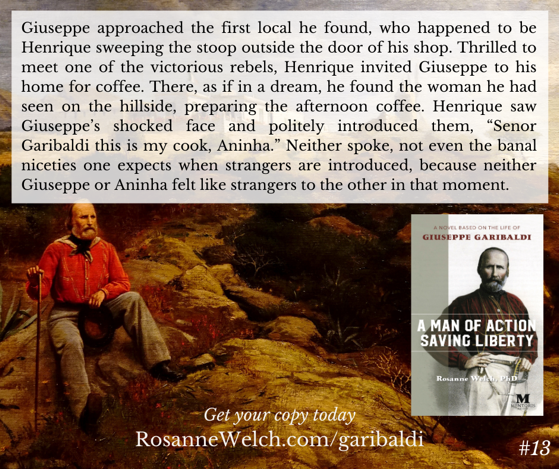
Giuseppe approached the first local he found, who happened to be Henrique sweeping the stoop outside the door of his shop. Thrilled to meet one of the victorious rebels, Henrique invited Giuseppe to his home for coffee. There, as if in a dream, he found the woman he had seen on the hillside, preparing the afternoon coffee.

Henrique saw Giuseppe’s shocked face and politely introduced them, “Senor Garibaldi this is my cook, Aninha.” Neither spoke, not even the banal niceties one expects when strangers are introduced, because neither Giuseppe or Aninha felt like strangers to the other in that moment.

Get your copy of A Man Of Action Saving Liberty Today!