From The Journal Of Screenwriting V1 Issue 1: So it’s not surprising I’m neurotic The Screenwriter and the Screen Idea Work Group by Ian W Macdonald

Highlighting the articles in the past editions of the Journal of Screenwriting, of which I am the Book Reviews Editor. Hopefully these abstracts will entice you to did a little deeper into the history and future of screenwriting. — Rosanne


So it’s not surprising I’m neurotic The Screenwriter and the Screen Idea Work Group by Ian W Macdonald

The Screen Idea Work Group (SIWG) is a flexibly constructed group organized around the development and production of a screen idea; a hypothetical grouping of those professional workers involved in conceptualizing and developing fictional narrative work for any particular moving image screen idea. In this article, I use the notion of the SIWG to draw together the views of key workers about how the process of screen idea development works or doesn’t. My findings are based on a small ethnographic study I undertook in 2004, in which, through in-depth semi-structured interviews with seven SIWG workers, I attempted to understand how they came to occupy their role, how they felt their judgements were made and received, and how far the SIWG’s view of the screen idea accorded with the screenwriting doxa (characterized as how to do a good piece of work). As detailed below, their answers were concerned with status, a sense of self-worth and respect, points of tension, power, control, collaboration and trust, and the nature of the doxa itself.
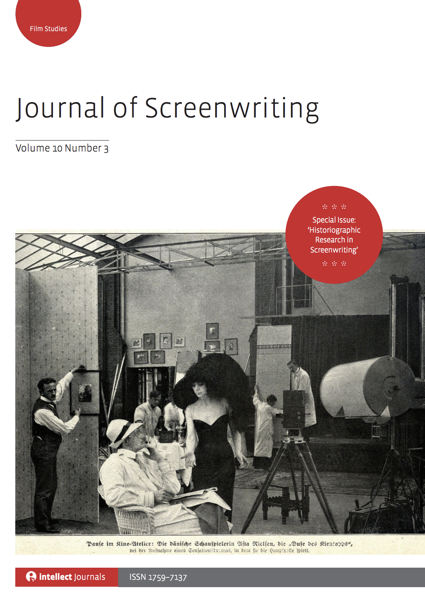

The Journal of Screenwriting is an international double-blind peer-reviewed journal that is published three times a year. The journal highlights current academic and professional thinking about the screenplay and intends to promote, stimulate and bring together current research and contemporary debates around the screenplay whilst encouraging groundbreaking research in an international arena. The journal is discursive, critical, rigorous and engages with issues in a dynamic and developing field, linking academic theory to screenwriting practice. 

Get your copy and subscription to the Journal of Screenwriting Today!


* A portion of each sale from Amazon.com directly supports our blogs
** Many of these books may be available from your local library. Check it out!

01 Introduction from Why Researching Screenwriters (has Always) Mattered – Dr. Rosanne Welch [Video] (1 minute)

Watch this entire presentation

01 Introduction from Why Researching Screenwriters (has Always) Mattered - Dr. Rosanne Welch [Video] (1 minute)

Subscribe to Rosanne’s Channel and receive notice of each new video!


Transcript:

Thank you all very much. I apologize that I will speak in English because we do very bad in teaching languages in the United States. So this is the best that I can do, but I appreciate very much the translator who will help us all this evening. So thank you all for coming. We are here to talk about why researching screenwriters is important and I think it’s a very important thing. I’ve been teaching it for a while and I was, in fact, a screenwriter myself for a while. As a writer in Hollywood, I wrote for these television shows. You can see me in the little corner picture there quite a few years ago on “Touched by an Angel”, “Beverly Hills 90210”. These are the kind of programs from the United States that get traveled around the world and I teach my students now how important it is that they are finally being able to take in the stories from other countries and we’ll talk about the importance of streaming media and how that has allowed for that to happen as we move on.

A Note About This Presentation

A clip from my keynote speech at the 10th Screenwriters´(hi)Stories Seminar for the interdisciplinary Graduation Program in “Education, Art, and History of Culture”, in Mackenzie Presbyterian University, at São Paulo, SP, Brazil, focused on the topic “Why Researching Screenwriters (has Always) Mattered.” I was especially pleased with the passion these young scholars have toward screenwriting and it’s importance in transmitting culture across the man-made borders of our world.

To understand the world we have to understand its stories and to understand the world’s stories we must understand the world’s storytellers. A century ago and longer those people would have been the novelists of any particular country but since the invention of film, the storytellers who reach the most people with their ideas and their lessons have been the screenwriters. My teaching philosophy is that: Words matter, Writers matter, and Women writers matte, r so women writers are my focus because they have been the far less researched and yet they are over half the population. We cannot tell the stories of the people until we know what stories the mothers have passed down to their children. Those are the stories that last. Now is the time to research screenwriters of all cultures and the stories they tell because people are finally recognizing the work of writers and appreciating how their favorite stories took shape on the page long before they were cast, or filmed, or edited. But also because streaming services make the stories of many cultures now available to a much wider world than ever before.

Many thanks to Glaucia Davino for the invitation.


* A portion of each sale from Amazon.com directly supports our blogs
** Many of these books may be available from your local library. Check it out!
† Available from the LA Public Library

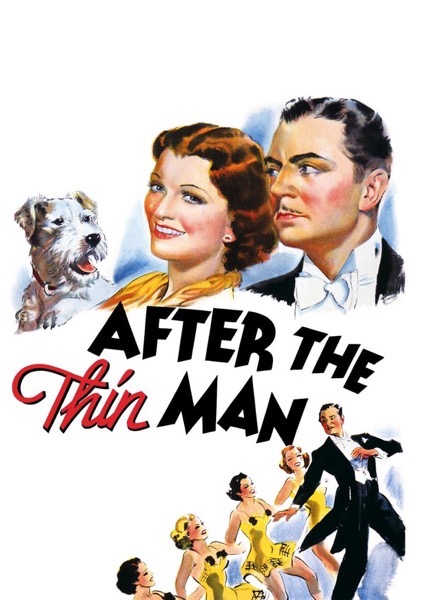
From The “When Women Wrote Hollywood” Archives 17: After the Thin Man. Wrs: Frances Goodrich, Albert Hackett, and Dashiell Hammett. Dir: Van Dyke W. S. Metro-Goldwyn-Mayer, 1936, USA 112 mins.

Months of research went into the creation of the essays in “When Women Wrote Hollywood.” Here are some of the resources used to enlighten today’s film lovers to the female pioneers who helped create it.

After the Thin Man. Wrs: Frances Goodrich, Albert Hackett, and Dashiell Hammett. Dir: Van Dyke W. S. Metro-Goldwyn-Mayer, 1936, USA  112 mins.

After the Thin Man. Wrs: Frances Goodrich, Albert Hackett, and Dashiell Hammett. Dir: Van Dyke W. S. Metro-Goldwyn-Mayer, 1936, USA  112 mins.

From The

After the Thin Man is a 1936 American comedy film directed by W. S. Van Dyke and starring William Powell, Myrna Loy, and James Stewart. A sequel to the film The Thin Man, the film presents Powell and Loy as Dashiell Hammett’s characters Nick and Nora Charles. The film also features Elissa Landi, Joseph Calleia, Jessie Ralph, Alan Marshal, and Penny Singleton (billed under her maiden name as Dorothy McNulty).

Read more


Buy “When Women Wrote Hollywood” Today!

Paperback Edition | Kindle Edition | Google Play Edition

Help Support Local Bookstores — Buy at Bookshop.org

* A portion of each sale from Amazon.com directly supports our blogs
** Many of these books may be available from your local library. Check it out!
† Available from the LA Public Library

02 Women and Horror Writing from When Women Write Horror with Dr. Rosanne Welch [Video] (45 seconds)

Watch this entire presentation

02 Women and Horror Writing from When Women Write Horror with Dr. Rosanne Welch

Subscribe to Rosanne’s Channel and receive notice of each new video!


In honor of Halloween – and in service to my teaching philosophy —

“Words Matter. Writers Matter. Women Writers Matter.”

I presented this holiday lecture “When Women Write Horror” on Tuesday, October 29th, 2019. Researching the many, many women who have written horror stories – in novels, films and television – brought new names to my attention who I am excited to start reading. I hope you will be, too!

Transcript:

The best horror — and I’m gonna come to some examples as we travel through — is stuff that involves social commentary along with the scare because that’s the stuff that sticks with us. So I think Mary is very important. I made a point to mention I think it’s useful we think about women writing. Back in the day, it wasn’t acceptable for women to READ novels because it would rot their brains. So they certainly couldn’t write them. So you’ll notice when the book was first came out there was no author on the book. Nobody bothered to wonder how come there’s no writer there. It was because she could not admit that she had written it and then when it came so ridiculously famous and so profitable then she was able to say “well I’m cool enough that’s fine I’ll take the ding for doing this,” right? So I think it’s really important to think about what women had to go through just to be writers right?


* A portion of each sale from Amazon.com directly supports our blogs
** Many of these books may be available from your local library. Check it out!
† Available from the LA Public Library

Listen to the latest “How I Wrote That” Podcast with Screenwriter Julie Hébert from ‘American Crime’ and ‘Man in the High Castle’

Listen to the latest How I Wrote That Podcast with Tera Hernandez of The Big Bang Theory [Audio]

Listen to the latest

Subscribe to the Podcast with iTunes | TuneIn

Listen to this episode

Julie Hébert started her creative life as a theater director and playwright (Ruby’s Bucket of Blood).  She’s written and directed for the Magic Theater, Steppenwolf, Victory Gardens, LaMaMa, The Women’s Project, Cornerstone and many more.  Her plays were honored twice with the Pen Award for Drama. Moving into television, Julie has written and directed for some of the most respected shows in television including American Crime, The Good Wife, Boss, Numb3rs and The West Wing. Her films have been praised as “intriguingly complex” (Variety) and “pulsing with veracity” (LA Times), with “a raw power that is impossible to dismiss” (Roger Ebert).  She blogs occasionally at JulieHébert.com.

“I honor the depth inside and the stories that really want to be told because often in television you can get away with topline chatter, but to really hit on something that has meaning for you, that will have meaning for someone hearing the story, it has to come from a deeper place.” -Julie Hébert

Presented by Stephens College MFA in TV and Screenwriting


Visit the Stephens College MFA in TV and Screenwriting for more information.

Follow @StephensMFA on Instagram

Follow and Like the Stephens College MFA in TV and Screenwriting


#MentorMonday 8 - Dawn Comer Jefferson - Stephens College MFA in TV and Screenwriting

My Events Cancelled Due To COVID19 Concerns

Due to the COVID19 crisis, the following personal events and events the Stephens College MFA in TV and Screenwriting were planning to attend and present athave been cancelled. I will update this list as necessary. We’ll be announcing online events to be held during this time. — Rosanne

CANCELLED

Bad Ass Movie Motherhood: From Leia to Ripley and Back Again

Bad Ass Movie Motherhood: From Leia to Ripley and Back Again
March 24, 2020 — Cal Poly Pomona University Library

CANCELLED

Scms

Society For Cinema and Media Studies (SCMS) Conference
April 1-5, 2020 — Denver, Colorado

CANCELLED

Broadcast Education Association (BEA) Conference with NAB

Broadcast Education Association (BEA) Conference with NAB
April 18-22, 2020 — Las Vegas, Nevada

From The Journal Of Screenwriting V1 Issue 1: Everybody’s a Writer Theorizing screenwriting as creative labour by Bridget Conor

Highlighting the articles in the past editions of the Journal of Screenwriting, of which I am the Book Reviews Editor. Hopefully these abstracts will entice you to did a little deeper into the history and future of screenwriting. — Rosanne


Everybody’s a Writer Theorizing screenwriting as creative labour by Bridget Conor

This paper offers a theoretical agenda for a labourist analysis of screenwriting, and critically evaluates the marginal status of screenwriting within film production systems. On the one hand, screenwriting offers an exemplary case study of creative work in post-modernized film production industries, work characterized by freelancing and multivalent working patterns, insecurity and hierarchization. Investigating screenwriting as creative labour also offers unique insights into an intensely industrial vocation; this requires a highly particular theorization of the contexts and conditions of writers’ working lives.This paper draws on sociological analyses of creative production and utilizes a Foucauldian understanding of technologies of the self as this concept has been applied in the analysis of creative labour. This approach enables a critical examination of particular aspects of screenwriting labour, including the rigidity of the industrial screenplay form and its pedagogical frameworks, the standardized mechanisms of control over screenwriting labour (such as inequitable collaboration and practices of multiple authorship), and the heady mix of both creative fulfilment and punishment which characterizes this form of work.


The Journal of Screenwriting is an international double-blind peer-reviewed journal that is published three times a year. The journal highlights current academic and professional thinking about the screenplay and intends to promote, stimulate and bring together current research and contemporary debates around the screenplay whilst encouraging groundbreaking research in an international arena. The journal is discursive, critical, rigorous and engages with issues in a dynamic and developing field, linking academic theory to screenwriting practice. 

Get your copy and subscription to the Journal of Screenwriting Today!


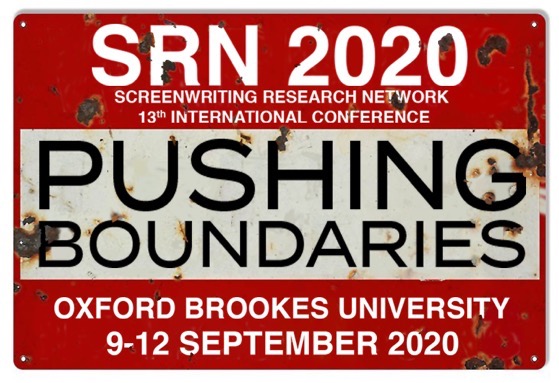
Screenwriting Research Network Conference 2020

Join me at the Screenwriting Research Network’s Annual Conference in Oxford, UK


* A portion of each sale from Amazon.com directly supports our blogs
** Many of these books may be available from your local library. Check it out!

A Photographic February for Stephens MFA in TV and Screenwriting

February was a month of sharing the marvelous photos from all the guest lectures who graced the January Stephens College MFA in TV and Screenwriting workshop with their talent and inspiration… (plus a quick shot of my upcoming book on Films of the Civil War).

February at Stephens MFA in TV and Screenwriting


Visit the Stephens College MFA in TV and Screenwriting for more information.

Follow @StephensMFA on Instagram

Follow and Like the Stephens College MFA in TV and Screenwriting

#MentorMonday 8 - Dawn Comer Jefferson - Stephens College MFA in TV and Screenwriting

Write Your Family’s Stories! – Stephens College MFA in TV and Screenwriting

Sometimes the best scripts are hidden in our own families – call relatives, have dinners, write letters.

Then come to the Stephens College MFA in TV and Screenwriting to learn how to Write, Reach, and Represent all those hidden stories.Write Your Family's Stories! - Stephens College MFA in TV and Screenwriting

Charles M. Schulz Museum

💪🍪 We honor the great women who have gone ahead of us and who walk beside us every day on this #InternationalWomensDay. This Peanuts strip was first published on November 11, 1976⁠.⁠⁠


Visit the Stephens College MFA in TV and Screenwriting for more information.

Follow @StephensMFA on Instagram

Follow and Like the Stephens College MFA in TV and Screenwriting

#MentorMonday 8 - Dawn Comer Jefferson - Stephens College MFA in TV and Screenwriting

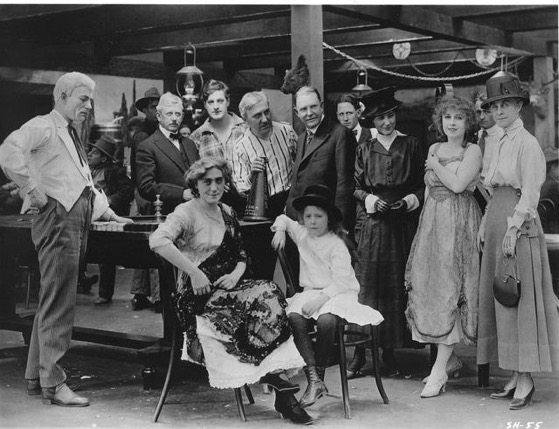
From The “When Women Wrote Hollywood” Archives 16: “Ida May Park.” Women Film Pioneers Project. Center for Digital Research and Scholarship, 27 Sept. 2013

Months of research went into the creation of the essays in “When Women Wrote Hollywood.” Here are some of the resources used to enlighten today’s film lovers to the female pioneers who helped create it.

From The “When Women Wrote Hollywood” Archives 16: “Ida May Park.” Women Film Pioneers Project. Center for Digital Research and Scholarship, 27 Sept. 2013

From The

The 1916 Motion Picture News Studio Directory credits Los Angeles native Ida May Park with twelve years of stage experience as a “leading woman in support of well-known stars” and with screen experience at Pathé and the Universal Film Manufacturing Company, where she was then employed as a scenario writer (134). Park flourished at Universal, where she wrote forty-four films, half of them feature length, between 1914 and 1919. Before 1917, Park’s husband, Joseph De Grasse, directed almost all of the films she wrote. In 1917, Park began directing her own scenarios and, according to a 1918 story in the Universal Weekly, a newspaper for exhibitors, editing them as well (29). She crafted a total of eleven features by this method in a scant two years. Park is important to understand as part of a strong creative presence that we now refer to as “Universal Women,” those who between 1912 and 1919 were promoted from acting or writing to directing and were credited on at least one hundred and seventy titles, a cohort that included Ruth Ann Baldwin, Cleo Madison, Ruth Stonehouse, Lois Weber, and Elsie Jane Wilson (Cooper 17, Denton 50). Park and De Grasse left Universal in the spring or summer of 1919 for reasons as yet unknown. On September 12, the Los Angeles Times reported that Lew Cody and manager-producer Louis J. Gasnier had signed her to direct motion pictures in which Cody would star (16). She made one such title, and, with De Grasse, directed two features for Andrew J. Callaghan Productions in 1920.

Read more


Buy “When Women Wrote Hollywood” Today!

Paperback Edition | Kindle Edition | Google Play Edition

Help Support Local Bookstores — Buy at Bookshop.org

* A portion of each sale from Amazon.com directly supports our blogs
** Many of these books may be available from your local library. Check it out!
† Available from the LA Public Library