04 Sex and Marriage from Concord Days: Margaret Fuller in Italy [Video]

In researching and writing my book on Giuseppe and Anita Garibaldi and the unification of Italy (A Man Of Action Saving Liberty: A Novel Based On The Life Of Giuseppe Garibaldi)  I re-discovered the first American female war correspondent – Margaret Fuller — who I had first met in a college course on the Transcendentalists. I was once again fascinated by a life lived purposefully.

Then I found Tammy Rose’s podcast on the Transcendentalists – Concord Days – and was delighted when she asked me to guest for a discussion of Fuller’s work in Italy as both a journalist – and a nurse. — Rosanne

04 Sex and Marriage from Concord Days: Margaret Fuller in Italy [Video]

Watch this entire presentation

Concord Days sends love to Margaret Fuller on the anniversary of her death in 1850.

The conversation focuses on Margaret’s exciting days in ITALY!

Dr. Rosanne Welch takes us through her adventures and enthusiastically reminds us what she was like when she was living her best life!

Transcript:

Rosanne: So they knew sex. They talked about sex and they wanted to be careful about it.

Tammy: Right.

Rosanne: Exactly. So funny.

Tammy: Yeah. Well, and Margaret was especially aware of issues about being a woman in a make society and issues of marriage and how it was very hard to actually have an equal balance between two intellectual individuals because it was not something that she had generally seen or that generally happened.

Rosanne: It didn’t. It wasn’t socially acceptable. Women were supposed to accept that, even if you were semi-smart, you had been allowed some learning, which she got lucky because her father believed in that. Then you gave that up when you went home and then you just took care of the kids if you got married.

Tammy: Right and her father started training her when she was a kid. This is not a little thing. He was a strict disciplinarian and wanted her to be translating The Aeneid by the time she was 10 without any hesitation and without any errors and she had nightmares as a child because he was holding her up to such a high standard, but I think she lived by that high standard for the rest of her life.

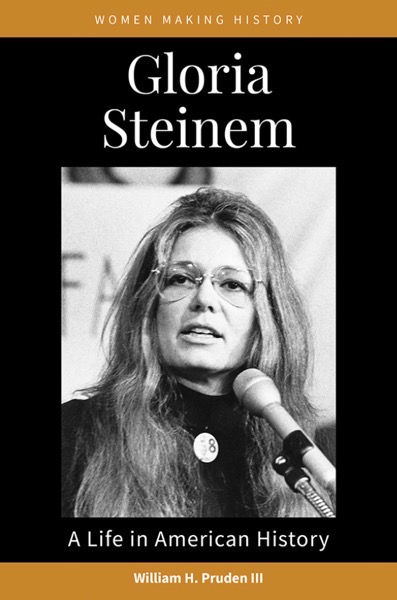
Now Available: Gloria Steinem: A Life in American History by William H. Pruden III, Edited by Drs. Rosanne Welch and Peg Lamphier

Good Morning to all our dedicated authors in the Women Making History series for ABC-Clio.

Peg and I wanted to share the nice news that Book #2 has been published and congratulate author Bill Pruden for all his hard work on the life of Gloria Steinem.  We can’t wait to see the rest of the books in our series come to publication. 

Now Available: Gloria Steinem: A Life in American History by William H. Pruden III, Edited by Drs. Rosanne Welch and Peg Lamphier

We know (being meant for libraries) that the volumes are higher priced so we can’t ask you all to buy a copy  –  but you can alert your local public or school library to their existence and ask that they buy a copy for their stacks (or their Kindle offerings). (Download A PDF Flyer for the book

Stay safe and keep reading! — Rosanne and Peg

11 Even More On Beverly Hills 90210 from Worry and Wonder | The Courier Thirteen Podcast [Video]

Watch the entire presentation – Worry and Wonder | The Courier Thirteen Podcast | Episode # 29 here

11 Even More On Beverly Hills 90210 from Worry and Wonder | The Courier Thirteen Podcast [Video]

Transcript:

So those characters became three-dimensional human beings for the five years he ran the show and then he left and a couple of people who mostly worked in — more that’s the word I want — more soap opera kind of things and I like soap operas. I don’t think they’re bad but they’re a different style and they turn the show into who is having sex with who each week but it stayed in the air for another three or four years because of the foundation, the love, for those original characters that the audience had. They just kept wanting to watch them even if the stories got less and less interesting and that’s the power of what he put together in those first two years. So truly believing and caring about those characters — which meant he truly believed and cared about the writing — the stories had to be real and I think that showed. That’s why I mean come on why do you guys still know what Beverly Hills 90210 is? You weren’t around in the 90s right but it’s been around and rerun. There’s a lot of other teenage shows but that one sticks right? There’s a reason for that.

It’s always fun to sit down with students and share stories about entering the television industry and how things work at all stages and I had that opportunity the other day.

Daniela Torres, a just-graduated (Congratulations!) student of the Columbia College Semester in LA program asked me to guest on a podcast she had recently begun hosting with another college student she met during her internship (good example of networking in action!).

We could have talked all morning (the benefit of a 3 hour class session) but we held it to about an hour and fifteen minutes or so. Hopefully, along the way I answered some questions you might have about how the business works. So often it amounts to working hard at being a better writer and gathering a group of other talented, hard-working people around you so you can all rise together.

Dr. Rosanne Welch is a television writer with credits that include Beverly Hills 90210, Picket Fences, ABCNEWS: Nightline and Touched by an Angel. She also teaches Television Writing and the Art of Film at San Jose State University.

Rosanne discusses what made shows like Beverly Hills 90210 compelling, what to do and not to do when attempting to pitch a show to broadcast or streaming, what most young writers neglect in their writing process, and much more!

The Courier Thirteen Podcast is available on YouTube, Spotify, Apple Podcasts, SoundCloud, and Audible.

From The Journal Of Screenwriting V5 Issue 2: Start me up: Lean screenwriting for American entrepreneurial cinema by Andrew Kenneth Gay

Highlighting the articles in the past editions of the Journal of Screenwriting, of which I am the Book Reviews Editor. Hopefully these abstracts will entice you to did a little deeper into the history and future of screenwriting. — Rosanne


Start me up: Lean screenwriting for American entrepreneurial cinema by Andrew Kenneth Gay
  
This article proposes a new approach to script development modelled after lean software development practices and entrepreneurial startup principles. First, it argues that the Hollywood mode of production and its methods of project development, when applied to microbudget film-making, are inherently wasteful and fail in the face of extreme uncertainty and unpredictability. Second, it argues that entrepreneurial screenwriters and writer/film-makers can adopt lean thinking in order to eliminate waste from their creative labour and enhance learning at every stage of development and production, adding value for their audience. Finally, it argues that inexperienced writer/film-makers are particularly susceptible to the false security of the ‘blueprint’ metaphor, often clinging to an original plan even as it fails them. The flexibility inherent to lean thinking, on the other hand, not only reduces waste but also enhances creativity and collaboration, increasing a project’s chances of success.

From The Journal Of Screenwriting V5 Issue 2: Start me up: Lean screenwriting for American entrepreneurial cinema by Andrew Kenneth Gay


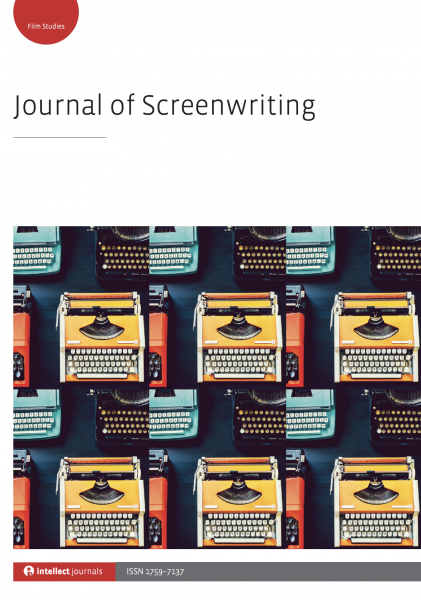
Journal of Screenwriting Cover

The Journal of Screenwriting is an international double-blind peer-reviewed journal that is published three times a year. The journal highlights current academic and professional thinking about the screenplay and intends to promote, stimulate and bring together current research and contemporary debates around the screenplay whilst encouraging groundbreaking research in an international arena. The journal is discursive, critical, rigorous and engages with issues in a dynamic and developing field, linking academic theory to screenwriting practice. 

Get your copy and subscription to the Journal of Screenwriting Today!


* A portion of each sale from Amazon.com directly supports our blogs
** Many of these books may be available from your local library. Check it out!

03 Transcendentalism and the 1960s from Concord Days: Margaret Fuller in Italy [Video]

In researching and writing my book on Giuseppe and Anita Garibaldi and the unification of Italy (A Man Of Action Saving Liberty: A Novel Based On The Life Of Giuseppe Garibaldi)  I re-discovered the first American female war correspondent – Margaret Fuller — who I had first met in a college course on the Transcendentalists. I was once again fascinated by a life lived purposefully.

Then I found Tammy Rose’s podcast on the Transcendentalists – Concord Days – and was delighted when she asked me to guest for a discussion of Fuller’s work in Italy as both a journalist – and a nurse. — Rosanne

03 Transcendentalism and the 1960s from Concord Days: Margaret Fuller in Italy [Video]

Watch this entire presentation

Concord Days sends love to Margaret Fuller on the anniversary of her death in 1850.

The conversation focuses on Margaret’s exciting days in ITALY!

Dr. Rosanne Welch takes us through her adventures and enthusiastically reminds us what she was like when she was living her best life!

Transcript:


Rosanne: When I used to teach a straight history class I would often compare this era of the transcendentalists and all the utopian societies to the 1960s because we have that same urge going on to make the world a better place and I love that and most people — we know about the 60s. We’ve seen it in movies and stuff but they really don’t know that that urge happened so much earlier and that women were part of it.

Tammy: Exactly. Well, and the women were part of it kind of whether they wanted to be or not because these utopian societies were maybe designed by men. You know Bronson was kind of like, all right this is how I want to run the school. I want to be open and honest with the kids and even Elizabeth Peabody you know she wrote a book called the history of that school and in it she’s like we told the children the right answers to all the questions that they had including when they asked about sex. You know we told them honestly.


10 More On Beverly Hills 90210 from Worry and Wonder | The Courier Thirteen Podcast | Episode # 29 [Video]

Watch the entire presentation – Worry and Wonder | The Courier Thirteen Podcast | Episode # 29 here

10 More On Beverly Hills 90210 from Worry and Wonder | The Courier Thirteen Podcast | Episode # 29 [Video]

Transcript:

…and I always say Beverly Hills 90210 is an excellent study for people in how who the showrunner is makes a difference because that show was created as a pilot by Darren Starr who’s still famously writing pilots and then he left and the show was run, managed on a daily basis by Chuck Rosen. If you look at the pilot of 90210, it’s really a bunch of rich kids and fancy clothes hanging out at the beach having bonfires. There’s not a whole lot of meat to it. Two Ohio kid’s dad moves to town because he’s an accountant and he’s going to work in Beverly Hills and so their midwest values meet Beverly hills values and that’s all you get. Chuck took over and he was the child of a surgeon at Cedars-Sinai. He grew up in Beverly Hills. So those children became real three-dimensional human beings because one of the issues is how do you — how do you connect to a character that’s uber-rich. Like they have no problems because they’re rich and that’s what most people would think because we’re not all rich but he knew kids who had drug problems. He knew kids whose parents had drug problems and therefore weren’t there for them. So he looked at the fact that it doesn’t matter how much money you have, if there’s a problem in your family, it still makes you vulnerable and that is going to make an audience interested in you.

It’s always fun to sit down with students and share stories about entering the television industry and how things work at all stages and I had that opportunity the other day.

Daniela Torres, a just-graduated (Congratulations!) student of the Columbia College Semester in LA program asked me to guest on a podcast she had recently begun hosting with another college student she met during her internship (good example of networking in action!).

We could have talked all morning (the benefit of a 3 hour class session) but we held it to about an hour and fifteen minutes or so. Hopefully, along the way I answered some questions you might have about how the business works. So often it amounts to working hard at being a better writer and gathering a group of other talented, hard-working people around you so you can all rise together.

Dr. Rosanne Welch is a television writer with credits that include Beverly Hills 90210, Picket Fences, ABCNEWS: Nightline and Touched by an Angel. She also teaches Television Writing and the Art of Film at San Jose State University.

Rosanne discusses what made shows like Beverly Hills 90210 compelling, what to do and not to do when attempting to pitch a show to broadcast or streaming, what most young writers neglect in their writing process, and much more!

The Courier Thirteen Podcast is available on YouTube, Spotify, Apple Podcasts, SoundCloud, and Audible.

02 Fuller’s Life and Bronson Alcott from Concord Days: Margaret Fuller in Italy [Video]

In researching and writing my book on Giuseppe and Anita Garibaldi and the unification of Italy (A Man Of Action Saving Liberty: A Novel Based On The Life Of Giuseppe Garibaldi)  I re-discovered the first American female war correspondent – Margaret Fuller — who I had first met in a college course on the Transcendentalists. I was once again fascinated by a life lived purposefully.

Then I found Tammy Rose’s podcast on the Transcendentalists – Concord Days – and was delighted when she asked me to guest for a discussion of Fuller’s work in Italy as both a journalist – and a nurse. — Rosanne

02 Fuller's Life and Bronson Alcott from Concord Days: Margaret Fuller in Italy [Video]

Watch this entire presentation

Concord Days sends love to Margaret Fuller on the anniversary of her death in 1850.

The conversation focuses on Margaret’s exciting days in ITALY!

Dr. Rosanne Welch takes us through her adventures and enthusiastically reminds us what she was like when she was living her best life!

Transcript:

Rosanne: So I was, I was enthralled to find a woman with such a modern mind in that country.

Tammy: Exactly and let’s sort of go through her life. Sort of hit the major time periods before she gets to Italy because she’s in Italy at the very end of her life. So she was born in 1810 in Cambridgeport, Massachusetts, which is like 10 miles away from Concord, and she was kind of born into the world of you know she grew up playing with Thomas Wentworth Higginson you know and she very quickly met Emerson and fell in with the Transcendental crowd just as they were actually starting to get going.

Rosanne: Exactly and I think it’s important that she worked you know when she did her early teaching and things like that she worked with Bronson Alcott, who was also someone that — we all knew Louisa May Alcott — which we should and then it was later that I learned her father was involved and you know was maybe not one of the most successful transcendentalists but was trying with ideas — like an integrated school and it was hurting him financially and Margaret was part of that right, supporting that so you can see early on.

From The Journal Of Screenwriting V5 Issue 2: The pragmatic modernist: William Faulkner’s craft and Hollywood’s networks of production by Ben Robbins

Highlighting the articles in the past editions of the Journal of Screenwriting, of which I am the Book Reviews Editor. Hopefully these abstracts will entice you to did a little deeper into the history and future of screenwriting. — Rosanne


The pragmatic modernist: William Faulkner’s craft and Hollywood’s networks of production by Ben Robbins

This article analyzes the screenplays and treatments for two highly popular and critically acclaimed films, To Have and Have Not (1944) and Mildred Pierce(1945), on which Faulkner worked as a salaried screenwriter for Warner Brothers. Faulkner’s collaborative writing for To Have and Have Not demonstrates his ability to participate in and extend the construction of the cinematic archetype of the Hawksian woman on the level of action and language, a portrayal that both develops and transcends the portrayal of women within his own fiction. The article also illuminates the process through which Faulkner recycled content across the high–low cultural divide, borrowing from himself to include a hybrid scene from his modernist masterwork Absalom, Absalom! (1936) in Mildred Pierce, a noir melodrama starring Joan Crawford. The article further illustrates how Faulkner reconciled himself to the narrative mode of Hollywood through his use of ‘charged realism’. As such, Faulkner’s work for the screen would seem to confound a number of presumed modernist imperatives for artistic practice: autonomy, organic production, breaking with the past, formal innovation and disdain for objective realism. The article concludes by suggesting a way to reconcile the divergent skill bases of Faulkner’s screenwriting and modernist fiction by showing how he was able to imaginatively adapt his craft to inhabit and revisualize the structures of both genres.

From The Journal Of Screenwriting V5 Issue 2: The pragmatic modernist: William Faulkner’s craft and Hollywood’s networks of production by Ben Robbins


Journal of Screenwriting Cover

The Journal of Screenwriting is an international double-blind peer-reviewed journal that is published three times a year. The journal highlights current academic and professional thinking about the screenplay and intends to promote, stimulate and bring together current research and contemporary debates around the screenplay whilst encouraging groundbreaking research in an international arena. The journal is discursive, critical, rigorous and engages with issues in a dynamic and developing field, linking academic theory to screenwriting practice. 

Get your copy and subscription to the Journal of Screenwriting Today!


* A portion of each sale from Amazon.com directly supports our blogs
** Many of these books may be available from your local library. Check it out!

09 Beverly Hills 90210 from Worry and Wonder | The Courier Thirteen Podcast | Episode # 29 [Video]

Watch the entire presentation – Worry and Wonder | The Courier Thirteen Podcast | Episode # 29 here

09 Beverly Hills 90210 from Worry and Wonder | The Courier Thirteen Podcast | Episode # 29

Transcript:

Host: Were you a writer? Were you a writer’s assistant in that?

Rosanne:I was a freelance writer on that. That was my very first script.

Host: Okay so wow yeah. How did you– how did you feel when you got like the um the chance?

Rosanne: That’s wonderful stuff. It’s wonderful stuff. It was because at the time I had a partner and she was the assistant to the executive producer of that show. So after reading four — count them — four spec scripts of ours, he finally agreed to let us pitch and so we came in and pitched and that was lovely. So she was much more comfortable in that room than I was because she knew everybody. She’d been there for two or three years at that point but you know I knew the gentleman in charge, Chuck Rosen was one of the quote-unquote good guys in town. A real — a sweetheart. He’d been on a show called Northern Exposure, which I adored. He’s an excellent writer — just and cared about the stories.

It’s always fun to sit down with students and share stories about entering the television industry and how things work at all stages and I had that opportunity the other day.

Daniela Torres, a just-graduated (Congratulations!) student of the Columbia College Semester in LA program asked me to guest on a podcast she had recently begun hosting with another college student she met during her internship (good example of networking in action!).

We could have talked all morning (the benefit of a 3 hour class session) but we held it to about an hour and fifteen minutes or so. Hopefully, along the way I answered some questions you might have about how the business works. So often it amounts to working hard at being a better writer and gathering a group of other talented, hard-working people around you so you can all rise together.

Dr. Rosanne Welch is a television writer with credits that include Beverly Hills 90210, Picket Fences, ABCNEWS: Nightline and Touched by an Angel. She also teaches Television Writing and the Art of Film at San Jose State University.

Rosanne discusses what made shows like Beverly Hills 90210 compelling, what to do and not to do when attempting to pitch a show to broadcast or streaming, what most young writers neglect in their writing process, and much more!

The Courier Thirteen Podcast is available on YouTube, Spotify, Apple Podcasts, SoundCloud, and Audible.

From The Journal Of Screenwriting V5 Issue 2: ‘A story is not a story but a conference’: Story conferences and the classical studio system by Claus Tieber

Highlighting the articles in the past editions of the Journal of Screenwriting, of which I am the Book Reviews Editor. Hopefully these abstracts will entice you to did a little deeper into the history and future of screenwriting. — Rosanne


‘A story is not a story but a conference’: Story conferences and the classical studio system by Claus Tieber

In analyzing the script development of Grand Hotel (1932, Edmund Goulding), this article brings an insight into the workings of the classical studio system and the way screenwriting was organized and understood during this era. The protocols of story conferences that took place at MGM under the leadership of producer Irving Thalberg deliver an exhaustive picture of the whole process, from the first screen idea, to getting the rights for a novel, to the final discussions after the screening of a rough cut. The protocols deliver evidence of screenwriting as an ongoing work in progress that was done not by a single screenwriter, but by a group of film-makers, constantly discussing all elements of the production. The concerns of the participants of these conferences included more than just storytelling; they also focused on the emotional reactions of the audience and the presentation of stars. The criteria these decisions were based upon are not ‘rules’ of storytelling, but reasonable assumptions about the audience’s reactions. Screenwriting within the studio system was not an ongoing fight between screenwriters and producers, but an ongoing discussion about every detail of a film, constituting a rather modern and democratic system of film development.

From The Journal Of Screenwriting V5 Issue 2: ‘A story is not a story but a conference’: Story conferences and the classical studio system by Claus Tieber


Journal of Screenwriting Cover

The Journal of Screenwriting is an international double-blind peer-reviewed journal that is published three times a year. The journal highlights current academic and professional thinking about the screenplay and intends to promote, stimulate and bring together current research and contemporary debates around the screenplay whilst encouraging groundbreaking research in an international arena. The journal is discursive, critical, rigorous and engages with issues in a dynamic and developing field, linking academic theory to screenwriting practice. 

Get your copy and subscription to the Journal of Screenwriting Today!


* A portion of each sale from Amazon.com directly supports our blogs
** Many of these books may be available from your local library. Check it out!