Panel Discussion: Act Two: Transitioning to TV Writing from Other Careers – Wed, January 13, 2021 – 4pm PST – RSVP Today!
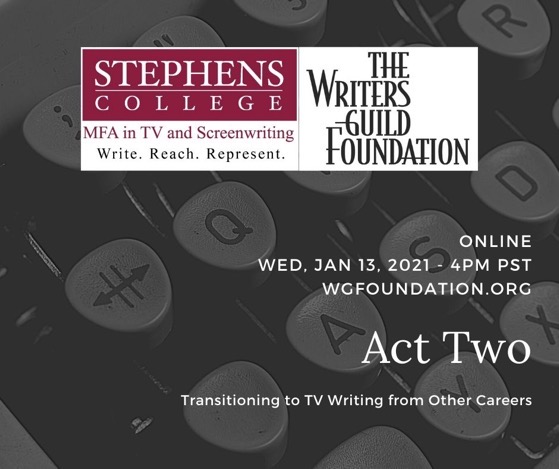
I’m proud to announce the next panel I’m moderating with the Writers Guild Foundation for our Stephens College MFA in TV and ScreenwritingAct Two: Transitioning to TV Writing from Other Careers

Panel Discussion: Act Two: Transitioning to TV Writing from Other Careers - Wed, January 13, 2021 - 4pm PST - RSVP Today!

The WGF may have hit a pause on our live events, but thanks to technology, we’re aiming to provide more access to advice and knowledge from film and TV writers while we’re all social distancing. Over the last few months, we’ve been hosting free Zoom panels about craft and all things relevant to writers.

For this session, we team up with Stephens College MFA in TV and Screenwriting for a discussion on transitioning to TV writing from other careers. Learn how our panel of TV writers and producers made the jump to television, how their previous experiences inform their writing, and how that lens impacts their approach in the writers room.

Panelists:

  • Zoanne Clack, M.D., MPH – Executive Producer, Grey’s Anatomy. Former career: Emergency room physician
  • Rashaan Dozier-Escalante – Staff Writer, SEAL Team. Former career: Senior Physical Security Analyst for federal agencies, U.S. Army Reserve veteran
  • Calaya Michelle Stallworth, Ph.D – Executive Story Editor, Fear of the Walking Dead. Former career: English professor at Spelman College, publishing
  • Moderated by Dr. Rosanne Welch, Director of Stephens College MFA in TV and Screenwriting.

Panel starts at 4:00pm Pacific time.

Space is limited so RSVP now. After signing up, you’ll receive information on how to access the Zoom panel.

If you have any questions, please feel free to reach out to us at events@wgfoundation.org.

For anyone who was unable to RSVP for the panel, we will record and post it at a later date.
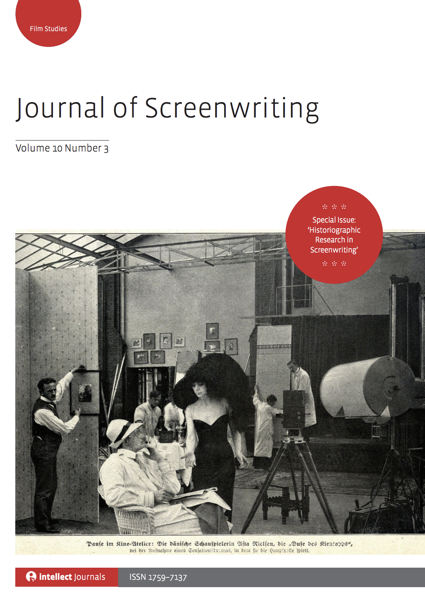
From The Journal Of Screenwriting V3 Issue 1: Imitation and adaptation: A screenwriting pedagogy by Debbie Danielpour

Highlighting the articles in the past editions of the Journal of Screenwriting, of which I am the Book Reviews Editor. Hopefully these abstracts will entice you to did a little deeper into the history and future of screenwriting. — Rosanne


Imitation and adaptation: A screenwriting pedagogy by Debbie Danielpour

Because originality is highly valued in all the arts, it initially appears counterproductive to teach screenwriting students the craft by encouraging them to imitate established genres or to adapt literature. This pedagogical method, however, teaches students genre-specific narrative structure and conventions, avoids the paralysis that sometimes comes with ‘complete’ artistic freedom and ultimately allows students to discern the qualities of their unique ‘voice’. Countless contemporary American films are adaptations, sequels, parodies or mashups, yet many fear that learning via imitation will cause students to write derivative or cliché scripts. By exploring the history of emulation in art and the fact that the value placed on originality is relatively new, the pedagogic push for originality starts to appear short-sighted. Further analysis reveals how reaching for ‘highly original’ may produce innovation but few screenplays of critical value. Identifying an example of ‘original’ within the genre boundaries of the horror screenplay demonstrates how a screenwriter can break new ground while still writing within the conventions of the genre. Fiction to Film Adaptations also prove to be highly innovative and original works, ultimately refining the definition of creativity, innovation and originality in screenplay writing.


The Journal of Screenwriting is an international double-blind peer-reviewed journal that is published three times a year. The journal highlights current academic and professional thinking about the screenplay and intends to promote, stimulate and bring together current research and contemporary debates around the screenplay whilst encouraging groundbreaking research in an international arena. The journal is discursive, critical, rigorous and engages with issues in a dynamic and developing field, linking academic theory to screenwriting practice. 

Get your copy and subscription to the Journal of Screenwriting Today!


* A portion of each sale from Amazon.com directly supports our blogs
** Many of these books may be available from your local library. Check it out!

01 Introduction from There And Back Again: Writing and Developing for American Television]: from Freelancing to Writers Rooms [Video] (1 minute)

01 Introduction from There And Back Again: Writing and Developing for American Television]: from Freelancing to Writers Rooms [Video] (1 minute)

Thanks to the gracious invitation from my Screenwriting Research Network colleague Paolo Russo – and a grant he was able to procure (and in the before-Covid time) I was able to spend a week at Oxford Brookes University working with the screenwriting masters students in Paolo’s course. At the culmination of the week, I gave this lecture on how writers rooms worked in the States.

Transcript:

As Paolo said — so I won’t spend a lot of time on it — these are the shows –these are the books I’ve done. Sorry. Largely a big Doctor Who fan. Any Doctor Who fans in the house. Really we’ll talk a little bit about the writing of that. It’s quite a brilliant show, I think. These are most of the things I’ve done. Also, love Torchwood has also been quite well done. I am the book review editor, so if you’re Masters students — when you graduate — you can email me, and if there’s a book you’d like to have for free — because they don’t pay you to write in journals — you can review the book and I’ll have it sent to you so you can do that and it’s a credit for you so it’s a lovely thing and Written By Magazine is the magazine of the Writers Guild. You can read this online for free if you go to writtenby.com. You go to WGA, which is our website for the Writer’s Guild, and every two months or so it comes out. Always interviews with writers and showrunners, movie film writers, people like that, so it’s really I think an excellent thing it’s like having a guest speaker come to you and very in-depth interviews, right? We’ll talk about some of them that I’ve done over time.

Watch this entire presentation

Subscribe to Rosanne’s Channel and receive notice of each new video!


* A portion of each sale from Amazon.com directly supports our blogs
** Many of these books may be available from your local library. Check it out!
† Available from the LA Public Library

Join our low-residency MFA in TV and Screenwriting at the Stephens College MFA in TV and Screenwriting — Apply Now

Join our low-residency MFA in TV and Screenwriting  at the Stephens College MFA in TV and Screenwriting -- Apply Now

Join our low-residency MFA in TV and Screenwriting to share in our mission of bringing more female and underrepresented voices into mainstream media.

Apply Now

From The Journal Of Screenwriting V3 Issue 1: Storyworld: the Bigger Picture, investigating the world of multi-platform/transmedia production…by Anna Zaluczkowska

Highlighting the articles in the past editions of the Journal of Screenwriting, of which I am the Book Reviews Editor. Hopefully these abstracts will entice you to did a little deeper into the history and future of screenwriting. — Rosanne


Storyworld: the Bigger Picture, investigating the world of multi-platform/transmedia production and its affect on storytelling processes by Anna Zaluczkowska

My investigations into transmedia and multi-platform production practices reveal that writers for film and TV could soon need to become content creators (directors or producers or craftspeople in addition to being writers), blurring the distinctions between concept, creation, production and post-production. This article explores this phenomenon of multi-platform/transmedia production, mostly in the United Kingdom, and in particular its storytelling processes through a study of a small but successful company, Bellyfeel, based in Manchester, United Kingdom. Bellyfeel have given me complete access to their work and established an online environment where I can study their practice/writing. I will contextualize the creative practice of the company with the work of Henry Jenkins, and suggest that, in the contemporary marketplace, it may be necessary for the writer to be focused on the production process and the technological aspects of this process in order to understand how product is created and functions in this new environment.


The Journal of Screenwriting is an international double-blind peer-reviewed journal that is published three times a year. The journal highlights current academic and professional thinking about the screenplay and intends to promote, stimulate and bring together current research and contemporary debates around the screenplay whilst encouraging groundbreaking research in an international arena. The journal is discursive, critical, rigorous and engages with issues in a dynamic and developing field, linking academic theory to screenwriting practice. 

Get your copy and subscription to the Journal of Screenwriting Today!


* A portion of each sale from Amazon.com directly supports our blogs
** Many of these books may be available from your local library. Check it out!

There And Back Again: Writing and Developing for American Television]: from Freelancing to Writers Rooms [Video] (52 minutes)

There And Back Again: Writing and Developing for American TV: from Freelancing to Writers Rooms

Thanks to the gracious invitation from my Screenwriting Research Network colleague Paolo Russo – and a grant he was able to procure (and in the before-Covid time) I was able to spend a week at Oxford Brookes University working with the screenwriting masters students in Paolo’s course. At the culmination of the week, I gave this lecture on how writers rooms worked in the States.

Subscribe to Rosanne’s Channel and receive notice of each new video!


* A portion of each sale from Amazon.com directly supports our blogs
** Many of these books may be available from your local library. Check it out!
† Available from the LA Public Library

From The Journal Of Screenwriting V3 Issue 1: Television and film screenwriters: How to reach a global audience by Philippe Perebinossoff

Highlighting the articles in the past editions of the Journal of Screenwriting, of which I am the Book Reviews Editor. Hopefully these abstracts will entice you to did a little deeper into the history and future of screenwriting. — Rosanne


Television and film screenwriters: How to reach a global audience by Philippe Perebinossoff

The focus of this article will be on an examination of American television and film projects and their inceptions and/or receptions in various marketplaces. In addition, the article will explore some of the specific cultural differences around the world that may be of importance to screenwriters.


The Journal of Screenwriting is an international double-blind peer-reviewed journal that is published three times a year. The journal highlights current academic and professional thinking about the screenplay and intends to promote, stimulate and bring together current research and contemporary debates around the screenplay whilst encouraging groundbreaking research in an international arena. The journal is discursive, critical, rigorous and engages with issues in a dynamic and developing field, linking academic theory to screenwriting practice. 

Get your copy and subscription to the Journal of Screenwriting Today!


* A portion of each sale from Amazon.com directly supports our blogs
** Many of these books may be available from your local library. Check it out!

From The Journal Of Screenwriting V3 Issue 1: Irish cinema 1994–2009: The trajectory of script development policy at the Irish Film Board by Díóg O’Connell

Highlighting the articles in the past editions of the Journal of Screenwriting, of which I am the Book Reviews Editor. Hopefully these abstracts will entice you to did a little deeper into the history and future of screenwriting. — Rosanne


Irish cinema 1994–2009: The trajectory of script development policy at the Irish Film Board by Díóg O’Connell

This article explores the changing nature of public policy in Ireland, 1994–2009, as it relates to film and scriptwriting practice. The dominant discourse in Irish cinema studies has centred around ideas of identity, national identity in particular with more recent studies branching off in the direction of genre studies, political economy and narrative studies. This article is framed, broadly speaking, within a political economy discourse, by way of exploring how Irish Film Board policy changed over a specific period as a result of internal and external factors, shaping a structure that would determine how Irish scriptwriters related to the wider field of film production. Through a survey of Irish Film Board policies, newspaper articles and annual reports, this article presents a general historical overview of an evolving film policy as it related directly to scriptwriting and script development. Against this backdrop, other questions surface about Irish cinema and scriptwriting practice, particularly questions centred on local/global issues.


The Journal of Screenwriting is an international double-blind peer-reviewed journal that is published three times a year. The journal highlights current academic and professional thinking about the screenplay and intends to promote, stimulate and bring together current research and contemporary debates around the screenplay whilst encouraging groundbreaking research in an international arena. The journal is discursive, critical, rigorous and engages with issues in a dynamic and developing field, linking academic theory to screenwriting practice. 

Get your copy and subscription to the Journal of Screenwriting Today!


* A portion of each sale from Amazon.com directly supports our blogs
** Many of these books may be available from your local library. Check it out!

Event: Stephens MFA in TV and Screenwriting Online Open House – Wednesday, November 18, 2020 – 4pm PST

Event: Stephens MFA in TV and Screenwriting Online Open House – Wednesday, November 18, 2020 – 4pm PSTEvent: Stephens MFA in TV and Screenwriting Online Open House - Wednesday, November 18, 2020 - 4pm PSTEvent: Stephens MFA in TV and Screenwriting Online Open House - Wednesday, November 18, 2020 - 4pm PST

Click To Register For The Event

Join our program director, Dr. Rosanne Welch, for a virtual open house to learn more about our Master of Fine Arts in TV and Screenwriting. As we prepare to welcome the 2021 cohort in fall 2021, we invite you to learn about the program, hear how the admissions process works, and an open Q&A to get all your questions answered.

Write
Reach
Represent

Online Open House with
Program Executive Director Dr. Rosanne Welch
and Director of Admissions Alexandra Miller

Stephens College Low Residency MFA in TV and Screenwriting

Check for your local time zone:

New York, USA Wed, Nov 18, 2020 at 7:00 pm EST
Columbia, USA Wed, Nov 18, 2020 at 6:00 pm CST
Denver, USA Wed, Nov 18, 2020 at 5:00 pm MST
Los Angeles, USA Wed, Nov 18, 2020 at 4:00 pm PST

From The Journal Of Screenwriting V3 Issue 1: The constructive use of film genre for the screenwriter: The relevant knowledge component of the mental space of film genre by Jule Selbo

Highlighting the articles in the past editions of the Journal of Screenwriting, of which I am the Book Reviews Editor. Hopefully these abstracts will entice you to did a little deeper into the history and future of screenwriting. — Rosanne


The constructive use of film genre for the screenwriter: The relevant knowledge component of the mental space of film genre by Jule Selbo

This exploration is a continuation of my work on the ‘mental space of film genre’, a term I have coined to introduce a terminology to investigate the use of film genre for the screenwriter as he or she constructs a screenplay. Understanding this use of film genre may add to the screenwriter’s other technical skills such as knowledge of story structure and character construction. I have previously delineated the first two elements of the mental space of film genre in the second issue of the Journal of Screenwriting – schematic knowledge (the use of film genre as a framing device) and specific knowledge (the understanding of film genre the audience brings to the viewing of filmic narratives). This work will then focus on what I believe to be the important third element of the mental space of film genre – relevant knowledge.


The Journal of Screenwriting is an international double-blind peer-reviewed journal that is published three times a year. The journal highlights current academic and professional thinking about the screenplay and intends to promote, stimulate and bring together current research and contemporary debates around the screenplay whilst encouraging groundbreaking research in an international arena. The journal is discursive, critical, rigorous and engages with issues in a dynamic and developing field, linking academic theory to screenwriting practice. 

Get your copy and subscription to the Journal of Screenwriting Today!


* A portion of each sale from Amazon.com directly supports our blogs
** Many of these books may be available from your local library. Check it out!