Have questions about the craft and/or business of screenwriting for film and TV? Drop them in the comments! via TikTok [Video]

@drrosannewelch

Have ##questions about the ##craft and/or ##business of ##screenwriting for ##film and ##TV? Drop them in the comments and I’ll be happy to answer them!

♬ original sound – Dr. Rosanne Welch


Have questions about the craft and/or business of screenwriting for film and TV? Drop them in the comments! via TikTok [Video]


Read more about screenwriting with these books


* A portion of each sale from Amazon.com directly supports our blogs
** Many of these books may be available from your local library. Check it out!
† Available from the LA Public Library

From The Journal Of Screenwriting V4 Issue 3: And the beat goes on: The continuing influence of The Singing Detective by Glen Creeber

Highlighting the articles in the past editions of the Journal of Screenwriting, of which I am the Book Reviews Editor. Hopefully these abstracts will entice you to did a little deeper into the history and future of screenwriting. — Rosanne


And the beat goes on: The continuing influence of The Singing Detective by Glen Creeber

From the 25 years of its original broadcast on British television in December 1986, this article aims to assess the continued influence of the British TV serial, The Singing Detective (BBC). It aims to clarify many of the major techniques employed in the programme and suggest ways in which its particular style and non-naturalistic aesthetic (with its roots dating back to the early 1960s) has influenced a whole generation of TV drama since. In particular, it will draw direct parallels between writer Dennis Potter’s work and serials such as Twin Peaks, Oz, Six Feet Under and The Sopranos, citing various sources that suggest these connections are more than just hypothetical. The American cable channel HBO (Home Box Office) will come under particular focus, with the author drawing links between its current remit to produce experimental and adult-themed drama and Potter’s own work. It will then investigate the state of contemporary British television drama and suggest why it arguably refuses to take as many risks as some of its American counterparts, citing various sources which suggest that contemporary British hard-hitting drama appears to have been forsaken for a plethora of heritage and period-based serials. In conclusion, it will argue that while the influence of The Singing Detective appears to have been profoundly significant elsewhere, its dramatic legacy is now surprisingly missing from British TV screens.

From The Journal Of Screenwriting V4 Issue 3: And the beat goes on: The continuing influence of The Singing Detective by Glen Creeber


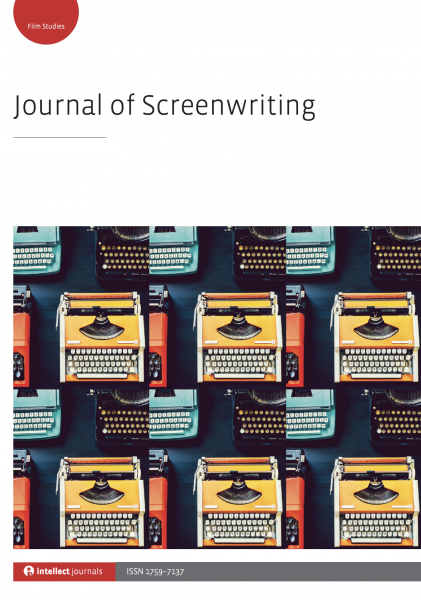
Journal of Screenwriting Cover

The Journal of Screenwriting is an international double-blind peer-reviewed journal that is published three times a year. The journal highlights current academic and professional thinking about the screenplay and intends to promote, stimulate and bring together current research and contemporary debates around the screenplay whilst encouraging groundbreaking research in an international arena. The journal is discursive, critical, rigorous and engages with issues in a dynamic and developing field, linking academic theory to screenwriting practice. 

Get your copy and subscription to the Journal of Screenwriting Today!


* A portion of each sale from Amazon.com directly supports our blogs
** Many of these books may be available from your local library. Check it out!

The Civil War On Film – 26 in a series – “…the movie is greatly esteemed by persons sympathetic with the Confederacy…”

The Civil War On Film - 26 in a series -

Ang Lee and writer James Schamus’s thesis for Ride with the Devil, suggests there was no right and wrong in the Civil War and that both sides were equally violent in their dealings with the other. While the movie is greatly esteemed by persons sympathetic with the Confederacy, viewers and movie critics were considerably less enthusiastic.

Movies profiled in this book:

07 The Writer’s Voice from How The Chaos Of Collaboration in the Writers Room Created Golden Age Television [Video]

With the full recording of “How The Chaos Of Collaboration in the Writers Room Created Golden Age Television”

Srn port07 The Writer's Voice from How The Chaos Of Collaboration in the Writers Room Created Golden Age Television [Video]

Subscribe to Rosanne’s Channel and receive notice of each new video!


When the folks hosting the conference announced their theme as “Screen Narratives: Chaos and Order” the word ‘chaos’ immediately brought to mind writers rooms. I offered a quick history of writers rooms (the presentations are only 20 minutes long) and then quoted several current showrunners on how they compose their rooms and how they run them.

Transcript

And I think that’s where we started to learn that, particularly in television, you had to find people with a defined voice and that is something you could build a show around and so when I define voice everyone has a slightly different concept but to me, it’s a simple matter of your opinion and the style in which you deliver it and that tells us your different voice and I think some of the shows I’m going to mention — it’s very clear they have very unique voices and that’s where they come from. So we started to recognize that the idea of the creator and television was the writer and that person should run the entire show themselves and should begin to gather about them a group of people who could mimic their voice while still keeping their own. That was the difficult job of television which is also still a difficult thing to teach students to write a spec script that sounds like, but doesn’t obliterate, your own voice, and that’s what you’re trying to do in the room, which again, is more chaotic than I would say.

For more information on the Screenwriting Research Network, visit

Screenwriting Research Network Conference, Porto, Portugal, All Sessions


Ready to present my talk yesterday at the Screenwriting Research Conference here in Porto, Portugal via Instagram

Follow me on Instagram


* A portion of each sale from Amazon.com directly supports our blogs
** Many of these books may be available from your local library. Check it out!

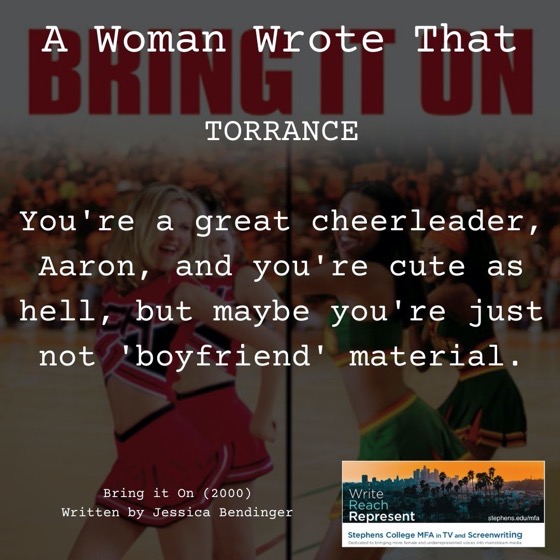
A Woman Wrote That – 22 in a series – Bring It On! (2000), Writer, Jessica Bendinger

This new “A Woman Wrote That” post is an echo of the Writers Guild campaign of a few years ago (“A Writer Wrote That”) where they noted famous movie quotes and credited the screenwriter rather than the director.  The difference here being that we will be posting lines from films written by female screenwriters.  Feel free to share! — Rosanne

A Woman Wrote That - 22 in a series - Bring It On! (2000), Writer, Jessica Bendinger

TORRANCE

You’re a great cheerleader, Aaron, and you’re cute as hell, but maybe you’re just not ‘boyfriend’ material.

From The Journal Of Screenwriting V4 Issue 2: Screenwriter Rafael Azcona, writing of his times by Julia Sabina Gutiérrez

Highlighting the articles in the past editions of the Journal of Screenwriting, of which I am the Book Reviews Editor. Hopefully these abstracts will entice you to did a little deeper into the history and future of screenwriting. — Rosanne


Screenwriter Rafael Azcona, writing of his times by Julia Sabina Gutiérrez

The aim of this article is to introduce the screenwriter Rafael Azcona, a key figure in the development of Spanish cinema, to an international audience. And rather than analyse his screenwriting work as simply a writer, I wish to look on his work as a spatial screenwriter, a creator of unforgettable images, situations and places in which his stories play out and his characters become unique. The concept of ‘space’ in his work is in reference to the relationship between the character and what André Gardies has referred to as ‘the cinematic narrative in relation to space’ or ‘narrative space’.

From The Journal Of Screenwriting V4 Issue 2: Screenwriter Rafael Azcona, writing of his times by Julia Sabina Gutiérrez


Journal of Screenwriting Cover

The Journal of Screenwriting is an international double-blind peer-reviewed journal that is published three times a year. The journal highlights current academic and professional thinking about the screenplay and intends to promote, stimulate and bring together current research and contemporary debates around the screenplay whilst encouraging groundbreaking research in an international arena. The journal is discursive, critical, rigorous and engages with issues in a dynamic and developing field, linking academic theory to screenwriting practice. 

Get your copy and subscription to the Journal of Screenwriting Today!


* A portion of each sale from Amazon.com directly supports our blogs
** Many of these books may be available from your local library. Check it out!

06 The Universal Studios Writers Pool from How The Chaos Of Collaboration in the Writers Room Created Golden Age Television [Video]

With the full recording of “How The Chaos Of Collaboration in the Writers Room Created Golden Age Television”

06 The Universal Studios Writers Pool from How The Chaos Of Collaboration in the Writers Room Created Golden Age Television [Video]

Subscribe to Rosanne’s Channel and receive notice of each new video!


When the folks hosting the conference announced their theme as “Screen Narratives: Chaos and Order” the word ‘chaos’ immediately brought to mind writers rooms. I offered a quick history of writers rooms (the presentations are only 20 minutes long) and then quoted several current showrunners on how they compose their rooms and how they run them.

Transcript

But one-hour dramas did not involve writer’s rooms in the beginning and I find that very fascinating because we rely on them now, but they did not in fact — they literally had writer pools and if you were running a show — so you were the creator of the show — you would walk down the hallway to the pool, of course, that’s the typing pool, and it was a bunch of guys not too many women involved at that time and you would say I need an episode of Columbo. Who’s free this week and that person would have to come up with an episode of Columbo. The NBC Mystery Movie was a perfect example of that because every Sunday there was a different one of these shows. They weren’t a weekly show and so you had some time to prepare it. So you’d walk down the street and say I don’t know which of these shows would we need this next week and that’s — so writer’s rooms took freelance ideas and you didn’t sit in the room and break the story together and that has been something that’s evolved over time I think is interesting. In this writer’s pool at Universal, which contributed to that show, were all these men who became the show runners of the second golden age of television and they all are men whose shows have run on television incessantly.

For more information on the Screenwriting Research Network, visit
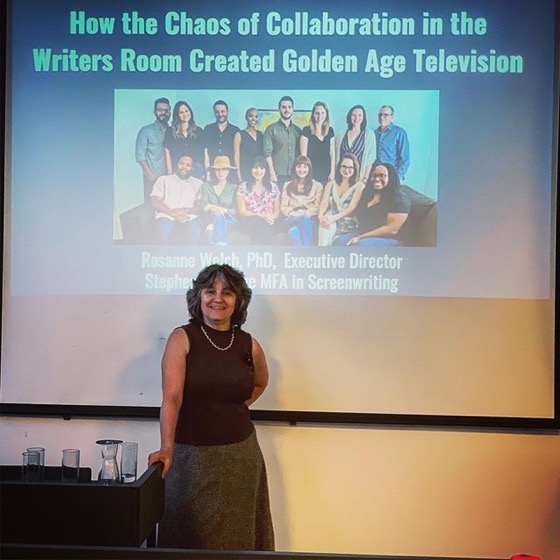
Screenwriting Research Network Conference, Porto, Portugal, All Sessions


Ready to present my talk yesterday at the Screenwriting Research Conference here in Porto, Portugal via Instagram

Follow me on Instagram


* A portion of each sale from Amazon.com directly supports our blogs
** Many of these books may be available from your local library. Check it out!

A Woman Wrote That – 21 in a series – Bewitched (2005), Writer, Nora Ephron

This new “A Woman Wrote That” post is an echo of the Writers Guild campaign of a few years ago (“A Writer Wrote That”) where they noted famous movie quotes and credited the screenwriter rather than the director.  The difference here being that we will be posting lines from films written by female screenwriters.  Feel free to share! — Rosanne

A Woman Wrote That - 21 in a series - Bewitched (2005), Writer, Nora Ephron

UNCLE ARTHUR

Do you want the long version or the short version? Keep in mind, the long version is in Aramaic.

Dr. Rosanne Welch Presents “Female Creatives & A Star Is Born” [Video]

Dr. Rosanne Welch Presents

Connections at conferences matter! Through the most recent SCMS, I met Vicki Callahan, whose film history focus right now is on Mabel Normand. When she learned I could put together a lecture on the importance of the female voice in the A Star is Born franchise she asked me to give that lecture to her master students.

It made for a great opportunity for me to hone the ideas I’m working on for a chapter on that franchise that I’m writing for a new book from Bloomsbury: The Bloomsbury Handbook Of International Screenplay Theory. It’s always nice when one piece of research can be purposed in other ways – and it’s always fun revisiting such a female-centric film franchise – one that drew the talents of such powerful performers as Janet Gaynor, Judy Garland, Barbara Streisand, and Lady Gaga.

Find out why in this lecture!

RMW Rosanne Signature for Web


Dr. Rosanne Welch and Intellect Editor James Campbell Talk Stephens College MFA in TV and Screenwriting, The Journal of Screenwriting, and Other Work [Video] (1 hour)

One of the benefits of attending conferences is that you can meet the editors from the companies that have published some of your books face to face. That happened at the recent SCMS conference where I met Intellect editor James Campbell and he invited me to be a guest on his InstagramLive show.

We chatted about my work with the Stephens College MFA in TV and Screenwriting, and then my work with co-editor Rose Ferrell on the Journal of Screenwriting’s special issue on Women in Screenwriting (Volume 11, Number 3) that came out recently and which featured articles about an international set of female screenwriters from Syria, Argentina, China and Canada (to name a few).

We even had time to nerd out on our own favorite classic films across the eras which brought up fun memories of Angels with Dirty Faces, Back to the Future, Bonnie and Clyde, and of course, all things Star Wars from the original 3 to The Mandalorian. It’s always so fun to talk to fellow cinephiles.

RMW Rosanne Signature for Web

Dr. Rosanne Welch and Intellect Editor James Campbell Talk Stephens College MFA in TV and Screenwriting, The Journal of Screenwriting, and Other Work [Video] (1 hour)


With Intellect Books Editor James Campbell (@IntellectBooks)

Speaking with Dr. Rosanne Welch, Author, teacher, and television screenwriter. Today we cover everything from women in screenwriting to our favorite Jimmy Cagney movies and Friends.

Journal of Screenwriting Cover