From The “When Women Wrote Hollywood Archives 44: Jane Murfin at the Women Film Pioneers Project

Months of research went into the creation of the essays in “When Women Wrote Hollywood.” Here are some of the resources used to enlighten today’s film lovers to the female pioneers who helped create it.

From The

From The

As a woman who wrote or cowrote over sixty produced films, a producer who championed strong female roles, and a Hollywood insider with a career spanning over three decades, Jane Murfin may be one of the most prolific but least known writers of the 1920s and ’30s.

Jane Murfin was born Jane Macklem in Quincy, Michigan. Her first marriage, in 1907, to lawyer James Murfin, lasted less than five years, but Jane adopted his surname and would use it—excluding the brief period in the late 1910s when she and Jane Cowl used the pseudonym Allan Langdon Martin—throughout her life. Although the 1910 US Census records list her as living as a housewife in Michigan with her lawyer-husband James, according to Murfin family correspondence from 1967, Jane moved shortly after to New York City while her husband remained in Michigan. According to the University of Michigan in Ann Arbor, James eventually became a school regent, after a long career teaching law, and even has a gate on the grounds named after him.

Read this entire article


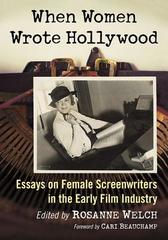
Buy “When Women Wrote Hollywood” Today!


When Women Wrote Hollywood: Essays on Female Screenwriters in the Early Film Industry

Paperback Edition | Kindle Edition | Google Play Edition

Help Support Local Bookstores — Buy at Bookshop.org

* A portion of each sale from Amazon.com directly supports our blogs
** Many of these books may be available from your local library. Check it out!
† Available from the LA Public Library

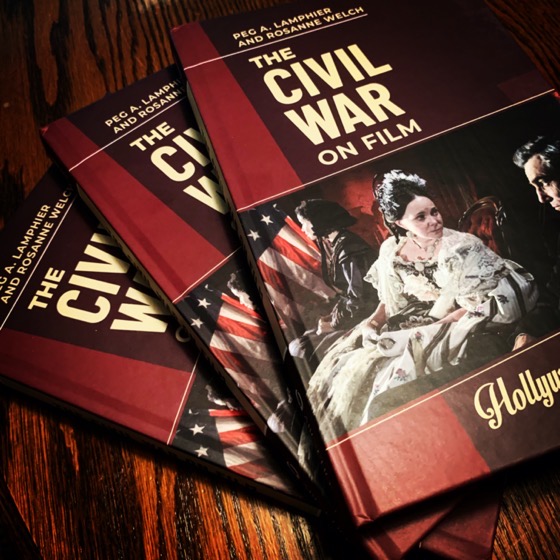
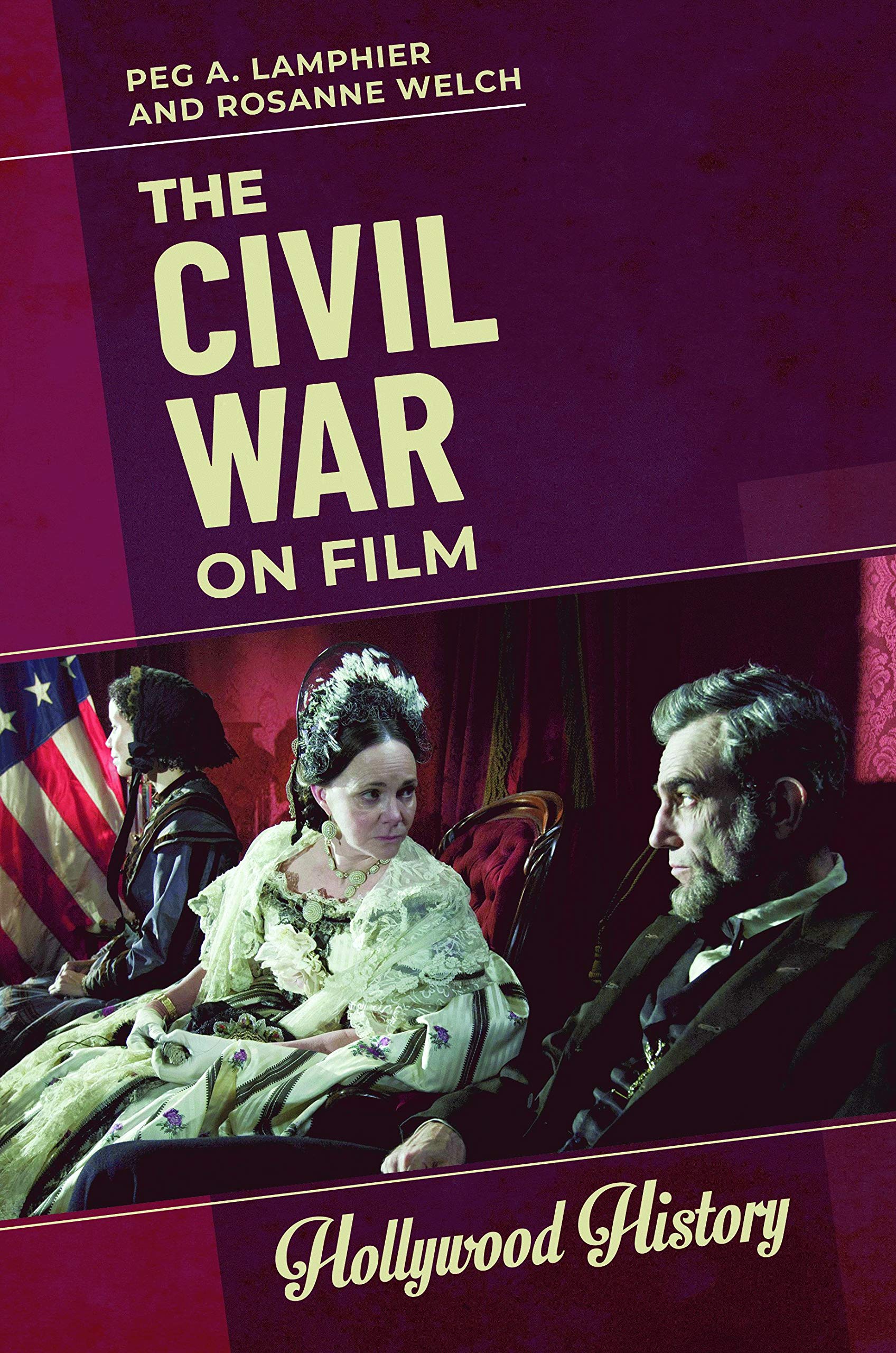
Now Available: The Civil War on Film (Hollywood History) by Dr. Rosanne Welch and Dr. Peg Lamphier

My newest book The Civil War on Film (co-written with my colleague Peg Lamphier as part of ABC-Clio’s Hollywood History series) was published today. 

Peg and I discuss 10 Civil War films based on their accuracy and cultural context. It is no surprise that we agree with a collection of historians that the most accurate of all the films of the Civil War is Glory (written by Kevin Jarre), though even that film makes the ‘mistake’ of omitting the fact that Harriet Tubman served as a spy for the 54th Massachusetts Infantry Regiment. 

As we say about many of the films, one film can’t encapsulate the entirety of a historical event (though Free State of Jones (written by Gary Ross) does try, and here we admit that that attempt to do it all makes for a long and plodding film, which is sad since it is a thorough portrait of Reconstruction, which is nearly never covered in films as they all prefer ending when the war ends).

As always it was a pleasure to work with Peg.  We’re in the middle of our second book for this series – chronicling how Women’s History is covered in films coming sometime in 2021.

Want to use The Civil War On Film as a classroom text?
Contact ABC-CLIO for more information

The Civil War on Film will inform high school and college readers interested in Civil War film history on issues that arise when film viewers confuse entertainment with historical accuracy.

The nation’s years of civil war were painful, destructive, and unpleasant. Yet war films tend to embrace mythologies that erase that historical reality, romanticizing the Civil War. The editors of this volume have little patience for any argument that implies race-based slavery isn’t an entirely repugnant economic, political, and cultural institution and that the people who fought to preserve slavery were fighting for a glorious and admirable cause

To that end, The Civil War on Film will open with a timeline and introduction and then explore ten films across decades of cinema history in ten chapters, from Birth of a Nation, which debuted in 1915, to The Free State of Jones, which debuted one hundred and one years later. It will also analyze and critique the myriad of mythologies and ideologies which appear in American Civil War films, including Lost Cause ideation, Black Confederate fictions, Northern Aggression mythologies, and White Savior tropes. It will also suggest the way particular films mirror the time in which they were written and filmed. Further resources will close the volume.

  • Makes clear that depictions of the Civil War on film are often mythologized
  • Analyzes films in a manner that shows students the historical context in which the films were made and viewed
  • Goes beyond just synopses and historical facts, helping students to develop critical thinking skills
  • Stimulates debate over the various ways the war was interpreted and experienced

Film discussed include:

  1. Gone with the Wind (1939)
  2. Friendly Persuasion (1957)
  3. The Good, the Bad and the Ugly (1966)
  4. Glory (1989)
  5. Gettysburg (1993)
  6. Andersonville (1996)
  7. Ride with the Devil (1999)
  8. Gangs of New York (2002)
  9. Lincoln (2012)
  10. Free State of Jones (2016)


* A portion of each sale from Amazon.com directly supports our blogs
** Many of these books may be available from your local library. Check it out!

More books from Dr. Rosanne Welch


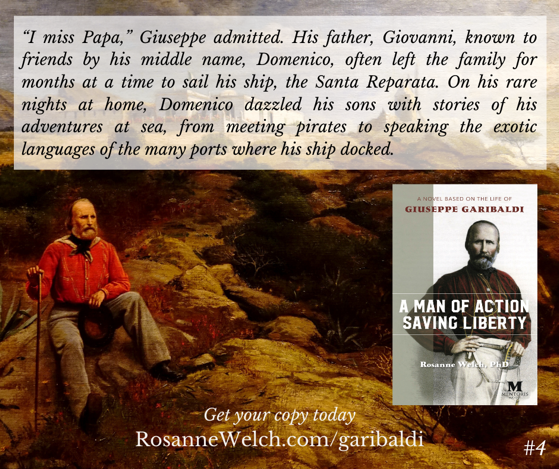
“A Man Of Action Saving Liberty: A Novel Based On The Life Of Giuseppe Garibaldi” – 4 in a series

Pre-order the Kindle Version of  “A Man Of Action Saving Liberty” for 99¢ until October 1, 2020

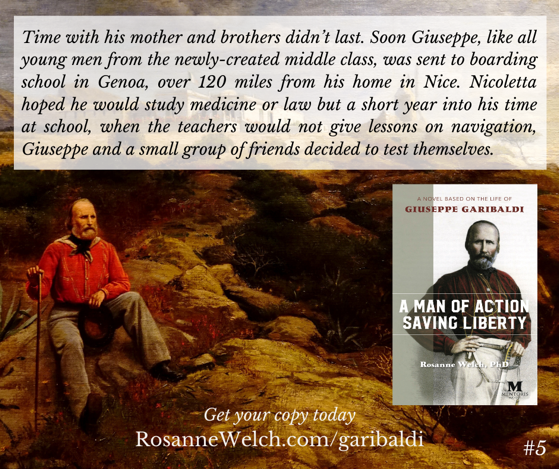
““I miss Papa,” Giuseppe admitted. His father, Giovanni, known to friends by his middle name, Domenico, often left the family for months at a time to sail his ship, the Santa Reparata. On his rare nights at home, Domenico dazzled his sons with stories of his adventures at sea, from meeting pirates to speaking the exotic languages of the many ports where his ship docked.”

Get your copy of A Man Of Action Saving Liberty Today!

30 The “Final Girl” Trope from When Women Write Horror with Dr. Rosanne Welch [Video] (43 seconds)

Watch this entire presentation

30 The

Subscribe to Rosanne’s Channel and receive notice of each new video!


Transcript:

Now one of the things we have to think about — side note — when we think about horror movies again — is what they’re telling us. In this movie, as we know, spoiler alert, he’s the bad guy. Anthony Perkins was gay and by casting him they knew the audience would feel awkward about him. there would be something wrong with him They didn’t have to say what it was. They just knew society would find him wrong and so they cast him as the bad guy right? And so under all of this, what we’re saying is you can’t trust gay men. They’re dangerous. Don’t be near them. That’s the underlying concept behind Psycho. So I think that’s really — I have to think about what are the messages we’re getting from the stuff we’re watching and the stuff we’re reading and how do we counter those if they’re messages that we don’t want to have but it’s a good movie. It’s a good movie but have to think about that.

A Note About This Presentation

A clip from my keynote speech at the 10th Screenwriters´(hi)Stories Seminar for the interdisciplinary Graduation Program in “Education, Art, and History of Culture”, in Mackenzie Presbyterian University, at São Paulo, SP, Brazil, focused on the topic “Why Researching Screenwriters (has Always) Mattered.” I was especially pleased with the passion these young scholars have toward screenwriting and it’s importance in transmitting culture across the man-made borders of our world.

To understand the world we have to understand its stories and to understand the world’s stories we must understand the world’s storytellers. A century ago and longer those people would have been the novelists of any particular country but since the invention of film, the storytellers who reach the most people with their ideas and their lessons have been the screenwriters. My teaching philosophy is that: Words matter, Writers matter, and Women writers matte, r so women writers are my focus because they have been the far less researched and yet they are over half the population. We cannot tell the stories of the people until we know what stories the mothers have passed down to their children. Those are the stories that last. Now is the time to research screenwriters of all cultures and the stories they tell because people are finally recognizing the work of writers and appreciating how their favorite stories took shape on the page long before they were cast, or filmed, or edited. But also because streaming services make the stories of many cultures now available to a much wider world than ever before.

Many thanks to Glaucia Davino for the invitation.


* A portion of each sale from Amazon.com directly supports our blogs
** Many of these books may be available from your local library. Check it out!
† Available from the LA Public Library

Quotes from “A Man Of Action Saving Liberty: A Novel Based On The Life Of Giuseppe Garibaldi” – 3 in a series

Pre-order the Kindle Version of  “A Man Of Action Saving Liberty” for 99¢ until October 1, 2020

Quotes from

“Garibaldi rode off, no longer only a child of French-held Nice, no longer the failed leader of the South American rebels of Rio Grande do Sul, no longer merely a candle-makers apprentice in the turbulent times in the far off United States. So much loss, yet so much gained in what still seemed so little time. He could barely believe it all himself.”

Get your copy of A Man Of Action Saving Liberty Today!

Quotes from “A Man Of Action Saving Liberty: A Novel Based On The Life Of Giuseppe Garibaldi” – 2 in a series

Pre-order the Kindle Version of  “A Man Of Action Saving Liberty” for 99¢ until October 1, 2020

Quotes from

“On October 26, 1860 Giuseppe Garibaldi found himself as far from his childhood home as a man could be, having traveled around the world and back again in his 53 years, seeking a goal no man had yet accomplished, the unification of his beloved Italy.”

Get your copy of A Man Of Action Saving Liberty Today!

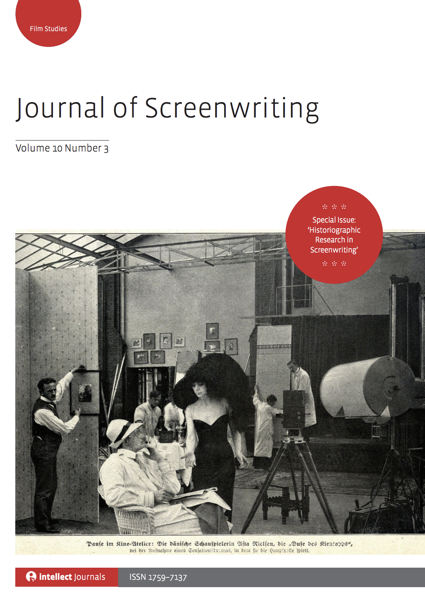
From The Journal Of Screenwriting V2 Issue 2: Escape from the stage? From play to screenplay in British cinema’s early sound period by Victoria Lowe

Highlighting the articles in the past editions of the Journal of Screenwriting, of which I am the Book Reviews Editor. Hopefully these abstracts will entice you to did a little deeper into the history and future of screenwriting. — Rosanne


Escape from the stage? From play to screenplay in British cinema’s early sound period by Victoria Lowe

In this article I discuss the evolution of the screenplay from play to film of Escape (1930) through a detailed examination of the archive correspondence between its producer Basil Dean and the original writer of the play, John Galsworthy. My aim is to provide a more nuanced account of the relationship between stage and screen practices at this time, one that goes beyond histories that have understood the adaptation of stage material to have been a burden from which British cinema had to escape, in order to create its own distinctive identity. I argue that the relationship between the two practices was affected by the coming of sound, and the cultural anxiety and debates around the film industry and national identity formations that it engendered. I then examine Basil Dean’s thoughts about the adapted screenplay, in particular his ideas around the retention of the original author’s dialogue, and his practical response to the issues in terms of his collaboration with Galsworthy in the writing of the screenplay of Escape, one of the first talkies made in the United Kingdom.


The Journal of Screenwriting is an international double-blind peer-reviewed journal that is published three times a year. The journal highlights current academic and professional thinking about the screenplay and intends to promote, stimulate and bring together current research and contemporary debates around the screenplay whilst encouraging groundbreaking research in an international arena. The journal is discursive, critical, rigorous and engages with issues in a dynamic and developing field, linking academic theory to screenwriting practice. 

Get your copy and subscription to the Journal of Screenwriting Today!


* A portion of each sale from Amazon.com directly supports our blogs
** Many of these books may be available from your local library. Check it out!

Dr. Rosanne Welch and Dr. Peg Lamphier Talk Women In American History on the College of Education and Integrative Studies Podcast [Video]

Here’s a fun interview of my friend and frequent collaborator Peg Lamphier and I on the podcast hosted by the Dean of the College of Education and Integrative Studies at Cal Poly Pomona.

Dr. Rosanne Welch and Dr. Peg Lamphier Talk Women In America History on the College of Education and Integrative Studies Podcast [Video]

He invited us to discuss the two awards given to our 4 volume encyclopedia on Women in American History.  (It was named to both the 2018 Outstanding References Sources List and the 2018 list of Best Historical Materials, by the Reference and User Services Association (RUSA), a division of the American Library Association) and our current book contracts.

Thanks to Ashley Jones, the Communications Specialist at Cal Poly Pomona, who plans podcasts for helping to highlight the work of adjuncts on our campus.  If we can’t get ‘the big bucks’ it’s nice to have our scholarship acknowledged by the larger community. 

We filmed this before campus closed down in March so we end up saying our new book on Fact Checking Hollywood History will be out in April… which of course hasn’t happened since most college libraries continue to be closed.  We expect it to be released in another couple of months.

Quotes from “A Man Of Action Saving Liberty: A Novel Based On The Life Of Giuseppe Garibaldi” – 1 in a series

Pre-order the Kindle Version of  “A Man Of Action Saving Liberty” for 99¢ until October 1, 2020

Quotes from

“A tree is judged by the quality of the fruit it bears, and individuals are judged by the benefits they can bestow on their fellow human beings.” – Giuseppe Garibaldi

Get your copy of A Man Of Action Saving Liberty Today!

From The “When Women Wrote Hollywood Archives 43: COMEDY OUTLOOK SADDENS SPEWACK (1960) – The New York Times

Months of research went into the creation of the essays in “When Women Wrote Hollywood.” Here are some of the resources used to enlighten today’s film lovers to the female pioneers who helped create it.

From The

COMEDY OUTLOOK SADDENS SPEWACK; Calls Times ‘Unfortunate’ for the Writer of Humor — Cites ‘Method’ School as ‘Grim’
By Louis Calta

Available in facsimile version on the NY Times web site.


Buy “When Women Wrote Hollywood” Today!


When Women Wrote Hollywood: Essays on Female Screenwriters in the Early Film Industry

Paperback Edition | Kindle Edition | Google Play Edition

Help Support Local Bookstores — Buy at Bookshop.org

* A portion of each sale from Amazon.com directly supports our blogs
** Many of these books may be available from your local library. Check it out!
† Available from the LA Public Library