A TED Talk Worth Watching – “Saving the World Vs Kissing the Girl” by Lindsay Doran

I am quite a fan of TED Talks – for their content and the spiffy way they illustrate a talk should go in a quick 20 minutes or so.  I often show students one of my favorites – Chimamanda Adiche’s “The Danger of a Single Story” and show my friend, Art Benjamin’s TED Talks in some of my humanities courses.  I was deeply pleased to be asked to give my own TED Talk, “A Female Voice In The Room”,  when CalPolyPomona hosted their own TED@CPP event a few years ago.  So when I find a new one worth sharing – I share it. 

The latest TED Talk to catch my attention was given by film producer Lindsay Doran in 2012.  “Saving the World Vs Kissing the Girl” is a fascinating look at how ‘action’ movies end on the announcement of the success to someone the protagonist is in a relationship with, making the culmination of the relationship more important than the ‘saving the world’ part. 

For instance, at the end of Rocky he doesn’t say “Yo, Adrian, I won” because he doesn’t win the fight.  He only survived it. The movie ends with Rocky and Adrian struggling to get to each other in the crowd. When they reach each other, they clutch each other saying, “I love you” over and over again. THAT’s the win.

A TED Talk Worth Watching -  “Saving the World Vs Kissing the Girl” by Lindsay Doran

Using Dirty Dancing, Karate Kid, and The King’s Speech she explains how positive relationships are more important than positive accomplishments in films.  They always end with the healing of a primary relationship. Heroes who don’t win their fight (Rocky in Rocky, George Bailey in It’s A Wonderful Life, Atticus Finch in To Kill A Mockingbird) are so inspirational because they win their relationships. 

Then she says that women don’t need to learn that relationships are more important than accomplishments in life – men do.  So perhaps these action films are women’s way of teaching that lesson that no man is a failure who has friends.

I LOVE that idea!

Dr. Rosanne Welch Moderates “More Than Queens and Crowns: Writing Female-Focused Historical Fiction” – Friday, January 7, 2022 – Writers Guild Foundation

Whenever I plan one of the Writers Guild Foundation panels that I host during our MFA Workshop I look for things I’m interested in hearing more about.  As I’ve enjoyed a few historical pieces recently it made sense to do a panel of writers in that genre. 

RMW Rosanne Signature for Web


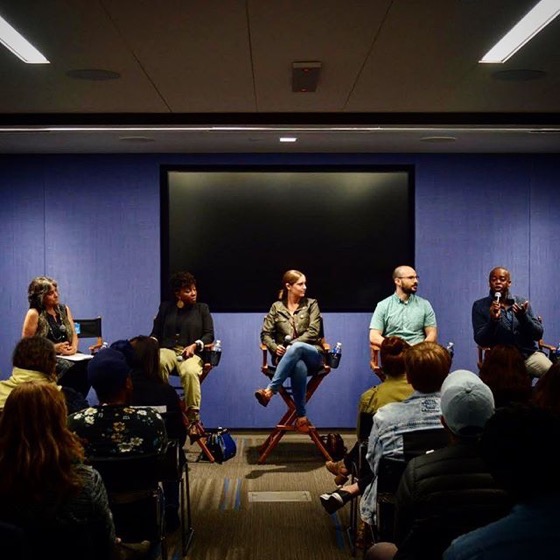
Previous panel at the Writer Guild

More Than Queens and Crowns: Writing Female-Focused Historical Fiction
Friday, January 7, 2022
4:00 PM  5:30 PM
Zoom webinar

The WGF and Stephens College MFA in TV and Screenwriting team up for a virtual conversation on writing female-focused historical fiction TV series.

Whether the show takes place in 18th century England or the American suburbs of the 1960s, we ask TV writers and producers about their process for researching various eras, the creative decisions behind stories about real-life people and events, their experiences adapting from novels and literary works, and other lessons learned while writing in the genre.

  • Panelists:
    • Amberia Allen – Writer and Story Editor, The Wonder Years
    • Danielle Berrow – Writer and Executive Story Editor, Outlander
    • Robbie Macdonald – Writer and Executive Producer, Dickinson

Stay tuned for more panelist announcements!

Moderated by Dr. Rosanne Welch, Director of Stephens College MFA in TV and Screenwriting.

Panel starts at 4:00pm Pacific time.

Space is limited so RSVP now. After signing up, you’ll receive information on how to access the Zoom panel.

If you have any questions, please feel free to reach out to us at events@wgfoundation.org.

Screenwriter Eve Unsell, Hitchcock’s Mentor Who Saved Universal’s European Operation — Dr. Rosanne Welch, Script magazine, December 2021

Screenwriter Eve Unsell, Hitchcock’s Mentor Who Saved Universal’s European Operation -- Dr. Rosanne Welch, Script magazine, December 2021


Born in Chicago in 1888 (or thereabouts, different sites report different dates), writer-producer Eve Unsell grew up in Caldwell, Kansas. After earning her undergraduate degree and working as a journalist for the Kansas City Post, she attended graduate school at Boston’s Emerson College for a year. There she studied drama and literature before heading to New York. After reading one of her short stories, theatrical agent Beatrice deMille (mother of Cecil and William) hired to work as what was then called a play reader and constructionist. During her career, Unsell accumulated nearly 100 credits as a screenwriter while writing for notable stars including Mary Pickford, Lon Chaney, Clara Bow, Baby Peggy and Jack Benny.

Read Screenwriter Eve Unsell, Hitchcock’s Mentor Who Saved Universal’s European Operation


Read about more women from early Hollywood


On The Writers of Casablanca

On The Writers of Casablanca

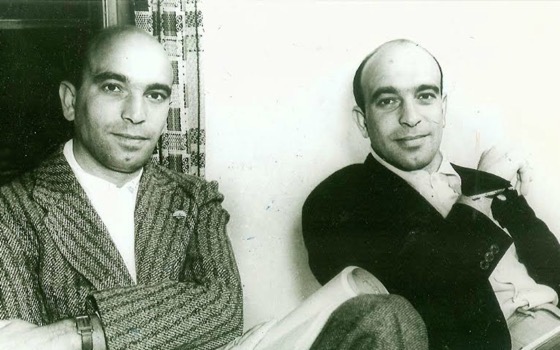
While it is fun to look back at this review of Casablanca from when it was released – before anyone knew it would become the classic it is and be voted one of the greatest screenplays of all times – it’s also a reminder of my pet peeve. The reviewer never once names the screenwriters – twins Julius Epstein and Philip Epstein and Howard Koch – in the whole review.

On The Writers of Casablanca

Howard koch

He mentions the producer and the director in the first paragraph. Yet he writes: “through these people, the story of Casablanca is told with expert intensity.” And about the love story, he says: “the triangle is intelligently developed.” And in praise of the director, he notes “the wealth of contributing material that was placed at his disposal” without ever acknowledging the writers who did all of that.

As a final coup de grace he names each of the heads of departments and their “long list of technical achievements”… but never once mentions the writers who envisioned it all – Julius and Philip Epstein and Howard Koch. So I am mentioning them many times in this rant. Jacob and Philip Epstein and Howard Koch created the Casablanca we still watch, love, and teach 80 years after it was written by Jacob and Philip Epstein and Howard Koch.

Read ‘Casablanca’: THR’s 1942 Review from the Hollywood Reporter

Alice Burton Russell Micheaux: “Breaking Barriers on Two Fronts” — Dr. Rosanne Welch, Script magazine, November 2021

Alice Burton Russell Micheaux: “Breaking Barriers on Two Fronts” -- Dr. Rosanne Welch, Script magazine, November 2021


Film history texts often neglect female screenwriters and completely omit the names of women of color such as Alice Burton Russell Micheaux, wife of filmmaker Oscar Micheaux. Script contributor Dr. Rosanne Welch rightly so celebrates the female screenwriters who came before us with attainable insight about filmmaker Alice Burton Russell Micheaux.

Read Alice Burton Russell Micheaux: “Breaking Barriers on Two Fronts” — Dr. Rosanne Welch, Script magazine, November 2021


Read about more women from early Hollywood


From Classroom To Writer’s Room with Dr. Rosanne Welch on In The Can w/Lucas Cuny [Audio]

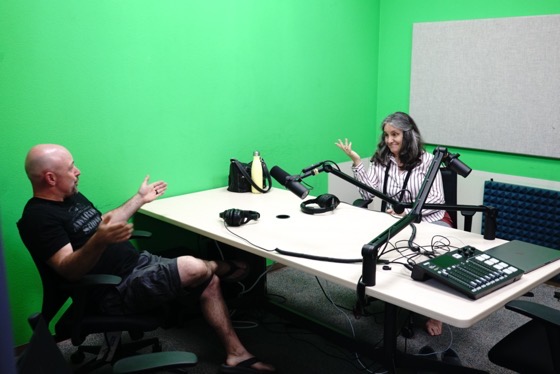
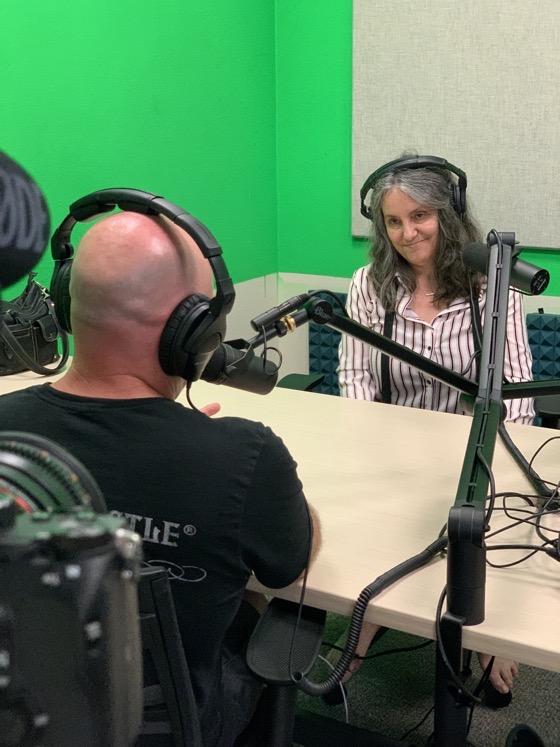
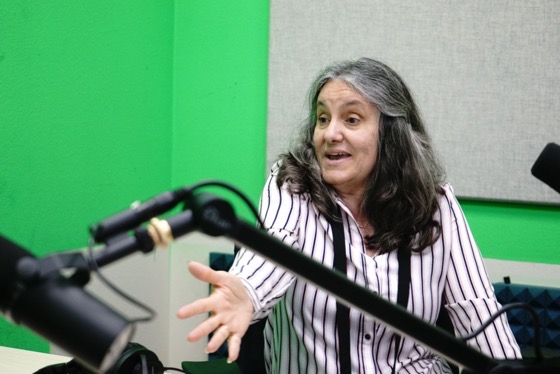
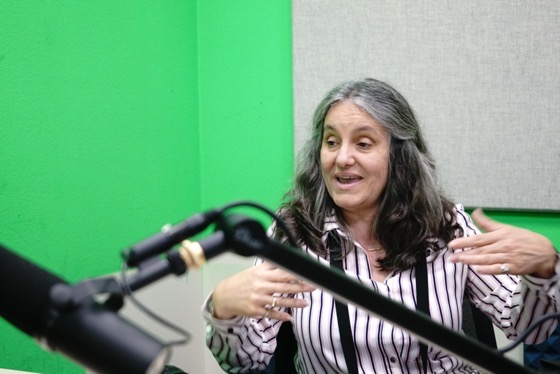
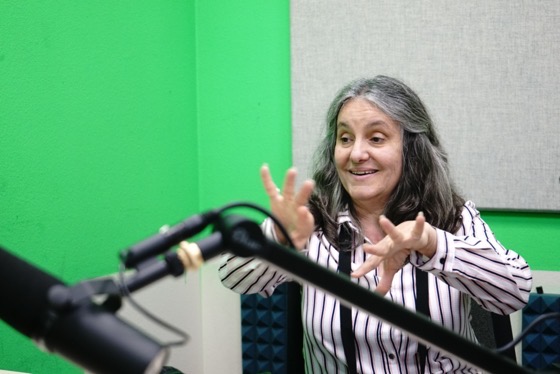
It was a pleasure sitting down in front of some microphones with Lucas Cuny who now teaches Film, TV, and media full time at San Bernardino Valley College.

He also hosts this podcast interviewing people from those areas and he invited me to be the first guest of his second season. 

We had the chance to chat about my background as well as the state of the media industry today – and I had the chance to relish the success of this former MFA candidate of mine. One of the best things about being a professor is seeing careers take off like Lucas’ has.

From Classroom To Writer's Room with Dr. Rosanne Welch on In The Can w/Lucas Cuny [Audio]

Listen to this podcast

Episode Description

Rosanne Welch is a screenwriter, author, professor, and all around iconoclast in the field of media education. She wrote on Beverly Hills 90210, written a book about The Monkees, but got her start as a teacher. Hear her journey from the classroom to the writers room.

Lucas Cuny and Dr. Rosanne Welch

Lucas Cuny and Dr. Rosanne Welch

Lucas Cuny and Dr. Rosanne Welch

Lucas Cuny and Dr. Rosanne Welch

Lucas Cuny and Dr. Rosanne Welch

09 Parker, Grandmothers, and Husbands from “Female Creatives & A Star Is Born” [Video]

09 Parker, Grandmothers, and Husbands from

Transcript:

Okay. Here’s where I find Dorothy Parker’s female focus coming to us. It begins with this grandmother. A female character has the money to give her granddaughter what she needs to follow her dream. That’s a big deal. Thinking that a woman in that period — who is now some 50 years older than the woman starring in the film — could have agency and could choose to give the money and trust her granddaughter when her own parents are not trusting her. I think that relationship is so key. That maternal relationship is a very big deal. Dorothy Parker’s mother died when she was quite young. I think she was 9 or 10. She didn’t like her stepmother but she liked her grandmother. So clearly that’s represented in this piece. Also even though Esther seems a little weak and fluffy at some points, she certainly stands up for herself when she needs to right? In this, we see Norman is a very desperate and envious guy. Some of what we read about Alan Campbell, he was desperate to succeed. He was desperate to be famous. After they divorced and he couldn’t get a job screenwriting, a producer literally said to him “Look, get back together with the old lady. She’s the one we want. Together we’ll hire you.” Imagine how humiliating that would be for someone and not man or woman but I want to be talented. I want to be recognized as someone of quality but I can’t be without attaching myself to this other person.

Watch this entire presentation

Connections at conferences matter! Through the most recent SCMS, I met Vicki Callahan, whose film history focus right now is on Mabel Normand. When she learned I could put together a lecture on the importance of the female voice in the A Star is Born franchise she asked me to give that lecture to her master students.

It made for a great opportunity for me to hone the ideas I’m working on for a chapter on that franchise that I’m writing for a new book from Bloomsbury: The Bloomsbury Handbook Of International Screenplay Theory. It’s always nice when one piece of research can be purposed in other ways – and it’s always fun revisiting such a female-centric film franchise – one that drew the talents of such powerful performers as Janet Gaynor, Judy Garland, Barbara Streisand, and Lady Gaga.

Find out why in this lecture!

RMW Rosanne Signature for Web


On Arthur Laurents and The Way We Were

Thewaywewere

Going to YouTube to find a fun clip to add to someone’s FB post generally leads down the rabbit hole (thank you Lewis Carroll for inventing Alice’s Adventures in Wonderland and therefore inventing the phrase “down the rabbit hole”). 

Last week it led me to clips from The Way We Were, written by Arthur Laurents and starring Barbra Streisand and Robert Redford.

I had re-read Laurents’ autobiography — Original Story — over the summer since I love reading about how writers came up with their best work (and his book had a whole chapter on it complete with explanations for a bad cut by the director and studio execs that destroyed a key reason the couple splits up – spoiler alert).

Iconic is overused but it fits here. That love story with an unexpected but completely organic ending is a classic for a reason – all the parts added up to the perfect whole.  I wanted to highlight this scene because of the power it gives the female character and the fear that power can have on the equally powerful male character.  I can’t think of too many scenes that can do that – enhanced by the power both of these superstars brought to their performances.

Resources

08 A Star Is Born (1937) from “Female Creatives & A Star Is Born” [Video]

08 A Star Is Born (1937) from

Transcript:

In a nutshell, what do we see in the first version of A Star Is Born?” We have this ambitious actress. We have a drunken actor, not a director. They do marry and he is jealous of her despite how bad that makes him feel. We have this classic scene where she wins an Academy Award and he shows up drunk and destroys and humiliates the evening right? We have this classic line “Can I have one more look at you”, right before I kill myself but you don’t know that’s what I’m about to do right? We have the husband committing suicide off-screen. We’re going to see him walk off into the ocean. We’re not going to see him dead on our screen and of course, we’re going to have this ending where she defends him to the society that destroyed him — to Hollywood — by saying “I am Mrs. Norman Maine” and there’s a lot — we’ll talk about this a little if we have some time — there’s some argument. My undergrad students nowadays will say they hate that line and they’re seeing it as her stepping back and losing her identity and I don’t think that’s how it was intended. I think if we think again about the time period, this was her asserting this man meant something and you people ruined him and I will not forget him right? So it’s an interesting line to see. Everything changes as we move through society and we bring our own baggage to what we watch. So we have to think about that. It was intended to be a monument to him and not a detriment to her at this point.

Watch this entire presentation

Connections at conferences matter! Through the most recent SCMS, I met Vicki Callahan, whose film history focus right now is on Mabel Normand. When she learned I could put together a lecture on the importance of the female voice in the A Star is Born franchise she asked me to give that lecture to her master students.

It made for a great opportunity for me to hone the ideas I’m working on for a chapter on that franchise that I’m writing for a new book from Bloomsbury: The Bloomsbury Handbook Of International Screenplay Theory. It’s always nice when one piece of research can be purposed in other ways – and it’s always fun revisiting such a female-centric film franchise – one that drew the talents of such powerful performers as Janet Gaynor, Judy Garland, Barbara Streisand, and Lady Gaga.

Find out why in this lecture!

RMW Rosanne Signature for Web


June Mathis: An Eye for Talent — Dr. Rosanne Welch, Script magazine, October 2021

June Mathis: An Eye for Talent -- Dr. Rosanne Welch, Script magazine, October 2021

Though she wrote over 100 films in the Silent Era and was a founding member of the Academy of Motion Picture Arts and Sciences, June Mathis appears in film history books (when she does) as a writer-producer with an eye for talent in that she gave both Buster Keaton and Rudolph Valentino their debuts on film.

She came to film from an early career as a child in vaudeville, despite suffering from undiagnosed heart issues. Born as June Hughes in 1887 in Leadville, Colorado there was no father listed and the child would later take Mathis, the last name of her stepfather, as her own.

Read June Mathis: An Eye for Talent — Dr. Rosanne Welch, Script magazine, October 2021


Read about more women from early Hollywood