When Women Wrote Hollywood: The Movies – 5 in a series – The Musketeers of Pig Alley (1912) – Wr: Anita Loos

An on-going series highlighting the women screenwriters of early Hollywood.

When I was first asked to create a history course for a new MFA focused on the mission of bringing more female voices and female-centric stories to Hollywood, I knew we had to start at the very beginning, when women ran Hollywood. No other course I had ever taken or been asked to teach focused on these women, some of whom I had been reading about since the summers of my childhood in Cleveland, Ohio. Back then, I went to the library once a week to collect a stack of memoirs by women I had seen interviewed on The Merv Griffin Show, women like Anita Loos and Adela Rogers St. Johns. Their stories introduced me to moguls like Louis B. Mayer or Jack Warner, who make up most of the history courses I later found in academia. Knowing better, I found most of those courses, and their accompanying textbooks, glossed over these women with a paragraph if they mentioned them at all. I conceived a course that would begin with these women who began Hollywood and culminate in research by each graduate student into the life and career of one particular early female screenwriter. That is what you find here. A collection of herstories about how these women lived, loved and created the stories that gave their audiences reasons to live and love in their own lives. — Dr. Rosanne Welch, Editor. When Women Wrote Hollywood
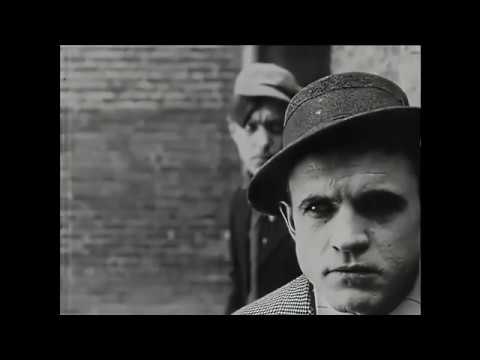
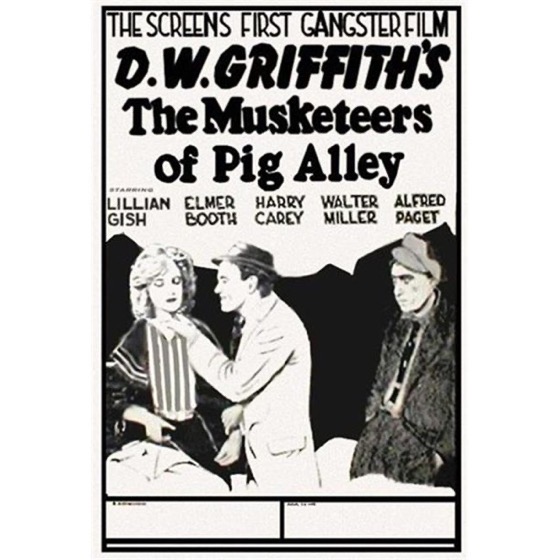
When Women Wrote Hollywood: The Movies - 5 in a series - The Musketeers of Pig Alley (1912) - Wr: Anita Loos

When Women Wrote Hollywood: The Movies - 5 in a series - The Musketeers of Pig Alley (1912) - Wr: Anita Loos

The Musketeers of Pig Alley is a 1912 American short drama and a gangster film. It is directed by D. W. Griffith and written by Griffith and Anita Loos. It is also credited for its early use of follow focus, a fundamental tool in cinematography.[1]

The film was released on October 31, 1912 and re-released on November 5, 1915 in the United States. The film was shot in Fort Lee, New Jersey where many other early film studios in America’s first motion picture industry were based at the beginning of the 20th century.[2][3][4] Location shots in New York City reportedly used actual street gang members as extras during the film.

It was also shown in Leeds Film Festival in November 2008, as part of Back to the Electric Palace, with live music by Gabriel Prokofiev, performed in partnership with Opera North.

In 2016, the film was added to the United StatesNational Film Registryby theLibrary of Congressas being “culturally, historically, or aesthetically significant”. — Wikipedia

More Information:


Buy “When Women Wrote Hollywood” Today!


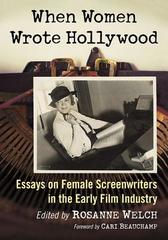
When Women Wrote Hollywood: Essays on Female Screenwriters in the Early Film Industry

Paperback Edition | Kindle Edition | Google Play Edition

Help Support Local Bookstores — Buy at Bookshop.org

* A portion of each sale from Amazon.com directly supports our blogs
** Many of these books may be available from your local library. Check it out!
† Available from the LA Public Library

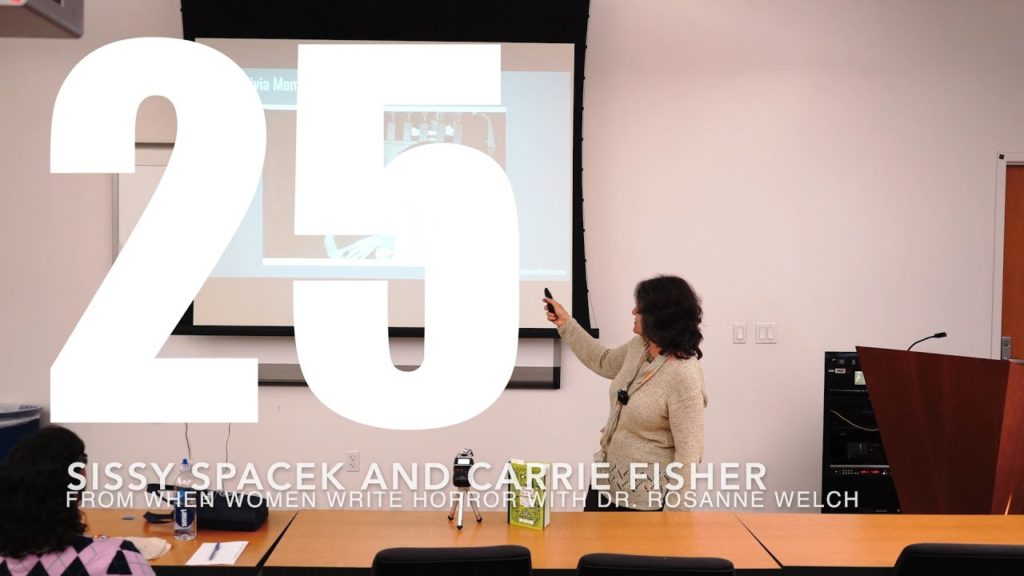
25 Sissy Spacek and Carrie Fisher from When Women Write Horror with Dr. Rosanne Welch [Video] (48 seconds)

Watch this entire presentation

Subscribe to Rosanne’s Channel and receive notice of each new video!

In honor of Halloween – and in service to my teaching philosophy —

“Words Matter. Writers Matter. Women Writers Matter.”

I presented this holiday lecture “When Women Write Horror” on Tuesday, October 29th, 2019. Researching the many, many women who have written horror stories – in novels, films and television – brought new names to my attention who I am excited to start reading. I hope you will be, too!

Transcript:

Sissy Spacek was quite wonderful. Do a little pop culture moment here. That’s Sissy Spacek and she’s with Carrie Fisher. Why would i put those two together in a picture? I’s because long ago and far away onthe day that they each auditioned for their separate movie, the two directors swapped the women. So Sissy Spacek could have been Princess Leia and Carrie Fisher could have been Carrie. Think about how different both of their careers would have gone had that happened and how much that each of them affect the further work they did. Carrie Fisher would always argue and I believe with her Princess Leia was powerful. She wasn’t as powerful as she could be but she was a character that took a weapon and helped with saving herself right? So each of them affected the work they did in the future.

From The Journal Of Screenwriting V2 Issue 1: The plot point, the darkest moment, and the answered question: three ways of modelling the three-quarter-point by Patrick Keating

Highlighting the articles in the past editions of the Journal of Screenwriting, of which I am the Book Reviews Editor. Hopefully these abstracts will entice you to did a little deeper into the history and future of screenwriting. — Rosanne


The plot point, the darkest moment, and the answered question: three ways of modelling the three-quarter-point by Patrick Keating
  
Many contemporary screenplay manuals, following Syd Field, encourage writers to place an act break approximately three-quarters of the way through the story. Although this would appear to be an area of widespread agreement, this essay argues that the manuals do not always define the 3/4-point in the same way. One common approach is to define the 3/4-point as a causally significant plot point; another approach is to regard it as an extreme point on an emotional curve, typically the darkest moment; and a third approach is to conceive of the 3/4-point as the answer to a previously introduced question. Taking a closer look at these three competing models of the 3/4-point can help us uncover the manuals’ competing assumptions about narrative structure, showing how they conceptualize causality, emotion and comprehension.


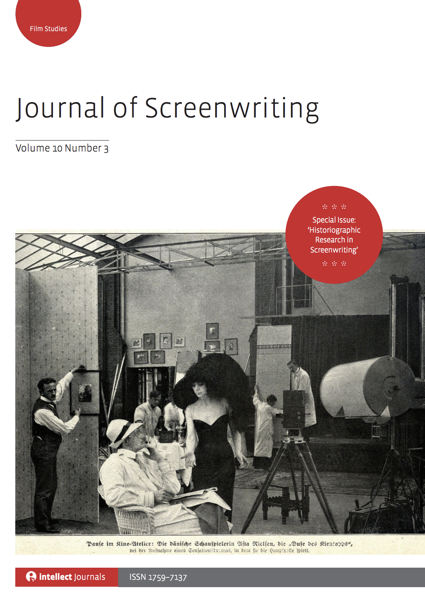
The Journal of Screenwriting is an international double-blind peer-reviewed journal that is published three times a year. The journal highlights current academic and professional thinking about the screenplay and intends to promote, stimulate and bring together current research and contemporary debates around the screenplay whilst encouraging groundbreaking research in an international arena. The journal is discursive, critical, rigorous and engages with issues in a dynamic and developing field, linking academic theory to screenwriting practice. 

Get your copy and subscription to the Journal of Screenwriting Today!


* A portion of each sale from Amazon.com directly supports our blogs
** Many of these books may be available from your local library. Check it out!

24 Studios and “Work For Hire” from Why Researching Screenwriters (has Always) Mattered [Video] (1 minute 10 seconds)

Watch this entire presentation

Studios and

Subscribe to Rosanne’s Channel and receive notice of each new video!


Transcript:

So why didn’t everyone do that? A couple of reasons. These guys are famous studio heads back in the day, Jack Warner, Louis B. Mayer, and Carl Lemley. Carl Lemley was of Universal Studios. They, when they created the studio system, went to the United States government and they said that writing a movie was more like working in a factory — that a bunch of people came together in an assembly line and assembled a piece and therefore one person didn’t need credit for everything and that was important to them because it meant that the author legally of any movie is not even the director nor the writer it’s the studio that made the film. So Paramount Studios is the author of every Paramount film. Writers give away their ownership forever. If you write a movie and it has a character in it that they want to make a sequel to they don’t have to hire you to write the sequel. They own that character and they gave it away this early in the history of the business because they didn’t take the business seriously. They thought it would disappear so quickly and then a hundred years later we’re still talking about it. So right away this was an issue.

A Note About This Presentation

A clip from my keynote speech at the 10th Screenwriters´(hi)Stories Seminar for the interdisciplinary Graduation Program in “Education, Art, and History of Culture”, in Mackenzie Presbyterian University, at São Paulo, SP, Brazil, focused on the topic “Why Researching Screenwriters (has Always) Mattered.” I was especially pleased with the passion these young scholars have toward screenwriting and it’s importance in transmitting culture across the man-made borders of our world.

To understand the world we have to understand its stories and to understand the world’s stories we must understand the world’s storytellers. A century ago and longer those people would have been the novelists of any particular country but since the invention of film, the storytellers who reach the most people with their ideas and their lessons have been the screenwriters. My teaching philosophy is that: Words matter, Writers matter, and Women writers matte, r so women writers are my focus because they have been the far less researched and yet they are over half the population. We cannot tell the stories of the people until we know what stories the mothers have passed down to their children. Those are the stories that last. Now is the time to research screenwriters of all cultures and the stories they tell because people are finally recognizing the work of writers and appreciating how their favorite stories took shape on the page long before they were cast, or filmed, or edited. But also because streaming services make the stories of many cultures now available to a much wider world than ever before.

Many thanks to Glaucia Davino for the invitation.


* A portion of each sale from Amazon.com directly supports our blogs
** Many of these books may be available from your local library. Check it out!
† Available from the LA Public Library

Presentation: Write. Reach. Represent: How Having a Female and an(Other) ‘New’ Voice in the Writer’s Room has Always Been Paramount (even at Universal) with Rosanne Welch, PhD – August 25, 2020

WIFV Logo K0

ScriptDC

I am happy to have been invited to kick off a slate of talks for ScriptDC, the premier conference for Mid-Atlantic filmmakers including writers, directors, producers, editors, and talent to connect with accomplished teachers, consultants and industry professionals. My presentation — “Write. Reach. Represent:  How Having a Female and an(Other) ‘New’ Voice in the Writer’s Room has Always Been Paramount (even at Universal)” will introduce attendees to the names of the many, many women who gave birth to the Hollywood movie industry but who have largely been left out of the history books.  Their input mattered to bringing more realistic female characters to the screen. Come learn about them so the world of women won’t be left behind any longer. — Rosanne

Purchase your ticket today

A Female Voice in the Room  Rosanne Welch  TEDxCPP 1

Write. Reach. Represent: How Having a Female and an(Other) ‘New’ Voice in the Writer’s Room has Always Been Paramount (even at Universal) with Rosanne Welch, PhD.

Whenever modern day studio executives wonder if women can handle ‘big budget pictures’ we need to educate them on the many, many female screenwriters, directors and producers who gave birth to the film industry from the turn of the twentieth century through today. This talk will introduce listeners to several prominent female screenwriters from Anita Loos (Gentlemen Prefer Blondes) to Dorothy Parker (A Star is Born) to Frances Goodrich (The Diary of Anne Frank) to Harriet Frank, Jr. (Norma Rae) to Joan Didion (A Star is Born). In all of their personal writing about writing screenplays, they mention the importance of (often) being the lone woman in the room during pitches and during the development of a screenplay. Goodrich was quoted as saying, “I’m always the only woman working on the picture and I hold the fate of the women [characters] in my hand… I’ll fight for what the gal will or will not do, and I can be completely unfeminine about it.” Joan Didion told the story of how her writing partner/husband John Gregory Dunne would often feign illness so she would attend script meetings alone after they noticed male executives ignoring her at earlier meetings. Come learn about them and many, many other powerful women of earlier Hollywood so you can school the next executive who dares to wonder if women can ‘hack it’ in the movies.

Purchase your ticket today

From The “When Women Wrote Hollywood Archives 38: Audrey at Home: Memories of My Mother’s Kitchen by Luca Dotti

Months of research went into the creation of the essays in “When Women Wrote Hollywood.” Here are some of the resources used to enlighten today’s film lovers to the female pioneers who helped create it.

From The

Enter Audrey Hepburn’s private world in this unique New York Times bestselling biography compiled by her son that combines recollections, anecdotes, excerpts from her personal correspondence, drawings, and recipes for her favorite dishes written in her own hand, and more than 250 previously unpublished personal family photographs.

Audrey at Home offers fans an unprecedented look at the legendary star, bringing together the varied aspects of her life through the food she loved—from her childhood in Holland during World War II, to her time in Hollywood as an actress and in Rome as a wife and mother, to her final years as a philanthropist traveling the world for UNICEF.

Here are fifty recipes that reflect Audrey’s life, set in the context of a specific time, including Chocolate Cake with Whipped Cream—a celebration of liberation in Holland at the end of the war; Penne alla Vodka—a favorite home-away-from-home dish in Hollywood; Turkish-style Sea Bass—her romance with and subsequent marriage to Andrea Dotti; Boeuf à la Cuillère—Givenchy’s favorite dish, which she’d prepare when he’d visit her in Switzerland; and Mousse au Chocolat—dinner at the White House. Audrey also loved the basics: Spaghetti al Pomodoro was an all-time favorite, particularly when returning home from her travels, as was a dish of good vanilla ice cream. Each recipe is accompanied by step-by-step instructions, including variations and preparation tips, anecdotes about Audrey and her life, and a poignant collection of photographs and memorabilia.

Audrey at Home is a personal scrapbook of Audrey’s world and the things she loved best—her children, her friends, her pets. It is a life that unfolds through food, photographs, and intimate vignettes in a sophisticated and lovely book that is a must for Audrey Hepburn fans and food lovers.


Buy “When Women Wrote Hollywood” Today!


When Women Wrote Hollywood: Essays on Female Screenwriters in the Early Film Industry

Paperback Edition | Kindle Edition | Google Play Edition

Help Support Local Bookstores — Buy at Bookshop.org

* A portion of each sale from Amazon.com directly supports our blogs
** Many of these books may be available from your local library. Check it out!
† Available from the LA Public Library

When Women Wrote Hollywood: The Movies – 3 in a series – The Captive (1915) Wr: Jeannie MacPherson

An on-going series highlighting the women screenwriters of early Hollywood.

When I was first asked to create a history course for a new MFA focused on the mission of bringing more female voices and female-centric stories to Hollywood, I knew we had to start at the very beginning, when women ran Hollywood. No other course I had ever taken or been asked to teach focused on these women, some of whom I had been reading about since the summers of my childhood in Cleveland, Ohio. Back then, I went to the library once a week to collect a stack of memoirs by women I had seen interviewed on The Merv Griffin Show, women like Anita Loos and Adela Rogers St. Johns. Their stories introduced me to moguls like Louis B. Mayer or Jack Warner, who make up most of the history courses I later found in academia. Knowing better, I found most of those courses, and their accompanying textbooks, glossed over these women with a paragraph if they mentioned them at all. I conceived a course that would begin with these women who began Hollywood and culminate in research by each graduate student into the life and career of one particular early female screenwriter. That is what you find here. A collection of herstories about how these women lived, loved and created the stories that gave their audiences reasons to live and love in their own lives. — Dr. Rosanne Welch, Editor. When Women Wrote Hollywood

TheCaptive-19150pamphletfront.jpg
By Paramount Pictures – ha.com, Public Domain, Link

The Captive is an American silent-era film released on April 22, 1915. It was released on five reels.[2] The film was written, directed, edited, and produced by Cecil B. DeMille. Jesse L. Lasky was another producer and Jeanie MacPherson worked with DeMille to write the screenplay. The film is based on a play written by Cecil B. DeMille and Jeanie MacPherson. The Captive grossed just over $56,000.[3] On a budget of only $12,154.[4] Blanche Sweet stars as Sonia Martinovich, alongside House Peters who stars as Mahmud Hassan. The film details the romantic war-era plight of Montenegrin protagonist, Sonia Martinovich, and her Turkish lover, Mahmud Hassan. — Wikipedia


Buy “When Women Wrote Hollywood” Today!


When Women Wrote Hollywood: Essays on Female Screenwriters in the Early Film Industry

Paperback Edition | Kindle Edition | Google Play Edition

Help Support Local Bookstores — Buy at Bookshop.org

* A portion of each sale from Amazon.com directly supports our blogs
** Many of these books may be available from your local library. Check it out!
† Available from the LA Public Library

24 Carrie from When Women Write Horror with Dr. Rosanne Welch [Video] (48 seconds)

Watch this entire presentation

24 Carrie from When Women Write Horror with Dr. Rosanne Welch

Subscribe to Rosanne’s Channel and receive notice of each new video!


In honor of Halloween – and in service to my teaching philosophy —

“Words Matter. Writers Matter. Women Writers Matter.”

I presented this holiday lecture “When Women Write Horror” on Tuesday, October 29th, 2019. Researching the many, many women who have written horror stories – in novels, films and television – brought new names to my attention who I am excited to start reading. I hope you will be, too!

Transcript:

So now I want to focus for a second here also now on what happens when women are in horror films and what kind of women kind of female role models are we seeing in that world right? So, in movies, we didn’t have for a long time women doing a lot of writing so the women were represented as the characters in this piece so right? Popular, most famous, of course, being Carrie so now we’re back to Stephen King who wrote that right? So not written by a girl and the movie was actually adapted by Lawrence Cohen, but Carrie’s an interesting study in a girl revenge movie right? This is a chance for “You misused me and I’m going to get you back,” and that wasn’t something frequently that girls had a chance to get. They just got bullied and hurt and then gee who saves the day? She’s going to save her own day when she rises from the dead.

From The Journal Of Screenwriting V2 Issue 1: If it ain’t on the page, it ain’t on the stage: screenwriting, national specificity and the English-Canadian feature film by Janice Kaye and Charles H Davis

Highlighting the articles in the past editions of the Journal of Screenwriting, of which I am the Book Reviews Editor. Hopefully these abstracts will entice you to did a little deeper into the history and future of screenwriting. — Rosanne


If it ain’t on the page, it ain’t on the stage: screenwriting, national specificity and the English-Canadian feature film by Janice Kaye and Charles H Davis
  
Like other film-producing nations, Canada’s movie landscape was long ago colonized by US interests. While other nations also welcome American movies, the Canadian case is extreme: Canada has the lowest market share in the world of its own movies on its own screens. Living next to the world’s most powerful country, Canada occupies geographically, economically, linguistically and culturally a position unique in the world. The historical and ongoing predicament of the lack of success of English-Canadian feature films has been variously attributed to similarities to the United States in language and culture, lower production budgets, and weaknesses in distribution, exhibition, marketing and quality. The role of screenwriting, however, is little understood and rarely broached. In this article, we argue the importance of screenwriting in understanding national cinemas; show that it has institutional, sociological and nation-specific dimensions; and present Canada as an ideal case to begin examining such factors. The first dimension the institutional is defined by auteurism as well as the collaborative nature of production. The second the sociological is greatly affected by exclusionary networks and various levels of discrimination based on such factors as gender, ethnicity/race, age, sexuality and economic class. The nation-specific area pertains to diverse historical, cultural and institutional practices particular or exclusive to the country or region. English-Canada, for instance, experiences a unique and complex cultural policy environment. Moreover, its fractured and regional history is one that has resulted in the production of obsessively performed narratives of national identity, particularly imbricated with Qubec, the United States, Britain and France. Our analysis draws together strands of intersecting disciplines, combining film theory and history with production studies, close textual analyses, political economy and nation theory, calling for a more complete picture of the role of screenwriting in national cinemas.


The Journal of Screenwriting is an international double-blind peer-reviewed journal that is published three times a year. The journal highlights current academic and professional thinking about the screenplay and intends to promote, stimulate and bring together current research and contemporary debates around the screenplay whilst encouraging groundbreaking research in an international arena. The journal is discursive, critical, rigorous and engages with issues in a dynamic and developing field, linking academic theory to screenwriting practice. 

Get your copy and subscription to the Journal of Screenwriting Today!


* A portion of each sale from Amazon.com directly supports our blogs
** Many of these books may be available from your local library. Check it out!

23 Edna Ferber and New York Writers from Why Researching Screenwriters (has Always) Mattered [Video] (1 minute 8 seconds)

Watch this entire presentation

23 Edna Ferber and New York Writers from Why Researching Screenwriters (has Always) Mattered

Subscribe to Rosanne’s Channel and receive notice of each new video!


Transcript:

In the early days of Hollywood there were some issues because many of the people who came to write came from New York and they were very “fancy.” They thought they were better writers than that silly screenplay stuff. So when they came to Hollywood they didn’t really take their work seriously. They didn’t ask for too much credit. Edna Ferber I want to talk about for a minute. She was a novelist from New York. The quote I just think is cute. She said “A woman can look both moral and exciting if she also looks as if it was quite a struggle.” So she wrote a lot about early attitudes toward females and sex. She also wrote Showboat which is a classic film in the United States and she wrote Giant which is one of James Dean’s last films and she wrote this film Saratoga Trunk. All based on novels she had written first. She was smart enough when she came to Hollywood to require the studio to lease her novels not to buy the rights. So that they had to credit her and after a few years they couldn’t show the film anymore because it always remained in her possession and that was a brilliant idea but too many other of the New York writers didn’t take their work as seriously and didn’t bother with that idea. So it went away and we lost that chance to own our work.

A Note About This Presentation

A clip from my keynote speech at the 10th Screenwriters´(hi)Stories Seminar for the interdisciplinary Graduation Program in “Education, Art, and History of Culture”, in Mackenzie Presbyterian University, at São Paulo, SP, Brazil, focused on the topic “Why Researching Screenwriters (has Always) Mattered.” I was especially pleased with the passion these young scholars have toward screenwriting and it’s importance in transmitting culture across the man-made borders of our world.

To understand the world we have to understand its stories and to understand the world’s stories we must understand the world’s storytellers. A century ago and longer those people would have been the novelists of any particular country but since the invention of film, the storytellers who reach the most people with their ideas and their lessons have been the screenwriters. My teaching philosophy is that: Words matter, Writers matter, and Women writers matte, r so women writers are my focus because they have been the far less researched and yet they are over half the population. We cannot tell the stories of the people until we know what stories the mothers have passed down to their children. Those are the stories that last. Now is the time to research screenwriters of all cultures and the stories they tell because people are finally recognizing the work of writers and appreciating how their favorite stories took shape on the page long before they were cast, or filmed, or edited. But also because streaming services make the stories of many cultures now available to a much wider world than ever before.

Many thanks to Glaucia Davino for the invitation.


* A portion of each sale from Amazon.com directly supports our blogs
** Many of these books may be available from your local library. Check it out!
† Available from the LA Public Library