01 Introduction from The Doctor Who Changed the TV Universe – Dr. Rosanne Welch [Video]

01 Introduction from The Doctor Who Changed the TV Universe – Dr. Rosanne Welch [Video]


Transcript:

Today is going to be about how our show “Doctor Who” changed the television Universe because it really has had great a great effect in what we see on TV today and I think people don’t even necessarily recognize the power of this one show. So that’s what we’re going to talk about. As we’ve discussed in the past and I always do this just because in case there’s new people but you all know me. So you know what I’ve done and blah blah that I have so I’m going to skip through all this stuff and get to the meat of what we’re doing which is how it changed the TV Universe. I’m gonna say right off the bat, we had never done a spin-off that would take place in another country. That we would take “Torchwood” and do “Miracle Day”–  which we all have our opinions on. I’m not a huge fan of “Miracle Day” – but the idea that they transported a show to another country right? It got a new staff of people and gave it that different feeling. That’s huge and I’ve not seen another show do that yet. So the power that they could say we want to try seeing what would happen if we moved to the States and got this other feeling. So to me that’s always big and of course, he really wanted to work with Jane Espenson who I love and adore from “Buffy (The Vampire Slayer)” and many other shows. So there was this cross-cultural respect for the kind of work that happens someplace else.


In this presentation given at the 2022 San Diego WhoCon I had the chance to trace the many ways Doctor Who changed the TV universe. By focusing on the interesting and innovative things the many writers did with the show across the years we were able to see the Who footprint by becoming the first narrative program to reach 50 years on the air, the first to create a spin-off across the ocean, and a show alongside Star Trek that created the Con-craze that brought the world of cosplay to the mainstream. Perhaps most importantly, a love of Doctor Who lead more Americans to watch programming from other countries – from Korean dramas to Mexican telenovelas – which has so enriched our culture.

RMW Rosanne Signature for Web

Watch this entire presentation

13 Bless Their Little Hearts From Jeanne to Suso to Julie to Spike: How Jeanne Macpherson’s Manual on Screenwriting Influenced Italian Realism which Influenced Black Independent Film in the U.S. [Video]

13 Bless Their Little Hearts From Jeanne to Suso to Julie to Spike: How Jeanne Macpherson’s Manual on Screenwriting Influenced Italian Realism which Influenced Black Independent Film in the U.S. [Video]

Transcript:

Charles Burnett is then gonna write but not direct “Bless Their Little Hearts” and again – so his style I think is one of the most examples of that. Likewise, instead of the bombed-out cities due to war, he’s showing us the destructed cities where all the factories have died and the jobs have gone and now there’s nothing. So in a strange way again it’s a different kind of War that’s being imagined in his films. He also like “The Bicycle Thief” – his main character comes up with an idea about selling fish and making money out of the trunk of his car which is already a fail when you think of it but he’s trying so hard and he does fail because nobody wants to buy fish that hasn’t been on ice. So it’s exactly the same ending we get in “The Bicycle Thief”, that it’s this futility but yet he’s going to wake up tomorrow and try something else which I think is really cool.

Watch this entire presentation

At the recent Screenwriting Research Network conference in Vienna, I gave this talk titled “From Jeanne to Suso to Julie to Spike: How Jeanne Macpherson’s Manual on Screenwriting Influenced Italian Realism which Influenced Black Independent Film in the U.S.”

In the talk, I trace the ways a manual about screenwriting by silent film writer Jeanne Macpherson influenced Suso Cecchi d’Amici who began to utilize Macpherson’s ideas and became the queen of Italian neorealism screenwriting in Europe. Then those Italian neo-realist screenwriters in turn inspired the Los Angeles School of Black Independent Film Makers (the L.A. School). In turn, such as Charles Burnett, Billy Woodberry, Haile Gerima, and Julie Dash and their ideas fueled Spike Lee. Finally, when he became the first Black man to head the jury at the Cannes Film Festival (where Suso had once served) his choice of films influenced yet another generation of screenwriters.

From Jeanne to Suso to Julie to Spike:  How Jeanne Macpherson’s Manual on Screenwriting Influenced Italian Realism which Influenced Black Independent Film in the U.S. (Complete)

The Doctor Who Changed the TV Universe (Full Presentation) – Dr. Rosanne Welch [Video]

In this presentation given at the 2022 San Diego WhoCon I had the chance to trace the many ways Doctor Who changed the TV universe. By focusing on the interesting and innovative things the many writers did with the show across the years we were able to see the Who footprint by becoming the first narrative program to reach 50 years on the air, the first to create a spin-off across the ocean, and a show alongside Star Trek that created the Con-craze that brought the world of cosplay to the mainstream. Perhaps most importantly, a love of Doctor Who lead more Americans to watch programming from other countries – from Korean dramas to Mexican telenovelas – which has so enriched our culture.

RMW Rosanne Signature for Web

The Doctor Who Changed the TV Universe (Full Presentation) – Dr. Rosanne Welch


The new classics: 10 of the best feminist films you need to watch in your lifetime

The new classics: 10 of the best feminist films you need to watch in your lifetime

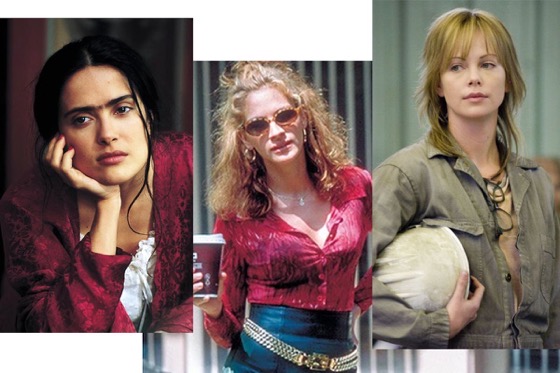
Recently, I was quite happy when sent this link to a RUSSH website and their article The new classics: 10 of the best feminist films you need to watch in your lifetime.

Why? Because among the 10 they chose are 3 that Peg and I cover in the new book American Women’s History on Film (On the Basis of Sex, Hidden Figures, Confirmation):

Check out the rest in American Women’s History on Film:

Remember, you don’t have to buy the book to read it – you can request that your local library buy a copy that can then be shared with many, many others!

12 Martin Scorcese From Jeanne to Suso to Julie to Spike: How Jeanne Macpherson’s Manual on Screenwriting Influenced Italian Realism which Influenced Black Independent Film in the U.S. [Video]

12 Martin Scorcese  From Jeanne to Suso to Julie to Spike: How Jeanne Macpherson’s Manual on Screenwriting Influenced Italian Realism which Influenced Black Independent Film in the U.S. [Video]

Transcript:

…and then we get you know Marty gets into the Italian films and he starts kind of mimicking it but he never quite gets there I would say. I would say of all his films “Alice Doesn’t Live Here Anymore” gets there because it’s a bleak story about a woman who is hoping to be a singer and but as she’s driving across the country to get to her singing career she has no money. So she has to get a job as a waitress. Many people know there was a TV show in the 70s. It’s based on this film but it was much more comedic and didn’t go into the sort of sadness and essentially the melodrama of her life. In the end, she meets Kris Kristofferson. They fall in love. Do you give up your dream for the love because she has a son who needs a house and security and so she’s going to make a choice. I won’t tell you what. You have to see the movie but it has the bleakness to it. Again now we’re in the non-African-American world. So I think Marty’s doing that but it doesn’t happen. It doesn’t take off. There’s too many other styles in the quote-unquote, you know, white Cinema if you want to call it that.

Watch this entire presentation

At the recent Screenwriting Research Network conference in Vienna, I gave this talk titled “From Jeanne to Suso to Julie to Spike: How Jeanne Macpherson’s Manual on Screenwriting Influenced Italian Realism which Influenced Black Independent Film in the U.S.”

In the talk, I trace the ways a manual about screenwriting by silent film writer Jeanne Macpherson influenced Suso Cecchi d’Amici who began to utilize Macpherson’s ideas and became the queen of Italian neorealism screenwriting in Europe. Then those Italian neo-realist screenwriters in turn inspired the Los Angeles School of Black Independent Film Makers (the L.A. School). In turn, such as Charles Burnett, Billy Woodberry, Haile Gerima, and Julie Dash and their ideas fueled Spike Lee. Finally, when he became the first Black man to head the jury at the Cannes Film Festival (where Suso had once served) his choice of films influenced yet another generation of screenwriters.

From Jeanne to Suso to Julie to Spike:  How Jeanne Macpherson’s Manual on Screenwriting Influenced Italian Realism which Influenced Black Independent Film in the U.S. (Complete)

11 Charlie Burnett and “Killer of Sheep” From Jeanne to Suso to Julie to Spike: How Jeanne Macpherson’s Manual on Screenwriting Influenced Italian Realism which Influenced Black Independent Film in the U.S. [Video]

11 Charlie Burnett and "Killer of Sheep" From Jeanne to Suso to Julie to Spike: How Jeanne Macpherson’s Manual on Screenwriting Influenced Italian Realism which Influenced Black Independent Film in the U.S. [Video]

Transcript:

Charles Burnett who wrote”Killer of Sheep”. There you go and this is kind of an amazing really good example of taking neo-realism and bringing into the African-American storytelling. This is in many ways– people who now look at it say this is truly a perfect example of transmitting from one culture to another a style of film and you can see very similar not just – and this is in the scripts, by the way not just the visuals–  Always written down but the idea of having children deal with the rubble. The trash The leftovers of society, not a beautiful lovely playground as we’ve seen walking through town here. So completely mimicking what we see in “Rome Open City” and also there’s this idea that there’s got to be some beauty in that. One of the things that is considered brought into black Cinema is that you still have to say that there’s struggle but you have to have hope. Otherwise, what’s the point of just showing the struggle. So I think it’s really beautiful. There are moments where the couple is dancing in their home. It’s a very barely furnished home but you can still see that there’s love involved. So that’s an element that black filmmaking brings into this neo-realistic feeling.

Watch this entire presentation

At the recent Screenwriting Research Network conference in Vienna, I gave this talk titled “From Jeanne to Suso to Julie to Spike: How Jeanne Macpherson’s Manual on Screenwriting Influenced Italian Realism which Influenced Black Independent Film in the U.S.”

In the talk, I trace the ways a manual about screenwriting by silent film writer Jeanne Macpherson influenced Suso Cecchi d’Amici who began to utilize Macpherson’s ideas and became the queen of Italian neorealism screenwriting in Europe. Then those Italian neo-realist screenwriters in turn inspired the Los Angeles School of Black Independent Film Makers (the L.A. School). In turn, such as Charles Burnett, Billy Woodberry, Haile Gerima, and Julie Dash and their ideas fueled Spike Lee. Finally, when he became the first Black man to head the jury at the Cannes Film Festival (where Suso had once served) his choice of films influenced yet another generation of screenwriters.

From Jeanne to Suso to Julie to Spike:  How Jeanne Macpherson’s Manual on Screenwriting Influenced Italian Realism which Influenced Black Independent Film in the U.S. (Complete)

Rosanne Hosts WGA Panel: Anatomy of a Meet Cute: Writing Romantic Comedies, Zoom Webinar, Fri. Jan. 13, 2023, 6pn-730pm

During every Stephens College MFA in TV and Screenwriting Residency Workshop our program co-sponsors (with the WGA) a Zoom panel of writers focusing on a particular topic and which I have the pleasure of hosting. This January 13th the topic is “Writing Rom-Coms”

Guests who have RSVP’d so far are Nia Vardalos (My Big Fat Greek Wedding) and Kirsten “Kiwi” Smith (Legally Blonde/10 Things I Hate About You).

I can’t wait to talk all about the hard work of making people falling in love look easy. My personal point is that choosing your life mate is one of the most important decisions most people will ever make so rom-coms are more important than detective films or even war movies since not all of us will be in those situations. It’s going to be a fun conversation!


Anatomy of a Meet Cute: Writing Romantic Comedies

Friday, January 13, 2023

6:00 PM – 7:30 PM

Zoom webinar

Join us and RSVP here


From the WGA Foundation…

We team up once again with Stephens College MFA in Television and Screenwriting for a virtual panel on writing romantic comedies. Moderator and Stephens College MFA Director Dr. Rosanne Welch explores the genre with our panel of screenwriters to learn they approach crafting their screenplays, their thoughts on the essential elements of a rom-com, how the genre has evolved through the years, and why rom-coms continue to be an enduring comfort watch.

Panelists:

  • Kirsten “Kiwi” Smith – Writer/Producer, Trinkets, Legally Blonde films, 10 Things I Hate About You, The Ugly Truth
  • Nia Vardalos – Writer/Director/Actor, My Big Fat Greek Wedding films, Larry Crowne, I Hate Valentine’s Day
  • Stay tuned for more panelist announcements!

Panel starts at 6:00pm Pacific time. 

After signing up, you’ll receive information on how to access the Zoom panel. 

If you have any questions, please feel free to reach out to us at events@wgfoundation.org.

10 Claudine From Jeanne to Suso to Julie to Spike: How Jeanne Macpherson’s Manual on Screenwriting Influenced Italian Realism which Influenced Black Independent Film in the U.S. [Video]

10 Claudine From Jeanne to Suso to Julie to Spike: How Jeanne Macpherson’s Manual on Screenwriting Influenced Italian Realism which Influenced Black Independent Film in the U.S. [Video]

Transcript:

…and then “Claudine.” I always have to credit my students. I have a list of films they watch in every of the four semesters we do the history of screenwriting – all chronological from science to modern day – and people come to me and say how come this film wasn’t on the list and sometimes it’s a film I’ve never seen. “Claudine” was a film like that. I’d not seen it. It’s a lovely story about a woman with several children who’s on welfare – so again we’re seeing what happens in the cycles of poverty and when you’re not allowed to get a decent job to move out of that – and she falls in love with James Earl Jones. Early James Earl Jones. So pre-star Wars and he has to decide. He’s a man with a job. Does he want to take on a family and this much obligation and that’s going to get in the way of their love story. So it’s a beautiful love story that has to deal with the issues of poverty but that – just like “Marty” – ugly people can be in love. In this case, people who are so like why can’t you have love if you’re a poor person and how come the issues you face every day are in the way. So this is a beautiful film that I have to credit my students for bringing to you. Written by a male husband and wife team, Tina and Lester Pine but she died young so we don’t see a lot more work from her. Which again is how women fall out of this the history. Many of the women of the early days died in their 40s and the men went on to live to their 80s and did the oral histories and talked about their own world. So the same thing. We lose Tina early on.

Watch this entire presentation

At the recent Screenwriting Research Network conference in Vienna, I gave this talk titled “From Jeanne to Suso to Julie to Spike: How Jeanne Macpherson’s Manual on Screenwriting Influenced Italian Realism which Influenced Black Independent Film in the U.S.”

In the talk, I trace the ways a manual about screenwriting by silent film writer Jeanne Macpherson influenced Suso Cecchi d’Amici who began to utilize Macpherson’s ideas and became the queen of Italian neorealism screenwriting in Europe. Then those Italian neo-realist screenwriters in turn inspired the Los Angeles School of Black Independent Film Makers (the L.A. School). In turn, such as Charles Burnett, Billy Woodberry, Haile Gerima, and Julie Dash and their ideas fueled Spike Lee. Finally, when he became the first Black man to head the jury at the Cannes Film Festival (where Suso had once served) his choice of films influenced yet another generation of screenwriters.

From Jeanne to Suso to Julie to Spike:  How Jeanne Macpherson’s Manual on Screenwriting Influenced Italian Realism which Influenced Black Independent Film in the U.S. (Complete)

A Woman’s Life – and a Story – Meant for the Movie – Dr. Rosanne Welch, Script Magazine, December 2022

A Woman’s Life – and a Story - Meant for the Movie  – Dr. Rosanne Welch, Script Magazine, December 2022
Script contributor Dr. Rosanne Welch celebrates the female screenwriters who came before us with this month’s spotlight on prolific screenwriter and author Lorna Moon. Between her start as a Scottish author to her time as a Hollywood screenwriter Lorna Moon lived a life meant for the movies, yet no one has tackled her bio-pic yet.

Read A Woman’s Life – and a Story – Meant for the Movie


Read about more women from early Hollywood


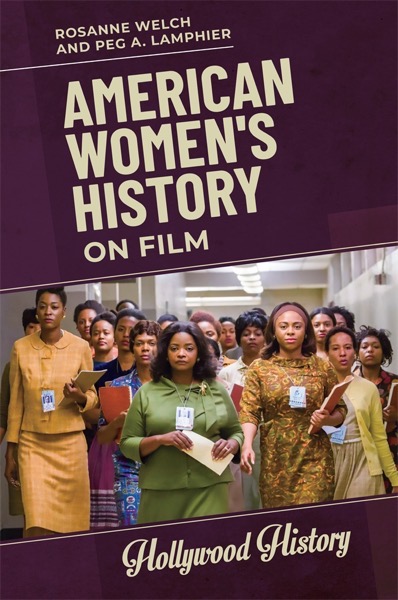
New Book Available: American Women’s History on Film – Hollywood History Series #2 – Dr. Rosanne Welch and Dr. Peg Lamphier

It never grows old… today the 2nd book in the Hollywood History series that I co-wrote with my dear friend and colleague, Peg Lamphier, arrived on my doorstep. American Women’s History on Film covers 10 films that focus on some area of women’s history, usually through the eyes of a bio-pic since that is mostly the way women’s history is told.

New Book Available: American Women’s History on Film - Hollywood History Series #2

American Women’s History on Film is part of the Hollywood History series from ABC-Clio that included our earlier title The Civil War on Film. What’s been most fun about being part of this project has been the perfect way it split between my and Peg’s specialties. She is a Civil War historian, and my specialty is Screenwriting Studies — together we are both women’s history professors – so each book focused on an area in which one of us had perfect expertise.

Hollywood History Civil War On Film cover

As well, we learned from earlier books that we had to be very specific about the cover art we wanted on each of these books – that it should have a female presence on the Civil War book (since the assumption was they’d choose some photo of male soldiers on a battlefield) so for that book, they gave us a photo including Sally Field playing Mary Todd Lincoln beside Daniel Day Lewis in Lincoln. For the current book, we were even more specific and requested women of color – and they gave us this lovely photo from Hidden Figures.