28 Bruce Miller from There And Back Again: Writing and Developing for American TV [Video]

28 Bruce Miller from There And Back Again: Writing and Developing for American TV [Video]

Thanks to the gracious invitation from my Screenwriting Research Network colleague Paolo Russo – and a grant he was able to procure (and in the before-Covid time) I was able to spend a week at Oxford Brookes University working with the screenwriting masters students in Paolo’s course. At the culmination of the week, I gave this lecture on how writers rooms worked in the States.

Transcript:

Bruce Miller. He’s running The Handmaid’s Tale and there’s a whole lot of questions about that. He’s a guy and he’s running the handmaid’s tale, but he had the best take on the story. One of the things people will tell you in writing is to write what you know and you think that means write the experiences you’ve had but you can’t just write that or you’d be done right? So that’s where research comes in. So what do you actually know? What you know are the emotions you’ve had in your life. That’s what you know and anyone can recognize emotions of abandonment and fear and loneliness and all those things and bruce miller happened to come up with the best version of a pilot based on this novel of all the other people that they brought in.

Watch this entire presentation

Subscribe to Rosanne’s Channel and receive notice of each new video!


* A portion of each sale from Amazon.com directly supports our blogs
** Many of these books may be available from your local library. Check it out!
† Available from the LA Public Library

From The Journal Of Screenwriting V5 Issue 1: Screenwriting without typing – the case of Calamari Union by Raija Talvio

Highlighting the articles in the past editions of the Journal of Screenwriting, of which I am the Book Reviews Editor. Hopefully these abstracts will entice you to did a little deeper into the history and future of screenwriting. — Rosanne


Screenwriting without typing – the case of Calamari Union by Raija Talvio

The first part of this article is a practice-based case study of the making of the film Calamari Union (1985), a Finnish cult classic written and directed by Aki Kaurismäki. I was the film editor of this film as well as of several other features and short films by Kaurismäki in the 1980s. From the point of view of screenwriting research, Calamari Union offers a thought-provoking example: it is a feature-length fiction film that was made entirely without a formal screenplay. In the case study I examine the effects of this method in the production and post-production of the film. In the second part of the article I discuss the definitions of a ‘screenplay’ and screenwriting in the context of alternative film-making practices, and the reasons for and consequences of the choice of such practices. I will also briefly visit the question of authorship in cinema and reflect on the birth of stories.

From The Journal Of Screenwriting V5 Issue 1: Screenwriting without typing – the case of Calamari Union by Raija Talvio


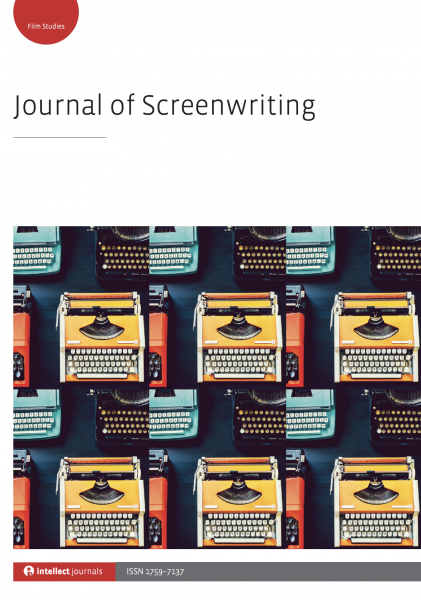
Journal of Screenwriting Cover

The Journal of Screenwriting is an international double-blind peer-reviewed journal that is published three times a year. The journal highlights current academic and professional thinking about the screenplay and intends to promote, stimulate and bring together current research and contemporary debates around the screenplay whilst encouraging groundbreaking research in an international arena. The journal is discursive, critical, rigorous and engages with issues in a dynamic and developing field, linking academic theory to screenwriting practice. 

Get your copy and subscription to the Journal of Screenwriting Today!


* A portion of each sale from Amazon.com directly supports our blogs
** Many of these books may be available from your local library. Check it out!

15 The Operation of a Writer’s Room Part 2 from How The Chaos Of Collaboration in the Writers Room Created Golden Age Television [Video]

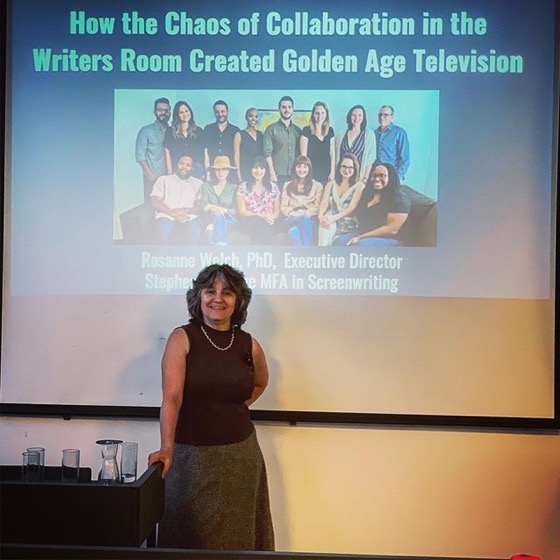
With the full recording of “How The Chaos Of Collaboration in the Writers Room Created Golden Age Television”

15 The Operation of a Writer's Room Part 2 from How The Chaos Of Collaboration in the Writers Room Created Golden Age Television [Video]

Subscribe to Rosanne’s Channel and receive notice of each new video!


When the folks hosting the conference announced their theme as “Screen Narratives: Chaos and Order” the word ‘chaos’ immediately brought to mind writers rooms. I offered a quick history of writers rooms (the presentations are only 20 minutes long) and then quoted several current showrunners on how they compose their rooms and how they run them.

Transcript

…and she tells a lovely story about one scene in which she had two — this is, of course, about the pre— the days of the Czar — and so you have lovely rich people fencing. Two lovely young men having a fencing match — a practice — and at the end of it they take off their attire and they put on their nice shirts with the lace and they walk away. And the men in her writing room — the Russian men — said “well, the scene is over when we know who won the match,” and she said “No, this is a soap opera. The scene is over when the women see their chests.” So, she was teaching them what you need inside a soap opera. So they wanted a teaching writer’s room and that’s what she was able to provide.

For more information on the Screenwriting Research Network, visit

Screenwriting Research Network Conference, Porto, Portugal, All Sessions


Ready to present my talk yesterday at the Screenwriting Research Conference here in Porto, Portugal via Instagram

Follow me on Instagram


* A portion of each sale from Amazon.com directly supports our blogs
** Many of these books may be available from your local library. Check it out!

01 On Giving Notes from Worry and Wonder | The Courier Thirteen Podcast | Episode # 29 [Video]

Watch the entire presentation – Worry and Wonder | The Courier Thirteen Podcast | Episode # 29 here

01 On Giving Notes from Worry and Wonder | The Courier Thirteen Podcast | Episode # 29 [Video]

Transcript:

I always tell people you get hired to write on a television show. Look at them. They have eight episodes now or 12 maybe. You’re gonna write one and you’re going to have to give good notes on the other 10 or 11 for people who want you to stick around. It’s your job to make their work better so the show doesn’t get canceled and you don’t keep your job. So notes are one of the most important things to understand how to do.

Dr. Rosanne Welch is a television writer with credits that include Beverly Hills 90210, Picket Fences, ABCNEWS: Nightline and Touched by an Angel. She also teaches Television Writing and the Art of Film at San Jose State University.

Rosanne discusses what made shows like Beverly Hills 90210 compelling, what to do and not to do when attempting to pitch a show to broadcast or streaming, what most young writers neglect in their writing process, and much more!

The Courier Thirteen Podcast is available on YouTube, Spotify, Apple Podcasts, SoundCloud, and Audible.

On Screenwriting: The Mary Tyler Moore Show, Title IV, and Today [Essay]

Working on this chapter about how the life of Ruth Bader Ginsburg was adapted for the screen in On the Basis of Sex, I was reminded of the interview scene in the pilot of The Mary Tyler Moore Show where Lou Grant asks her if she’s married and what religion she is.

On Screenwriting: The Mary Tyler Moore Show, Title IV, and Today [Essay]

In 1970 those questions were illegal thanks to Title IV of the Civil Rights Act of 1964.  But RBG had graduated in 1959 so the Act had not been around to help her.  She was turned down because she was a woman and because she was Jewish – despite achievements like graduating first in her class and the distinction of being the first woman to work on two major law reviews: the Harvard Law Review and Columbia Law Review.

Then I did some searching on the MTM script and found this article about how, though the scene was written in 1970 by James Brooks and Allan Burns, it is still relevant today.  Fascinating statistics between now and then including the fact that by 2017 in 38 percent of heterosexual marriages, women outearn their husbands.

3 ways ‘The Mary Tyler Moore Show’ pilot is still relevant today from the Washington Post

After Mary Tyler Moore’s death Wednesday, I watched the pilot episode of “The Mary Tyler Moore Show.” Though the show was revolutionary for its time for its portrayal of a single woman, working in journalism and living alone — I didn’t expect it to hold up all that well. Forty-seven years after the pilot aired, there are parts that are certainly retro. Louis “Lou” Grant (Edward Asner), for example, flat-out tells Mary Richards (Mary Tyler Moore) during a job interview: “I figured I’d hire a man for it, but we can talk about it.” But there’s a lot in that first episode that’s still relevant for single women today.

Read 3 ways ‘The Mary Tyler Moore Show’ pilot is still relevant today

And watch the scene if you don’t know it…

27 Inside The Write’s Room from There And Back Again: Writing and Developing for American TV [Video]

27 Inside The Write's Room from There And Back Again: Writing and Developing for American TV [Video]

Thanks to the gracious invitation from my Screenwriting Research Network colleague Paolo Russo – and a grant he was able to procure (and in the before-Covid time) I was able to spend a week at Oxford Brookes University working with the screenwriting masters students in Paolo’s course. At the culmination of the week, I gave this lecture on how writers rooms worked in the States.

Transcript:

Let’s think about what happens inside a writer’s room. By the way, that’s not a bad book right there. A couple of really important showrunners in America right now and what they have to say about it right? Nahnatchka Khan is Fresh Off The Boat. I don’t know if that’s in England or not. It’s the story of an Asian American family immigrating to the United States. It was based on a famous chef in New York. He wrote a memoir. Now they turned it into a tv show. It’s a comedy. It’s quite fun and so obviously she came in she wanted people who were different. She was smart enough to know she needed people who understood being on the outside looking in because the theme of the show was how do you assimilate without losing the heritage you came in with. That’s the big question, right? So it’s a really, really important new show. It’s about the third season now.

Watch this entire presentation

Subscribe to Rosanne’s Channel and receive notice of each new video!


* A portion of each sale from Amazon.com directly supports our blogs
** Many of these books may be available from your local library. Check it out!
† Available from the LA Public Library

14 The Operation of a Writer’s Room from How The Chaos Of Collaboration in the Writers Room Created Golden Age Television [Video]

With the full recording of “How The Chaos Of Collaboration in the Writers Room Created Golden Age Television”

14 The Operation of a Writer's Room from How The Chaos Of Collaboration in the Writers Room Created Golden Age Television [Video]

Subscribe to Rosanne’s Channel and receive notice of each new video!


When the folks hosting the conference announced their theme as “Screen Narratives: Chaos and Order” the word ‘chaos’ immediately brought to mind writers rooms. I offered a quick history of writers rooms (the presentations are only 20 minutes long) and then quoted several current showrunners on how they compose their rooms and how they run them.

Transcript

I wanted to talk about what it’s like. What’s the “operation” of a writer’s room and I love that this game is, of course, based on Rick & Morty, a TV show. So, we’re blending TV into all these other mediums now. You have to think about what kind of writer’s room you’re working. There are different kinds we’ve had experience with. My friend, Lisa Seidman, is a writer from Los Angeles. Some Russian producers came to Los Angeles. They wanted a woman –a person — who had written soap operas — both afternoon and evening soap operas — who could speak Russian and who had been a screenwriting teacher, because they wanted that person to move to Russia for a few years, start the show, Anastasia, Poor Anastasia, and teach a writing room how it should work. So that she could then leave and they could manage it themselves.

For more information on the Screenwriting Research Network, visit

Screenwriting Research Network Conference, Porto, Portugal, All Sessions


Ready to present my talk yesterday at the Screenwriting Research Conference here in Porto, Portugal via Instagram

Follow me on Instagram


* A portion of each sale from Amazon.com directly supports our blogs
** Many of these books may be available from your local library. Check it out!

From The Journal Of Screenwriting V5 Issue 1: Writing with images: The Film-Photo-Essay, the Left Bank Group and the pensive moment by Andrew Taylor

Highlighting the articles in the past editions of the Journal of Screenwriting, of which I am the Book Reviews Editor. Hopefully these abstracts will entice you to did a little deeper into the history and future of screenwriting. — Rosanne


Writing with images: The Film-Photo-Essay, the Left Bank Group and the pensive moment by Andrew Taylor

This article is focused on the film-photo-essay form. The first part of the article is a narrative account of my experiments ‘writing with images’ in the early and mid-2000s, using (the then) new digital tools to make film-photo-essays. My account reflects on how the change from analogue to digital affected my approach to photography, film-making and writing with images. I then look at the case study of Siberia (2009), an illustrated script that was written following my experimentation with the film-photo-essay form. The second part of this article is a more general enquiry into the film-photo-essay form and work that combines cinema and photography. I discuss the contemporary interest in work that falls on a spectrum between photography and cinema; often referred to as ‘still/moving’. I then focus on the ‘Left Bank Group’, whose work often combined cinema, photography and the literary and philosophical essay. Examples from the ‘cine-writing’ of Alain Resnais, Agnes Varda and Chris Marker highlight how Raymond Bellour’s idea of the ‘pensive moment’ is apt in relation to their work. I argue that still/moving forms allow more space for audience interaction and emotional response than conventional narrative cinema; and in a world saturated with information and cluttered with images, there is an important place for new pensive hybrid art forms.

This article is focused on the film-photo-essay form. The first part of the article is a narrative account of my experiments ‘writing with images’ in the early and mid-2000s, using (the then) new digital tools to make film-photo-essays. My account reflects on how the change from analogue to digital affected my approach to photography, film-making and writing with images. I then look at the case study of Siberia (2009), an illustrated script that was written following my experimentation with the film-photo-essay form. The second part of this article is a more general enquiry into the film-photo-essay form and work that combines cinema and photography. I discuss the contemporary interest in work that falls on a spectrum between photography and cinema; often referred to as ‘still/moving’. I then focus on the ‘Left Bank Group’, whose work often combined cinema, photography and the literary and philosophical essay. Examples from the ‘cine-writing’ of Alain Resnais, Agnes Varda and Chris Marker highlight how Raymond Bellour’s idea of the ‘pensive moment’ is apt in relation to their work. I argue that still/moving forms allow more space for audience interaction and emotional response than conventional narrative cinema; and in a world saturated with information and cluttered with images, there is an important place for new pensive hybrid art forms.


Journal of Screenwriting Cover

The Journal of Screenwriting is an international double-blind peer-reviewed journal that is published three times a year. The journal highlights current academic and professional thinking about the screenplay and intends to promote, stimulate and bring together current research and contemporary debates around the screenplay whilst encouraging groundbreaking research in an international arena. The journal is discursive, critical, rigorous and engages with issues in a dynamic and developing field, linking academic theory to screenwriting practice. 

Get your copy and subscription to the Journal of Screenwriting Today!


* A portion of each sale from Amazon.com directly supports our blogs
** Many of these books may be available from your local library. Check it out!

26 ShowUsYourRoom from There And Back Again: Writing and Developing for American TV [Video]

26 ShowUsYourRoom from There And Back Again: Writing and Developing for American TV [Video]

Thanks to the gracious invitation from my Screenwriting Research Network colleague Paolo Russo – and a grant he was able to procure (and in the before-Covid time) I was able to spend a week at Oxford Brookes University working with the screenwriting masters students in Paolo’s course. At the culmination of the week, I gave this lecture on how writers rooms worked in the States.

Transcript:

This is a great hashtag. #showusyourroom is a challenge the Writers Guild put out to get more people to have inclusive writers rooms so of course it’s up on Twitter and anyone who has a writer’s room with people of color or people of different backgrounds — ageism is the thing in Hollywood too — so there’s some of that. They’re putting their rooms up there and people who haven’t put their rooms up there is because they notice they haven’t done anything different right? So it’s kind of fun.

Watch this entire presentation

Subscribe to Rosanne’s Channel and receive notice of each new video!


* A portion of each sale from Amazon.com directly supports our blogs
** Many of these books may be available from your local library. Check it out!
† Available from the LA Public Library

From The Journal Of Screenwriting V5 Issue 1: Screenwriting and emotional rhythm by Ian David

Highlighting the articles in the past editions of the Journal of Screenwriting, of which I am the Book Reviews Editor. Hopefully these abstracts will entice you to did a little deeper into the history and future of screenwriting. — Rosanne


Screenwriting and emotional rhythm by Ian David

Recent advances in neuroscience have begun to unravel the part played by emotion in decision-making and creativity. All storytellers rely on emotion, but the screenwriter, conveying the essential narrative and technical information required to make a film, carries a unique burden. Screenplays must act as a bridge from the author to the audience, describing the narrative’s capacity to evoke emotion through action and image. In discussing a screenplay, the narrative is usually assessed in terms of its characters, plot, subplots, theme, dialogue, tone, style, etc. Yet, emotion, the quality that determines the screenplay’s (and ultimately the film’s) overall effect, is often poorly understood. This paper proposes Emotional Rhythm – that subliminal sequence of emotions underpinning all the dramatic components – as a means of evaluating the screenplay’s potency as it relates to the construction of the narrative.

From The Journal Of Screenwriting V5 Issue 1: Screenwriting and emotional rhythm by Ian David


Journal of Screenwriting Cover

The Journal of Screenwriting is an international double-blind peer-reviewed journal that is published three times a year. The journal highlights current academic and professional thinking about the screenplay and intends to promote, stimulate and bring together current research and contemporary debates around the screenplay whilst encouraging groundbreaking research in an international arena. The journal is discursive, critical, rigorous and engages with issues in a dynamic and developing field, linking academic theory to screenwriting practice. 

Get your copy and subscription to the Journal of Screenwriting Today!


* A portion of each sale from Amazon.com directly supports our blogs
** Many of these books may be available from your local library. Check it out!