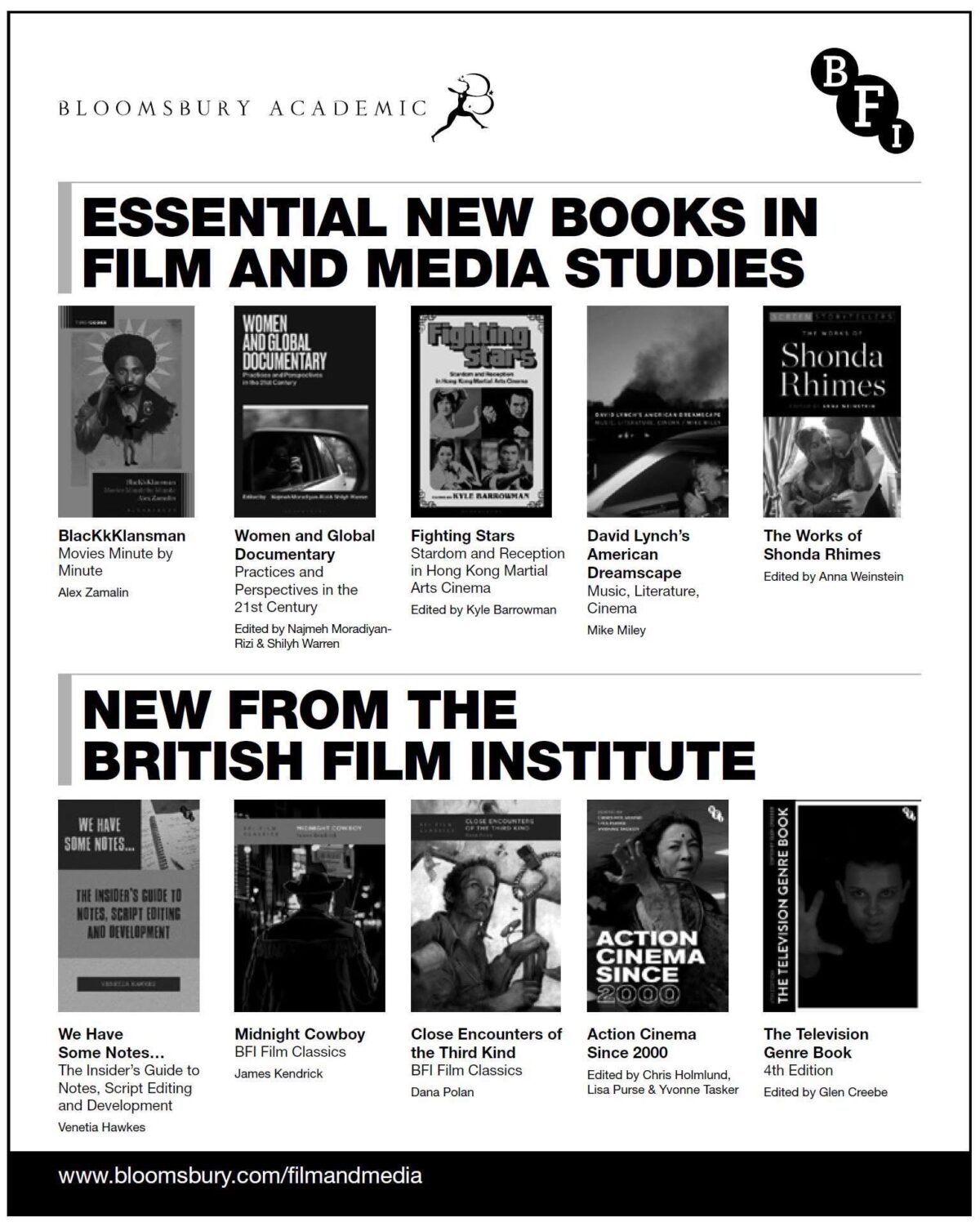
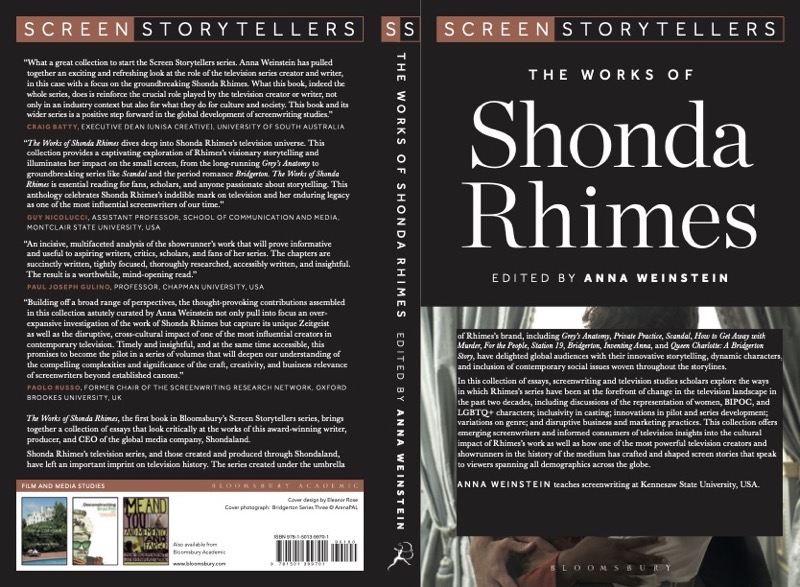
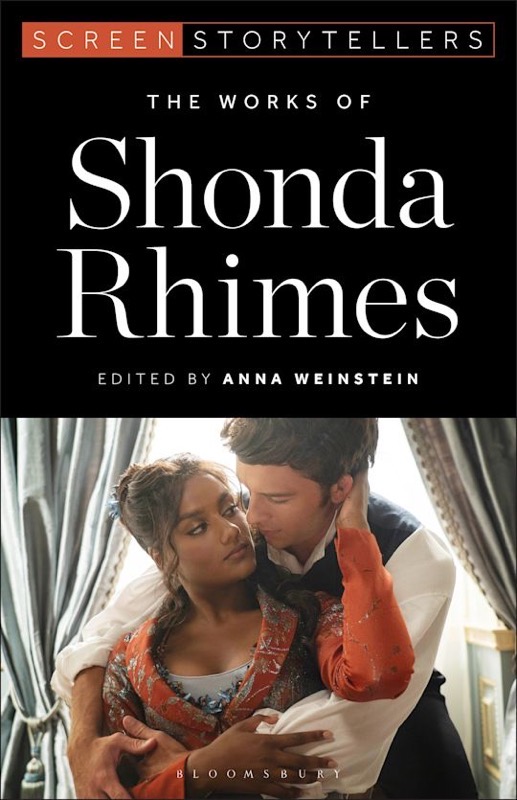
I’m very proud to have a chapter in this new inaugural book in the Screen Storytellers collection covering The Works of Shonda Rhimes. Edited by Anna Weinstein, an Assistant Professor of Screenwriting at Kennesaw State University, the series is designed to do one of my favorite things – bust the outdated ‘auteur’ theory by bringing attention to the writers of the stories we have loved and watched – and rewatched – all our lives.
For this collection, my chapter focuses on how Rhimes’ shows come from the Humanism ideology even moreso than simply a feminist one, though that is what many people think. But Rhimes’ hired Dan Shapiro, chair of the College of Medicine’s humanities department at Penn State Hershey, as a consultant for her first two medical dramas Grey’s Anatomy (2005–) and Private Practice (2007–13). In this way, Rhimes was able to bring the real-world philosophy of medicine to her fictional hospitals, presenting authentic depictions of humanism to her audiences. One of the things I love about research is learning new things about people/shows/events I thought I already knew well.
The other exciting thing about this inaugural book arriving is that I have signed on to edit a similar book on The Works of Susan Harris so this book is my example of what that future project will feel like when it arrives in the mail!
At San Diego Who Con 2024 (https://www.sdwhocon.com/), I enjoyed lecturing on “From Shakespeare to Shelley or Dante to Dickens: The Literary References Who Has Introduced You To!”.
I first thought of it while watching an episode with my favorite classic Doctor Peter Davison. I heard a line that was so specific I thought that it had to come from some book I didn’t know. It did. So then I researched what other famous authors had been quoted by the various Doctors and deeply enjoyed finding lots of Shakespeare and Dylan Thomas and of course, Byron and Shelley were in that mix. It was a reminder that writers READ. They read a lot to fuel their work.
The lecture also allowed me to highlight some great English actors who’ve starred in Shakespeare’s works like Patrick Stewart, Derek Jacobi, and Alex Kingston – some of whom also (of course) guested on Doctor Who.
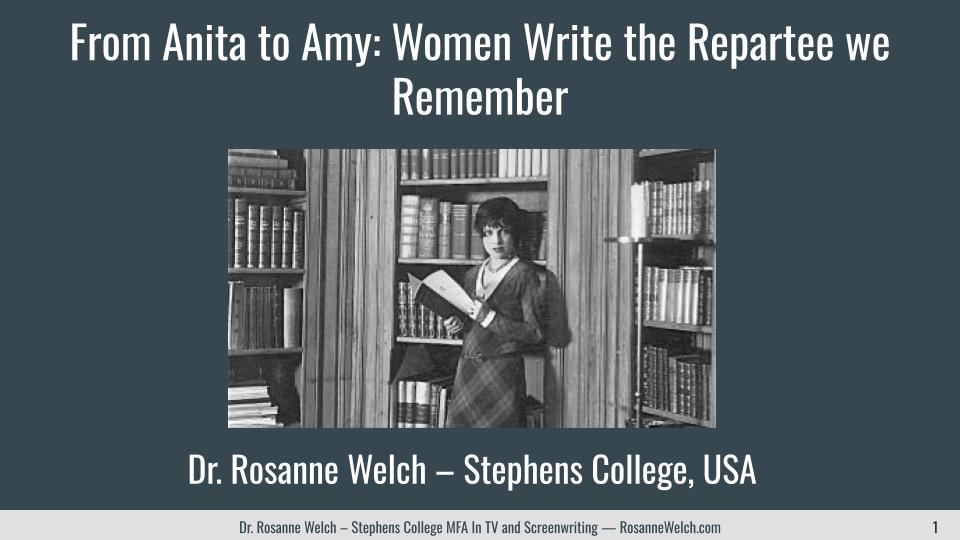
With the conference theme “A Conversation Beyond Script,” I decided to use my presentation time to “Celebrate the Daring Dialogue of Women Writers,” which allowed me to introduce the audience to the work of famous female screenwriters, from Anita Loos to Mae West to Lillian Hellman.
Then I delved into some names lesser-known to our international SRN members because they came from the TV world before the great sharing that streaming has offered us. From Gertrude Berg of The Goldbergs in the 1950s to Susan Harris (Soap, Golden Girls) and Linda Bloodworth Thomason (Designing Women) we covered the progressive (and often controversial) topics they brought to mainstream Americans.
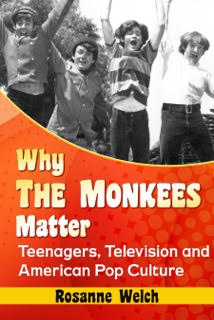
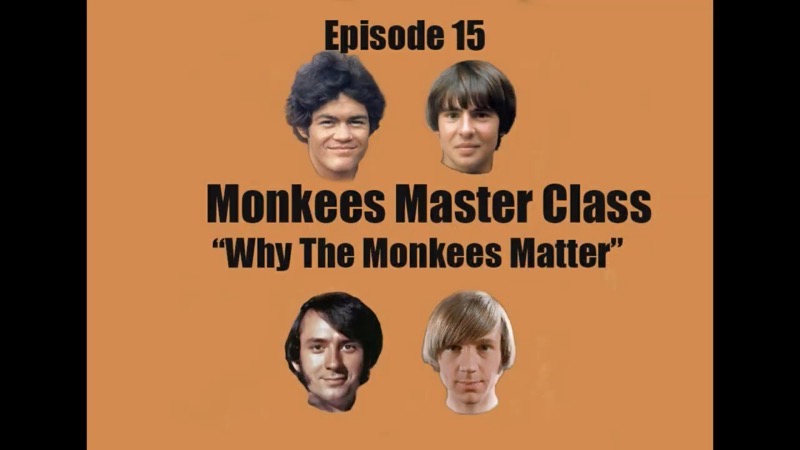
I always say I could talk about The Monkees all day – or at least for an hour, which is what I just had the privilege of doing with Joe Russo of The Monkees Pad on YouTube.
It’s especially fun to talk with folks like Joe, who know The Monkees so well – both the music and the TV show, which is more my specialty. We covered how the show got on the air (thanks to a young Grant Tinker), how so many of their counter-culture jokes made it past the censor, and why the fandom keeps growing across the generations.
If you love The Monkees individually or as a group, and if you love the TV of the 1960s, I hope you enjoy the listen.
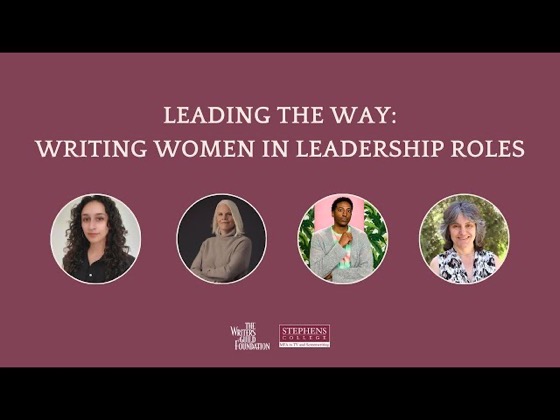
Since there’s been so much talk this week about mothers being proud of their highly accomplished children it’s a wonderful week to share the link to the latest Writers Guild Foundation panel co-sponsored by the Stephens College MFA in TV and Screenwriting covering the topic of “Writing Females in Leadership Roles”.
Moderated by our Executive Director Dr. Rosanne Welch the panel includes three writers from shows that celebrate female leaders from the real-life 23-year-old Miep Gies who hid Anne Frank’s family to real-life First Ladies Eleanor Roosevelt, Michelle Obama, and Betty Ford to the fictional female leaders of Station 19. Many thanks to Joan Rater (A Small Light), Zora Bikangaga (The First Lady), and especially to our Stephens College MFA alum Alexandra Fernandez (Station 19) for joining us to discuss everything from our childhood role models of female leadership (mostly moms and aunties) to the traits we expect to see in our leaders, to the nuts and bolts of working in a television writers room.
If you haven’t yet watched Derry Girls you have to – This trailer to the first season shows the brilliance of creator Lisa McGee, who wrote ALL 3 seasons worth of episodes herself (much like Susan Harris wrote many of her early season shows herself to cement the tone and style).
I don’t always agree with the idea of no writers room – writers rooms have a deeply important purpose – but in this case, her story was SOOOO distinctly of Derry, not even merely of Ireland but completely from her own home town and her own time period as a teen in that town, that I understand. In essence, she wrote an 20 hour movie broken up into 3 seasons of 8 half hour episodes apiece.
So like a loooong film, what the trailer can’t yet show is the wonderful arcs of each of these young women who by the Season 3 series finale (not a spoiler alert since I’m not telling you what they decide) must decide how to vote on the Good Friday Agreement.
The house where Lisa McGee grew up, in Derry, in Northern Ireland, sits on the bank of the River Foyle, near a largely Catholic neighborhood known as the Bogside. In 1969, the Bogside was the site of a three-day conflict. Residents hurled projectiles and petrol bombs; they were met with tear gas and batons. The violence spread to other cities and towns, and ultimately resulted in hundreds of injuries and a number of deaths. British troops were called in to Derry—the beginning of a long-term military operation. The conflict, known as the Battle of the Bogside, marked what many would call the start of the Troubles, which dominated Northern Irish politics for roughly three decades. In 1972, violence flared in the Bogside again. More than a dozen civilians were killed by soldiers in a massacre known as Bloody Sunday.
Tidbits with great points for writers (aspiring and published/produced because writers are always learning) include:
Write what you’re afraid of writing: “ “I had said my whole life, ‘I’ll never write about the Troubles,’ ” she told me. “Everything I saw about the Troubles was either the news, or something quite shit that was going on in my actual life.” In films about the period, she didn’t recognize the people. “There were never any jokes. I don’t know any Northern Irish person that isn’t funny,” she said. Lewin, who had been listening to McGee tell stories about her childhood for years, persuaded her to try. “They’re so joyful,” she said.”
AND
Create writerly habits: “She often carries a notebook. “If somebody says something funny, she’ll write it down,” Mallon said. “She might even ask you again, ‘What was that? What did you say?’ She wants to get it right, word for word.” Mallon told me that McGee once heard his father say something about his car—“It stinks of fish in here!”—and borrowed the line years later in “Derry Girls.”
While the show is comical to anyone who has any experience in a Catholic school –that background isn’t required. We all understand coming-of-age and coming-to-love-our-heritage and teenagers and parents dealing with each other.
But on top of all that viewers outside of Ireland learn about the history of another country and its political turmoil and hear some great discussions about peace and how we’re all a lot more similar than we are different. And that’s what art can do.
Susan Harris wrote her first freelance TV show in 1970, wrote for All in the Family and Maude from 1971-1973, premiered SOAP in 1977, followed it up with the spinoff of Benson in 1979, and The Golden Girls ran from 85-92. Though she retired in the early aughts her “Girls” have since been re-envisioned for audiences in Holland, Greece, and Chile.
How many years AFTER her last hit show went off the air and she – the writer – is known for those shows — not the many journeymen directors who came and went – so much so that in June 2024 June 8 to be exact) the Los Angeles Times Daily Crossword puzzle included this question: 1 Across, 4 letters: “Emmy-winning sitcome created by Susan Harris.” Answer: “SOAP.” The explanation: “Former TV writer and producer Susan Harris created quite a few hit TV shows, including “Soap”, “Benson”, “The Golden Girls” and “Empty Nest”.
THAT is how writers should be written about (especially by other writers) and why I’m editing a book of essays/chapters on The Works of Susan Harris!
I was doing editor rewrites on a chapter titled “Dorothy Parker: The Creative Genius Behind Film Franchise A STAR IS BORN.” To the note asking me to consider a “less hagiographic title,” I said “No”.
A quick check showed me that many, many, many male writers are called geniuses – but few women.
“Try a quick google search of the terms “literary genius”. The same names keep appearing: William Shakespeare, Fyodor Dostoyevsky, Henry James, William Chaucer, Virginia Woolf, Ernest Hemingway, Herman Melville, Walt Whitman, Jane Austen, Mark Twain, J.D. Salinger, and so on.”
But I would object to J.D. Salinger. Catcher in the Rye did not move me at all – but S. E. (Susan Elizabeth) Hinton’s The Outsiders moved me and all the generations from mine through my son’s Millennial group and into the folks watching the musical on Broadway right now – while teaching us all to love the poetry of another male genius – Robert Frost. See, I’m willing to use the adjective on men when they deserve it.
So the lesson of the day is that if any writer deserves to be called genius, it’s Dorothy Parker.
Own your genius. And use it to describe other female creatives. And maybe refrain from using it on less men for once.
As expected, I learned so much – she was born in Virginia to (sadly) racist parents but chose Northern schools to teach herself the opposite of their ways – ended up at the march in Selma and became friends with John Lewis — the book title comes from his famous phrase which she asked his permission to use.
My Mom always said you learn more from autobiographies than from fictional books. Though I still read copious amounts of both kinds, she was right in that the real-life details I’ve collected from autobiographies have stayed in my mind longer than much of my other reading.
And if you don’t know the story of how Gilpin Faust became the first female president of Harvard University – check it out:
Essentially, previous president Lawrence H. Summers was forced out for saying that “intrinsic” gender differences accounted for the lack of women in science (in other words there weren’t a lot of women in science and math departments because ‘girls aren’t good at math’) so they appointed Faust the immediate interim pres while they looked for a new one – and after 18 months of looking it suddenly occurred to them that she’d been doing the job for… 18 months so why not make her the permanent new pres? She held the gig for 11 years and “generated what might be considered the opposite kind of controversy: She was too PC, her critics griped — during her time, the number of tenured female faculty rose by 47 percent.”
While we have rolling admissions until all seats in the new cohort are filled. If potential MFA candidates submit materials by March 30th and suit the criteria they will be in contention for our Jan Marino Scholarship (for a woman writer 45 or older).
Check out our new video with interviews with our most recent grads:
Being a low residency program means you travel to Hollywood for 10 days at the beginning of each semester (once in August/once in January) for a workshop experience worth 3 units. We hold workshops at the historic Jim Henson Studios (originally the Charlie Chaplin Studios) in Hollywood, California.
Each semester students will take 3 courses after the workshop. They have one mentor for a television script and one mentor for a screenplay. The television mentors change each semester because in Fall semester you write a spec script/in Spring a pilot; the screenplay mentor is onboard for the whole year, as the Fall semester is all about developing an outline and writing Act One of the screenplay, and in the spring semester you complete and revise the script. Our instructors are all chosen because they are working writers and members of the Writers Guild of America (WGA).
In year two, there’s a second screenplay written (with a different mentor) and a thesis project, which can be anything from a web series to a limited series pilot and bible to a group of short films to an actual written thesis.
Our History of Screenwriting Courses are taught with a female gaze. Taught by our Executive Director so she can stay in touch with MFA candidates across their 2 years in the program. In the course, students read texts and view films each week that feature female-focused stories, and then post responses to the material. At the end of each semester, students turn in a profile of a screenwriter.
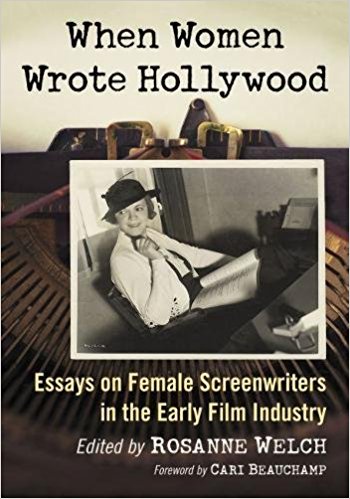
In 2017, 22 of these profiles written by MFA students were compiled into the book WHEN WOMEN WROTE HOLLYWOOD, published by McFarland Press.
If you are a writer looking to move your material to the next level so it will secure you a spot in the industry – or a college educator who wants a graduate degree to move up in the academic world – then our program is perfect for you.