From The Journal Of Screenwriting V4 Issue 2: Tracing the voice of the auteur: Persona and the Ingmar Bergman Archive by Anna Sofia Rossholm

Highlighting the articles in the past editions of the Journal of Screenwriting, of which I am the Book Reviews Editor. Hopefully these abstracts will entice you to did a little deeper into the history and future of screenwriting. — Rosanne


Tracing the voice of the auteur: Persona and the Ingmar Bergman Archive by Anna Sofia Rossholm

This article discusses the Ingmar Bergman Archive, a donation by Bergman himself, mainly consisting of notebooks, manuscripts, production documents and letters, as well as the screenwriting process behind the film Persona (1966). The study approaches the digital manuscript archive as an interface that lends itself to an understanding of the artwork as continuous movement of transformation across media, an understanding that also links to aesthetical ideas on the relations between words and images expressed in Bergman’s cinematographic work. The study opens with a discussion of these issues and continues with a reading of the self-reflexive film Persona in order to examine how the explicit reflections on the mediation are negotiated across notebook drafts and scripts. The different phases in the process of creation – from notes and drafts to script versions and film – reflect on the transitory nature of the text as well as drawing on the specificities of each form of expression.

From The Journal Of Screenwriting V4 Issue 2: Tracing the voice of the auteur: Persona and the Ingmar Bergman Archive by Anna Sofia Rossholm


Journal of Screenwriting Cover

The Journal of Screenwriting is an international double-blind peer-reviewed journal that is published three times a year. The journal highlights current academic and professional thinking about the screenplay and intends to promote, stimulate and bring together current research and contemporary debates around the screenplay whilst encouraging groundbreaking research in an international arena. The journal is discursive, critical, rigorous and engages with issues in a dynamic and developing field, linking academic theory to screenwriting practice. 

Get your copy and subscription to the Journal of Screenwriting Today!


* A portion of each sale from Amazon.com directly supports our blogs
** Many of these books may be available from your local library. Check it out!

Rosanne presents to Oxford Brookes University Students in transatlantic creative education exchange

1200px Oxford Brookes University logo svg


Previous, on-site, presentation at Oxford Brookes

Thanks for our meeting at a Screenwriting Research Network conference almost 10 years ago Dr. Paolo Russo (of Oxford Brookes University) and I have been able to engage in a few transatlantic creative exchanges.

He’s come to speak on Italian Neo-realism to my MFA candidates and I had the pleasure of visiting with his masters candidates (in person! when that was still possible) and giving them notes on their drama series treatments. 

This week I’ll be doing that again on Zoom with the help of Shannon Dobson Fopeano, my Graduate Assistant in the Stephens College MFA in TV and Screenwriting.  Paolo and I are both interested in expanding the reach of this cross-ocean collegiality in the future!

Stephens College MFA In TV And Screenwriting Workshop


03 Managed Chaos from How The Chaos Of Collaboration in the Writers Room Created Golden Age Television [Video]

With the full recording of “How The Chaos Of Collaboration in the Writers Room Created Golden Age Television”

03 Manage Chaos from How The Chaos Of Collaboration in the Writers Room Created Golden Age Television [Video]

Subscribe to Rosanne’s Channel and receive notice of each new video!


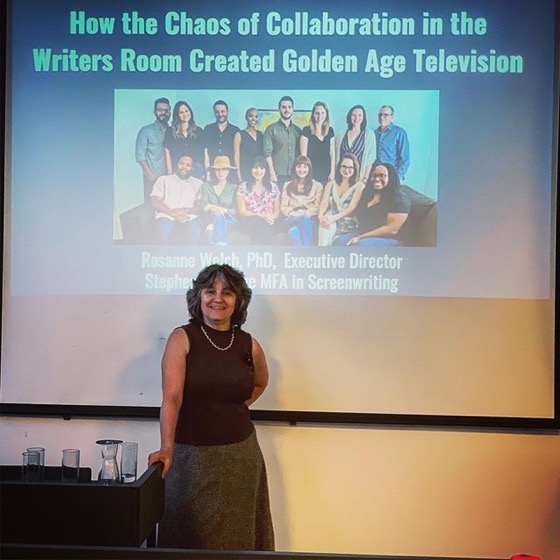
When the folks hosting the conference announced their theme as “Screen Narratives: Chaos and Order” the word ‘chaos’ immediately brought to mind writers rooms. I offered a quick history of writers rooms (the presentations are only 20 minutes long) and then quoted several current showrunners on how they compose their rooms and how they run them.

Transcript

So that’s kind of my philosophy. I really don’t like the auteur theory and neither do a lot of other writers. This particular quote comes to us from the gentleman who gave us, in America, Breaking Bad, Vince Gilligan. So I want to talk about writer’s rooms and his is considered one of the most organized so perhaps the less chaotic but still what happens in the room has its own form of chaos. So I think it’s really interesting that he is willing to defend the idea that writers are more important than directors. He’s certainly got an Emmy to prove he’s an important writer but I appreciate very much what he had to say. The room is about making people as comfortable as possible and this can be a difficult task but it’s the task of the executive producer or the showrunner to make sure that the people in the room are open to sharing as many of their interesting ideas as possible right? So chaos but managed chaos. You have to allow for much conversation but you’re the one managing what’s being said so you don’t run off on a tangent and of course Vince was brilliant at that.

For more information on the Screenwriting Research Network, visit

Screenwriting Research Network Conference, Porto, Portugal, All Sessions


Ready to present my talk yesterday at the Screenwriting Research Conference here in Porto, Portugal via Instagram

Follow me on Instagram


* A portion of each sale from Amazon.com directly supports our blogs
** Many of these books may be available from your local library. Check it out!

13 Characters and Susannah Grant from There And Back Again: Writing and Developing for American TV [Video] (56 seconds)

13 Characters and Susannah Gra from There And Back Again: Writing and Developing for American TV [Video] (56 seconds)

Thanks to the gracious invitation from my Screenwriting Research Network colleague Paolo Russo – and a grant he was able to procure (and in the before-Covid time) I was able to spend a week at Oxford Brookes University working with the screenwriting masters students in Paolo’s course. At the culmination of the week, I gave this lecture on how writers rooms worked in the States.

Transcript:

All right, so. what I wanted to do for about half a minute is describe this woman. Visually describe this character. Her name is Erin Brockovich. You may or may not have seen this movie all right. So we might know something about her from the movie but visually — and she’s Julia Roberts, you can tell — quickly how would you describe her if you’re writing that action line in your script? If nothing else, think of three adjectives. We always start with that. Style comes from what you do in the action lines because the dialogue has to sound like your characters but the action lines sound like you alright. Shy doesn’t work in the writers’ room. If you don’t have an idea, I’ll stop paying you a contract and you go home. I always tell my students when they have to pitch, you better have an idea right away because you’re turning down $38,000 because if there’s a new script and we need one done next week and you don’t do it your friend just got that much money. That’s a lot of money to turn down because you’re too shy to open your mouth. So school is when you practice not being shy.

Watch this entire presentation

Subscribe to Rosanne’s Channel and receive notice of each new video!


* A portion of each sale from Amazon.com directly supports our blogs
** Many of these books may be available from your local library. Check it out!
† Available from the LA Public Library

From The Journal Of Screenwriting V4 Issue 2: Writing With Light: The screenplay and photography by Kathryn Millard

Highlighting the articles in the past editions of the Journal of Screenwriting, of which I am the Book Reviews Editor. Hopefully these abstracts will entice you to did a little deeper into the history and future of screenwriting. — Rosanne


Writing With Light: The screenplay and photography by Kathryn Millard

This article considers alternative processes for recording the screen idea, specifically, processes that draw on photography and images in the writing process. It discusses screen works inspired by the photographs of Samuel Bollendorff (Journey to the End of Coal, 2009), Arthur Felig Weegee (The Naked City, 2002) and August Sanders (Do Right and Fear No-one, 1975), and proposes that ‘writing with light’ is an appropriate metaphor for screenplays that are inherently unstable and always in transition.

From The Journal Of Screenwriting V4 Issue 2: Writing With Light: The screenplay and photography by Kathryn Millard


Journal of Screenwriting Cover

The Journal of Screenwriting is an international double-blind peer-reviewed journal that is published three times a year. The journal highlights current academic and professional thinking about the screenplay and intends to promote, stimulate and bring together current research and contemporary debates around the screenplay whilst encouraging groundbreaking research in an international arena. The journal is discursive, critical, rigorous and engages with issues in a dynamic and developing field, linking academic theory to screenwriting practice. 

Get your copy and subscription to the Journal of Screenwriting Today!


* A portion of each sale from Amazon.com directly supports our blogs
** Many of these books may be available from your local library. Check it out!

02 Words Matter. Writers Matter. Women Writers Matter from How The Chaos Of Collaboration in the Writers Room Created Golden Age Television [Video]

With the full recording of “How The Chaos Of Collaboration in the Writers Room Created Golden Age Television”

02 Words Matter. Writers Matter. Women Writers Matter from How The Chaos Of Collaboration in the Writers Room Created Golden Age Television [Video]

Subscribe to Rosanne’s Channel and receive notice of each new video!


When the folks hosting the conference announced their theme as “Screen Narratives: Chaos and Order” the word ‘chaos’ immediately brought to mind writers rooms. I offered a quick history of writers rooms (the presentations are only 20 minutes long) and then quoted several current showrunners on how they compose their rooms and how they run them.

Transcript

This is my teaching philosophy. Words Matter. Writers Matter. Women Writers Matter, and that’s something I try to focus on as much as possible. There’s a lot of women who never get mentioned and that bothers me but that’s a different lecture so — I did that last year this year. We’re talking about why writers are important and how the writers room works. As far as I’m concerned we have to remember that writer precedes director so I want more of our students to know the names of the writers of their favorite films not always just the directors because when you talk about a film you don’t say “Do you remember that beautiful camera angle in scene seven?” You say “My name is Inigo Montoya. You killed my father. Prepare to die” and that is something the writer did so I think we have to remember that the dialogue is what makes movies special and the characters.

For more information on the Screenwriting Research Network, visit

Screenwriting Research Network Conference, Porto, Portugal, All Sessions


Ready to present my talk yesterday at the Screenwriting Research Conference here in Porto, Portugal via Instagram

Follow me on Instagram


* A portion of each sale from Amazon.com directly supports our blogs
** Many of these books may be available from your local library. Check it out!

Dr. Rosanne Welch Joins Panel on the Monkees TV Show with Plastic EP Live [Video] (49 Minutes)

Dr. Rosanne Welch Joins Panel on the Monkees TV Show with Plastic EP Live [Video] (49 Minutes)

Monkees Top 5 TV Shows With Plastic Ep And A Panel Of Special Guests

Get your copy today!

12 Describing Your Characters from There And Back Again: Writing and Developing for American TV [Video] (1 minute)

12 Describing Your Characters from There And Back Again: Writing and Developing for American TV [Video] (1 minute)


Thanks to the gracious invitation from my Screenwriting Research Network colleague Paolo Russo – and a grant he was able to procure (and in the before-Covid time) I was able to spend a week at Oxford Brookes University working with the screenwriting masters students in Paolo’s course. At the culmination of the week, I gave this lecture on how writers rooms worked in the States.

Transcript:

All right, so. what I wanted to do for about half a minute is describe this woman. Visually describe this character. Her name is Erin Brockovich. You may or may not have seen this movie all right. So we might know something about her from the movie but visually — and she’s Julia Roberts, you can tell — quickly how would you describe her if you’re writing that action line in your script? If nothing else, think of three adjectives. We always start with that. Style comes from what you do in the action lines because the dialogue has to sound like your characters but the action lines sound like you alright. Shy doesn’t work in the writers’ room. If you don’t have an idea, I’ll stop paying you a contract and you go home. I always tell my students when they have to pitch, you better have an idea right away because you’re turning down $38,000 because if there’s a new script and we need one done next week and you don’t do it your friend just got that much money. That’s a lot of money to turn down because you’re too shy to open your mouth. So school is when you practice not being shy.

Watch this entire presentation

Subscribe to Rosanne’s Channel and receive notice of each new video!


* A portion of each sale from Amazon.com directly supports our blogs
** Many of these books may be available from your local library. Check it out!
† Available from the LA Public Library

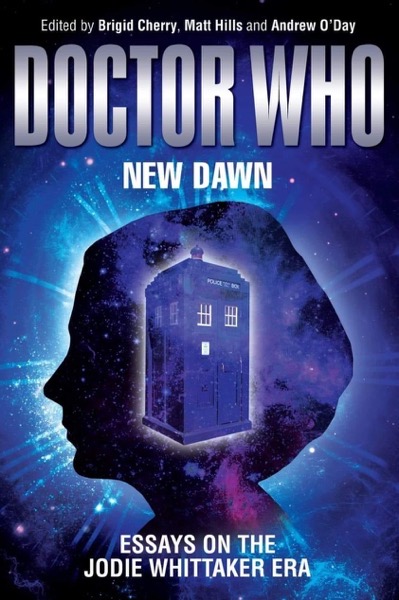
Coming Soon: A chapter in a new book, Doctor Who: New Dawn: Essays on the Jodie Whitaker Era

There are many exciting steps along the way to having a chapter you’ve written about a beloved television show accepted into a book collection.

  • First you see the Call for Submissions, have an idea and send in an abstract.
  • Then they tell you they like your idea and want to include it in their collection.
  • Then you write the chapter and they send back minimal notes.
  • Then (that’s today) they send you the artwork for the cover and you smile all over again knowing other fans of the show will be reading your ideas as they consider the importance of the show to our culture. 

Coming Soon: A chapter in a new book, Doctor Who: New Dawn: Essays on the Jodie Whitaker Era

All those steps (except the cover page) happened recently on a couple of upcoming collections I’m contributing to but the other day this cover came along for Doctor Who: New Dawn: Essays on the Jodie Whitaker Era and I couldn’t be more excited that a show I originally watched on PBS back in Ohio and followed all these years then made their lead character a female and then I had the chance to write about how a writer could go about making such a culturally important change.

My essay is entitled ‘She is wise and unafraid’: writing the first female Doctor and a diverse universe for her to protect

The book itself will be out later this year!

From The Journal Of Screenwriting V4 Issue 1: The unseen collaborator: Breaking down art to create modern narratives by Marie Regan

Highlighting the articles in the past editions of the Journal of Screenwriting, of which I am the Book Reviews Editor. Hopefully these abstracts will entice you to did a little deeper into the history and future of screenwriting. — Rosanne


The unseen collaborator: Breaking down art to create modern narratives by Marie Regan

This article proposes a new way of looking at the screenwriting process and at the pedagogical instruction of screenwriting. It proposes an alternative to the industrial model of screenwriting – one that allows for the possibility of creating film scripts that might lie on the borders of narrative. Starting with a research process, this method uses the deconstruction of an art source to develop the writer’s point of view in hopes of creating modern works of unusual complexity and resonance. Citing examples from Bach, Munch and Melville, and films by Francois Girard, Peter Watkins and Claire Denis, the article suggests a method for screenwriters using the limit of an original artwork’s form to generate a unique narrative structure, and building on that structure by bringing the writer’s own contemporary perspective to the content concerns. It contends that this process works to renew the writer’s connection to form and, by working with an artwork the writer admires, pushes the writer into deeper engagement with her own point of view.

From The Journal Of Screenwriting V4 Issue 1: The unseen collaborator: Breaking down art to create modern narratives by Marie Regan


Journal of Screenwriting Cover

The Journal of Screenwriting is an international double-blind peer-reviewed journal that is published three times a year. The journal highlights current academic and professional thinking about the screenplay and intends to promote, stimulate and bring together current research and contemporary debates around the screenplay whilst encouraging groundbreaking research in an international arena. The journal is discursive, critical, rigorous and engages with issues in a dynamic and developing field, linking academic theory to screenwriting practice. 

Get your copy and subscription to the Journal of Screenwriting Today!


* A portion of each sale from Amazon.com directly supports our blogs
** Many of these books may be available from your local library. Check it out!