10 Things Hollywood Writers Must Know with Dr. Rosanne Welch – Best in Fest Podcast Ep #23 – La Femme Film Festival

10 Things Hollywood Writers Must Know with Dr. Rosanne Welch - Best in Fest Podcast Ep #23 - La Femme Film Festival

The Stephens College MFA in TV and Screenwriting is one of many sponsors of the LaFemme Film Festival which supports and nurtures the artistic entertainment productions of women. Their President and Director, Leslie LaPage, hosts the Best in Fest podcast and recently invited me on to talk about the 10 Things Hollywood Writers Must Know.

RMW Rosanne Signature for Web

Dr. Rosanne Welch is a writer and university professor of Humanities in the (IGE) Department at California State Polytechnic University, Pomona; and screenwriting for two MFA in Screenwriting programs (Cal State, Fullerton and Stephens College). Her current books include Why The Monkees Matter: Teenagers, Television and American Pop Culture (McFarland Publishing, 2017) and Women in American History: A Social, Political, and Cultural Encyclopedia and Document Collection (ABC-CLIO, 2017), which she co-edited with her CalPoly Pomona colleague and officemate, Dr. Peg Lamphier. 

In her previous life, Welch was a television writer/producer with credits that include Beverly Hills 90210, Picket Fences and Touched by an Angel and ABC NEWS/Nightline. Welch serves as Book Reviews editor for Journal of Screenwriting and on the Editorial Advisory Board for Written By magazine, the magazine of the Writers Guild.

In this episode, Leslie and Rosanne discuss 10 things Hollywood writers must know. For example, how to write what you emotionally know, how to work in a writer’s room, the do’s and don’ts of pitching, when to use a pitch deck and when it’s a horrible idea and much more.

01 Introduction from “Female Creatives & A Star Is Born” with Dr. Rosanne Welch [Video] [CC]

01 Introduction from

Transcript:

Here we are. We’re talking about the importance of female creatives in A Star Is Born. For me, that’s really what it’s all about. I like to my begin my lectures about the fact that I would like to acknowledge that this event is happening on the traditional lands of the Tongva people. That’s what Los Angeles is and we should recognize that there were people here before us and we need to respect their history and they’re the people who still exist on this land. So I like to start with that. I learned that when I went to a conference in New Zealand and they start all their lectures that way and I thought that was quite beautiful. As you just said so I don’t need this. These are the shows that I’ve worked on. These are the books that I have written. The lecture we’re speaking on today is going to come up next year in the book. I also am on the editorial board for Written By magazine, which I happen to have a copy of right next to me. It’s free online. So the magazine of the Writers Guild. I recommend people read it and it always has interviews with movie writers or television writers and that’s really good. I also do book reviews for the Journal of Screenwriting. It’s a great place for new academics to get published. If there are books you feel like reviewing or you’d like a free copy of you can write a review for me. So Vicki will get you in touch with me if that’s interesting to you.

Watch this entire presentation

Connections at conferences matter! Through the most recent SCMS, I met Vicki Callahan, whose film history focus right now is on Mabel Normand. When she learned I could put together a lecture on the importance of the female voice in the A Star is Born franchise she asked me to give that lecture to her master students.

It made for a great opportunity for me to hone the ideas I’m working on for a chapter on that franchise that I’m writing for a new book from Bloomsbury: The Bloomsbury Handbook Of International Screenplay Theory. It’s always nice when one piece of research can be purposed in other ways – and it’s always fun revisiting such a female-centric film franchise – one that drew the talents of such powerful performers as Janet Gaynor, Judy Garland, Barbara Streisand, and Lady Gaga.

Find out why in this lecture!

RMW Rosanne Signature for Web


Stephens College and Writers Guild Foundation Present The Panel Discussion — “It’s All Relative: Writing Matriarchs” [Video]

During every Residency Workshop the Stephens College MFA in TV and Screenwriting Executive Director, Dr. Rosanne Welch, joins with the Writers Guild Foundation to moderate a panel on a topic of interest to female writers.  This year we planned one on Writing Diverse Families – but in the last day before our panel 2 panelists had to drop out due to… family duties.  So we pivoted, realizing the panelists who were able to appear all had shows that involved 3 generational families lead by matriarchs.  

Hence the title:   It’s All Relative: Writing Matriarchs.

This gave us a chance to explore how these female TV writers have expanded depictions of the relationships between grandmothers, mothers and daughter over the years and how they’ve developed storylines that reflect the complexity and universality of these inescapable bonds. Panelists include Sheryl J. Anderson – Creator and Executive Producer, Sweet Magnolias;  Lang Fisher – Co-creator and Executive Producer, Never Have I Ever; and Valerie Woods – Co-executive Producer, Queen Sugar. Everyone shared memories of their own family matriarchs and the inspiration they continue to provide each woman’s writing.

 Stephens College and Writers Guild Foundation Present The Panel Discussion --

Due to Covid we recorded this panel live at the Jim Henson Studios where we host our Workshop in front of the live audience of MFA candidates.

Online Panel Discussion: It's All Relative: Writing Diverse Television Families, Friday, August 6, 2021, 5:30 PM  7:00 PM - Stephens College MFA in TV and Screenwriting

The Importance of Endings

The Importance of Endings

I had typed out one of those quotes I tend to use all the time –

“So much time and so little to do. Wait a minute. Strike that. Reverse it.”

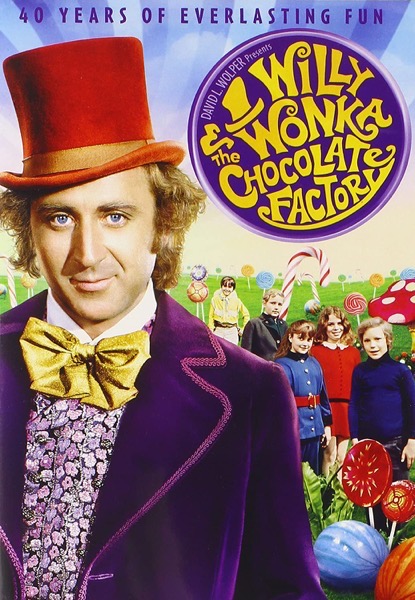
— and in my habit I wanted to credit the writer of the quote, which we all know comes from the movie, Willy Wonka and the Chocolate Factory, adapted by David Seltzer from the book by Roald Dahl. 

My question became “Did that line come from the book OR the film OR both?”  I couldn’t find any clarification on that right away – but I did find this great NPR interview with Seltzer about how he changed the ending of the film because the director felt “It ends with the word, yippee? He said that’s not a screen play. That’s not a movie. You can’t do that” so Seltzer rewrote the ending to be this:

Mr. SELTZER: It ends with the word, yippee? He said that’s not a screen play. That’s not a movie. You can’t do that.

COHEN: So, what did you do?

Mr. SELTZER: I said, well, let me think about it. You know, how long do I have? He said, how long? We’re standing here. It’s $30,000 an hour. You tell me. And, I said, well, give me a second. And I think it was about 6 in the morning. And I walked down, literally, looked over the lake in Maine. I thought, what the hell am I going to do? My head space was totally out of this movie. I could barely remember what had led up to this but I thought, OK, it’s a fairy tale. It’s a children’s story, and how do children’s stories end? I don’t know. How could – how do they end? They end with, they all lived happily ever after. But that’s not good. That’s not what a screenwriter writes. And so I took a deep swallow and I went to the phone. I said, Mel, OK, listen carefully. They’re going up in the spaceship and looking at the ground disappear. And Willy Wonka announces to Charlie that the chocolate factory is his. Then, Willy Wonka looks at him and he says, but Charlie – in a very cautious voice – you do know what happened to the little boy who suddenly got everything he ever wanted, don’t you? And fear comes across Charlie’s face and he says, no, what? And Willy says, he lived happily ever after. And it was a long pause, and I thought my career as a screenwriter is over.


William Blinn, Brian’s Song, Purple Rain, and Screenwriting

William Blinn, Screenwriting, Brian's Song, and Purple Rain

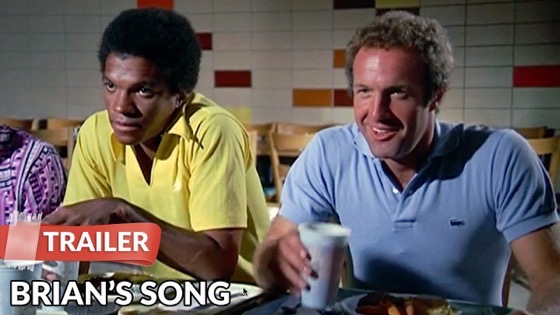
Sometimes I love the way the internet lets you drill down layer after layer of research when you only had one small question – but you learn things you forgot you wanted to know.  When I saw a question on Quora’s Ask a Screenwriter forum about the best “Based on a True Story” films the one that came immediately to mind was Brian’s Song so first I found the trailer:

Naturally then, I wanted to know who wrote it, which brought me to the film’s Wikipedia page, which brought me to William Blinn’s Wikipedia page

There I came to find that not only did he win an Emmy for writing that TV film but also one for writing on the original Roots.  Here he receives the Paddy Chayefsky Laurel Award for Television for “a WGA guild member who has advanced the literature of television and made outstanding contributions to the profession of the television writer.”

His advice to young writers is to “get off you’re a** and do the work” and to “Tell the truth in an interesting way.”

(If you listen to nothing else in this blog post – listen to that speech!).

Blinn was nominated 3 times for episodes of Fame. And he won Humanitas and Peabody Awards along the way.   Blinn also produced Starsky and Hutch (both the TV show and the 2004 movie!). Finally, he co-wrote Purple Rain

THAT is a career –  and you probably have never heard of him. 

Finally, I came to remember how much I had resisted watching “a football movie”  but I kept hearing how much other people loved it so when it re-ran on the 11:30pm film one night I snuck out of bed in the childhood home I shared with my grandparents and watched the film – finding myself sobbing as it ended.  I had never seen a film about such a strong male friendship – and I have rarely seen on as strong since.

Yay for the internet – and Yay for William Blinn.

18 Fresh Off The Boat from How The Chaos Of Collaboration in the Writers Room Created Golden Age Television [Video]

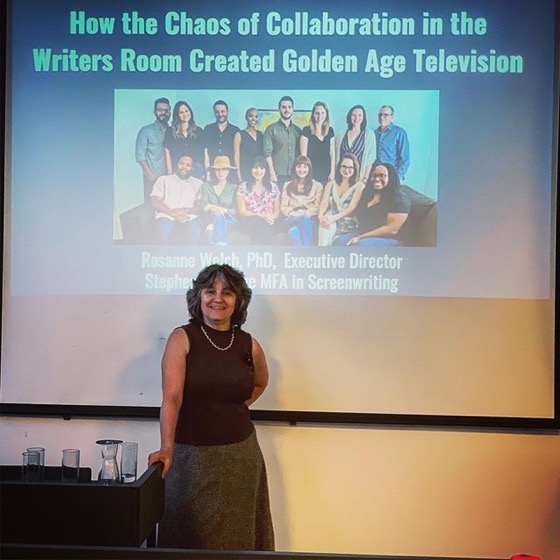
With the full recording of “How The Chaos Of Collaboration in the Writers Room Created Golden Age Television”

18 Fresh Off The Boat from How The Chaos Of Collaboration in the Writers Room Created Golden Age Television [Video]

Subscribe to Rosanne’s Channel and receive notice of each new video!


When the folks hosting the conference announced their theme as “Screen Narratives: Chaos and Order” the word ‘chaos’ immediately brought to mind writers rooms. I offered a quick history of writers rooms (the presentations are only 20 minutes long) and then quoted several current showrunners on how they compose their rooms and how they run them.

Transcript

So for me what’s interesting and important about a writer’s room is what you have to do. In this case, this show called Fresh Off The Boat. It’s based on the memories of an Asian-American man and his immigrant family and for their room they wanted to make sure all the people they hired had an outsider perspective. People who understood what it was like to go to a new place and be different and how do you manage that balance of I’m an American-Korean but my parents are truly Korean and in moving to another country the parents have given away part of the knowledge of their children because they won’t share the same kind of childhood. So that was an important aspect that Nahnatchka Khan wanted to bring to her show and really interesting that she’s not a Korean American and she’s running the show. So it’s about an experience she shares emotionally not the same ethnic experience and so I think that’s an interesting movement forward — which is pretty good.

For more information on the Screenwriting Research Network, visit

Screenwriting Research Network Conference, Porto, Portugal, All Sessions


Ready to present my talk yesterday at the Screenwriting Research Conference here in Porto, Portugal via Instagram

Follow me on Instagram


* A portion of each sale from Amazon.com directly supports our blogs
** Many of these books may be available from your local library. Check it out!

17 Representation from How The Chaos Of Collaboration in the Writers Room Created Golden Age Television [Video]

With the full recording of “How The Chaos Of Collaboration in the Writers Room Created Golden Age Television”

17 Representation from How The Chaos Of Collaboration in the Writers Room Created Golden Age Television [Video]

Subscribe to Rosanne’s Channel and receive notice of each new video!


When the folks hosting the conference announced their theme as “Screen Narratives: Chaos and Order” the word ‘chaos’ immediately brought to mind writers rooms. I offered a quick history of writers rooms (the presentations are only 20 minutes long) and then quoted several current showrunners on how they compose their rooms and how they run them.

Transcript

I think inclusive writer’s rooms, obviously, create more inclusive stories. I happen to adore Torchwood. I’m a big Russell Davies fan and I love the stories he tells about how, when he came to create the show, he created a female police officer whose husband stayed at home and took care of the house and the baby and he hadn’t seen enough of that on television. So he provided that in the story and as they went through you got many more characters of color, characters from other backgrounds. it definitely shows, right? And He, I go to interview him, as I said, for Written By and he said it was a very difficult thing to watch people watch television seeing how badly so many were represented. So, his rooms have always been about representation.

For more information on the Screenwriting Research Network, visit

Screenwriting Research Network Conference, Porto, Portugal, All Sessions


Ready to present my talk yesterday at the Screenwriting Research Conference here in Porto, Portugal via Instagram

Follow me on Instagram


* A portion of each sale from Amazon.com directly supports our blogs
** Many of these books may be available from your local library. Check it out!

16 Vida from How The Chaos Of Collaboration in the Writers Room Created Golden Age Television [Video]

With the full recording of “How The Chaos Of Collaboration in the Writers Room Created Golden Age Television”

16 Vida  from How The Chaos Of Collaboration in the Writers Room Created Golden Age Television [Video]


Subscribe to Rosanne’s Channel and receive notice of each new video!


When the folks hosting the conference announced their theme as “Screen Narratives: Chaos and Order” the word ‘chaos’ immediately brought to mind writers rooms. I offered a quick history of writers rooms (the presentations are only 20 minutes long) and then quoted several current showrunners on how they compose their rooms and how they run them.

Transcript

In the case of this show on Starz, Vida, it’s the story of three LatinX women in Los Angeles who had moved away but come home when their mother dies and they discover that they’ve inherited a bar and the bigger discovery is that they’ve co-inherited it with their mother’s lesbian lover. So, now they’ve learned their mother’s a lesbian and they own a bar and they’re living in a part of LA that is going under gentrification. The entire show is staffed by female LatinX writers and so having a room that is entirely inclusive of the people on the show has been very special to them. Whether or not they are missing other perspectives, I can’t say, but that’s an experience that’s making it an open place for them to tell their stories, which is very important. Queen Sugar is a director-led writer’s room. Ava Devernay, who’s done several films, she now ran the show, she created it and she brought in a team of writers who are in charge. So now she’s — everything comes from the visual with her and you have to start with the visual when you tell a story. She has hired someone else to run the room, but they’re thinking of her desire as they do it. So that’s important.

For more information on the Screenwriting Research Network, visit

Screenwriting Research Network Conference, Porto, Portugal, All Sessions


Ready to present my talk yesterday at the Screenwriting Research Conference here in Porto, Portugal via Instagram

Follow me on Instagram


* A portion of each sale from Amazon.com directly supports our blogs
** Many of these books may be available from your local library. Check it out!

From The Journal Of Screenwriting V5 Issue 1: Screenwriting without typing – the case of Calamari Union by Raija Talvio

Highlighting the articles in the past editions of the Journal of Screenwriting, of which I am the Book Reviews Editor. Hopefully these abstracts will entice you to did a little deeper into the history and future of screenwriting. — Rosanne


Screenwriting without typing – the case of Calamari Union by Raija Talvio

The first part of this article is a practice-based case study of the making of the film Calamari Union (1985), a Finnish cult classic written and directed by Aki Kaurismäki. I was the film editor of this film as well as of several other features and short films by Kaurismäki in the 1980s. From the point of view of screenwriting research, Calamari Union offers a thought-provoking example: it is a feature-length fiction film that was made entirely without a formal screenplay. In the case study I examine the effects of this method in the production and post-production of the film. In the second part of the article I discuss the definitions of a ‘screenplay’ and screenwriting in the context of alternative film-making practices, and the reasons for and consequences of the choice of such practices. I will also briefly visit the question of authorship in cinema and reflect on the birth of stories.

From The Journal Of Screenwriting V5 Issue 1: Screenwriting without typing – the case of Calamari Union by Raija Talvio


Journal of Screenwriting Cover

The Journal of Screenwriting is an international double-blind peer-reviewed journal that is published three times a year. The journal highlights current academic and professional thinking about the screenplay and intends to promote, stimulate and bring together current research and contemporary debates around the screenplay whilst encouraging groundbreaking research in an international arena. The journal is discursive, critical, rigorous and engages with issues in a dynamic and developing field, linking academic theory to screenwriting practice. 

Get your copy and subscription to the Journal of Screenwriting Today!


* A portion of each sale from Amazon.com directly supports our blogs
** Many of these books may be available from your local library. Check it out!

A Woman Wrote That – 30 in a series – Sleepless in Seattle (1993)

This new “A Woman Wrote That” post is an echo of the Writers Guild campaign of a few years ago (“A Writer Wrote That”) where they noted famous movie quotes and credited the screenwriter rather than the director.  The difference here being that we will be posting lines from films written by female screenwriters.  Feel free to share! — Rosanne 

“Destiny is something that we’ve invented because we can’t stand the fact that everything that happens is accidental.”

ANNIE

“Destiny is something that we’ve invented because we can’t stand the fact that everything that happens is accidental.”